
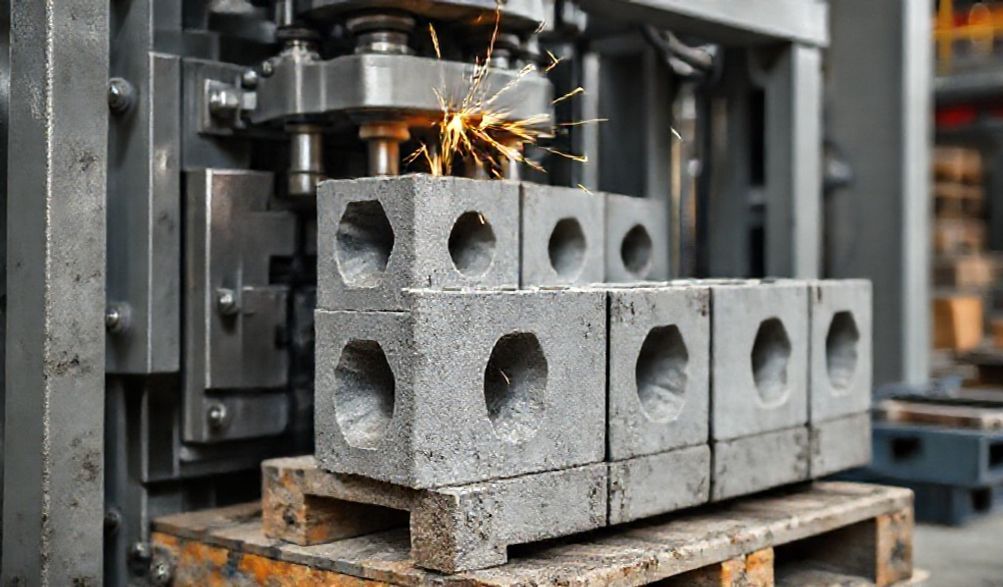
Полное руководство по машинам для производства пустотелых бетонных блоков: выбор, эксплуатация и стоимость
Введение
Глобальная строительная отрасль постоянно стремится найти баланс между стоимостью, скоростью и долговечностью. В основе этой задачи лежит фундаментальная потребность: доступные и надежные строительные материалы. Здесь на сцену выходит скромный пустотелый бетонный блок — краеугольный камень современной кладки, предлагающий прочность, тепловую эффективность и экономию материалов. Но за каждым стабильным, высококачественным блоком стоит машина, спроектированная для точности и производительности. Для строителей, подрядчиков и предпринимателей выбор правильной машины для производства пустотелых бетонных блоков — это не просто покупка; это ключевое вложение в будущее ваших проектов или бизнеса.
Это исчерпывающее руководство создано с нуля, чтобы стать вашим надежным источником информации. Мы объединили отраслевые стандарты, фундаментальные принципы машиностроения и проверенные на практике методы эксплуатации, чтобы отделить суть от маркетингового шума. Представленные здесь выводы основаны на реальных параметрах проектирования оборудования, исследованиях производственных линий и протоколах технического обслуживания, которые определяют успех в строительном производстве.
Наша цель ясна: предоставить вам всеобъемлющую и надежную основу для понимания, выбора и эксплуатации станка для производства пустотелых бетонных блоков. Независимо от того, оцениваете ли вы небольшой проект или расширяете крупное предприятие, это руководство поможет вам сделать обоснованные инвестиции, обеспечить эффективное производство и добиться прибыльных результатов.
Мы рассмотрим:
Основная механика и преимущества производства пустотелых блоков.
* Подробная классификация типов машин — от ручных до полностью автоматических.
* Ключевые особенности, которые следует тщательно изучить перед покупкой.
* Лучшие практики эксплуатации и технического обслуживания для продления срока службы оборудования.
* Прозрачный анализ затрат и окупаемости инвестиций (ROI) для обоснования вашего бизнес-планирования.
Понимание машин для производства пустотелых бетонных блоков
Прежде чем углубляться в технические характеристики и поставщиков, важно понять, что делают эти машины и почему их продукция так ценна в современном строительстве.
Что такое станок для производства пустотелых бетонных блоков?
Машина для производства пустотелых бетонных блоков — это механизированная система, предназначенная для автоматизации формования бетона в стандартизированные пустотелые блоки. Она заменяет нестабильные и трудоёмкие ручные методы процессом, который обеспечивает однородность, плотность и структурную целостность за счёт контролируемой вибрации и давления.
Основной производственный процесс обычно проходит следующие этапы:
1. Кормление:Сырьевые материалы (цемент, песок, заполнители) загружаются в бункер.
2. Смешивание:Материалы смешивают с водой для получения однородной полусухой бетонной смеси.
3. Формование:Смесь подается в полость формы на вибрирующем столе.
4. Уплотнение:Высокочастотная вибрация, часто в сочетании с гидравлическим или механическим давлением, удаляет воздушные карманы и плотно уплотняет бетон.
5. Выброс и отверждение:Новый сформированный блок выгружается на поддон или на землю, чтобы начать критический процесс отверждения, в ходе которого он набирает прочность.
Почему полые блоки? Преимущества в современном строительстве
Конструкция пустотелых блоков не является случайной; она обеспечивает ощутимые инженерные и экономические преимущества, которые обуславливают их популярность.Несущая каменная кладкаи заполняющие стены.
- Эффективность использования материалов и экономическая эффективность.Полые сердечники уменьшают объем бетона, необходимого на один блок, снижая затраты на материалы и общую мертвую нагрузку на конструкцию.
- Тепловая и акустическая изоляция:Воздушные карманы внутри блоков создают естественные барьеры для тепла и звука, способствуя энергоэффективности и снижению шума в зданиях.
- Эффективность строительства:Пустоты служат удобными каналами для прокладки электропроводки, водопроводных труб и арматурных стержней, что значительно ускоряет строительный процесс.
- Снижение структурной нагрузки:По сравнению с цельными блоками их меньший вес позволяет создавать более легкие и экономичные конструкции фундаментов.
Основные компоненты и принцип их работы
Понимание ключевых компонентов помогает разобраться в устройстве машины, облегчая диагностику неисправностей и принятие решений о покупке.
- Хоппер и питатель:Точка входа сырья, часто оснащенная измерительной системой для обеспечения постоянного размера партий.
- Миксер:Смешивает цемент, заполнители и воду до точной консистенции, необходимой для оптимального уплотнения.
- Плесень (или Умри):Сердце машины. Этот взаимозаменяемый стальной ящик определяет размер и форму блока (например, блока 4", 6", 8"). Его качество определяет отделку и долговечность блока.
- Вибростол и прессДвигатель создает высокочастотную вибрацию, передаваемую на форму. В более совершенных машинах гидравлический пресс одновременно оказывает давление вниз. Этот синергетический эффект имеет решающее значение для получения высокоплотных, прочных блоков.
- Система управления:От простых рычажных механизмов до программируемых логических контроллеров (PLC), автоматизирующих весь цикл и обеспечивающих повторяемость.
- Паллетный питатель/конвейер:Осуществляет подачу поддонов для блоков, на которых они выдерживаются (на стационарных заводах), или перемещает блоки от станка.
Виды станков для производства пустотелых бетонных блоков
The market offers solutions for every scale of operation. Your choice fundamentally impacts your production capacity, labor needs, and capital investment.
Ручные, полуавтоматические и полностью автоматические машины
| Особенность | Ручной станок | Полуавтоматический станок | Полностью автоматический станок |
| :— | :— | :— | :— |
| Производственная мощность | Low (200-500 blocks/day) | Medium (1000-3000 blocks/8hr shift) | High (5000-20,000+ blocks/8hr shift) |
| Требования к рабочей силе | High (4-6 people) | Moderate (2-3 people) | Low (1-2 people for monitoring) |
| Первоначальные инвестиции| Низкий | Средний | Высокий |
| Automation Level | Human-powered operation, manual mixing. | Mechanized vibration and compaction; manual material feeding and block removal. | Fully automated cycle from feeding to block stacking; PLC-controlled. |
| Ideal Use Case | Very small projects, remote sites with no power. | Small-to-medium businesses, startups, block yards. | Large-scale block manufacturing plants, high-volume infrastructure projects. |
Руководство: A startup or small contractor might begin with a robust semi-automatic model to balance cost and output. A large developer or dedicated block supplier would prioritize the productivity and consistency of a fully automatic plant setup.
Стационарные станки для производства блоков
These are the workhorses of fixed-location block manufacturing plants.
- Описание: Heavy-duty, high-output machines installed on a solid concrete foundation. They produce blocks on pallets, which are then moved to curing racks or chambers via forklift or conveyor systems.
- Плюсы:
- Highest production output and consistency.
- Superior block density and finish due to powerful, stable vibratory pressсистемы.
- Can be integrated into automated production lines.
- Минусы:
- Requires significant space for the machine, curing area, and storage.
- Higher initial capital investment.
- Requires pallets, which add to operational cost and logistics.
Mobile Block Making Machines (Egg-Laying Type)
These machines bring production directly to the job site.
- Описание: As the machine operates, it moves forward on rails or wheels, depositing (“laying”) freshly molded blocks directly onto a level ground surface, much like a chicken laying eggs.
- Плюсы:
- Eliminates the need for pallets, reducing a major cost component.
- Ideal for on-site production, cutting transport costs for blocks.
- Generally lower initial purchase price than stationary plants.
- Минусы:
- More labor-intensive for block handling and ground preparation.
- Production output is typically lower and more weather-dependent.
- Block quality can be more variable due to less controlled curing conditions.
Key Features to Consider When Buying
Looking beyond the basic type, these features will determine your long-term satisfaction and profitability.
Производственная мощность (блоков в час)
Don’t just look at the peak “blocks per hour” rating. Assess the sustainable 8-hour shift output. Calculate your required capacity based on:
* Project Demand: Average blocks needed per day/week for your contracts.
* Бизнес-план: Sales targets for a block manufacturing business.
* Future Growth: Consider a machine with 20-30% extra capacity to handle growth without immediate reinvestment.
Block Size and Mold Customization
- Стандартные размеры: Ensure the machine can produce the most in-demand sizes in your market (e.g., 4″, 6″, 8″ thick blocks).
- Взаимозаменяемые формы: The ability to quickly swap molds is essential for product diversification. Check the cost and availability of additional molds for pavers, curbstones, or solid blocks.
- Качество пресс-формы: Opt for hardened steel molds. They resist wear longer, ensuring consistent block dimensions and a smooth finish over thousands of cycles.
Power Source: Electric, Diesel, or Hybrid?
- Электрический: Cleaner, quieter, and lower operating cost per hour. Requires a stable, high-capacity power grid.
- Дизель: Offers complete independence from the grid, crucial for remote sites or regions with frequent power cuts. Higher fuel and maintenance costs.
- Гибрид: Offers flexibility to switch between power sources, providing a valuable backup but at a higher purchase price.
Automation Level and Control System
Higher automation directly impacts:
* Последовательность: PLC systems ensure every block receives identical vibration and pressure.
* Сокращение отходов: Precise material measurement minimizes spillage and rejects.
* Labor Skill Requirement: A fully automatic machine reduces physical labor but requires basic technical skills for monitoring and troubleshooting.
Machine Durability and After-Sales Support
This is the most critical factor for надёжность in your investment.
- Качество сборки: Inspect the frame and critical components. Are they made from heavy-duty, reinforced steel? Thin-gauge steel will flex and wear quickly.
- Гарантия: A reputable supplier will offer a clear, comprehensive warranty (e.g., 1 year on the machine, 6 months on wear parts).
- Послепродажная поддержка: Это не обсуждается. Verify:
- Availability of spare parts locally or via fast shipping.
- Provision of detailed operation and maintenance manuals.
- Access to technical support (phone, online, or in-person).
- A common oversight is choosing a cheap machine from a supplier with no local presence, leading to catastrophic downtime when a simple part fails.
Operating and Maintaining Your Machine for Longevity
Your machine’s performance and lifespan are directly tied to how you operate and care for it.
The Production Process: Step-by-Step
- Подготовка сырья: Use clean, well-graded aggregates. A common starting mix ratio is 1 part cement : 6 parts sand : 4 parts gravel (aggregate). Water should be added to achieve a semi-dry mix that holds its shape when squeezed.
- Operation Cycle: The operator feeds the mix into the machine, initiates the cycle (vibration + compaction), and the block is ejected onto a pallet or the ground.
- Курение: This is where blocks gain strength. Keep blocks moist and under cover (e.g., with plastic sheeting) for at least 7 days. Steam curing in a chamber can accelerate this to 24 hours for high-strength blocks.
Essential Safety Protocols
- Обучение: Never allow untrained personnel to operate the machine.
- Средства индивидуальной защиты (СИЗ): Mandatory use of safety glasses, gloves, steel-toe boots, and hearing protection.
- Machine Guards: Ensure all moving parts, especially the vibration mechanism and press, are properly guarded. Lock-out/tag-out procedures must be followed for any maintenance.
Routine Maintenance Checklist
Preventive maintenance is far cheaper than emergency repairs.
- Ежедневно: Clean the machine thoroughly at the end of each shift. Check for loose bolts and nuts. Inspect the hydraulic system for leaks.
- Weekly: Lubricate all moving parts as per the manual. Check the oil level in the vibration motor and hydraulic tank. Inspect mold liners for wear.
- Monthly: Tighten all major structural bolts. Check the alignment of the feeding system and conveyor. Test safety interlocks.
Устранение распространённых проблем
- Poor Block Strength: Usually caused by incorrect water-cement ratio (too much water), insufficient vibration time, or weak concrete mix. Re-calibrate your mix and compaction cycle.
- Surface Cracks: Often due to improper curing (drying too quickly) or excessive vibration. Ensure blocks are kept moist and adjust vibration duration.
- Machine Jams: Caused by overfilling the mold, overly wet concrete, or foreign objects in the mix. Stop the machine, clear the obstruction, and adjust feeding.
Cost Analysis and Return on Investment (ROI)
A clear financial picture separates a hopeful venture from a viable business.
Breaking Down the Investment Cost
- Machine Price: Ranges from ~$5,000 for a basic manual machine to over $100,000 for a high-end fully automatic line.
- Auxiliary Costs: Don’t forget: cost of additional molds ($500-$2,000 each), installation/commissioning fees, and the initial stockpile of raw materials.
Operational Costs: Raw Materials, Labor, and Power
To find your cost per block, track:
* Material Cost: (Cement + Sand + Aggregate) per block.
* Labor Cost: Wages allocated per block produced.
* Utilities & Depreciation: Power/fuel consumption and machine depreciation per block.
* Пример: If total costs sum to $0.50 per block and you sell it for $0.80, your gross profit margin is $0.30 per block.
Calculating Your Potential ROI
Use this simplified framework:
ROI Timeframe = Total Investment / (Monthly Profit from Block Sales)
Factors dramatically affecting ROI:
* Local Market Demand & Pricing: What is the selling price in your area?
* Операционная эффективность: Can you achieve the machine’s rated output with minimal downtime?
* Масштаб: Higher production spreads fixed costs (like labor) over more blocks, increasing profit margin.
A well-run semi-automatic operation in a market with good demand can often see a full return on investment within 12-24 months.
Frequently Asked Questions (FAQ)
Q1: What is the average production capacity of a standard block making machine?
А: Capacity varies wildly. A small semi-automatic machine may produce 1,000-2,000 blocks in an 8-hour shift, while a large fully automatic plant can produce 10,000+. The key is to discuss “sustainable daily output” with your supplier, not peak theoretical capacity.
Q2: Can I produce different block sizes and designs with one machine?
А: Absolutely, through interchangeable molds. This is a major advantage. However, each mold is a separate purchase, and changing molds requires time (from 30 minutes to a few hours), which temporarily halts production.
Q3: What is the ideal concrete mix ratio for strong hollow blocks?
А: A reliable starting point is a 1:6:4 ratio (Cement: Sand: 3/8″ Gravel). However, the “ideal” ratio depends on the quality and properties of your local sand and aggregates. We strongly recommend conducting trial mixes and compression tests to optimize for your specific materials and machine.
Q4: How much space is required to set up a block manufacturing plant?
А: Consider three zones:
1. Production Shed: To house the machine (~300-500 sq. ft.).
2. Curing Area: A covered, level space 4-5 times larger than the production shed for blocks to gain strength.
3. Raw Material & Finished Block Storage: Additional open or covered space.
A micro plant might need 2,000 sq. ft., while a serious operation requires 10,000+ sq. ft.
Q5: How do I choose a reliable machine supplier?
А: This is the most critical step for your надёжность and success.
* Check History & Reputation: How long has the company been in business? Search for independent reviews or complaints.
* Request Client References: Ask for contacts of past buyers, preferably in your region, and call them.
* Verify Quality Certifications: Do they have ISO or other relevant manufacturing quality certifications?
* Inspect Warranty & Support Terms: Are they clear, fair, and in writing? Is there a local service agent?
* Visit if Possible: If feasible, visit the supplier’s factory or a client’s working plant to see the machine in action. The quality of assembly and customer service will be evident.
Заключение
Choosing and operating a concrete hollow block making machine is a significant technical and financial decision. The path to success lies in carefully matching the machine type—be it manual, semi-automatic, or fully automatic—to your specific production needs and budget. Prioritizing build quality, mold versatility, and, above all, the after-sales support from your supplier will protect your investment for years to come.
Remember, understanding the true operational costs, from raw materials to preventive maintenance, is just as important as the purchase price. This guide has provided the factual information and operational framework to ground your research.
Your Call to Action: Use this guide as a checklist when evaluating machines and speaking with suppliers. Demand detailed demonstrations, scrutinize warranty documents, and always start with a solid business and production plan. With thorough preparation, your investment in a concrete hollow block making machine can become a cornerstone of your construction efficiency or business growth.
<