
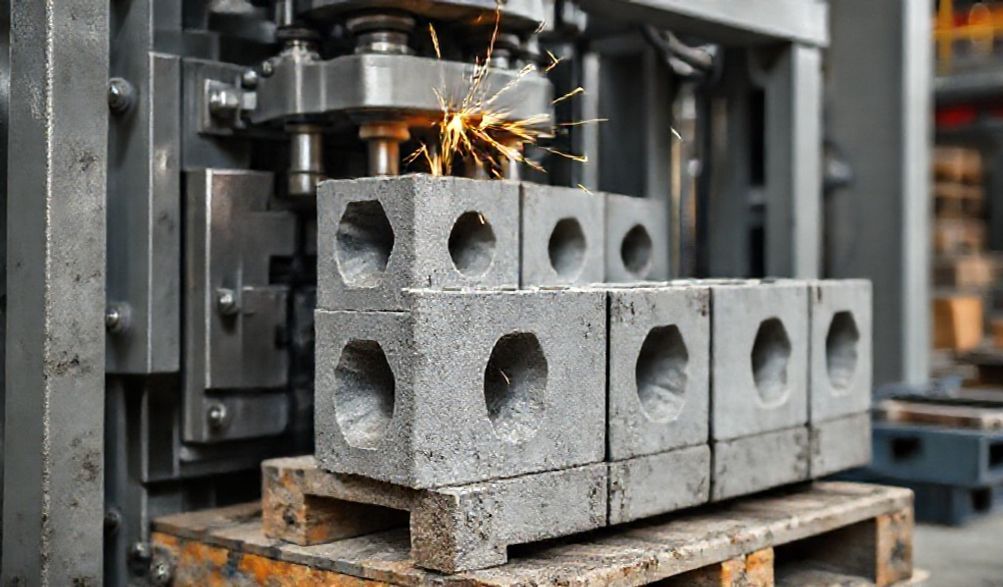
Ang Komprehensibong Gabay sa Makina ng Paggawa ng Hollow Blocks na Semento: Pagpili, Pagpapatakbo, at Gastos
Panimula
Ang pandaigdigang industriya ng konstruksiyon ay patuloy na nakikipagtagisan upang balansehin ang gastos, bilis, at tibay. Sa sentro ng hamong ito ay naroon ang isang pangunahing pangangailangan: abot-kayang, maaasahang materyales sa paggawa. Dito pumapasok ang karaniwang hollow block na yari sa kongkreto—isang batong-panulukan ng makabagong masonry na nag-aalok ng lakas, mahusay na pagkontrol ng init, at pagtitipid sa materyales. Ngunit sa likod ng bawat pare-pareho at de-kalidad na bloke ay may isang makina na ininhinyero para sa katumpakan at produktibidad. Para sa mga tagapagtayo, kontratista, at negosyante, ang pagpili ng tamang makina sa paggawa ng hollow block na yari sa kongkreto ay hindi lamang isang pagbili; ito ay isang mahalagang pamumuhunan para sa kinabukasan ng iyong mga proyekto o negosyo.
Ang gabay na ito ay buong-isang inihanda upang maging mapagkakatiwalaang sanggunian. Pinagsama-sama namin ang mga detalye ng industriya, pangunahing prinsipyo ng mechanical engineering, at subok na pamamaraan sa pagpapatakbo upang maging malinaw at praktikal. Ang mga kaalamang nakapaloob dito ay hango sa aktwal na mga parametro ng disenyo ng makinarya, pag-aaral ng kaso sa linya ng produksyon, at mga protokol sa pagpapanatili na siyang susi sa tagumpay sa pagmamanupaktura ng konstruksyon.
Malinaw ang aming layunin: bigyan kayo ng komprehensibo at mapagkakatiwalaang balangkas para sa pag-unawa, pagpili, at pagpapatakbo ng isang makina sa paggawa ng mga konkretong hollow block. Maging sinusuri man ninyo ang isang maliit na negosyo o pinalalaki ang isang pangunahing planta, gabayan kayo ng patnubay na ito upang matiyak na may sapat na kaalaman ang inyong pamumuhunan, episyente ang inyong produksyon, at kumikita ang inyong mga resulta.
Sasaklawin natin ang:
* Ang pangunahing mekanika at mga pakinabang ng paggawa ng hollow block.
* Isang detalyadong paghihiwalay ng mga uri ng makina—mula manual hanggang ganap na awtomatiko.
* Mahahalagang tampok na dapat suriin bago bumili.
* Pinakamahuhusay na kasanayan para sa operasyon at pagpapanatili upang mapahaba ang buhay ng makina.
* Isang malinaw na pagsusuri ng gastos at ROI upang suportahan ang iyong pagpaplano ng negosyo.
Pag-unawa sa Makina ng Paggawa ng Concrete Hollow Block
Bago sumisid sa mga detalye at supplier, mahalagang maunawaan kung ano ang ginagawa ng mga makinang ito at kung bakit napakahalaga ng kanilang produkto sa kontemporaryong konstruksyon.
Ano ang Makina sa Paggawa ng Hollow Block na Konkreto?
Ang makinang gumagawa ng hollow block na konkreto ay isang mekanisadong sistema na idinisenyo upang awtomatikong hubugin ang konkreto sa mga pamantayang hollow block. Pinapalitan nito ang hindi pantay at masusing-paggawang manwal na pamamaraan sa isang proseso na nagsisiguro ng pagkakapareho, densidad, at integridad ng estruktura sa pamamagitan ng kontroladong panginginig at presyon.
Ang pangunahing proseso ng produksyon ay karaniwang sumusunod sa mga yugtong ito:
1. Pagpapakain:Ang mga hilaw na materyales (semento, buhangin, aggregates) ay inilalagay sa isang hopper.
2. Paghahalo: Materials are blended with water to achieve a homogeneous, semi-dry concrete mix.
3. Paghuhulma:Ang timpla ay ipinapasok sa isang hulmang lukab sa ibabaw ng isang umiindayog na mesa.
4. Pagpapakintab: High-frequency vibration, often combined with hydraulic or mechanical pressure, removes air pockets and densely compacts the concrete.
5. Pag-eject at Pagpapahid: The newly formed block is ejected onto a pallet or the ground to begin the critical curing process, where it gains strength.
Why Hollow Blocks? Advantages in Modern Construction
The design of hollow blocks isn’t arbitrary; it delivers tangible engineering and economic benefits that drive their popularity in load-bearing masonry and infill walls.
- Kahusayan sa Materyal at Pagiging Epektibo sa Gastos: The hollow cores reduce the volume of concrete required per block, lowering material costs and the overall dead load on a structure.
- Insulasyong Termal at Akustiko: The air pockets within the blocks create natural barriers to heat and sound, contributing to energy-efficient and quieter buildings.
- Kahusayan sa Konstruksiyon: The voids provide convenient channels for running electrical conduits, plumbing pipes, and reinforcement bars, significantly speeding up the construction process.
- Reduced Structural Load: Their lighter weight compared to solid blocks allows for lighter, more economical foundation designs.
Mga Pangunahing Bahagi at Paano Sila Gumagana
Understanding the key components demystifies the machine and aids in troubleshooting and purchasing decisions.
- Hopper at Feeder: The entry point for raw materials, often equipped with a measuring system for consistent batch sizes.
- Panghalo: Blends cement, aggregates, and water to the precise consistency required for optimal compaction.
- Amag (o Hulmahan): The heart of the machine. This interchangeable steel box defines the block’s size and shape (e.g., 4″, 6″, 8″ blocks). Its quality dictates block finish and longevity.
- Vibrating Table & Press: A motor generates high-frequency vibration transmitted to the mold. In more advanced machines, a hydraulic press applies simultaneous downward pressure. This synergy is critical for achieving high-density, strong blocks.
- Sistema ng Kontrol Ranges from simple lever-operated mechanisms to programmable logic controllers (PLCs) that automate the entire cycle, ensuring repeatability.
- Pallet Feeder/Conveyor: Tagapakain ng Pallet / Konbeyor Supplies pallets for the blocks to be cured on (stationary plants) or moves blocks away from the machine.
Types of Concrete Hollow Block Making Machines
The market offers solutions for every scale of operation. Your choice fundamentally impacts your production capacity, labor needs, and capital investment.
Manu-mano kumpara sa Semi-Awto kumpara sa Ganap na Awto na Makina
| Feature | Manual Machine | Semi-Automatic Machine | Fully Automatic Machine |
| :— | :— | :— | :— |
| Kapasidad sa Produksyon | Low (200-500 blocks/day) | Medium (1000-3000 blocks/8hr shift) | High (5000-20,000+ blocks/8hr shift) |
| Labor Requirement | High (4-6 people) | Moderate (2-3 people) | Low (1-2 people for monitoring) |
| Paunang Puhunan | Low | Medium | High |
| Antas ng Automatisasyon | Human-powered operation, manual mixing. | Mechanized vibration and compaction; manual material feeding and block removal. | Fully automated cycle from feeding to block stacking; PLC-controlled. |
| Ideal Use Case | Very small projects, remote sites with no power. | Small-to-medium businesses, startups, block yards. | Large-scale block manufacturing plants, high-volume infrastructure projects. |
Guidance: A startup or small contractor might begin with a robust semi-automatic model to balance cost and output. A large developer or dedicated block supplier would prioritize the productivity and consistency of a fully automatic plant setup.
Mga Makina ng Paggawa ng Bloke na Nakatigil
These are the workhorses of fixed-location block manufacturing plants.
- Paglalarawan: Heavy-duty, high-output machines installed on a solid concrete foundation. They produce blocks on pallets, which are then moved to curing racks or chambers via forklift or conveyor systems.
- Mga Kalamangan:
- Highest production output and consistency.
- Superior block density and finish due to powerful, stable vibratory pressmga sistema.
- Can be integrated into automated production lines.
- Mga Disbentahe:
- Requires significant space for the machine, curing area, and storage.
- Higher initial capital investment.
- Requires pallets, which add to operational cost and logistics.
Mobile Block Making Machines (Egg-Laying Type)
These machines bring production directly to the job site.
- Paglalarawan: As the machine operates, it moves forward on rails or wheels, depositing (“laying”) freshly molded blocks directly onto a level ground surface, much like a chicken laying eggs.
- Mga Kalamangan:
- Eliminates the need for pallets, reducing a major cost component.
- Ideal for on-site production, cutting transport costs for blocks.
- Generally lower initial purchase price than stationary plants.
- Mga Disbentahe:
- More labor-intensive for block handling and ground preparation.
- Production output is typically lower and more weather-dependent.
- Block quality can be more variable due to less controlled curing conditions.
Key Features to Consider When Buying
Looking beyond the basic type, these features will determine your long-term satisfaction and profitability.
Kapasidad sa Produksiyon (Bloke Bawat Oras)
Don’t just look at the peak “blocks per hour” rating. Assess the sustainable 8-hour shift output. Calculate your required capacity based on:
* Project Demand: Average blocks needed per day/week for your contracts.
* Business Plan: Sales targets for a block manufacturing business.
* Future Growth: Consider a machine with 20-30% extra capacity to handle growth without immediate reinvestment.
Block Size and Mold Customization
- Karaniwang Sukat: Ensure the machine can produce the most in-demand sizes in your market (e.g., 4″, 6″, 8″ thick blocks).
- Palitanang Molde: The ability to quickly swap molds is essential for product diversification. Check the cost and availability of additional molds for pavers, curbstones, or solid blocks.
- Kalidad ng Molde: Opt for hardened steel molds. They resist wear longer, ensuring consistent block dimensions and a smooth finish over thousands of cycles.
Power Source: Electric, Diesel, or Hybrid?
- Kuryente: Cleaner, quieter, and lower operating cost per hour. Requires a stable, high-capacity power grid.
- Diesel: Offers complete independence from the grid, crucial for remote sites or regions with frequent power cuts. Higher fuel and maintenance costs.
- Hybrid: Offers flexibility to switch between power sources, providing a valuable backup but at a higher purchase price.
Automation Level and Control System
Higher automation directly impacts:
* Pagkakapare-pareho: PLC systems ensure every block receives identical vibration and pressure.
* Pagbabawas ng Basura: Precise material measurement minimizes spillage and rejects.
* Labor Skill Requirement: A fully automatic machine reduces physical labor but requires basic technical skills for monitoring and troubleshooting.
Machine Durability and After-Sales Support
This is the most critical factor for pagkakatiwalaan in your investment.
- Kalidad ng Pagkakagawa: Inspect the frame and critical components. Are they made from heavy-duty, reinforced steel? Thin-gauge steel will flex and wear quickly.
- Garantiya: A reputable supplier will offer a clear, comprehensive warranty (e.g., 1 year on the machine, 6 months on wear parts).
- Suporta Pagkatapos ng Benta: Ito ay hindi maaaring pag-usapan. Verify:
- Availability of spare parts locally or via fast shipping.
- Provision of detailed operation and maintenance manuals.
- Access to technical support (phone, online, or in-person).
- A common oversight is choosing a cheap machine from a supplier with no local presence, leading to catastrophic downtime when a simple part fails.
Operating and Maintaining Your Machine for Longevity
Your machine’s performance and lifespan are directly tied to how you operate and care for it.
The Production Process: Step-by-Step
- Paghahanda ng Hilaw na Materyal: Use clean, well-graded aggregates. A common starting mix ratio is 1 part cement : 6 parts sand : 4 parts gravel (aggregate). Water should be added to achieve a semi-dry mix that holds its shape when squeezed.
- Operation Cycle: The operator feeds the mix into the machine, initiates the cycle (vibration + compaction), and the block is ejected onto a pallet or the ground.
- Pagpapagaling: This is where blocks gain strength. Keep blocks moist and under cover (e.g., with plastic sheeting) for at least 7 days. Steam curing in a chamber can accelerate this to 24 hours for high-strength blocks.
Essential Safety Protocols
- Pagsasanay: Never allow untrained personnel to operate the machine.
- Kagamitang Pangkaligtasan (Personal Protective Equipment o PPE): Mandatory use of safety glasses, gloves, steel-toe boots, and hearing protection.
- Machine Guards: Ensure all moving parts, especially the vibration mechanism and press, are properly guarded. Lock-out/tag-out procedures must be followed for any maintenance.
Routine Maintenance Checklist
Preventive maintenance is far cheaper than emergency repairs.
- Daily: Clean the machine thoroughly at the end of each shift. Check for loose bolts and nuts. Inspect the hydraulic system for leaks.
- Weekly: Lubricate all moving parts as per the manual. Check the oil level in the vibration motor and hydraulic tank. Inspect mold liners for wear.
- Monthly: Tighten all major structural bolts. Check the alignment of the feeding system and conveyor. Test safety interlocks.
Troubleshooting Common Issues
- Poor Block Strength: Usually caused by incorrect water-cement ratio (too much water), insufficient vibration time, or weak concrete mix. Re-calibrate your mix and compaction cycle.
- Surface Cracks: Often due to improper curing (drying too quickly) or excessive vibration. Ensure blocks are kept moist and adjust vibration duration.
- Machine Jams: Caused by overfilling the mold, overly wet concrete, or foreign objects in the mix. Stop the machine, clear the obstruction, and adjust feeding.
Cost Analysis and Return on Investment (ROI)
A clear financial picture separates a hopeful venture from a viable business.
Breaking Down the Investment Cost
- Machine Price: Ranges from ~$5,000 for a basic manual machine to over $100,000 for a high-end fully automatic line.
- Auxiliary Costs: Don’t forget: cost of additional molds ($500-$2,000 each), installation/commissioning fees, and the initial stockpile of raw materials.
Operational Costs: Raw Materials, Labor, and Power
To find your cost per block, track:
* Material Cost: (Cement + Sand + Aggregate) per block.
* Labor Cost: Wages allocated per block produced.
* Utilities & Depreciation: Power/fuel consumption and machine depreciation per block.
* Halimbawa: If total costs sum to $0.50 per block and you sell it for $0.80, your gross profit margin is $0.30 per block.
Calculating Your Potential ROI
Use this simplified framework:
ROI Timeframe = Total Investment / (Monthly Profit from Block Sales)
Factors dramatically affecting ROI:
* Local Market Demand & Pricing: What is the selling price in your area?
* Kahusayan sa Pagpapatakbo: Can you achieve the machine’s rated output with minimal downtime?
* Sukat: Higher production spreads fixed costs (like labor) over more blocks, increasing profit margin.
A well-run semi-automatic operation in a market with good demand can often see a full return on investment within 12-24 months.
Mga Madalas Itanong (FAQ)
Q1: What is the average production capacity of a standard block making machine?
Isalin ang teksto sa Filipino. I-output LAMANG ang isinalin na teksto. Capacity varies wildly. A small semi-automatic machine may produce 1,000-2,000 blocks in an 8-hour shift, while a large fully automatic plant can produce 10,000+. The key is to discuss “sustainable daily output” with your supplier, not peak theoretical capacity.
Q2: Can I produce different block sizes and designs with one machine?
Isalin ang teksto sa Filipino. I-output LAMANG ang isinalin na teksto. Absolutely, through interchangeable molds. This is a major advantage. However, each mold is a separate purchase, and changing molds requires time (from 30 minutes to a few hours), which temporarily halts production.
Q3: What is the ideal concrete mix ratio for strong hollow blocks?
Isalin ang teksto sa Filipino. I-output LAMANG ang isinalin na teksto. A reliable starting point is a 1:6:4 ratio (Cement: Sand: 3/8″ Gravel). However, the “ideal” ratio depends on the quality and properties of your local sand and aggregates. We strongly recommend conducting trial mixes and compression tests to optimize for your specific materials and machine.
Q4: How much space is required to set up a block manufacturing plant?
Isalin ang teksto sa Filipino. I-output LAMANG ang isinalin na teksto. Consider three zones:
1. Production Shed: To house the machine (~300-500 sq. ft.).
2. Curing Area: A covered, level space 4-5 times larger than the production shed for blocks to gain strength.
3. Raw Material & Finished Block Storage: Additional open or covered space.
A micro plant might need 2,000 sq. ft., while a serious operation requires 10,000+ sq. ft.
Q5: How do I choose a reliable machine supplier?
Isalin ang teksto sa Filipino. I-output LAMANG ang isinalin na teksto. This is the most critical step for your pagkakatiwalaan and success.
* Check History & Reputation: How long has the company been in business? Search for independent reviews or complaints.
* Hilingin ang Mga Sanggunian ng Kliyente Ask for contacts of past buyers, preferably in your region, and call them.
* Verify Quality Certifications: Do they have ISO or other relevant manufacturing quality certifications?
* Inspect Warranty & Support Terms: Are they clear, fair, and in writing? Is there a local service agent?
* Visit if Possible: If feasible, visit the supplier’s factory or a client’s working plant to see the machine in action. The quality of assembly and customer service will be evident.
Konklusyon
Choosing and operating a concrete hollow block making machine is a significant technical and financial decision. The path to success lies in carefully matching the machine type—be it manual, semi-automatic, or fully automatic—to your specific production needs and budget. Prioritizing build quality, mold versatility, and, above all, the after-sales support from your supplier will protect your investment for years to come.
Remember, understanding the true operational costs, from raw materials to preventive maintenance, is just as important as the purchase price. This guide has provided the factual information and operational framework to ground your research.
Your Call to Action: Use this guide as a checklist when evaluating machines and speaking with suppliers. Demand detailed demonstrations, scrutinize warranty documents, and always start with a solid business and production plan. With thorough preparation, your investment in a concrete hollow block making machine can become a cornerstone of your construction efficiency or business growth.
<