
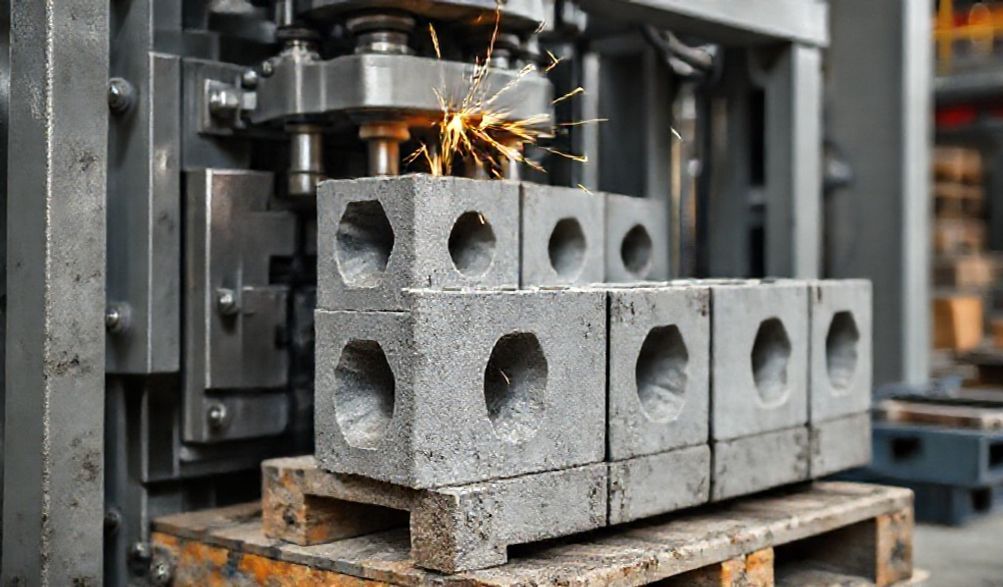
O Guia Definitivo para Máquinas de Fabricação de Blocos de Concreto Vazados: Seleção, Operação e Custo
Introdução
A indústria global da construção está em uma corrida perpétua para equilibrar custo, velocidade e durabilidade. No cerne desse desafio está uma necessidade fundamental: materiais de construção acessíveis e confiáveis. Eis que surge o humilde bloco de concreto vazado — uma pedra angular da alvenaria moderna que oferece resistência, eficiência térmica e economia de material. Mas por trás de cada bloco consistente e de alta qualidade há uma máquina projetada para precisão e produtividade. Para construtores, empreiteiros e empresários, selecionar a máquina correta para fabricar blocos de concreto vazados não é apenas uma compra; é um investimento crucial para o futuro de seus projetos ou negócios.
Este guia definitivo foi projetado desde a base para servir como seu recurso confiável. Sintetizamos especificações do setor, princípios fundamentais da engenharia mecânica e as melhores práticas operacionais conquistadas com esforço, para cortar o ruído de marketing. As percepções aqui apresentadas são extraídas de parâmetros reais de projeto de maquinário, estudos de caso de linhas de produção e protocolos de manutenção que definem o sucesso na fabricação da construção civil.
Nosso propósito é claro: fornecer a você uma estrutura abrangente e confiável para compreender, selecionar e operar uma máquina de fabricar blocos de concreto vazados. Seja você que está avaliando um empreendimento de pequena escala ou ampliando uma grande fábrica, este guia ajudará a garantir que seu investimento seja bem fundamentado, sua produção seja eficiente e seus resultados sejam lucrativos.
Nós abordaremos:
* A mecânica fundamental e as vantagens da produção de blocos vazados.
* Uma análise detalhada dos tipos de máquinas—do manual ao totalmente automático.
* Recursos críticos para examinar antes de comprar.
* Melhores práticas de operação e manutenção para maximizar a vida útil da máquina.
* Uma análise transparente de custos e ROI para fundamentar seu planejamento de negócios.
Compreendendo Máquinas para Fabricação de Blocos de Concreto Vazados
Antes de mergulhar em especificações e fornecedores, é crucial entender o que essas máquinas fazem e por que seu produto é tão valioso na construção contemporânea.
O que é uma Máquina de Fabricar Blocos de Concreto Vazados?
Uma máquina de fabricar blocos de concreto vazados é um sistema mecanizado projetado para automatizar a moldagem de concreto em blocos vazados padronizados. Ela substitui métodos manuais inconsistentes e intensivos em mão de obra por um processo que garante uniformidade, densidade e integridade estrutural por meio de vibração e pressão controladas.
O processo de produção central geralmente segue os estágios:
1. Alimentação:Matérias-primas (cimento, areia, agregados) são carregadas em um funil.
2. Mistura:Os materiais são misturados com água para obter uma mistura de concreto homogênea e semi-seca.
3. Moldagem:A mistura é alimentada em uma cavidade de molde sobre uma mesa vibratória.
4. Compactação:Vibração de alta frequência, frequentemente combinada com pressão hidráulica ou mecânica, remove bolsas de ar e compacta o concreto de forma densa.
5. Ejeção e Cura:O bloco recém-formado é ejetado sobre um palete ou no chão para iniciar o processo crítico de cura, onde ganha resistência.
Por que Blocos Vazados? Vantagens na Construção Moderna
O design dos blocos vazados não é arbitrário; ele oferece benefícios tangíveis de engenharia e economia que impulsionam sua popularidade.alvenaria estruturale paredes de preenchimento.
- Eficiência de Materiais & Custo-Benefício:Os núcleos vazados reduzem o volume de concreto necessário por bloco, diminuindo os custos de material e a carga permanente total em uma estrutura.
- Isolamento Térmico e Acústico:As bolsas de ar dentro dos blocos criam barreiras naturais contra o calor e o som, contribuindo para edifícios mais eficientes em termos energéticos e mais silenciosos.
- Eficiência na Construção:Os vazios fornecem canais convenientes para a passagem de conduítes elétricos, tubulações hidráulicas e barras de reforço, acelerando significativamente o processo de construção.
- Carga Estrutural ReduzidaSeu peso mais leve em comparação com blocos sólidos permite fundações mais leves e econômicas.
Componentes Principais e Como Eles Funcionam
Compreender os componentes principais desmistifica a máquina e auxilia na resolução de problemas e nas decisões de compra.
- Alimentador e Dosador: The entry point for raw materials, often equipped with a measuring system for consistent batch sizes.
- Misturador: Blends cement, aggregates, and water to the precise consistency required for optimal compaction.
- Mofo (ou Morra): The heart of the machine. This interchangeable steel box defines the block’s size and shape (e.g., 4″, 6″, 8″ blocks). Its quality dictates block finish and longevity.
- Vibrating Table & Press: A motor generates high-frequency vibration transmitted to the mold. In more advanced machines, a hydraulic press applies simultaneous downward pressure. This synergy is critical for achieving high-density, strong blocks.
- Sistema de Controle: Ranges from simple lever-operated mechanisms to programmable logic controllers (PLCs) that automate the entire cycle, ensuring repeatability.
- Alimentador/Transportador de Paletes: Supplies pallets for the blocks to be cured on (stationary plants) or moves blocks away from the machine.
Types of Concrete Hollow Block Making Machines
The market offers solutions for every scale of operation. Your choice fundamentally impacts your production capacity, labor needs, and capital investment.
Máquinas Manuais vs. Semiautomáticas vs. Totalmente Automáticas
| Característica | Máquina Manual | Máquina Semiautomática | Máquina Totalmente Automática |
| :— | :— | :— | :— |
| Capacidade de Produção | Low (200-500 blocks/day) | Medium (1000-3000 blocks/8hr shift) | High (5000-20,000+ blocks/8hr shift) |
| Requerimento de Mão de Obra | High (4-6 people) | Moderate (2-3 people) | Low (1-2 people for monitoring) |
| Investimento Inicial | Low | Medium | High |
| Automation Level | Human-powered operation, manual mixing. | Mechanized vibration and compaction; manual material feeding and block removal. | Fully automated cycle from feeding to block stacking; PLC-controlled. |
| Ideal Use Case | Very small projects, remote sites with no power. | Small-to-medium businesses, startups, block yards. | Large-scale block manufacturing plants, high-volume infrastructure projects. |
Guidance: A startup or small contractor might begin with a robust semi-automatic model to balance cost and output. A large developer or dedicated block supplier would prioritize the productivity and consistency of a fully automatic plant setup.
Máquinas Estacionárias para Fabricação de Blocos
These are the workhorses of fixed-location block manufacturing plants.
- Descrição: Heavy-duty, high-output machines installed on a solid concrete foundation. They produce blocks on pallets, which are then moved to curing racks or chambers via forklift or conveyor systems.
- Prós:
- Highest production output and consistency.
- Superior block density and finish due to powerful, stable vibratory presssistemas.
- Can be integrated into automated production lines.
- Contras:
- Requires significant space for the machine, curing area, and storage.
- Higher initial capital investment.
- Requires pallets, which add to operational cost and logistics.
Mobile Block Making Machines (Egg-Laying Type)
These machines bring production directly to the job site.
- Descrição: As the machine operates, it moves forward on rails or wheels, depositing (“laying”) freshly molded blocks directly onto a level ground surface, much like a chicken laying eggs.
- Prós:
- Eliminates the need for pallets, reducing a major cost component.
- Ideal for on-site production, cutting transport costs for blocks.
- Generally lower initial purchase price than stationary plants.
- Contras:
- More labor-intensive for block handling and ground preparation.
- Production output is typically lower and more weather-dependent.
- Block quality can be more variable due to less controlled curing conditions.
Key Features to Consider When Buying
Looking beyond the basic type, these features will determine your long-term satisfaction and profitability.
Capacidade de Produção (Blocos Por Hora)
Don’t just look at the peak “blocks per hour” rating. Assess the sustainable 8-hour shift output. Calculate your required capacity based on:
* Project Demand: Average blocks needed per day/week for your contracts.
* Business Plan: Sales targets for a block manufacturing business.
* Crescimento Futuro: Consider a machine with 20-30% extra capacity to handle growth without immediate reinvestment.
Block Size and Mold Customization
- Tamanhos Padrão: Ensure the machine can produce the most in-demand sizes in your market (e.g., 4″, 6″, 8″ thick blocks).
- Moldes Intercambiáveis: The ability to quickly swap molds is essential for product diversification. Check the cost and availability of additional molds for pavers, curbstones, or solid blocks.
- Qualidade do Molde: Opt for hardened steel molds. They resist wear longer, ensuring consistent block dimensions and a smooth finish over thousands of cycles.
Power Source: Electric, Diesel, or Hybrid?
- Elétrico: Cleaner, quieter, and lower operating cost per hour. Requires a stable, high-capacity power grid.
- Diesel: Offers complete independence from the grid, crucial for remote sites or regions with frequent power cuts. Higher fuel and maintenance costs.
- Híbrido: Offers flexibility to switch between power sources, providing a valuable backup but at a higher purchase price.
Automation Level and Control System
Higher automation directly impacts:
* Consistência: PLC systems ensure every block receives identical vibration and pressure.
* Redução de Resíduos: Precise material measurement minimizes spillage and rejects.
* Labor Skill Requirement: A fully automatic machine reduces physical labor but requires basic technical skills for monitoring and troubleshooting.
Machine Durability and After-Sales Support
This is the most critical factor for confiabilidade in your investment.
- Qualidade de Construção: Inspect the frame and critical components. Are they made from heavy-duty, reinforced steel? Thin-gauge steel will flex and wear quickly.
- Garantia: A reputable supplier will offer a clear, comprehensive warranty (e.g., 1 year on the machine, 6 months on wear parts).
- Suporte Pós-Venda: Isso não é negociável. Verify:
- Availability of spare parts locally or via fast shipping.
- Provision of detailed operation and maintenance manuals.
- Access to technical support (phone, online, or in-person).
- A common oversight is choosing a cheap machine from a supplier with no local presence, leading to catastrophic downtime when a simple part fails.
Operating and Maintaining Your Machine for Longevity
Your machine’s performance and lifespan are directly tied to how you operate and care for it.
The Production Process: Step-by-Step
- Preparação de Matérias-Primas: Use clean, well-graded aggregates. A common starting mix ratio is 1 part cement : 6 parts sand : 4 parts gravel (aggregate). Water should be added to achieve a semi-dry mix that holds its shape when squeezed.
- Operation Cycle: The operator feeds the mix into the machine, initiates the cycle (vibration + compaction), and the block is ejected onto a pallet or the ground.
- Cura: This is where blocks gain strength. Keep blocks moist and under cover (e.g., with plastic sheeting) for at least 7 days. Steam curing in a chamber can accelerate this to 24 hours for high-strength blocks.
Essential Safety Protocols
- Treinamento: Never allow untrained personnel to operate the machine.
- Equipamento de Proteção Individual (EPI): Mandatory use of safety glasses, gloves, steel-toe boots, and hearing protection.
- Machine Guards: Ensure all moving parts, especially the vibration mechanism and press, are properly guarded. Lock-out/tag-out procedures must be followed for any maintenance.
Routine Maintenance Checklist
Preventive maintenance is far cheaper than emergency repairs.
- Diário: Clean the machine thoroughly at the end of each shift. Check for loose bolts and nuts. Inspect the hydraulic system for leaks.
- Semanal: Lubricate all moving parts as per the manual. Check the oil level in the vibration motor and hydraulic tank. Inspect mold liners for wear.
- Mensalmente: Tighten all major structural bolts. Check the alignment of the feeding system and conveyor. Test safety interlocks.
Solução de Problemas Comuns
- Poor Block Strength: Usually caused by incorrect water-cement ratio (too much water), insufficient vibration time, or weak concrete mix. Re-calibrate your mix and compaction cycle.
- Surface Cracks: Often due to improper curing (drying too quickly) or excessive vibration. Ensure blocks are kept moist and adjust vibration duration.
- Machine Jams: Caused by overfilling the mold, overly wet concrete, or foreign objects in the mix. Stop the machine, clear the obstruction, and adjust feeding.
Cost Analysis and Return on Investment (ROI)
A clear financial picture separates a hopeful venture from a viable business.
Breaking Down the Investment Cost
- Machine Price: Ranges from ~$5,000 for a basic manual machine to over $100,000 for a high-end fully automatic line.
- Auxiliary Costs: Don’t forget: cost of additional molds ($500-$2,000 each), installation/commissioning fees, and the initial stockpile of raw materials.
Operational Costs: Raw Materials, Labor, and Power
To find your cost per block, track:
* Material Cost: (Cement + Sand + Aggregate) per block.
* Labor Cost: Wages allocated per block produced.
* Utilities & Depreciation: Power/fuel consumption and machine depreciation per block.
* Exemplo: If total costs sum to $0.50 per block and you sell it for $0.80, your gross profit margin is $0.30 per block.
Calculating Your Potential ROI
Use this simplified framework:
ROI Timeframe = Total Investment / (Monthly Profit from Block Sales)
Factors dramatically affecting ROI:
* Local Market Demand & Pricing: What is the selling price in your area?
* Eficiência Operacional: Can you achieve the machine’s rated output with minimal downtime?
* Escala: Higher production spreads fixed costs (like labor) over more blocks, increasing profit margin.
A well-run semi-automatic operation in a market with good demand can often see a full return on investment within 12-24 months.
Perguntas Frequentes (FAQ)
Q1: What is the average production capacity of a standard block making machine?
A: Capacity varies wildly. A small semi-automatic machine may produce 1,000-2,000 blocks in an 8-hour shift, while a large fully automatic plant can produce 10,000+. The key is to discuss “sustainable daily output” with your supplier, not peak theoretical capacity.
Q2: Can I produce different block sizes and designs with one machine?
A: Absolutely, through interchangeable molds. This is a major advantage. However, each mold is a separate purchase, and changing molds requires time (from 30 minutes to a few hours), which temporarily halts production.
Q3: What is the ideal concrete mix ratio for strong hollow blocks?
A: A reliable starting point is a 1:6:4 ratio (Cement: Sand: 3/8″ Gravel). However, the “ideal” ratio depends on the quality and properties of your local sand and aggregates. We strongly recommend conducting trial mixes and compression tests to optimize for your specific materials and machine.
Q4: How much space is required to set up a block manufacturing plant?
A: Consider three zones:
1. Production Shed: To house the machine (~300-500 sq. ft.).
2. Curing Area: A covered, level space 4-5 times larger than the production shed for blocks to gain strength.
3. Raw Material & Finished Block Storage: Additional open or covered space.
A micro plant might need 2,000 sq. ft., while a serious operation requires 10,000+ sq. ft.
Q5: How do I choose a reliable machine supplier?
A: This is the most critical step for your confiabilidade and success.
* Check History & Reputation: How long has the company been in business? Search for independent reviews or complaints.
* Request Client References: Ask for contacts of past buyers, preferably in your region, and call them.
* Verify Quality Certifications: Do they have ISO or other relevant manufacturing quality certifications?
* Inspect Warranty & Support Terms: Are they clear, fair, and in writing? Is there a local service agent?
* Visit if Possible: If feasible, visit the supplier’s factory or a client’s working plant to see the machine in action. The quality of assembly and customer service will be evident.
Conclusão
Choosing and operating a concrete hollow block making machine is a significant technical and financial decision. The path to success lies in carefully matching the machine type—be it manual, semi-automatic, or fully automatic—to your specific production needs and budget. Prioritizing build quality, mold versatility, and, above all, the after-sales support from your supplier will protect your investment for years to come.
Remember, understanding the true operational costs, from raw materials to preventive maintenance, is just as important as the purchase price. This guide has provided the factual information and operational framework to ground your research.
Your Call to Action: Use this guide as a checklist when evaluating machines and speaking with suppliers. Demand detailed demonstrations, scrutinize warranty documents, and always start with a solid business and production plan. With thorough preparation, your investment in a concrete hollow block making machine can become a cornerstone of your construction efficiency or business growth.
<