
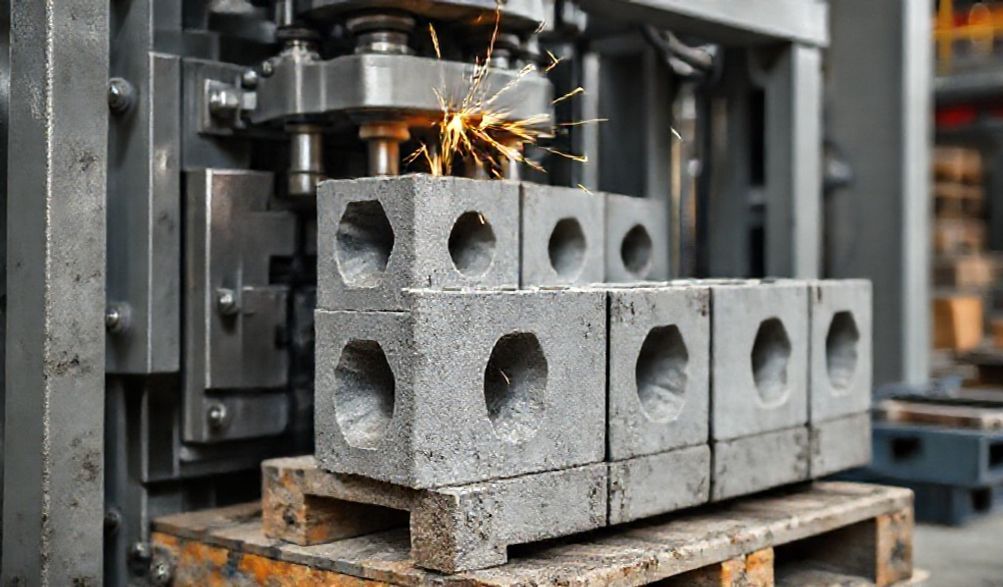
الدليل الشامل لآلات صناعة الطوب المجوف الخرساني: الاختيار، التشغيل، والتكلفة
مقدمة
تسابق صناعة البناء العالمية باستمرار لتحقيق التوازن بين التكلفة والسرعة والمتانة. وفي صميم هذا التحدي تكمن حاجة أساسية: مواد بناء ميسورة التكلفة وموثوقة. وهنا يأتي دور الطوب الخرساني المجوف المتواضع - حجر الزاوية في البناء الحديث الذي يوفر القوة والكفاءة الحرارية واقتصادية المواد. ولكن وراء كل طوبة عالية الجودة ومتسقة، توجد آلة مصممة للدقة والإنتاجية. بالنسبة للبنائين والمقاولين ورجال الأعمال، فإن اختيار آلة صنع الطوب الخرساني المجوف المناسبة ليس مجرد عملية شراء؛ بل هو استثناء محوري في مستقبل مشاريعك أو أعمالك.
هذا الدليل الشامل مُصمَّم من الأساس ليكون مصدرك الموثوق. لقد دمجنا المواصفات الصناعية، ومبادئ الهندسة الميكانيكية الأساسية، وأفضل الممارسات التشغيلية المكتسبة بصعوبة لاختراق ضجيج التسويق. الاستنتاجات هنا مستمدة من معايير تصميم الآلات الواقعية، ودراسات حالة خطوط الإنتاج، وبروتوكولات الصيانة التي تحدد النجاح في التصنيع الإنشائي.
هدفنا واضح: أن نزودك بإطار عمل شامل وموثوق لفهم واختيار وتشغيل آلة صنع الطوب الخرساني المجوف. سواء كنت تقيم مشروعًا صغيرًا النطاق أو توسع نطاق مصنع كبير، سيساعدك هذا الدليل على ضمان أن يكون استثمارك مدروسًا، وإنتاجك فعالًا، ونتائجك مربحة.
سوف نغطي:
* الميكانيكا الأساسية ومزايا إنتاج البلوك المجوف.
* تفصيل مفصل لأنواع الآلات - من اليدوية إلى الأوتوماتيكية بالكامل.
* الميزات الحرجة التي يجب فحصها قبل الشراء.
أفضل الممارسات للتشغيل والصيانة لتعظيم عمر الآلة.
* تحليل تكلفة وعائد استثمار شفاف لتأسيس تخطيط عملك على أرضية صلبة.
فهم آلات صناعة الطوب المجوف الخرساني
قبل الخوض في المواصفات والموردين، من الضروري فهم ما تفعله هذه الآلات ولماذا يعد منتجها قيماً جداً في البناء المعاصر.
ما هي آلة صنع البلوك الخرساني المجوف؟
آلة صنع البلوك الخرساني المجوف هي نظام ميكانيكي مصمم لأتمتة تشكيل الخرسانة إلى بلوك مجوف قياسي. وهي تحل محل الطرق اليدوية غير المتسقة والمكثفة العمالة بعملية تضمن الانتظام والكثافة والسلامة الهيكلية من خلال التحكم في الاهتزاز والضغط.
تتبع عملية الإنتاج الأساسية عادةً المراحل التالية:
1. التغذية:يتم تحميل المواد الخام (الأسمنت، الرمل، الركام) في قادوس.
2. خلط:يتم خلط المواد مع الماء للحصول على خليط خرساني متجانس وشبه جاف.
3. صبيتم تغذية الخليط في تجويف القالب على طاولة اهتزازية.
4. الضغط:الاهتزاز عالي التردد، غالباً ما يقترن بالضغط الهيدروليكي أو الميكانيكي، يزيل جيوب الهواء ويُكثف الخرسانة بشكل متماسك.
5. الطرد والمعالجة:يتم إخراج البلوكة المشكلة حديثًا على منصة أو على الأرض لبدء عملية المعالجة الحرجة، حيث تكتسب قوتها.
لماذا البلوكات الخرسانية؟ مزاياها في البناء الحديث
تصميم البلوكات المجوفة ليس اعتباطياً؛ فهو يوفر فوائد هندسية واقتصادية ملموسة تدفع لانتشارها الواسع.الحِمل الحائط الحجريوالجدران المملوءة.
- كفاءة المواد وفعالية التكلفةتقلل القلوب المجوفة من حجم الخرسانة المطلوبة لكل كتلة، مما يقلل من تكاليف المواد والحمل الميت الإجمالي على الهيكل.
- العزل الحراري والصوتي:تخلق جيوب الهواء داخل الكتل حواجز طبيعية للحرارة والصوت، مما يسهم في تحقيق مبانٍ موفرة للطاقة وأكثر هدوءًا.
- كفاءة البناء:توفر الفراغات قنوات ملائمة لتمرير القنوات الكهربائية وأنابيب السباكة وقضبان التسليح، مما يسرع بشكل كبير عملية البناء.
- تقليل الحمل الهيكلي:وزنها الخفيف مقارنة بالكتل الصلبة يسمح بتصميم أساسات أخف وأكثر اقتصادية.
المكونات الأساسية وكيفية عملها
فهم المكونات الرئيسية يزيل الغموض عن الجهاز ويساعد في استكشاف الأخطاء وإصلاحها واتخاذ قرارات الشراء.
- هوبر ومغذي The entry point for raw materials, often equipped with a measuring system for consistent batch sizes.
- الخلاط: Blends cement, aggregates, and water to the precise consistency required for optimal compaction.
- قالب (أو يموت): The heart of the machine. This interchangeable steel box defines the block’s size and shape (e.g., 4″, 6″, 8″ blocks). Its quality dictates block finish and longevity.
- Vibrating Table & Press: A motor generates high-frequency vibration transmitted to the mold. In more advanced machines, a hydraulic press applies simultaneous downward pressure. This synergy is critical for achieving high-density, strong blocks.
- نظام التحكم Ranges from simple lever-operated mechanisms to programmable logic controllers (PLCs) that automate the entire cycle, ensuring repeatability.
- مُغَذِّي/نَاقِل البَالِت Supplies pallets for the blocks to be cured on (stationary plants) or moves blocks away from the machine.
Types of Concrete Hollow Block Making Machines
The market offers solutions for every scale of operation. Your choice fundamentally impacts your production capacity, labor needs, and capital investment.
الآلات اليدوية مقابل الآلات شبه الأوتوماتيكية مقابل الآلات الأوتوماتيكية بالكامل
| الميزة | الآلة اليدوية | الآلة شبه الأوتوماتيكية | الآلة الأوتوماتيكية بالكامل |
| :— | :— | :— | :— |
| القدرة الإنتاجية | Low (200-500 blocks/day) | Medium (1000-3000 blocks/8hr shift) | High (5000-20,000+ blocks/8hr shift) |
| متطلبات العمالة | High (4-6 people) | Moderate (2-3 people) | Low (1-2 people for monitoring) |
| الاستثمار الأولي | Low | Medium | High |
| Automation Level | Human-powered operation, manual mixing. | Mechanized vibration and compaction; manual material feeding and block removal. | Fully automated cycle from feeding to block stacking; PLC-controlled. |
| Ideal Use Case | Very small projects, remote sites with no power. | Small-to-medium businesses, startups, block yards. | Large-scale block manufacturing plants, high-volume infrastructure projects. |
إرشاد A startup or small contractor might begin with a robust semi-automatic model to balance cost and output. A large developer or dedicated block supplier would prioritize the productivity and consistency of a fully automatic plant setup.
آلات صناعة الطوب الثابتة
These are the workhorses of fixed-location block manufacturing plants.
- الوصف: Heavy-duty, high-output machines installed on a solid concrete foundation. They produce blocks on pallets, which are then moved to curing racks or chambers via forklift or conveyor systems.
- مزايا:
- Highest production output and consistency.
- Superior block density and finish due to powerful, stable vibratory pressأنظمة.
- Can be integrated into automated production lines.
- سلبيات:
- Requires significant space for the machine, curing area, and storage.
- Higher initial capital investment.
- Requires pallets, which add to operational cost and logistics.
Mobile Block Making Machines (Egg-Laying Type)
These machines bring production directly to the job site.
- الوصف: As the machine operates, it moves forward on rails or wheels, depositing (“laying”) freshly molded blocks directly onto a level ground surface, much like a chicken laying eggs.
- مزايا:
- Eliminates the need for pallets, reducing a major cost component.
- Ideal for on-site production, cutting transport costs for blocks.
- Generally lower initial purchase price than stationary plants.
- سلبيات:
- More labor-intensive for block handling and ground preparation.
- الإنتاج الناتج is typically lower and more weather-dependent.
- Block quality can be more variable due to less controlled curing conditions.
Key Features to Consider When Buying
Looking beyond the basic type, these features will determine your long-term satisfaction and profitability.
القدرة الإنتاجية (الكتل في الساعة)
Don’t just look at the peak “blocks per hour” rating. Assess the sustainable 8-hour shift output. Calculate your required capacity based on:
* Project Demand: Average blocks needed per day/week for your contracts.
* Business Plan: Sales targets for a block manufacturing business.
* النمو المستقبلي: Consider a machine with 20-30% extra capacity to handle growth without immediate reinvestment.
Block Size and Mold Customization
- المقاسات القياسية: Ensure the machine can produce the most in-demand sizes in your market (e.g., 4″, 6″, 8″ thick blocks).
- القوالب القابلة للتبديل The ability to quickly swap molds is essential for product diversification. Check the cost and availability of additional molds for pavers, curbstones, or solid blocks.
- جودة القالب: Opt for hardened steel molds. They resist wear longer, ensuring consistent block dimensions and a smooth finish over thousands of cycles.
مصدر الطاقة: كهربائي، ديزل، أم هجين؟
- كهربائي Cleaner, quieter, and lower operating cost per hour. Requires a stable, high-capacity power grid.
- ديزل Offers complete independence from the grid, crucial for remote sites or regions with frequent power cuts. Higher fuel and maintenance costs.
- هجين: Offers flexibility to switch between power sources, providing a valuable backup but at a higher purchase price.
Automation Level and Control System
Higher automation directly impacts:
* الاتساق PLC systems ensure every block receives identical vibration and pressure.
* تقليل النفايات: Precise material measurement minimizes spillage and rejects.
* Labor Skill Requirement: A fully automatic machine reduces physical labor but requires basic technical skills for monitoring and troubleshooting.
Machine Durability and After-Sales Support
This is the most critical factor for الثقة in your investment.
- جودة التصنيع: Inspect the frame and critical components. Are they made from heavy-duty, reinforced steel? Thin-gauge steel will flex and wear quickly.
- الضمان: A reputable supplier will offer a clear, comprehensive warranty (e.g., 1 year on the machine, 6 months on wear parts).
- دعم ما بعد البيع هذا غير قابل للتفاوض. Verify:
- Availability of spare parts locally or via fast shipping.
- Provision of detailed operation and maintenance manuals.
- Access to technical support (phone, online, or in-person).
- A common oversight is choosing a cheap machine from a supplier with no local presence, leading to catastrophic downtime when a simple part fails.
Operating and Maintaining Your Machine for Longevity
Your machine’s performance and lifespan are directly tied to how you operate and care for it.
The Production Process: Step-by-Step
- تحضير المواد الخام: Use clean, well-graded aggregates. A common starting mix ratio is 1 part cement : 6 parts sand : 4 parts gravel (aggregate). Water should be added to achieve a semi-dry mix that holds its shape when squeezed.
- Operation Cycle: The operator feeds the mix into the machine, initiates the cycle (vibration + compaction), and the block is ejected onto a pallet or the ground.
- التداوي This is where blocks gain strength. Keep blocks moist and under cover (e.g., with plastic sheeting) for at least 7 days. Steam curing in a chamber can accelerate this to 24 hours for high-strength blocks.
Essential Safety Protocols
- تدريب Never allow untrained personnel to operate the machine.
- معدات الحماية الشخصية (PPE): Mandatory use of safety glasses, gloves, steel-toe boots, and hearing protection.
- Machine Guards: Ensure all moving parts, especially the vibration mechanism and press, are properly guarded. Lock-out/tag-out procedures must be followed for any maintenance.
Routine Maintenance Checklist
Preventive maintenance is far cheaper than emergency repairs.
- Daily: Clean the machine thoroughly at the end of each shift. Check for loose bolts and nuts. Inspect the hydraulic system for leaks.
- Weekly: Lubricate all moving parts as per the manual. Check the oil level in the vibration motor and hydraulic tank. Inspect mold liners for wear.
- Monthly: Tighten all major structural bolts. Check the alignment of the feeding system and conveyor. Test safety interlocks.
Troubleshooting Common Issues
- Poor Block Strength: Usually caused by incorrect water-cement ratio (too much water), insufficient vibration time, or weak concrete mix. Re-calibrate your mix and compaction cycle.
- Surface Cracks: Often due to improper curing (drying too quickly) or excessive vibration. Ensure blocks are kept moist and adjust vibration duration.
- Machine Jams: Caused by overfilling the mold, overly wet concrete, or foreign objects in the mix. Stop the machine, clear the obstruction, and adjust feeding.
Cost Analysis and Return on Investment (ROI)
A clear financial picture separates a hopeful venture from a viable business.
Breaking Down the Investment Cost
- Machine Price: Ranges from ~$5,000 for a basic manual machine to over $100,000 for a high-end fully automatic line.
- Auxiliary Costs: Don’t forget: cost of additional molds ($500-$2,000 each), installation/commissioning fees, and the initial stockpile of raw materials.
Operational Costs: Raw Materials, Labor, and Power
To find your cost per block, track:
* Material Cost: (Cement + Sand + Aggregate) per block.
* Labor Cost: Wages allocated per block produced.
* Utilities & Depreciation: Power/fuel consumption and machine depreciation per block.
* مثال: If total costs sum to $0.50 per block and you sell it for $0.80, your gross profit margin is $0.30 per block.
Calculating Your Potential ROI
Use this simplified framework:
ROI Timeframe = Total Investment / (Monthly Profit from Block Sales)
Factors dramatically affecting ROI:
* Local Market Demand & Pricing: What is the selling price in your area?
* الكفاءة التشغيلية: Can you achieve the machine’s rated output with minimal downtime?
* مقياس Higher production spreads fixed costs (like labor) over more blocks, increasing profit margin.
A well-run semi-automatic operation in a market with good demand can often see a full return on investment within 12-24 months.
الأسئلة الشائعة (FAQ)
Q1: What is the average production capacity of a standard block making machine?
أ: Capacity varies wildly. A small semi-automatic machine may produce 1,000-2,000 blocks in an 8-hour shift, while a large fully automatic plant can produce 10,000+. The key is to discuss “sustainable daily output” with your supplier, not peak theoretical capacity.
Q2: Can I produce different block sizes and designs with one machine?
أ: Absolutely, through interchangeable molds. This is a major advantage. However, each mold is a separate purchase, and changing molds requires time (from 30 minutes to a few hours), which temporarily halts production.
Q3: What is the ideal concrete mix ratio for strong hollow blocks?
أ: A reliable starting point is a 1:6:4 ratio (Cement: Sand: 3/8″ Gravel). However, the “ideal” ratio depends on the quality and properties of your local sand and aggregates. We strongly recommend conducting trial mixes and compression tests to optimize for your specific materials and machine.
Q4: How much space is required to set up a block manufacturing plant?
أ: Consider three zones:
1. Production Shed: To house the machine (~300-500 sq. ft.).
2. Curing Area: A covered, level space 4-5 times larger than the production shed for blocks to gain strength.
3. Raw Material & Finished Block Storage: Additional open or covered space.
A micro plant might need 2,000 sq. ft., while a serious operation requires 10,000+ sq. ft.
Q5: How do I choose a reliable machine supplier?
أ: This is the most critical step for your الثقة and success.
* Check History & Reputation: How long has the company been in business? Search for independent reviews or complaints.
* Request Client References: Ask for contacts of past buyers, preferably in your region, and call them.
* Verify Quality Certifications: Do they have ISO or other relevant manufacturing quality certifications?
* Inspect Warranty & Support Terms: Are they clear, fair, and in writing? Is there a local service agent?
* Visit if Possible: If feasible, visit the supplier’s factory or a client’s working plant to see the machine in action. The quality of assembly and customer service will be evident.
خاتمة
Choosing and operating a concrete hollow block making machine is a significant technical and financial decision. The path to success lies in carefully matching the machine type—be it manual, semi-automatic, or fully automatic—to your specific production needs and budget. Prioritizing build quality, mold versatility, and, above all, the after-sales support from your supplier will protect your investment for years to come.
Remember, understanding the true operational costs, from raw materials to preventive maintenance, is just as important as the purchase price. This guide has provided the factual information and operational framework to ground your research.
Your Call to Action: Use this guide as a checklist when evaluating machines and speaking with suppliers. Demand detailed demonstrations, scrutinize warranty documents, and always start with a solid business and production plan. With thorough preparation, your investment in a concrete hollow block making machine can become a cornerstone of your construction efficiency or business growth.
<