
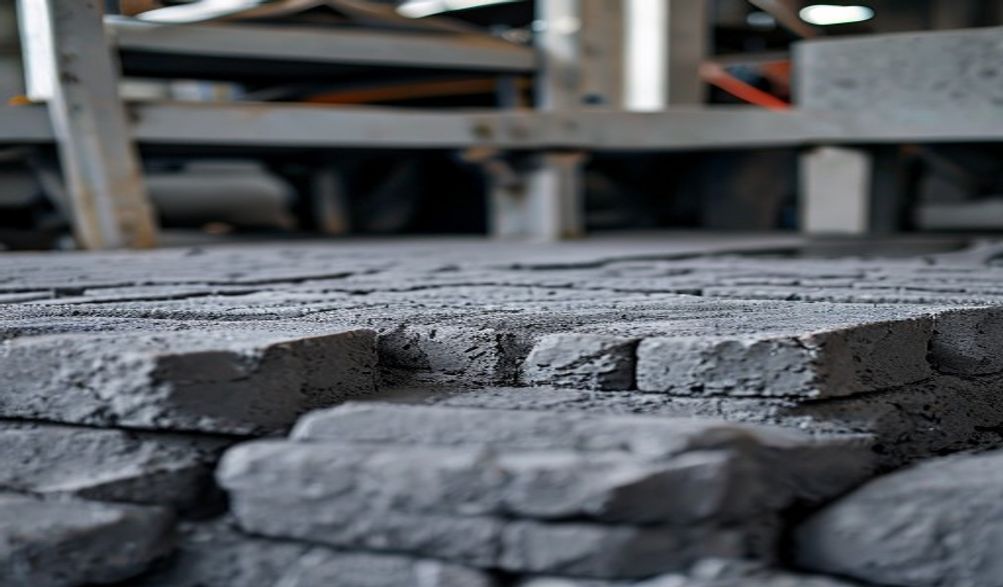
Sida Loo Xulo Mashiinka Sameynta Lebiska Dhoobada Duxusha: Hage 2024 ee Iibsadaha Khabiirka
Hordhac
Doorashada makiinada saxda ah ee sameynta lebiska dhoobada daxalka ah ma ahan wax iibsash oo kaliya; waa go'aansho ganacsi oo muhiim ah oo qaybinta wax soo saarkaada, tayada alaabta, iyo faa'iidada dhaqaaleha ku qeexi doona sanado badan ku xiga. Iyadoo aan haysto khibrad ka badan toban sano oo teknolojiyada dhismaha iyo warshadeynta aan-dhibic ah, waxaan si toos ah u aragay sida qalabka saxda ah ugu dhaqaaqi karo mashruuc si uu ugu liicdo guul, halka doorashada xun ay keento dib u dhac joogto ah, lebis aan tayo lahayn, iyo cadaadis dhaqaale oo culus.
Suuqa waa ka buuxsanyahay kala duwanaansho, laga bilaabo mashiinno fudud oo gacanta lagu shaqeeyo ilaa warshadooyin ballaaran oo si toos ah u shaqeeya, mid kasta oo ay ku xigto ereyo farsamo iyo ballan qaadyo adag. Hageegan waa loo qorsheeyay inuu dhex maro qaylooyinkaas. Waxaan ka sii bixi doonnaa hadallo iibiyaha oo aan ku siin doono qaab dhismeed cad, tillaabo-tillaabo ah oo ku dhisan khibrad dhab ah. Dhamaadka, waxaad heysan doontaa aqoonta lagu qiimeeyo mashiinnada iyadoo lagu saleeyay ujeeddooyinkaaga gaariga ah ee wax soo saarka, alaabta la isticmaalo, iyo miisaaniyadda, iyadoo lagu beddelayo go’aan adag inuu noqdo maalgelin kalsooni leh oo mustaqbalka adag ee ganacsigaaga.
Aan dhismo u dhisno aasaaska guushaada.
Fahmidka Shuruudaha Mashruucaaga: Aasaaska Doorashadaada
Kahor intaadan fiirin jaraa'id shirkadaha, waa inaad marka hore aragtid gudahaaga. Khaladka ugu caansan ee qiimaha badan waa iibsashada makiinad ku salaysan sifo qurux badan ama qiimo jilicsan, si keliya loogu helo inaysan ku habboonayn hawlahaaga dhabta ah. Qaabka ganacsigaaga waa khabiirka ugu dambeeya.
Qiimeynta Miisaanka Soosaarka & Ujeeddada Ganacsigaaga
Hadafkaaga maalmeedka ee wax soo saarka ayaa ah sababta ugu muhiimsan ee aad u doorato mashiinka. Aad u noqo mid dhab ah oo aan waxba ka jeclaan.
- Wax-yar/Qaabka bilowga (Ilaa 1000 bir/day):Waxaa laga yaabaa inaad suuqo baaritaan ku samaynayso, hantida aad leedahay ay xaddidan tahay, ama dalabyo goboleed oo gaar ah oo aad fulinayso. Mashiiqada gacanta ah ama kuwa ugu yar ee naqshadeynta ayaa noqon doonta bilowgaaga. Diyaar u noqo maalgelinta bilowga ee hooseeya iyo fududeynta hawlgalka.
- Heerka dhexe (1000 ilaa 10,000 brick/maalin):Tani waa meesha ugu wanaagsan ee ugu habboon inta badan wakaaladaha yaryar ee koraya iyo warshadaha dhismooyinka leh. Waxaad u baahan tahay tayo joogto ah iyo soo saar aamin ah.mashinkaada otomaatiga ah ee naadirka ama otomaatiga oo dhanwaxay noqon kartaa muhiim. Ka fikirso kordhinta mustaqbalka ee qorshaha dabaqaaga iyo kaydka korantada.
- Weyn/Ganacsiga (10,000+ brick/maalin):Waxaad bixisaa mashruucyada waaweyn ama qaybiyeyaasha. Wax kasta oo ugu muhiimsan waa waxtarka iyo iska caabbinta dadka.khadka toos ah oo PLC la maamulohalkan waxaa macno leh dhaqaale ahaan kuwa leh nidaamyada isdhexgalka ah ee maareynta iyo daaweynta qalabka.
Talo Sare:Had iyo intaas ka badan 20-25% u qorshee awooddaada hadda la leeyahay. Tani waxay u oggolaanaysaa korodhka suuqa oo ay ka hortagaysaa in makiinadaadu noqoto xannibaad sannad gudahood.
Falanqaynta Helitaanka & Tayooyinka Alaabta-Guri
Mashinkaadu waa inay noqotaa la shaqeynta waxaad leedahay, oo aanay ku lid ku ahayn.
- Xawaashka Duufaanta Isku Midka Ah:Tayada dabkaaga (ugu horayn)Nooca Flaga bituminous coal amaC-Noocaka sub-bituminous/lignite) si toos ah ayaa u saamaynaya xoogga lebiska iyo saamiga simento ee loo baahan yahay. Ilaalinta meel deggan oo maxalli ah ayaa muhiim ah. Dhaadhac isku mid ahayn waxay keeneysaa lebiska aan isku mid ahayn.
- Qalab kale:Qiimaynta tayada iyo jajabka ciidda ama bustahaaga. Ma heli kartaa si fudud oo qiimo jaban? Waa maxay tayada biyaha ee deegaanka? Biyo adag waxay saameyn karaan dhisidda.
- Baaritaanka Hore ee Loo Baahan Yahay:Haddii alaabtaada asalka ah (sida ciyaarta) aanay midabkoodu isku mid ahayn, waxaad u baahan doontaa qalabka gargaarka sidaqarxid ama saaridka hor inta aan la isku dhufto. Tayo sare lehqalab kuleylintawaa aan la wadaajin karin si loo gaaro isku dhafka isku midka ah, kaas oo ah tallaabada ugu horreysa ee loo qaado dhagax adag.
Qeexida Qeexista Leegooyinkaaga & Baahida Suuqa
Maxaad iibineysaa, oo ciddaad u iibineysaa? Alaabtaadu waxay qeexaysaa qaabka iyo cadaadiska mashiinkaada.
- Cabbirka Caadiga ah & Noocyada:Ma waxaad samaynaysaa bulooko caadi ah oo 4″, 6″, ama 8″ ah oo adag oo loogu talagalay shaqada qaab-dhismeedka?booloow laamaha ah(kaas oo kaydiyo qalabka oo wanaajiya daboolka) baahida sare? Wuxuu laga yaabaa suuqa laamiyahabrikad isku xirxiranama beertay ama dhismaha dhulkafuraha is booming in your region.
- Xoogga Culeysga This is the king of specifications. Load-bearing walls may require bricks with a compressive strength of 7-10 MPa or more, while partition walls can use lower-strength units. Know your local building codes and customer requirements. The machine’s pressure capacity (tonnage) is the primary factor determining this strength.
Key Technical Specifications of Fly Ash Brick Machines
Now, with your project blueprint in hand, we can decode the machine’s technical language. This is where expertise separates a good investment from a costly mistake.
Types of Fly Ash Brick Making Machines
-
Makiinada Gacanta: Operated entirely by hand levers or flywheels.
- Faaiidooyinka: Very low initial cost, minimal to no power requirement, simple to understand.
- Laba. Extremely low output (200-500 bricks/day), highly labor-intensive, inconsistent product quality, physically demanding.
- Ugu Fiican: Ultra-small startups, community projects, or producing samples.
-
Makiinnada Yar-otoomaatig ah: The operator feeds the mix into the machine hopper, but the pressing, ejection, and sometimes feeding are powered (hydraulic or vibratory).
- Faaiidooyinka: Excellent balance of output (1000-5000+ bricks/day), cost, and quality. Good consistency with less labor than manual machines. Often modular, allowing for future upgrades.
- Laba. Requires a steady power supply and some skilled labor for operation and maintenance.
- Ugu Fiican: The vast majority of small and medium enterprises (SMEs). This is the most popular and versatile category.
-
Makiinadaha Tooska ah ee Si Fudud: Computer-controlled (PLC) production lines. They automate material feeding, mixing, pressing, curing stack arrangement, and sometimes pallet return.
- Faaiidooyinka: Very high, consistent output (10,000+ bricks/day) with minimal labor. Exceptional product uniformity and quality control.
- Laba. High capital investment, requires significant space and robust three-phase power infrastructure, complex maintenance needing specialized technicians.
- Ugu Fiican: Large-scale industrial plants with high, consistent demand.
Core Mechanism: Hydraulic vs. Vibratory Press
This is a fundamental technical choice impacting brick quality and production style.
-
Gawaarida Hydraulic: Uses a hydraulic cylinder to apply immense, controlled static pressure (measured in tons) to the raw mix in a mold.
- How it works: Oil is pumped into a cylinder, forcing a piston to compact the mix under high, sustained pressure.
- Faa'iidooyinka: Produces bricks with superior density, strength, and dimensional accuracy. Excellent for high-strength solid blocks and interlocking bricks. The process is generally quieter.
- La xisaabtan: Cycle time can be slightly slower than some vibratory systems, but modern machines are highly efficient.
-
Vibratory Press: Uses a combination of vibration and lower pressure to compact the material. The mix is subjected to high-frequency vibrations that settle the particles densely.
- How it works: An eccentric weight rotates at high speed, creating vibrations transmitted to the mold table.
- Faa'iidooyinka: Often has a faster cycle time, making it suitable for high-volume production of certain hollow block designs. Can be more energy-efficient for specific applications.
- La xisaabtan: May not achieve the same ultra-high compressive strengths as a high-tonnage hydraulic press for solid blocks. Can be noisier and cause more wear on molds.
Verdict: For fly ash bricks where high compressive strength is a primary selling pointthehydraulic press is often the recommended and more prevalent choice. However, discuss your specific brick portfolio with suppliers, as some vibratory machines are excellent for certain products.
Critical Machine Specifications to Scrutinize
When comparing models, these are the numbers that matter:
- Xoogga Cadaadiska (Tonajka): Ranges from 20 tons for small machines to 200+ tons for large ones. Higher tonnage = higher potential brick density and compressive strength. Match this to your strength requirements.
- Cycle Time & Production Output: Cycle time is the seconds/minutes to produce one batch (e.g., 4 bricks). Output is bricks per hour/day. Ensure the claimed output is based on a standard cycle time, not a theoretical maximum. Cross-reference this with your scale assessment.
- Power Requirement (HP/KW): Determines your electricity bill and necessary connection. A 10 HP machine is vastly different from a 50 HP one. Factor this into your operational cost model.
- Heerka Automationka: Does it have an auto-feeder? An automatic pallet return system? A product stacker? Each level of automation reduces labor, increases consistency, and adds to the cost. Choose based on your labor availability and cost.
Beyond the Machine: Essential Auxiliary Equipment
A brick machine alone does not make a brick plant. Ignoring these components is like buying a car without planning for fuel or maintenance.
The Importance of a Quality Pan Mixer
The mixing process is where quality is born. A forced-action qalab kuleylinta with rotating stars/scrapers is essential. It ensures every particle of fly ash, sand, and cement is uniformly coated, leading to consistent strength and color. Size its batch capacity to match your machine’s cycle to avoid waiting time.
Brick Curing and Drying Systems
Freshly pressed “green” bricks are fragile. Proper curing is what gives them strength.
- Water Curing: The traditional method. Bricks are stacked and kept wet for 14-28 days. It’s low-cost but requires vast space, time, and consistent attention.
- Steam Curing (Autoclaving): Bricks are placed in a chamber and cured with steam under pressure for 8-12 hours. It’s faster, space-efficient, and produces higher early-strength bricks, but requires a significant investment in an autoclave and boiler.
- Pallets & Racks: You’ll need a sufficient number of steel or wooden pallets to hold bricks through the curing cycle and sturdy racks for organized storage.
Material Handling & Logistics
Moving tons of raw material and bricks manually is inefficient and increases breakage.
- Feed Hoppers & Conveyors: Belt conveyors or screw feeders can move raw mix from the mixer to the machine hopper seamlessly.
- Green Brick Handling: Forklifts, trolleys, or simple transfer carts are needed to move fresh bricks to the curing area without damage.
- Isku-dhafka: For larger operations, mechanical brick stackers can dramatically reduce labor and time post-curing.
The Supplier Evaluation Checklist: Ensuring Trust & Quality
The machine is only as good as the company behind it. This step protects your investment.
Manufacturer Reputation & After-Sales Service
- Research: Look for a history of 10+ years. Search for the company name + “reviews” or “complaints.” Ask for a list of client references and actually call them.
- The Deal-Breaker – After-Sales Support: Does the supplier offer installation supervision, on-site operator training, and a local service network? What is the warranty period (aim for at least 1 year on critical parts)? How quickly can they supply spare parts? A cheap machine with no support is the most expensive machine you can buy.
Requesting a Factory Visit & Machine Trial
If possible, never buy a machine you haven’t seen running.
- Witness Operation: Visit the manufacturer’s facility. See the machine’s build quality, weld points, and electrical panels. Observe it in action—is the operation smooth? Is the noise level acceptable?
- Conduct a Trial: The golden rule. Bring a sample of your own fly ash and raw materials. Have the supplier produce bricks with them. Test these bricks for dimensional accuracy, edge sharpness, and later, for compressive strength in a lab. This proves the machine’s capability with waad inputs.
Cost Analysis: Understanding the Total Investment
Look beyond the sticker price.
- Total Project Cost: Includes:
- Machine Price
- Auxiliary Equipment (Mixer, Conveyor, Pallets)
- Installation & Foundation Civil Work
- Electrical Setup (Transformers, Wiring)
- Transportation and Insurance
- Initial Spare Parts Kit
- Operational Cost per Brick: Calculate the cost of power, labor, maintenance, and raw materials for every 1000 bricks produced. A slightly more expensive but efficient and robust machine will often have a lower operational cost.
- Avoid the Cheap Trap: The lowest bid often cuts corners on steel quality, hydraulic components, and motor brands. This leads to frequent breakdowns, higher maintenance costs, and lost production time. Invest in reliability.
FAQ: Your Fly Ash Brick Machine Questions Answered
Q1: What is the average cost range for a good fly ash brick making machine?
A: Prices vary dramatically. A basic manual machine can start from $1,500 – $3,000. A quality semi-automatic hydraulic machine typically ranges from $15,000 – $50,000+, depending on automation and output. Fully automatic production lines begin around $80,000 and can exceed $250,000. Always get detailed quotes based on your specific output and automation requirements.
Q2: Can I use the same machine to produce different types of bricks (e.g., hollow and solid)?
A: Yes, most machines are designed for this, but with caveats. The machine must have sufficient pressure (tonnage) to produce dense solid blocks. You will need to purchase interchangeable molds for each brick type (hollow, solid, paver). Ensure the supplier can provide or source these additional molds and that the machine’s feed system and ejection mechanism are compatible with the different brick heights and designs.
Q3: What is the typical payback period for this investment?
A: With efficient operation and good market demand, a well-planned SME setup can see a payback period of 1.5 to 3 years. For a simplified estimate: (Total Investment Cost) / [(Selling Price per Brick – Cost per Brick) * Monthly Production]. Factors like your local brick price, raw material cost, and sales volume are critical.
Q4: How much skilled labor is required to operate a semi-automatic machine?
A: A standard semi-automatic plant can be effectively run by 2-3 semi-skilled workers. One attends to the mixer and machine feeding, while the others handle the green bricks—transferring them to curing stacks and managing pallets. Comprehensive training from the supplier is essential for safe and efficient operation.
Q5: What are the most common maintenance issues, and how can I prevent them?
A:
* Hydraulic Oil Leaks: Caused by worn seals or loose fittings. Prevention: Regular inspection and using the recommended grade of hydraulic oil.
* Mold Wear & Tear: Leading to rough brick edges or dimensional issues. Prevention: Regular cleaning after each shift and ensuring the raw mix is free of large, hard impurities.
* Electrical Faults: From dust ingress or loose connections. Prevention: Keeping control panels clean and dry, and conducting periodic checks.
* General Wear: On moving parts like bearings and guides. Prevention: Strict adherence to the daily and weekly lubrication schedule outlined in the manual.
Gabagabo
Choosing the perfect fly ash brick making machine is a systematic journey, not a snap decision. It begins with a clear-eyed assessment of your own production goals, raw materials, and market. This foundation allows you to navigate the technical landscape—understanding the vital difference between hydraulic and vibratory systems, and scrutinizing specifications like tonnage and cycle time. Finally, pairing the right technical specifications with a reputable, service-oriented supplier seals your investment’s success.
Remember, the best machine is not the cheapest or the most feature-laden. It is the one that forms the optimal bridge between your current reality and your growth ambitions, enabling you to produce high-quality, sustainable building materials profitably and reliably. Use this guide as your checklist, ask the hard questions, and invest with confidence.
Call to Action (CTA):
Ready to take the next step? Download our free, detailed Fly Ash Brick Machine Buyer’s Checklist to compare suppliers and specifications systematically. For personalized advice, contact our industry experts with your project details.