
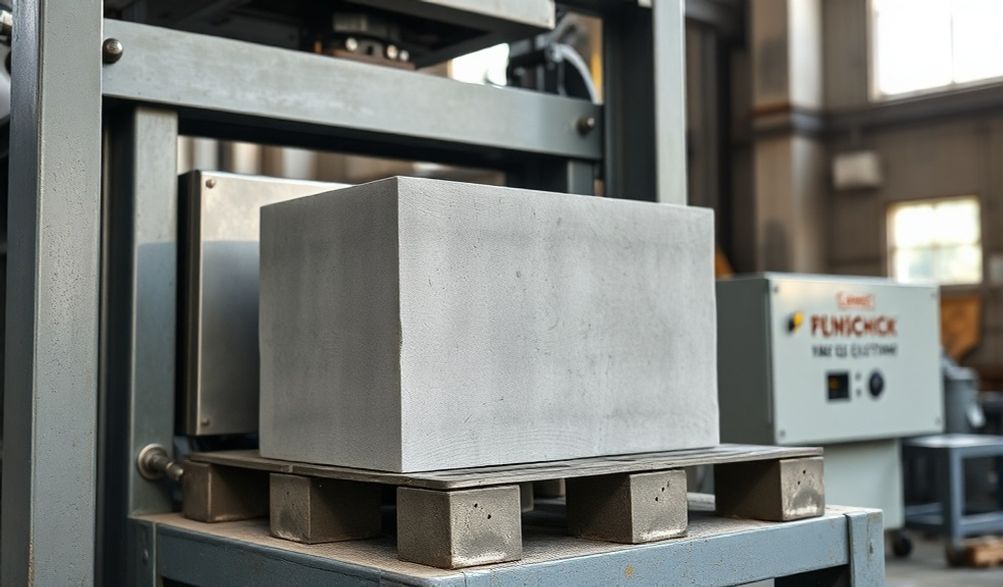
Ang Komprehensibong Gabay sa 4 Inch Block Machines: Mula sa Pagbili Hanggang sa Kita
Panimula
Sa pundamental na mundo ng konstruksiyon, ang pagkakapare-pareho ang hari. Maging ikaw ay isang kontratista na namamahala sa mahigpit na iskedyul ng proyekto o isang negosyanteng nakatutok sa merkado ng materyales sa paggawa, ang kakayahang makagawa ng maaasahan at de-kalidad na mga bahagi ayon sa pangangailangan ay isang malaking pagbabago. Narito ang4 na pulgadang bloke ng makinaisang dalubhasang kagamitan na idinisenyo upang gumawa ng isa sa mga pinakamalawak na ginagamit na bloke ng gusali sa industriya.
Ang karaniwang 4-inch na kongkretong bloke ay isang tunay na manggagawa. Ito ang pangunahing ginagamit para sa mga panloob na partisyon, panlabas na tapiserya, at hindi mabilang na iba pang aplikasyon. Ang paggawa ng mga blokeng ito nang manuwalan ay matrabaho at hindi pare-pareho. Gayunpaman, ang isang dedikadong makina ay nagbabago ng mga hilaw na materyales sa mga de-precision na bahagi na may kahanga-hangang kahusayan.
Ang komprehensibong gabay na ito ay batay sa ekspertong kaalaman mula sa industriya. Lilipas tayo sa mga brochure ng pagbebenta upang magbigay ng mapagkakatiwalaan at awtoritatibong pagtingin kung paano gumagana ang mga makinaryang ito, kung paano pumili ng angkop, at kung paano ito patakbuhin para sa pinakamataas na balik sa puhunan. Ituring ito bilang iyong saligang sanggunian sa paggawa ng isang maalam at kumikitang desisyon sa larangan ng paggawa ng bloke.
Pag-unawa sa 4 Inch Block Machine
Sa puso nito, ang isang 4 na pulgadang block machine ay isang de-presisyong pindutera. Ito ay idinisenyo upang kumuha ng isang semi-tuyong kongkretong halo at, sa pamamagitan ng kombinasyon ng matinding presyon at bibrasyon, hubugin ito sa isang siksik, matibay na bloke na may nominal na lapad na 4 na pulgada (100mm). Ang pagtutok sa isang partikular na sukat ay nagbibigay-daan sa pinaka-optimisadong inhenyeriya, na humahantong sa mas mahusay na kalidad at mas mabilis na produksyon kaysa sa mga pangkalahatang, multi-purpose na kagamitan.
Paano Gumagana ang 4 Inch Block Machine: Ang Siklo
Ang proseso ay isang kahanga-hangang halimbawa ng simple ngunit epektibong inhenyeriya. Bagama't nag-iiba ang antas ng awtomasyon, ang pangunahing ikot ay nananatiling pare-pareho:
- Pagpapakain:Ang handang kongkretong timpla (semento, buhangin, agregado, tubig) ay ikinakarga sa hopper ng makina.
- Pagsusukat at Paghubog:Isang sinukat na dami ng timpla ay ipinasok sa 4-pulgada na lukab ng molde.
- Pagpapatigas:Bumaba ang ulo ng martilyo ng makina. Kasabay nito, umandar ang malalakas na vibrator, pumipino sa timpla at nag-aalis ng mga hangin. Ang presyong haydroliko—karaniwang nasa pagitan ng 20 hanggang 100+ tonelada—ay pumipiga sa materyal upang maging isang solidong anyo.
- Pag-eject:Ang bagong nabuong bloke ay itinutulak pataas palabas ng kahon ng hulma patungo sa isang naghihintay na pallet o conveyor.
- Pagpapagaling:Ang bloke, kasama ang pallet nito, ay inililipat sa isang curing area kung saan ito ay tumitibay sa loob ng ilang araw bago maging handa para sa paggamit o pagbebenta.
Mga Pangunahing Bahagi at ang Kanilang Mahahalagang Tungkulin
Bawat bahagi ay may papel sa pagtitiyak ng kalidad at pagpapatuloy ng operasyon.
- Hopper:Ang pasukan. Dapat itong may tamang sukat para sa iyong bilis ng produksyon at magbigay-daan sa tuloy-tuloy na daloy ng materyal nang walang pagbabara o pagbara.
- Kahon ng Molde:Ang puso ng makina. Ang bahaging ito na gawa sa pinatigas na asero ang nagtatakda ng hugis, tekstura, at kawastuhan ng sukat ng bloke. Isang de-kalidad, matibay sa pagkasira na molde ang hindi maikakaila.
- Sistema ng Pagyanig:Karaniwang binubuo ng mga de-kuryenteng motor at mga eksentrikong timbang, ang sistemang ito ay nagbibigay ng mataas na dalas na pagyanig na mahalaga para sa pagpapatibay ng timpla sa bawat sulok ng hulma, tinitiyak ang pantay na densidad at lakas.
- Sistema ng Haydroliko/Presyon:Ang kalamnan. Ang sistemang ito (pomba, silindro, balbula) ang bumubuo sa kinakailangang tonelahe upang makagawa ng isang bloke na matibay ang istruktura. Ang pagiging maaasahan nito ay direktang nakakaapekto sa kalidad ng bloke.
- Control Panel: The brain. From simple manual buttons to programmable logic controllers (PLCs) on automatic models, this governs the machine’s cycle.
- Pallet Feeder/Conveyor: Tagapakain ng Pallet / Konbeyor Handles logistics. It automatically positions empty pallets for the new block and removes filled ones, streamlining the workflow.
Types of 4 Inch Block Machines: Matching Technology to Need
Not all machines are created equal. Your choice should be dictated by your production goals.
- Mga Makina ng Manual na Bloke: Operated via hand levers or flywheels. They require significant physical effort and are slow but have a very low upfront cost. Best for extremely small, occasional projects.
- Semi-Automatikong Makina: The sweet spot for many small businesses. The core molding cycle (vibration, compression, ejection) is automated, but tasks like feeding raw mix or placing pallets may be manual. They offer an excellent balance of output, cost, and simplicity.
- Ganap na Awtomatikong Makina ng Bloke: Complete production lines. These feature automated mix feeding, pallet circulation, block stacking, and even curing rack handling. They require a higher capital investment and 3-phase power but produce the highest volume with minimal labor.
Benefits of Using a Dedicated 4 Inch Block Machine
Why invest in a machine for just one block size? The advantages over makeshift or manual methods are substantial and tangible.
- Unmatched Precision and Consistency: Every block is identical. This dimensional accuracy is critical for speed and quality in masonry work, as consistent blocks lay faster and create a more professional finish. Structural integrity is also assured.
- Dramatically Enhanced Efficiency: A single operator on a semi-automatic machine can produce in one hour what might take a full crew a day to cast manually. This accelerates project completion or scales commercial output exponentially.
- Direct Material and Cost Savings: The machine’s precise measurement and high compaction reduce waste. You use the optimal amount of cement and aggregate per block, lowering your raw material cost per unit. Less spoilage equals higher margins.
- Inherent Versatility: While designed for 4-inch blocks, most quality machines offer interchangeable molds. With a quick change, the same machine can often produce solid blocks, 6-inch blocks, paving stones, or curb stones, allowing you to diversify your product line.
How to Choose the Right 4 Inch Block Machine
This is the most critical decision you’ll make. Let expertise, not just price, guide you. Ask the right questions.
Step 1: Honestly Assess Your Production Needs
- For a Single Project: A basic manual or small semi-automatic machine may be cost-effective. Focus on durability for the project’s duration.
- For a Startup/Small Business: A robust semi-automatic machine is typically the ideal entry point. Calculate your target daily output (e.g., 800-1500 blocks) and choose a model that exceeds it by 20% to allow for growth.
- For Large-Scale Commercial Production: You need a fully automatic line. Your analysis should focus on output per shift, total cost of ownership, and integration with mixers and material handling systems.
Step 2: Scrutinize Key Machine Specifications
- Oras ng Ikot: How many blocks per hour (BPH)? Don’t rely on theoretical maximums; ask for realistic, sustained production rates.
- Pressure Capacity: Measured in tons. Higher pressure (e.g., 60 tons vs. 30 tons) generally produces denser, stronger blocks suitable for load-bearing applications.
- Mga Pangangailangan sa Kuryente: Most semi-automatic and all automatic machines require 3-phase industrial power. Verify your facility’s electrical capacity.
- Kalidad ng Pagkakagawa: Look for a heavy, rigid frame made from thick steel plate. The vibration table should be massively built. This reduces wear and ensures stability during operation.
Step 3: Vet the Supplier with a Focus on E-A-T
Your relationship with the manufacturer or distributor is a long-term asset. Evaluate their Expertise, Authoritativeness, and Trustworthiness:
- Kadalubhasaan Do they provide clear, detailed technical documentation? Can they answer deep technical questions about mix design or machine optimization?
- Awtoridad: How long have they been in business? Do they have case studies or testimonials from other clients? Are their machines certified to relevant standards?
- Pagkakatiwalaan: What does their after-sales support look like? A reliable supplier will offer:
- A clear, comprehensive warranty.
- Readily available spare parts inventory.
- Accessible technical support, ideally with options for remote diagnostics.
- Installation guidance or supervision.
Operational Best Practices and Maintenance
A machine is only as good as its operation. Proper setup and care prevent downtime and ensure consistent quality.
Setting Up for Success
- Foundation is Key: Install the machine on a perfectly level, reinforced concrete pad. This is critical for alignment and proper vibration transfer.
- Master the Mix: The machine can only compact what you feed it. Spend time perfecting your concrete mix ratio (e.g., 1 part cement, 3 parts sand, 2 parts aggregate) and moisture content. The mix should be semi-dry—holding its shape when squeezed but crumbling apart.
- Follow the Manual: Adhere strictly to the manufacturer’s instructions for initial startup, lubrication, and electrical connections.
Essential Maintenance Checklist
Proactive maintenance is cheap; reactive repair is expensive.
- Daily:
- Clean the mold box, hopper, and pallets thoroughly with water and a brush after the last production cycle. Never let concrete harden on components.
- Visually inspect for loose bolts, nuts, or hydraulic leaks.
- Weekly:
- Lubricate all guide rods, bearings, and moving parts with the recommended grease.
- Check hydraulic fluid levels and condition.
- Monthly:
- Tighten all motor and vibrator mounting bolts (vibration can loosen them).
- Inspect mold liners for wear and replace if blocks show rounded edges or sticking.
- Check electrical connections for tightness.
Troubleshooting Common Issues
- Blocks Cracking or Breaking on Ejection: The most common cause is a mix that is too dry. Increase water slightly. Secondary causes: worn mold liners or excessive vibration time.
- Poor Surface Finish or “Honeycombing”: Usually caused by a mix that is too wet or insufficient vibration/compaction. Adjust the mix and ensure the vibration system is functioning at full power.
- Machine Jamming or Misalignment: Often due to a foreign object (stone, tool) falling into the mold or a damaged/bent pallet. Stop immediately, clear the obstruction, and inspect for damage.
Economic Analysis: Cost and ROI of a 4 Inch Block Machine
Let’s translate this into practical numbers. Understanding the financials is where real-world Karanasan pays off.
Initial Investment Breakdown
Your upfront cost is more than the machine’s price tag:
* Machine Cost (varies widely: $5,000 – $50,000+)
* Shipping and Import Duties (if applicable)
* Installation & Foundation Work
* Facility Modifications (3-phase power installation, water supply)
* Initial Stock of Pallets and Spare Parts
Operational Cost Factors (Monthly)
These are your ongoing expenses:
* Mga Hilaw na Materyales: Cement, sand, aggregate. This is typically 50-70% of your production cost.
* Paggawa: Wages for machine operators and material handlers.
* Utilities: Electricity for the machine and mixer, water for the mix and cleaning.
* Maintenance Fund: A reserved percentage of revenue for routine parts and unexpected repairs.
Calculating Your Potential Return on Investment (ROI)
This simplified model illustrates the process:
- Monthly Revenue: Blocks Produced/Month × Selling Price/Block.
- Halimbawa: 30,000 blocks × $0.80/block = $24,000
- Monthly Operational Cost: Material Cost + Labor + Utilities + Maintenance.
- Halimbawa: ($0.35/material cost per block × 30,000) + $2,000 labor + $500 utilities = $13,000
- Monthly Gross Profit: Revenue – Operational Cost.
- Halimbawa: $24,000 – $13,000 = $11,000
- ROI Timeframe (Break-Even Point): Total Initial Investment / Monthly Gross Profit.
- Halimbawa: $40,000 investment / $11,000 monthly profit = ~3.6 months.
Paalala: This is a simplified example. Your local market prices, material costs, and efficiency will vary. A well-run small semi-automatic operation often targets full ROI within 12-18 months.
Mga Madalas Itanong (FAQ)
Q: What is the typical production capacity of a semi-automatic 4 inch block machine?
Isalin ang teksto sa Filipino. I-output LAMANG ang isinalin na teksto. A standard semi-automatic machine can produce between 800 to 1500 blocks in an 8-hour shift, depending on the model and operator efficiency.
Q: Can I use a 4 inch block machine to produce other sizes?
Isalin ang teksto sa Filipino. I-output LAMANG ang isinalin na teksto. Primarily, it is designed for 4-inch blocks. However, many manufacturers offer interchangeable molds for different block types (e.g., 6-inch, pavers). You must confirm the machine’s compatibility and pressure capacity for other molds.
Q: What is the required compressive strength of blocks made for load-bearing walls?
Isalin ang teksto sa Filipino. I-output LAMANG ang isinalin na teksto. For load-bearing applications, blocks typically need a minimum compressive strength of 1,500 to 2,000 psi (10-14 MPa). This is achieved by using the correct cement mix ratio and proper machine compression. Always consult local building codes.
Q: How much space do I need to install and operate this machine?
Isalin ang teksto sa Filipino. I-output LAMANG ang isinalin na teksto. You need space for the machine itself, raw material storage, a mixing area, and a curing yard. A minimum covered area of 500-1000 sq. ft. is recommended for a small-scale setup, excluding open curing space.
Q: What kind of after-sales support should I expect from a reliable supplier?
Isalin ang teksto sa Filipino. I-output LAMANG ang isinalin na teksto. A trustworthy supplier should provide detailed installation manuals, offer installation supervision or clear guidance, supply a comprehensive parts catalog, and have a responsive technical support team available for troubleshooting.
Konklusyon
Investing in a 4 na pulgadang bloke ng makina is a strategic decision that moves you from being a consumer of building materials to a producer. It’s an investment in autonomy, quality control, and business potential. The journey from selection to profitable operation requires careful planning, grounded in the kind of expert knowledge we’ve outlined here.
Success hinges on choosing a machine built to last, from a supplier who stands behind their product, and committing to the operational discipline that ensures consistent quality. By doing so, you unlock a reliable stream of a fundamental construction component, turning raw materials into both building blocks and a solid foundation for your financial growth. Use this guide as your starting point, conduct thorough due diligence, and build your future—one precise block at a time.
<