
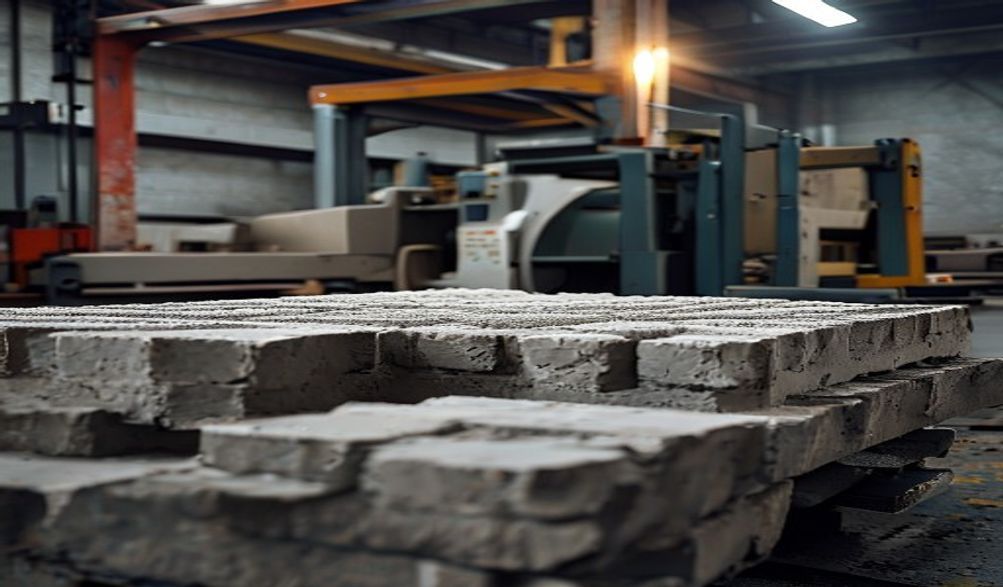
Sement G'isht Tayyorlash Mashinasini Qanday Tanlash Kerak: 2024 Yil Uchun Mutaxassis Xaridor Qo'llanmasi
Noto‘g‘ri sement g‘isht ishlab chiqarish mashinasini tanlash sizga minglab dollarlik mahsuldorlik yo‘qotishlari, past sifatli materiallar va loyiha muddatlarini o‘tkazib yuborishga tushishingizga olib kelishi mumkin. Bu yuqori darajadagi qaror bo‘lib, hissiyotlar va jozibador narx sizni osongina adashtirishi mumkin. O‘zim o‘nlab blok maydonchalari va ishlab chiqarish zavodlarini tashkil etishda maslahatchi bo‘lib ishlaganimda, shoshilinch xaridlar natijasida yuzaga kelgan muammolarni ko‘rganman.
Ushbu qo'llanma boshqacha. U taxminlarga emas, balki muhandislik tamoyillari, amaliy ishlash ma'lumotlari va sanoatda qo'lga kiritilgan tajribaga asoslangan. Mening maqsadim, bu murakkab qarorni aniq va bosqichma-bosqich jarayonga aylantirish. Oxirida siz o'z ishlab chiqarish maqsadlaringiz, joy cheklovlaringiz va byudjetingizga mos keladigan mukammal mashinani tanlash uchun aniq tizimga ega bo'lasiz.
Biz mantiqiy ravishda sizning ehtiyojlaringizni tushunishdan boshlab, mashina turlarining texnik landshafti orqali, muhim texnik xususiyatlarni sinchkovlik bilan o‘rganish va haqiqiy xarajatlarni hisoblashga o‘tamiz. Keling, muvaffaqiyatingiz uchun asos yarataylik.
Loyihangiz Talablarini Tushunish: Tanlovingiz Asosi
Yagona mashina broshyurasiga qarashdan oldin, siz ichki o'zingizni ko'rib chiqishingiz kerak. Eng murakkab va qimmat mashina ham, agar u sizning haqiqatingizga mos kelmasa, majburiyatga aylanadi. Ushbu dastlabki o'z-o'zini baholash, amaliy tajribaga asoslangan holda, eng muhim bosqichdir.
Ishlab chiqarish maqsadlaringizni belgilash
Sizning talab qilgan natijangiz keyingi barcha jarayonlarning asosiy yo'naltiruvchisidir.
- Soatlik/Kunlik G'isht Ishlab Chiqarish:Qattiq rostgo'ylik bilan ayt. Siz bitta uy qurish uchun bloklar ishlab chiqaryapsizmi, mahalliy qurilish bozoriga yetkazib beryapsizmi yoki yirik tijorat shartnomalarini maqsad qilyapsizmi?
- Kichik miqyosli (kuniga 100-500 blok):Ko'pincha qo'l yoki yarim avtomat mashinalar tomonidan xizmat ko'rsatiladi.
- Oʻrta miqyosli (kuniga 500-3,000 blok):Mustahkam yarim avtomat va boshlang'ich darajadagi avtomat mashinalar sohasi.
- Yirik hajmli (kuniga 3,000+ blok):To'liq avtomatlashtirilgan ishlab chiqarish liniyalari talab qilinadi.
- Loyiha Miqyosi va Davomiyligi:Bu bir martalik loyiha, vaqt-vaqti bilan shartnoma asosidagi ish yoki yangi, doimiy biznes tashabbusimi? Sizning javobingiz kerakli bardoshlik va investitsiyadan daromad olish (ROI) muddatini belgilaydi.
G'isht Spetsifikatsiyalari va Mahsulot Xilma-xilligi
Mashina 1000 dona mahsulot ishlab chiqarishi kerak.o'ngg'isht, shunchaki emasagʻisht.
- Oʻlcham, Shakl va Dizayn:Hozir va kelgusi 3-5 yil ichida sizga kerak bo'lishi mumkin bo'lgan barcha mahsulotlarni ro'yxatlang.
- Standart qattiq/ichiga bo'sh bloklar (4”, 6”, 8”)
- Pavers, interlocks, grass blocks - термини инглиз тилидаги атама бўлиб, ўзбек тилида "тўшама тўшаклари", "интерлок (бир-бирига уланган) плиталар", "майдон тўшаклари" деб таржима қилинади. Лекин сиз "шейлер шаклида" сўраган экансиз, мен "Pavers, interlocks, grass blocks" деган сўзларни "тўшама тўшаклари, интерлок плиталар, майдон тўшаклари" деб таржима қилиб бераман. Агар сиз матнни тўлиқ таржима қилмоқчи бўлсангиз, илтимос, матнни тўлиқ беринг.
- Maxsus dizaynlar yoki maxsus shakllar
- Kerakli siqilish mustahkamligi:Bu konstruktiv mustahkamlik uchun muhokama qilinishi mumkin bo'lmagan narsa. Mashinaning imkoniyatlarini mahalliy qurilish qoidalari va qo'llanish maqsadiga moslashtiring (masalan, yuk ko'taruvchi devorlar bog ' toshlariga qaraganda yuqori quvvat talab qiladi).
Sayt va operatsion cheklovlar
Buni e'tiborsiz qoldirsangiz, yangi mashinangiz juda katta qog'oz og'irligiga aylanadi.
- Mavjud joyMashinaning o‘z joylashishini emas, balki qotirish stendlari, xomashyo (sement, to‘ldiruvchi) saqlash joyi va tayyor mahsulot ombori uchun mo‘ljallangan maydonni ham o‘lchang.
- Quvvat manbaining mavjudligiSizda ishonchli uch fazali elektr energiyasi bormi yoki dizel bilan ishlaydigan mashina kerakmi? Qo‘l mashinalari mushak kuchini talab qiladi, elektr tarmog‘ini emas.
- Ishchi Malaka DarajasiUni kim boshqaradi? To‘liq avtomatik mashina o‘qitilgan texnikni talab qilishi mumkin, yarim avtomatik model esa tegishli tayyorgarlikdan o‘tgan oddiy ishchilar tomonidan boshqarilishi mumkin.
Sement G'isht Ishlab Chiqarish Mashinalarining Turlari: Mexanizmlar va Qo'llanish Sohalari
Har bir turdagi asosiy texnologiyani tushunish, uni ehtiyojlaringizga moslashtirish kalitidir. Quyida uchta asosiy toifaning texnik tahlili keltirilgan.
Qo'lda Blok Yasalish Mashinalari
Bu g'isht ishlab chiqarishning eng oddiy shakli bo‘lib, inson kuchiga tayanadi.
- Ular qanday ishlaydi:Rivichakdagi mexanizm qolipga qo‘yilgan sement aralashmasini siqadi. Elektr energiyasi yoki dvigatel talab qilinmaydi.
- Afzalliklar va kamchiliklar:
- Afzalliklari:Juda arzon narx, yuqori darajadagi ko‘chirish imkoniyati, nol energiya xarajatlari, oddiy texnik xizmat ko‘rsatish.
- Kamchiliklari: Very low output (40-120 blocks/day), high physical labor intensity, inconsistent quality dependent on operator.
- Mukammal mos keladi: DIY enthusiasts, very small-scale projects in remote locations without power, or as a supplemental tool for specialty, low-volume products.
Yarim Avtomatik G'isht Tayyorlash Mashinalari
This category offers the best balance for most small to medium businesses, automating the critical compaction process.
- Ular qanday ishlaydi: An electric or diesel motor drives a vibration system and hydraulic press to compact the concrete into molds. The process of filling molds, moving pallets, and stacking green bricks is typically manual.
- Afzalliklar va kamchiliklar:
- Afzalliklari: Significantly higher output than manual (300-2,500 blocks/day), good quality consistency due to powered vibration/pressure, moderate cost, more efficient labor use.
- Kamchiliklari: Still requires a crew of 3-5 people, output is limited by manual handling steps.
- Mukammal mos keladi: Growing masonry contractors, small block manufacturing businesses, and community housing projects. It’s the workhorse of the industry.
To'liq Avtomatik G'isht Tayyorlash Mashinalari
These are integrated production systems where human intervention is minimal.
- Ular qanday ishlaydi: A computerized control panel manages an entire line: automatic material batching and feeding, high-speed molding, curing, and robotic stacking/pallet return.
- Afzalliklar va kamchiliklar:
- Afzalliklari: Very high, consistent output (3,000-20,000+ blocks/day), superior and uniform brick quality, minimal manual labor (often just 1-2 supervisors), high efficiency.
- Kamchiliklari: Very high initial capital investment, complex maintenance requiring specialist knowledge, significant space and infrastructure (strong power supply) needed.
- Mukammal mos keladi: Large-scale block production plants, industrial operations, and businesses fulfilling high-volume government or developer contracts.
Key Machine Specifications and Features to Scrutinize
Once you know the type, you must compare models on a detailed level. Don’t just take the sales sheet at face value.
Core Performance Metrics
These numbers tell you what the machine can do.
- Sikl vaqti: The time (in seconds) to complete one molding cycle. Lower = higher potential output.
- Pressure Force (Tonnage): Measured in tons, this directly determines the brick’s density and final compressive strength. For standard blocks, look for machines with at least 60-100 tons of pressure.
- Titrama Tizimi: This is what removes air pockets and ensures a solid brick.
- Turi: Hydraulic vibration is often smoother and more controllable than mechanical eccentric vibrators.
- Amplitude & Frequency: A balanced, high-frequency vibration is key to proper compaction, especially for hollow blocks.
Durability and Construction Quality
This determines how long the machine will keep doing it.
- Ramka va Tuzilma: Look for heavy-duty, reinforced steel frames with clean, strong welds. A flimsy frame will flex under load, causing misalignment and wear.
- Asosiy tarkibiy qismlar: Ask about the brands of critical parts. Reputable hydraulic pumps, motors, and vibrators (from brands like Siemens, Rexroth, etc.) are a sign of quality.
- Korroziyadan himoya qilish: The environment is abrasive and caustic. A high-quality epoxy powder coating is far superior to basic paint.
Mold System and Flexibility
Your product line is only as good as your molds.
- Mold Changing Process: How long does it take to switch from producing 4” blocks to pavers? Systems that allow for quick mold changes maximize your operational flexibility.
- Mold Material & Precision: Molds should be made from hardened, high-chrome steel for longevity. Precision machining ensures every brick has identical dimensions.
After-Sales Support: The Non-Negotiable
The machine will break down. The supplier’s response defines your downtime.
- Availability of Spare Parts: Is there a local dealer with an inventory, or must every nut and bolt be shipped from overseas with a 6-week lead time?
- Technical Support & Training: Do they offer on-site installation and comprehensive operator training? Is phone/remote support readily available?
- Warranty Period and Coverage: A 1-year warranty on the whole machine is standard. Read the fine print—what is explicitly excluded? Longer warranties on the frame and hydraulics show manufacturer confidence.
Umumiy egalik qiymati: Narx belgisidan tashqari
The purchase price is just the entry fee. A holistic financial view builds trust and prevents nasty surprises.
Initial Investment Breakdown
- Machine Cost: The base price.
- Shipping, Insurance, and Customs: Can add 10-25% for international purchases.
- Oʻrnatish va ishga tushirish: Professional setup is crucial.
- Initial Spare Parts Kit: A wise investment to cover immediate needs.
- Operator tayyorlash: Often included, but confirm.
Operational and Hidden Costs
These are the recurring expenses that determine your profitability.
- Energiya iste'moli: Calculate the power (kW) or diesel consumption per hour and your local utility rates.
- Routine Maintenance: Lubricants, filter changes, wear parts like mold liners and vibration pads.
- Mehnat xarajatlari: Factor in the wages for the number of operators required by the machine’s automation level.
- Qolip xarajatlari: Additional molds for new products are a significant future expense.
Calculating Your Return on Investment (ROI)
A simple framework to justify the purchase:
(Total Value of Bricks Produced - Total Cost of Ownership) / Total Cost of Ownership
- Total Value of Bricks: Based on your target output and local market price.
- Umumiy egalik qiymati: Sum of all costs above (initial + operational) over your chosen period (e.g., one year).
- Asosiy tushuncha: A slightly more expensive, reliable machine that produces higher-quality bricks with less downtime will almost always have a better long-term ROI than a cheap, problematic unit.
Step-by-Step Selection Checklist and Supplier Vetting
Let’s synthesize everything into an actionable plan.
Your Pre-Purchase Checklist
Copy this list and fill it out for each machine you consider.
- Project Needs:
- [ ] Required daily output: ______ blocks
- [ ] Key brick types & strength needed: ______
- [ ] Available space: ______ sq ft
- [ ] Available power: ______
- Machine Type & Specs:
- [ ] Preferred type: Manual / Semi-Auto / Fully Auto
- [ ] Cycle Time: ______ seconds
- [ ] Pressure Force: ______ tons
- [ ] Vibration System Type: ______
- [ ] Mold changeover time: ______ minutes
- Budget & Support:
- [ ] Total Budget (including shipping): ______
- [ ] Warranty Length & Details: ______
- [ ] Spare Parts Lead Time Confirmed: ______
How to Vet Manufacturers and Suppliers
- Request and Check References: Ask for 2-3 clients in your region with similar needs. Call them. Ask about machine performance, reliability, and support responsiveness.
- Demand Proof of Performance: A reputable supplier will provide videos of the actual machine model running in their factory. Better yet, arrange a factory audit to see it live and test it with your mix design if possible.
- Analyze Quotations Meticulously: Ensure quotes are for identical specifications. A lower price often means cheaper components, thinner steel, or excluded essentials like training.
- Review Contracts Carefully: Pay special attention to warranty terms, payment milestones, and delivery/installation clauses. Do not sign vague documents.
Tez-tez so'raladigan savollar (FAQ)
Q: What is the average cost range for a cement brick making machine?
A: The range is vast, dictated entirely by specifications. Manual presses start around $500 – $2,000. Semi-automatic machines for small businesses typically range from $5,000 to $30,000. Fully automatic production lines begin around $50,000 and can exceed $200,000. Focus on the total cost of ownership, not just the sticker price.
Q: Can I use a brick making machine for other products like concrete pavers?
A: Yes, versatility is common. The critical factor is the mold. Ensure the machine you select has a compatible mold system for your desired products (e.g., paver molds) and that its pressure and vibration specifications are adequate to produce a dense, durable paver.
Q: How important is after-sales service, and what should I look for?
A: It is arguably the most important factor. A machine without support is a ticking clock. Look for a supplier with a documented network of service technicians, a readily available spare parts inventory (ask for a parts catalog), and a commitment to providing training. A strong warranty is a good indicator of their confidence.
Q: What is the most common mistake buyers make when choosing a machine?
A: Two extremes: 1) Overbuying: Purchasing a large, complex automatic machine for small-scale, intermittent use, which destroys ROI through high fixed costs and underutilization. 2) Under-specifying: Choosing a cheap machine that cannot meet the required output or brick strength, leading to project failures, wasted materials, and lost reputation. An honest needs assessment is your best defense.
Xulosa
Choosing the right cement brick making machine is a strategic investment that balances a triad of factors: your specific project requirementsthetechnical capabilities and durability of the equipment, and the long-term reliability and support of the supplier. There is no universal “best” machine—only the best machine for you.
By methodically working through this guide—from defining your output goals to calculating total cost and rigorously vetting suppliers—you move from being a hopeful buyer to an informed decision-maker. You’re not just purchasing a piece of machinery; you’re securing a productive asset that will literally build the foundation of your projects, business, and success for years to come.
Sizning Harakatga Chaqiriqingiz: Download or copy the checklist provided. Use it as your roadmap. Research thoroughly, ask the hard questions, and invest not just in metal and motors, but in partnership and peace of mind.
<