
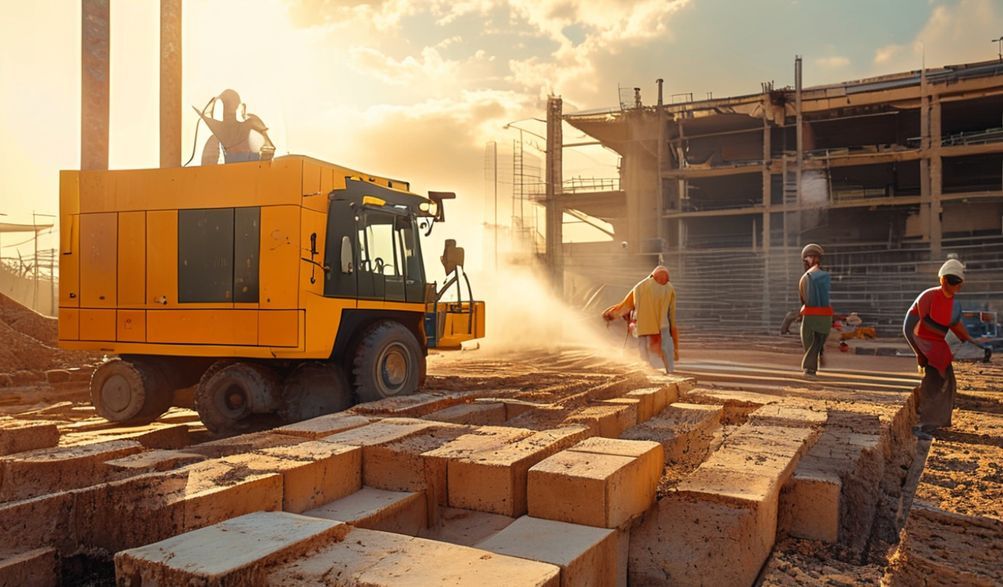
Jou Ultieme Gids vir Blokmaakmasjiene te Koop in Kenia | Kundige Insigte van FUDA Fabriek
Inleiding
Kenya se skyline is besig om te verander. Van die ambisieuse Bekostigbare Behuisingsprogram tot private ontwikkelings in ontluikende stedelike sentrums, die vraag na gehalte konstruksiemateriaal was nog nooit hoër nie. In die hart van hierdie bou-oplewing lê 'n kritieke komponent: die nederige, dog noodsaaklike, baksteen en blok. Vir entrepreneurs, kontrakteurs en konstruksiefirmas is die besluit om in 'n blokmasjien te belê nie net 'n aankoop nie—dit is 'n deurslaggewende besigheidstrategie wat winsgewendheid, gehalte en groei kan bepaal.
Hierdie gids dien as jou omvattende, onbevooroordeelde hulpbron om die mark vir blokmasjiene in Kenia te navigeer. Geïnspireer deur diep bedryfsondervinding met globale vervaardigingstandaarde en 'n spesifieke begrip van Kenia se unieke operasionele landskap—van wisselende grondtoestande tot kragtoevoeruitdagings—is ons doel om jou met feitelike, praktiese kennis toe te rus. Ons sal die verskillende tipes masjiene ontleed, die ware eienaarskapskoste uiteensit, en 'n raamwerk verskaf om verskaffers te evalueer, insluitend 'n gedetailleerde blik op aanbiedinge van gevestigde vervaardigers soos die FUDA-blokvervaardigingsfabriek. Teen die einde sal jy 'n duidelike padkaart hê om 'n selfversekerde, ingeligte belegging te maak wat meer as net mure bou; dit bou jou besigheid.
Verstaan die Keniaanse Blokmaakmasjienmark
Die oplewing in die vraag na blokmasjiene is geen toeval nie. Dit is 'n direkte reaksie op kragtige ekonomiese en sosiale dryfvere wat die nasie vorm. Om hierdry dryfvere en plaaslike nuanses te verstaan, is die eerste stap na 'n slim belegging.
Markdrywers: Hoekom Vraag in Kenië Groei
- Regering se Bekostigbare Behuisingsagenda:Hierdie vlagskipprojek onder die Groot Vier Agenda is 'n primêre enjin, wat daarop gemik is om honderdduisende behuisingseenhede te lewer. Dit skep massiewe, volgehoue vraag vir gestandaardiseerde, gehalte blokke.
- Vinnige Verstedeliking en Infrastruktuurontwikkeling:Graadse groei, en daarmee saam kom die behoefte aan nuwe huise, kommersiële gebouwe, paaie en skole. Gemeganiseerde blokproduksie is die sleutel om hierdie skaal doeltreffend te bereik.
- Verskuif van Handmatige na Gemeganiseerde Produksie:Daar is 'n groeiende erkenning dat handmatige produksie 'n knelpunt is. Masjiene bied beter konsekwentheid, hoër sterkte blokke, en die vermoë om groot bestellings se sperdatums te haal, wat besighede 'n mededingende voorsprong gee.
Kernoorwegings vir die Keniaanse Konteks
Om 'n masjien te koop wat vir 'n Europese mark ontwerp is, sal nie sukses hier waarborg nie. Die Keniaanse konteks vereis spesifieke aanpassings.
- Plaaslike Rou Materiale:Kenyaanse grond, sand en sementmengsels kan aansienlik verskil per streek. 'n Gehalte masjien moet verstelbare vibrasiefrekwensie en drukverstellings hê om hierdie plaaslike materiale doeltreffend te verdig, wat elke keer 'n digte, sterk blok produseer.
- Kragtoevoer:Netwerkonstabiliteit in sommige gebiede is 'n werklike operasionele risiko. Dit maak die beskikbaarheid vandieselaangedrewe enjinsofhibriede (elektriese/diesel) modelle'n deurslaggewende kenmerk. Evalueer altyd jou kragbetroubaarheid en kies 'n masjien wat nie tydens kragonderbrekings onaktief sal wees nie.
- Na-Verkope Ondersteuning: This is perhaps the most critical factor. A machine is a long-term asset. You must verify the availability of local technical support, readily available spare parts, and comprehensive operator training. The best machine is useless if it breaks down and stays broken for weeks awaiting a part from overseas.
Types of Block Making Machines: Which One Fits Your Project?
Choosing the right type of machine hinges on your project scale, budget, and output goals. Here’s a breakdown of the most common categories.
Handmatige & Semi-outomatiese Masjiene
- Ideaal Vir: Startups, small-scale builders, community-based projects (CBOs), and those with very low daily output requirements (e.g., under 500 blocks).
- Voordele:
- Lae Aanvangsbelegging:Die mees bekostigbare toegangspunt tot blokproduksie.
- Simplicity & Portability: Easy to operate, maintain, and move around a site.
- Low Power Requirement: Often only needs manual labor or a small mixer.
- Nadele:
- Hoë Arbeidsintensiteit: Requires significant physical effort, limiting output.
- Konsekwente Kwaliteit: Heavily dependent on operator skill, leading to potential variations in block size and density.
- Laer Uitset: Not suitable for commercial supply or medium-to-large projects.
Heeltemal Outomatiese Stilstaande Masjiene
- Ideaal Vir: Established block yards, suppliers to construction firms, and entrepreneurs targeting the medium-to-high-volume market (e.g., 2,000 to 10,000+ blocks per day).
- Voordele:
- Hoë Uitset & Doeltreffendheid: Automated processes (batching, mixing, molding, curing) enable consistent, high-volume production.
- Superior & Consistent Quality: Programmed settings ensure every block meets the same strength and dimensional standard.
- Reduced Labor Costs: Automates the most strenuous tasks, requiring fewer operators for a higher output.
- Nadele:
- Higher Capital Cost: Requires a more significant upfront investment.
- Requires Stable Setup Space: Needs a dedicated, prepared yard with space for curing and storage.
- Greater Technical Knowledge: Operators need proper training on the control systems and maintenance routines.
Mobile Block Machines (Egg Layers)
- Ideaal Vir: Large-scale construction projects (like a new school or housing estate) where producing blocks directly on-site eliminates substantial transport costs.
- Voordele:
- Excellent Mobility: Can be towed to different locations on a project site as needed.
- Cost-Effective for On-Site Work: Saves up to 30% or more on logistics by curing and using blocks where they are made.
- Simpler than Full Plants: Easier to set up and operate than a full stationary plant.
- Nadele:
- Laer Uitset: Generally produces fewer blocks per hour than a large stationary automatic machine.
- Still Labor-Intensive: Often requires manual feeding and block removal, though more efficient than purely manual methods.
Spotlight: Evaluating FUDA Block Making Machines for the Kenyan Market
As you research, you’ll encounter various brands. FUDA is one established global manufacturer whose machines are available in Kenya. A balanced, informed evaluation is key.
Oorsig van FUDA as 'n Vervaardiger
FUDA is a Chinese heavy machinery manufacturer with a significant global footprint in construction equipment, including concrete block making machines. They offer a range of models, from semi-automatic to fully automatic stationary plants and mobile egg layers. Their reputation is built on providing a balance of capability and cost-effectiveness. For the Kenyan market, models that emphasize durability and adaptability to local conditions are most relevant.
Key Features to Scrutinize in a FUDA Machine
If considering a FUDA machine, move beyond the brochure. Inspect these critical aspects:
- Bougehalte & Duursaamheid: Examine the steel frame thickness and the robustness of the vibration system. High-frequency, high-amplitude vibration motors are essential for compacting Kenyan raw materials into strong blocks. Ask about the grade of steel used in the mold and press head—these are high-wear parts.
- Production Capacity & Versatility: Don’t just look at the “blocks per hour” for a standard hollow block. Verify what other products the machine can produce with a simple mold change—interlocking blocks, paving slabs, kerbstones, etc. Versatility future-proofs your investment against market shifts.
- Automation Level & Ease of Use: Understand the control system. Is it a simple button panel or a programmable logic controller (PLC)? A PLC offers more precision but may require more skilled maintenance. Ask about the daily and weekly maintenance routine—is it straightforward for your team to perform?
The Critical Importance of Local Dealer & Support
This point cannot be overstated. The FUDA machine you buy is only as reliable as the Kenyan dealer who sells and supports it.
- Verify the dealer has a physical workshop and showroom.
- Check their inventory of common spare parts (like vibration motors, seals, and mold liners). Long lead times for parts cripple production.
- Insist on details about their technical team. Are they factory-trained? Can they provide on-site installation and training?
- Vra vircontactable references from other local businesses who have purchased from them.
The Real Cost of Owning a Block Making Machine in Kenya
The purchase price is just the beginning. A savvy buyer plans for the Total Cost of Ownership (TCO).
Upfront Purchase Price vs. Total Investment
The initial outlay includes several components:
* Ex-Works Machine Price: The base cost from the factory or local stockist.
* Shipping & Logistics: Cost of transport to Mombasa port and then to your yard.
* Customs Duty & Taxes: Budget approximately 25-35% of the CIF value for import duty, VAT, and other levies. Consult a clearing agent for an exact estimate.
* Installasie & Inbedryfstelling: Some suppliers include this; others charge extra. Factor in costs for a level concrete foundation for stationary machines.
Operational Costs Breakdown
Your ongoing expenses determine profitability:
* Rou Materiaal: Cement, sand, ballast, and water. The machine’s efficiency (waste percentage) directly impacts this cost.
* Arbeid: Wages for operators, mixers, and those handling cured blocks.
* Power/Fuel: Electricity consumption for electric motors or diesel costs for engine-driven models.
* Onderhoud & Herstelwerk: Regular servicing, replacement of wear parts (molds, pallets), and unexpected repairs. A machine with good local support minimizes downtime costs.
Calculating Your Return on Investment (ROI)
A simple framework to estimate viability:
1. Calculate Total Investment: Sum all upfront costs (A).
2. Estimate Monthly Operational Cost: Add up all ongoing expenses (B).
3. Determine Monthly Revenue: (Monthly block output) x (Selling price per block) = (C).
4. Monthly Profit: C – B = D.
5. Break-Even Point (Months): A / D.
Voorbeeld: If your total investment is KES 2,000,000 and your monthly profit is KES 200,000, your simple payback period is 10 months. Always use conservative estimates for output and price.
A Step-by-Step Buyer’s Checklist
Follow this actionable plan to avoid costly mistakes.
Before You Contact a Seller (Needs Assessment)
Answer these questions first:
* What is my target daily output in blocks?
* What types of blocks do my target customers need? (Hollow, solid, interlocking, paving?)
* What is my total budget, including shipping, taxes, and installation?
* What are my site conditions? (Space, power access, raw material source?)
Questions to Ask Every Supplier (Including FUDA Dealers)
Arm yourself with this list:
* “What is the exact warranty period and what does it cover? Is it handled locally or from abroad?”
* “Can you provide comprehensive operator training on-site?”
* “May I have a list of 3-5 local clients I can visit or call for a reference?”
* “What is your standard lead time for critical spare parts? Do you stock them here in Kenya?”
* “What is included in the delivery price? (FOB, CIF, installed?)”
The Site Visit & Machine Test
Never buy blind.
* Insist on seeing a working machine. A video is not enough.
* Ideally, visit a current client’s yard to see the machine in operation and speak candidly with the owner about performance and support.
* If possible, conduct a test production run using a sample of your own raw materials to see the block quality firsthand.
Frequently Asked Questions (FAQ)
Q: What is the price range for a good quality block making machine in Kenya?
A: Prices vary dramatically. A simple manual machine can start from KES 150,000, a robust semi-automatic from KES 500,000, while a fully automatic stationary plant can range from KES 2 million to KES 10 million or more. Remember, the cheapest option often carries the highest long-term cost in repairs and downtime.
Q: Can FUDA machines produce interlocking stabilised soil blocks (ISSBs) popular in some Kenyan projects?
A: Producing high-strength ISSBs requires a machine capable of very high compression pressure. While some FUDA models may be adaptable, you must confirm the specific model’s pressure capability (measured in kN or ton-force) with the supplier and likely require a specialized mold. Always request a test with stabilized soil.
Q: How do I ensure I’m dealing with a legitimate supplier and not a scam?
A: 1) Visit their physical office and workshop. 2) Verify their registration with the Business Registration Service. 3) Demand and actually contact client references. 4) Be wary of prices that seem too good to be true. 5) Never make full payment upfront before delivery and installation. Use secure payment methods.
Q: What is the typical lead time from order to installation?
A: If the machine is in local stock, it could be 2-4 weeks for delivery and installation. For an ex-factory order from abroad, lead time is typically 60-90 days for manufacturing, plus 30-45 days for shipping and customs clearance. Always get a written timeline in your contract.
Conclusion
Choosing the right block making machine is a strategic decision that hinges on a clear understanding of your business goals, a realistic assessment of costs, and, most importantly, the quality of local support available. From manual starters to fully automatic plants, the ideal machine is the one that reliably meets your production targets within your operational context.
Prioritize total value—where quality machinery meets exceptional after-sales service—over the allure of the lowest initial price tag. We encourage you to use the checklist and frameworks provided here as you visit multiple suppliers, inspect machines in operation, and speak with fellow builders.
Ready to take the next step? Use the knowledge in this guide to ask the right questions and evaluate your options thoroughly. For detailed specifications and quotes, engage with reputable local machinery suppliers who have a verifiable track record of supporting their clients in Kenya. Your informed due diligence today is the foundation for a profitable and sustainable business tomorrow.
<