
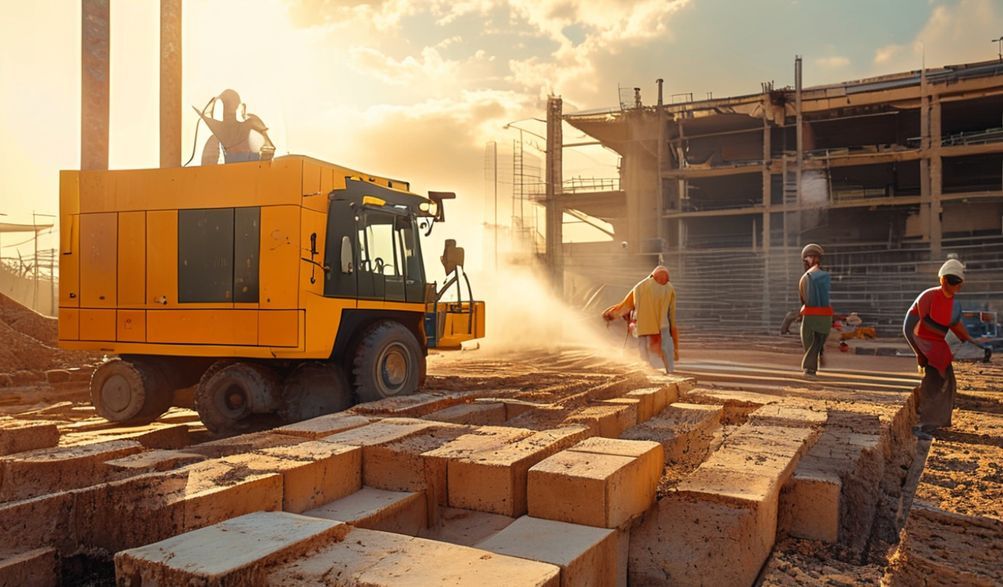
คู่มือขั้นสุดยอดสำหรับเครื่องทำบล็อกขายในเคนยา | ข้อมูลเชิงลึกจากผู้เชี่ยวชาญของโรงงานฟู่ต้า
บทนำ
เส้นขอบฟ้าของเคนยากำลังเปลี่ยนแปลง จากโครงการบ้านราคาไม่แพงที่มุ่งมั่น ไปจนถึงการพัฒนาของเอกชนในศูนย์กลางเมืองที่กำลังเติบโต ความต้องการวัสดุก่อสร้างคุณภาพไม่เคยสูงขนาดนี้มาก่อน หัวใจสำคัญของความเฟื่องฟูในการก่อสร้างนี้คือองค์ประกอบที่สำคัญ: อิฐและบล็อกที่เรียบง่ายแต่จำเป็น สำหรับผู้ประกอบการ ผู้รับเหมา และบริษัทก่อสร้าง การตัดสินใจลงทุนในเครื่องทำบล็อกไม่ใช่แค่การซื้อ แต่เป็นกลยุทธ์ทางธุรกิจที่สำคัญที่สามารถกำหนดความสามารถในการทำกำไร คุณภาพ และการเติบโต
คู่มือนี้ทำหน้าที่เป็นแหล่งข้อมูลที่ครอบคลุมและเป็นกลางสำหรับการสำรวจตลาดเครื่องผลิตบล็อกในเคนยา ด้วยประสบการณ์เชิงลึกในอุตสาหกรรมที่สอดคล้องกับมาตรฐานการผลิตระดับโลก และความเข้าใจเฉพาะด้านเกี่ยวกับสภาพแวดล้อมการดำเนินงานเฉพาะของเคนยา ตั้งแต่สภาพดินที่หลากหลายไปจนถึงความท้าทายด้านแหล่งจ่ายไฟฟ้า เป้าหมายของเราคือการมอบความรู้เชิงข้อเท็จจริงและปฏิบัติได้จริง เราจะวิเคราะห์ประเภทเครื่องจักรต่างๆ แยกแยะต้นทุนการเป็นเจ้าของที่แท้จริง และจัดเตรียมกรอบการประเมินซัพพลายเออร์ พร้อมทั้งสำรวจข้อเสนอจากผู้ผลิตที่ได้รับการยอมรับ เช่น โรงงานผลิตบล็อก FUDA เมื่อจบคู่มือนี้ คุณจะมีแผนที่เส้นทางที่ชัดเจนเพื่อการลงทุนที่มั่นใจและรอบรู้ ซึ่งไม่เพียงแต่สร้างกำแพง แต่ยังสร้างธุรกิจของคุณให้เติบโต
ทำความเข้าใจตลาดเครื่องผลิตบล็อกในเคนยา
ความต้องการเครื่องจักรผลิตบล็อกที่เพิ่มสูงขึ้นไม่ใช่เรื่องบังเอิญ แต่เป็นการตอบสนองโดยตรงต่อแรงผลักดันทางเศรษฐกิจและสังคมที่ทรงพลังซึ่งกำลังกำหนดทิศทางของประเทศ การทำความเข้าใจปัจจัยขับเคลื่อนเหล่านี้และความแตกต่างเฉพาะท้องถิ่นถือเป็นก้าวแรกสู่การลงทุนที่ชาญฉลาด
ปัจจัยขับเคลื่อนตลาด: เหตุใดความต้องการจึงเพิ่มขึ้นในเคนยา
- วาระที่อยู่อาศัยราคาไม่แพงของรัฐบาล:โครงการเรือธงภายใต้วาระบิ๊กโฟร์นี้เป็นเครื่องยนต์หลักที่มุ่งหมายในการส่งมอบหน่วยที่อยู่อาศัยนับแสนหน่วย ซึ่งก่อให้เกิดความต้องการอย่างมหาศาลและต่อเนื่องสำหรับบล็อกคุณภาพมาตรฐาน
- การขยายตัวของเมืองและการพัฒนาระบบโครงสร้างพื้นฐานอย่างรวดเร็วเทศมณฑลกำลังเติบโต และมาพร้อมกับความต้องการที่อยู่อาศัยใหม่ อาคารพาณิชย์ ถนน และโรงเรียน การผลิตบล็อกด้วยเครื่องจักรกลเป็นกุญแจสำคัญในการตอบสนองความต้องการในระดับนี้อย่างมีประสิทธิภาพ
- การเปลี่ยนจากการผลิตด้วยมือไปสู่การผลิตด้วยเครื่องจักรมีความตระหนักมากขึ้นว่าการผลิตด้วยมือเป็นจุดคอขวด เครื่องจักรให้ความสม่ำเสมอที่เหนือกว่า ผลิตบล็อกที่มีความแข็งแรงสูงกว่า และสามารถตอบสนองกำหนดเวลาสำหรับคำสั่งซื้อขนาดใหญ่ได้ ซึ่งทำให้ธุรกิจได้เปรียบในการแข่งขัน
ข้อควรพิจารณาหลักสำหรับบริบทของเคนยา
การซื้อเครื่องจักรที่ออกแบบมาสำหรับตลาดยุโรปไม่รับประกันความสำเร็จที่นี่ บริบทของเคนยาต้องการการปรับตัวเฉพาะทาง
- วัตถุดิบท้องถิ่น:ดินทรายและส่วนผสมปูนซีเมนต์ของเคนยาอาจแตกต่างกันอย่างมากตามภูมิภาค เครื่องจักรที่มีคุณภาพจะต้องมีการตั้งค่าความถี่การสั่นสะเทือนและความดันที่ปรับได้เพื่ออัดแน่นวัสดุท้องถิ่นเหล่านี้อย่างมีประสิทธิภาพ สร้างบล็อกที่หนาแน่นและแข็งแรงทุกครั้ง
- แหล่งจ่ายไฟ:ความไม่เสถียรของโครงข่ายไฟฟ้าในบางพื้นที่เป็นความเสี่ยงในการดำเนินงานที่แท้จริง สิ่งนี้ทำให้ความพร้อมใช้งานของเครื่องยนต์ที่ใช้พลังงานดีเซลหรือรุ่นไฮบริด (ไฟฟ้า/ดีเซล)คุณสมบัติที่สำคัญ ควรประเมินความน่าเชื่อถือของแหล่งจ่ายไฟและเลือกเครื่องที่สามารถทำงานได้แม้ในเวลาที่ไฟดับ
- การสนับสนุนหลังการขาย:นี่อาจเป็นปัจจัยที่สำคัญที่สุด เครื่องจักรเป็นสินทรัพย์ระยะยาว คุณต้องตรวจสอบความพร้อมของการสนับสนุนทางเทคนิคในพื้นที่, ชิ้นส่วนอะไหล่ที่พร้อมใช้งานได้ทันที, และการฝึกอบรมผู้ปฏิบัติงานอย่างครอบคลุมเครื่องจักรที่ดีที่สุดก็ไร้ประโยชน์หากมันเสียและต้องหยุดทำงานเป็นสัปดาห์เพื่อรออะไหล่จากต่างประเทศ
ประเภทของเครื่องอัดบล็อก: เครื่องไหนเหมาะกับโครงการของคุณ?
การเลือกประเภทของเครื่องจักรที่เหมาะสมขึ้นอยู่กับขนาดโครงการ งบประมาณ และเป้าหมายผลผลิตของคุณ นี่คือการแยกประเภทที่พบได้บ่อยที่สุด
เครื่องจักรแบบใช้มือและกึ่งอัตโนมัติ
- เหมาะสำหรับ:สตาร์ทอัพ ผู้สร้างขนาดเล็ก โครงการชุมชน (CBOs) และผู้ที่มีความต้องการผลผลิตต่อวันต่ำมาก (เช่น ต่ำกว่า 500 บล็อก)
- ข้อดี:
- การลงทุนเริ่มต้นต่ำจุดเริ่มต้นที่เข้าถึงได้มากที่สุดในการผลิตบล็อก
- ความเรียบง่ายและพกพาสะดวกใช้งานง่าย บำรุงรักษาง่าย และเคลื่อนย้ายไปรอบๆ ไซต์งานได้สะดวก
- Low Power Requirement: Often only needs manual labor or a small mixer.
- ข้อเสีย
- High Labor Intensity: Requires significant physical effort, limiting output.
- คุณภาพไม่คงที่ Heavily dependent on operator skill, leading to potential variations in block size and density.
- ผลผลิตต่ำ Not suitable for commercial supply or medium-to-large projects.
เครื่องจักรนิ่งอัตโนมัติเต็มรูปแบบ
- เหมาะสำหรับ: Established block yards, suppliers to construction firms, and entrepreneurs targeting the medium-to-high-volume market (e.g., 2,000 to 10,000+ blocks per day).
- ข้อดี:
- High Output & Efficiency: Automated processes (batching, mixing, molding, curing) enable consistent, high-volume production.
- Superior & Consistent Quality: Programmed settings ensure every block meets the same strength and dimensional standard.
- Reduced Labor Costs: Automates the most strenuous tasks, requiring fewer operators for a higher output.
- ข้อเสีย
- Higher Capital Cost: Requires a more significant upfront investment.
- Requires Stable Setup Space: Needs a dedicated, prepared yard with space for curing and storage.
- Greater Technical Knowledge: Operators need proper training on the control systems and maintenance routines.
Mobile Block Machines (Egg Layers)
- เหมาะสำหรับ: Large-scale construction projects (like a new school or housing estate) where producing blocks directly on-site eliminates substantial transport costs.
- ข้อดี:
- Excellent Mobility: Can be towed to different locations on a project site as needed.
- Cost-Effective for On-Site Work: Saves up to 30% or more on logistics by curing and using blocks where they are made.
- Simpler than Full Plants: Easier to set up and operate than a full stationary plant.
- ข้อเสีย
- ผลผลิตต่ำ Generally produces fewer blocks per hour than a large stationary automatic machine.
- Still Labor-Intensive: Often requires manual feeding and block removal, though more efficient than purely manual methods.
Spotlight: Evaluating FUDA Block Making Machines for the Kenyan Market
As you research, you’ll encounter various brands. FUDA is one established global manufacturer whose machines are available in Kenya. A balanced, informed evaluation is key.
ภาพรวมของ FUDA ในฐานะผู้ผลิต
FUDA is a Chinese heavy machinery manufacturer with a significant global footprint in construction equipment, including concrete block making machines. They offer a range of models, from semi-automatic to fully automatic stationary plants and mobile egg layers. Their reputation is built on providing a balance of capability and cost-effectiveness. For the Kenyan market, models that emphasize durability and adaptability to local conditions are most relevant.
Key Features to Scrutinize in a FUDA Machine
If considering a FUDA machine, move beyond the brochure. Inspect these critical aspects:
- Build Quality & Durability: Examine the steel frame thickness and the robustness of the vibration system. High-frequency, high-amplitude vibration motors are essential for compacting Kenyan raw materials into strong blocks. Ask about the grade of steel used in the mold and press head—these are high-wear parts.
- Production Capacity & Versatility: Don’t just look at the “blocks per hour” for a standard hollow block. Verify what other products the machine can produce with a simple mold change—interlocking blocks, paving slabs, kerbstones, etc. Versatility future-proofs your investment against market shifts.
- Automation Level & Ease of Use: Understand the control system. Is it a simple button panel or a programmable logic controller (PLC)? A PLC offers more precision but may require more skilled maintenance. Ask about the daily and weekly maintenance routine—is it straightforward for your team to perform?
The Critical Importance of Local Dealer & Support
This point cannot be overstated. The FUDA machine you buy is only as reliable as the Kenyan dealer who sells and supports it.
- Verify the dealer has a physical workshop and showroom.
- Check their inventory of common spare parts (like vibration motors, seals, and mold liners). Long lead times for parts cripple production.
- Insist on details about their technical team. Are they factory-trained? Can they provide on-site installation and training?
- ขอถามหน่อยcontactable references from other local businesses who have purchased from them.
The Real Cost of Owning a Block Making Machine in Kenya
The purchase price is just the beginning. A savvy buyer plans for the Total Cost of Ownership (TCO).
Upfront Purchase Price vs. Total Investment
The initial outlay includes several components:
* Ex-Works Machine Price: The base cost from the factory or local stockist.
* การขนส่งและโลจิสติกส์ Cost of transport to Mombasa port and then to your yard.
* Customs Duty & Taxes: Budget approximately 25-35% of the CIF value for import duty, VAT, and other levies. Consult a clearing agent for an exact estimate.
* การติดตั้งและการทดสอบระบบ Some suppliers include this; others charge extra. Factor in costs for a level concrete foundation for stationary machines.
Operational Costs Breakdown
Your ongoing expenses determine profitability:
* วัตถุดิบ: Cement, sand, ballast, and water. The machine’s efficiency (waste percentage) directly impacts this cost.
* แรงงาน Wages for operators, mixers, and those handling cured blocks.
* Power/Fuel: Electricity consumption for electric motors or diesel costs for engine-driven models.
* การบำรุงรักษาและซ่อมแซม: Regular servicing, replacement of wear parts (molds, pallets), and unexpected repairs. A machine with good local support minimizes downtime costs.
Calculating Your Return on Investment (ROI)
A simple framework to estimate viability:
1. Calculate Total Investment: Sum all upfront costs (A).
2. Estimate Monthly Operational Cost: Add up all ongoing expenses (B).
3. Determine Monthly Revenue: (Monthly block output) x (Selling price per block) = (C).
4. Monthly Profit: C – B = D.
5. Break-Even Point (Months): A / D.
ตัวอย่าง If your total investment is KES 2,000,000 and your monthly profit is KES 200,000, your simple payback period is 10 months. Always use conservative estimates for output and price.
A Step-by-Step Buyer’s Checklist
Follow this actionable plan to avoid costly mistakes.
Before You Contact a Seller (Needs Assessment)
Answer these questions first:
* What is my target daily output in blocks?
* What types of blocks do my target customers need? (Hollow, solid, interlocking, paving?)
* What is my total budget, including shipping, taxes, and installation?
* What are my site conditions? (Space, power access, raw material source?)
Questions to Ask Every Supplier (Including FUDA Dealers)
Arm yourself with this list:
* “What is the exact warranty period and what does it cover? Is it handled locally or from abroad?”
* “Can you provide comprehensive operator training on-site?”
* “May I have a list of 3-5 local clients I can visit or call for a reference?”
* “What is your standard lead time for critical spare parts? Do you stock them here in Kenya?”
* “What is included in the delivery price? (FOB, CIF, installed?)”
The Site Visit & Machine Test
Never buy blind.
* Insist on seeing a working machine. A video is not enough.
* Ideally, visit a current client’s yard to see the machine in operation and speak candidly with the owner about performance and support.
* If possible, conduct a test production run using a sample of your own raw materials to see the block quality firsthand.
คำถามที่พบบ่อย (FAQ)
Q: What is the price range for a good quality block making machine in Kenya?
ก Prices vary dramatically. A simple manual machine can start from KES 150,000, a robust semi-automatic from KES 500,000, while a fully automatic stationary plant can range from KES 2 million to KES 10 million or more. Remember, the cheapest option often carries the highest long-term cost in repairs and downtime.
Q: Can FUDA machines produce interlocking stabilised soil blocks (ISSBs) popular in some Kenyan projects?
ก Producing high-strength ISSBs requires a machine capable of very high compression pressure. While some FUDA models may be adaptable, you must confirm the specific model’s pressure capability (measured in kN or ton-force) with the supplier and likely require a specialized mold. Always request a test with stabilized soil.
Q: How do I ensure I’m dealing with a legitimate supplier and not a scam?
ก 1) Visit their physical office and workshop. 2) Verify their registration with the Business Registration Service. 3) Demand and actually contact client references. 4) Be wary of prices that seem too good to be true. 5) Never make full payment upfront before delivery and installation. Use secure payment methods.
Q: What is the typical lead time from order to installation?
ก If the machine is in local stock, it could be 2-4 weeks for delivery and installation. For an ex-factory order from abroad, lead time is typically 60-90 days for manufacturing, plus 30-45 days for shipping and customs clearance. Always get a written timeline in your contract.
สรุป
Choosing the right block making machine is a strategic decision that hinges on a clear understanding of your business goals, a realistic assessment of costs, and, most importantly, the quality of local support available. From manual starters to fully automatic plants, the ideal machine is the one that reliably meets your production targets within your operational context.
Prioritize total value—where quality machinery meets exceptional after-sales service—over the allure of the lowest initial price tag. We encourage you to use the checklist and frameworks provided here as you visit multiple suppliers, inspect machines in operation, and speak with fellow builders.
Ready to take the next step? Use the knowledge in this guide to ask the right questions and evaluate your options thoroughly. For detailed specifications and quotes, engage with reputable local machinery suppliers who have a verifiable track record of supporting their clients in Kenya. Your informed due diligence today is the foundation for a profitable and sustainable business tomorrow.
<