
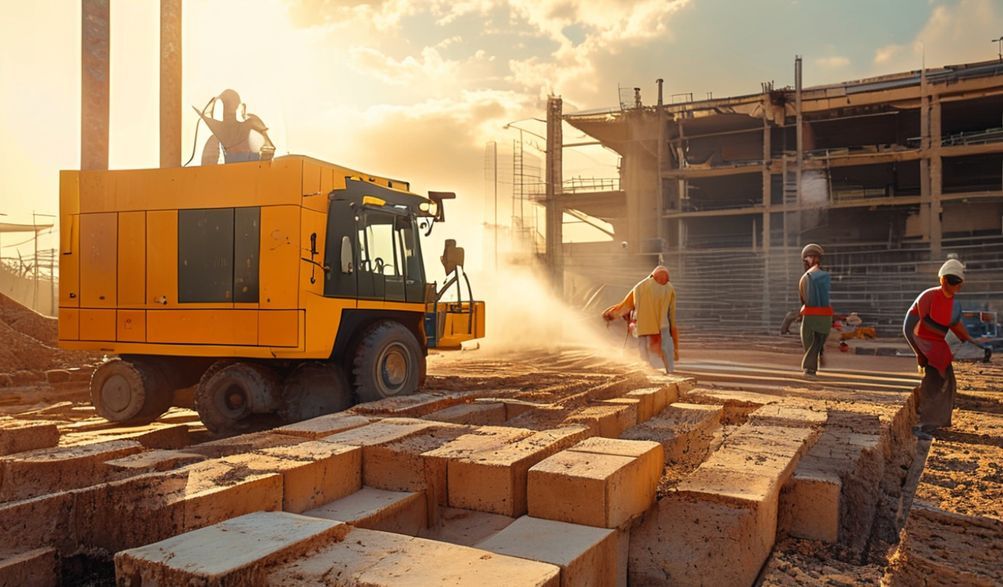
Tu Guía Definitiva para Máquinas de Fabricación de Bloques en Venta en Kenia | Perspectivas Expertas de la Fábrica FUDA
Introducción
El horizonte de Kenia está en transformación. Desde el ambicioso Programa de Vivienda Asequible hasta los desarrollos privados en centros urbanos en auge, la demanda de materiales de construcción de calidad nunca ha sido tan alta. En el corazón de este boom de la construcción se encuentra un componente crítico: el humilde, pero esencial, ladrillo y bloque. Para emprendedores, contratistas y empresas constructoras, la decisión de invertir en una máquina para fabricar bloques no es solo una compra, es una estrategia empresarial fundamental que puede definir la rentabilidad, la calidad y el crecimiento.
Esta guía sirve como su recurso integral e imparcial para navegar el mercado de máquinas para fabricar bloques en Kenia. Basándonos en una profunda experiencia en la industria con estándares de fabricación global y una comprensión específica del panorama operativo único de Kenia—desde las variables condiciones del suelo hasta los desafíos en el suministro eléctrico—nuestro objetivo es proporcionarle conocimiento factual y práctico. Analizaremos los diferentes tipos de máquinas, desglosaremos el costo real de propiedad y ofreceremos un marco para evaluar proveedores, incluyendo una mirada detallada a las ofertas de fabricantes establecidos como la fábrica de bloques FUDA. Al final, tendrá un mapa claro para realizar una inversión segura e informada que construya más que solo paredes; construirá su negocio.
Comprender el Mercado de Máquinas para Fabricar Bloques en Kenia
El aumento en la demanda de máquinas para fabricar bloques no es casualidad. Es una respuesta directa a las poderosas fuerzas económicas y sociales que están moldeando al país. Comprender estos impulsores y los matices locales es el primer paso para una inversión inteligente.
Impulsores del Mercado: Por Qué la Demanda está Creciendo en Kenia
- Agenda del Gobierno para la Vivienda Asequible:Este proyecto insignia bajo la Agenda de los Cuatro Grandes es un motor principal, que busca entregar cientos de miles de unidades de vivienda. Esto genera una demanda masiva y sostenida de bloques estandarizados y de calidad.
- Urbanización Rápida y Desarrollo de Infraestructura:Los condados están creciendo, y con ellos surge la necesidad de nuevas viviendas, edificios comerciales, carreteras y escuelas. La producción mecanizada de bloques es clave para satisfacer esta escala de manera eficiente.
- Cambio de la Producción Manual a la Mecanizada:Existe un creciente reconocimiento de que la producción manual es un cuello de botella. Las máquinas ofrecen una consistencia superior, bloques de mayor resistencia y la capacidad de cumplir con los plazos de pedidos grandes, lo que brinda a las empresas una ventaja competitiva.
Consideraciones Clave para el Contexto Keniano
Comprar una máquina diseñada para el mercado europeo no garantiza el éxito aquí. El contexto keniano exige adaptaciones específicas.
- Materias Primas Locales:Las mezclas de suelo, arena y cemento en Kenia pueden variar significativamente según la región. Una máquina de calidad debe tener ajustes de frecuencia de vibración y presión regulables para compactar estos materiales locales de manera efectiva, produciendo un bloque denso y resistente en cada ocasión.
- Fuente de alimentación:La inestabilidad de la red en algunas áreas es un riesgo operativo real. Esto hace que la disponibilidad deMotores diésel.oModelos híbridos (eléctricos/diésel)Una característica crucial. Siempre evalúe la confiabilidad de su suministro eléctrico y elija una máquina que no quede inactiva durante los cortes de energía.
- Soporte Postventa:Este es quizás el factor más crítico. Una máquina es un activo a largo plazo. Debes verificar la disponibilidad desoporte técnico local, repuestos fácilmente disponibles y capacitación integral para operadoresLa mejor máquina es inútil si se descompone y permanece averiada durante semanas esperando una pieza del extranjero.
Tipos de Máquinas para Hacer Bloques: ¿Cuál se Ajusta a tu Proyecto?
La elección del tipo de máquina adecuada depende de la escala de tu proyecto, el presupuesto y los objetivos de producción. Aquí tienes un desglose de las categorías más comunes.
Máquinas Manuales y Semiautomáticas
- Ideal para:Nuevas empresas, constructores a pequeña escala, proyectos comunitarios (CBOs) y aquellos con requisitos de producción diaria muy bajos (por ejemplo, menos de 500 bloques).
- Pros:
- Baja Inversión Inicial:El punto de entrada más asequible a la producción de bloques.
- Simplicidad y Portabilidad:Fácil de operar, mantener y desplazar por un sitio.
- Bajo Requisito de Energía:A menudo solo requiere mano de obra o una pequeña mezcladora.
- Contras:
- Alta Intensidad de Mano de Obra:Requiere un esfuerzo físico significativo, lo que limita la producción.
- Calidad Inconsistente:Altamente dependiente de la habilidad del operador, lo que puede provocar variaciones en el tamaño y la densidad del bloque.
- Salida inferior:No apto para suministro comercial o proyectos medianos a grandes.
Máquinas Estacionarias Completamente Automáticas
- Ideal para:Patios de bloques establecidos, proveedores para empresas de construcción y emprendedores dirigidos al mercado de volumen medio a alto (por ejemplo, de 2,000 a más de 10,000 bloques por día).
- Pros:
- High Output & Efficiency: Automated processes (batching, mixing, molding, curing) enable consistent, high-volume production.
- Superior & Consistent Quality: Programmed settings ensure every block meets the same strength and dimensional standard.
- Reduced Labor Costs: Automates the most strenuous tasks, requiring fewer operators for a higher output.
- Contras:
- Higher Capital Cost: Requires a more significant upfront investment.
- Requires Stable Setup Space: Needs a dedicated, prepared yard with space for curing and storage.
- Greater Technical Knowledge: Operators need proper training on the control systems and maintenance routines.
Mobile Block Machines (Egg Layers)
- Ideal para: Large-scale construction projects (like a new school or housing estate) where producing blocks directly on-site eliminates substantial transport costs.
- Pros:
- Excellent Mobility: Can be towed to different locations on a project site as needed.
- Cost-Effective for On-Site Work: Saves up to 30% or more on logistics by curing and using blocks where they are made.
- Simpler than Full Plants: Easier to set up and operate than a full stationary plant.
- Contras:
- Salida inferior: Generally produces fewer blocks per hour than a large stationary automatic machine.
- Still Labor-Intensive: Often requires manual feeding and block removal, though more efficient than purely manual methods.
Spotlight: Evaluating FUDA Block Making Machines for the Kenyan Market
As you research, you’ll encounter various brands. FUDA is one established global manufacturer whose machines are available in Kenya. A balanced, informed evaluation is key.
Descripción General de FUDA como Fabricante
FUDA is a Chinese heavy machinery manufacturer with a significant global footprint in construction equipment, including concrete block making machines. They offer a range of models, from semi-automatic to fully automatic stationary plants and mobile egg layers. Their reputation is built on providing a balance of capability and cost-effectiveness. For the Kenyan market, models that emphasize durability and adaptability to local conditions are most relevant.
Key Features to Scrutinize in a FUDA Machine
If considering a FUDA machine, move beyond the brochure. Inspect these critical aspects:
- Calidad de Construcción y Durabilidad: Examine the steel frame thickness and the robustness of the vibration system. High-frequency, high-amplitude vibration motors are essential for compacting Kenyan raw materials into strong blocks. Ask about the grade of steel used in the mold and press head—these are high-wear parts.
- Production Capacity & Versatility: Don’t just look at the “blocks per hour” for a standard hollow block. Verify what other products the machine can produce with a simple mold change—interlocking blocks, paving slabs, kerbstones, etc. Versatility future-proofs your investment against market shifts.
- Automation Level & Ease of Use: Understand the control system. Is it a simple button panel or a programmable logic controller (PLC)? A PLC offers more precision but may require more skilled maintenance. Ask about the daily and weekly maintenance routine—is it straightforward for your team to perform?
The Critical Importance of Local Dealer & Support
This point cannot be overstated. The FUDA machine you buy is only as reliable as the Kenyan dealer who sells and supports it.
- Verify the dealer has a physical workshop and showroom.
- Check their inventory of common spare parts (like vibration motors, seals, and mold liners). Long lead times for parts cripple production.
- Insist on details about their technical team. Are they factory-trained? Can they provide on-site installation and training?
- Pidecontactable references from other local businesses who have purchased from them.
The Real Cost of Owning a Block Making Machine in Kenya
The purchase price is just the beginning. A savvy buyer plans for the Total Cost of Ownership (TCO).
Upfront Purchase Price vs. Total Investment
The initial outlay includes several components:
* Ex-Works Machine Price: The base cost from the factory or local stockist.
* Envíos y Logística: Cost of transport to Mombasa port and then to your yard.
* Customs Duty & Taxes: Budget approximately 25-35% of the CIF value for import duty, VAT, and other levies. Consult a clearing agent for an exact estimate.
* Instalación y Puesta en Marcha: Some suppliers include this; others charge extra. Factor in costs for a level concrete foundation for stationary machines.
Operational Costs Breakdown
Your ongoing expenses determine profitability:
* Materias Primas: Cement, sand, ballast, and water. The machine’s efficiency (waste percentage) directly impacts this cost.
* Trabajo: Wages for operators, mixers, and those handling cured blocks.
* Power/Fuel: Electricity consumption for electric motors or diesel costs for engine-driven models.
* Mantenimiento y Reparaciones: Regular servicing, replacement of wear parts (molds, pallets), and unexpected repairs. A machine with good local support minimizes downtime costs.
Calculating Your Return on Investment (ROI)
A simple framework to estimate viability:
1. Calculate Total Investment: Sum all upfront costs (A).
2. Estimate Monthly Operational Cost: Add up all ongoing expenses (B).
3. Determine Monthly Revenue: (Monthly block output) x (Selling price per block) = (C).
4. Monthly Profit: C – B = D.
5. Break-Even Point (Months): A / D.
Ejemplo: If your total investment is KES 2,000,000 and your monthly profit is KES 200,000, your simple payback period is 10 months. Always use conservative estimates for output and price.
A Step-by-Step Buyer’s Checklist
Follow this actionable plan to avoid costly mistakes.
Before You Contact a Seller (Needs Assessment)
Answer these questions first:
* What is my target daily output in blocks?
* What types of blocks do my target customers need? (Hollow, solid, interlocking, paving?)
* What is my total budget, including shipping, taxes, and installation?
* What are my site conditions? (Space, power access, raw material source?)
Questions to Ask Every Supplier (Including FUDA Dealers)
Arm yourself with this list:
* “What is the exact warranty period and what does it cover? Is it handled locally or from abroad?”
* “Can you provide comprehensive operator training on-site?”
* “May I have a list of 3-5 local clients I can visit or call for a reference?”
* “What is your standard lead time for critical spare parts? Do you stock them here in Kenya?”
* “What is included in the delivery price? (FOB, CIF, installed?)”
The Site Visit & Machine Test
Never buy blind.
* Insist on seeing a working machine. A video is not enough.
* Ideally, visit a current client’s yard to see the machine in operation and speak candidly with the owner about performance and support.
* If possible, conduct a test production run using a sample of your own raw materials to see the block quality firsthand.
Frequently Asked Questions (FAQ)
Q: What is the price range for a good quality block making machine in Kenya?
A: Prices vary dramatically. A simple manual machine can start from KES 150,000, a robust semi-automatic from KES 500,000, while a fully automatic stationary plant can range from KES 2 million to KES 10 million or more. Remember, the cheapest option often carries the highest long-term cost in repairs and downtime.
Q: Can FUDA machines produce interlocking stabilised soil blocks (ISSBs) popular in some Kenyan projects?
A: Producing high-strength ISSBs requires a machine capable of very high compression pressure. While some FUDA models may be adaptable, you must confirm the specific model’s pressure capability (measured in kN or ton-force) with the supplier and likely require a specialized mold. Always request a test with stabilized soil.
Q: How do I ensure I’m dealing with a legitimate supplier and not a scam?
A: 1) Visit their physical office and workshop. 2) Verify their registration with the Business Registration Service. 3) Demand and actually contact client references. 4) Be wary of prices that seem too good to be true. 5) Never make full payment upfront before delivery and installation. Use secure payment methods.
Q: What is the typical lead time from order to installation?
A: If the machine is in local stock, it could be 2-4 weeks for delivery and installation. For an ex-factory order from abroad, lead time is typically 60-90 days for manufacturing, plus 30-45 days for shipping and customs clearance. Always get a written timeline in your contract.
Conclusión
Choosing the right block making machine is a strategic decision that hinges on a clear understanding of your business goals, a realistic assessment of costs, and, most importantly, the quality of local support available. From manual starters to fully automatic plants, the ideal machine is the one that reliably meets your production targets within your operational context.
Prioritize total value—where quality machinery meets exceptional after-sales service—over the allure of the lowest initial price tag. We encourage you to use the checklist and frameworks provided here as you visit multiple suppliers, inspect machines in operation, and speak with fellow builders.
Ready to take the next step? Use the knowledge in this guide to ask the right questions and evaluate your options thoroughly. For detailed specifications and quotes, engage with reputable local machinery suppliers who have a verifiable track record of supporting their clients in Kenya. Your informed due diligence today is the foundation for a profitable and sustainable business tomorrow.
<