
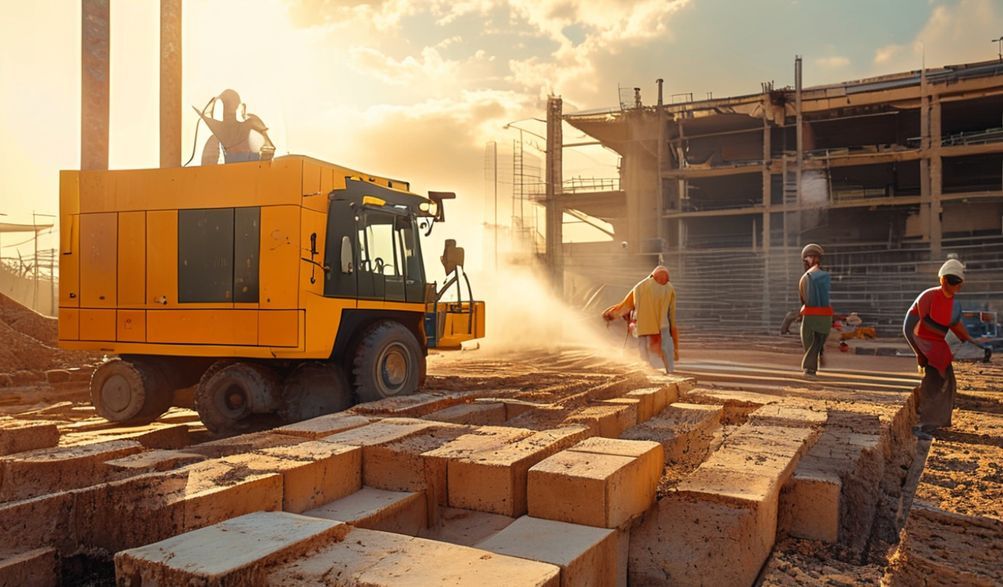
Ваше исчерпывающее руководство по машинам для производства блоков в продаже в Кении | Экспертные рекомендации от завода FUDA
Введение
Горизонт Кении меняется. От амбициозной программы доступного жилья до частных застроек в растущих городских центрах — спрос на качественные строительные материалы как никогда высок. В основе этого строительного бума лежит ключевой компонент: скромный, но незаменимый кирпич и блок. Для предпринимателей, подрядчиков и строительных компаний решение инвестировать в станок для производства блоков — это не просто покупка, а ключевая бизнес-стратегия, способная определить прибыльность, качество и рост.
Это руководство является вашим всеобъемлющим и объективным ресурсом для ориентации на рынке станков для производства блоков в Кении. Основываясь на глубоком отраслевом опыте в соответствии с мировыми стандартами производства и конкретном понимании уникальных условий работы в Кении — от переменчивых почвенных условий до проблем с электроснабжением — наша цель состоит в том, чтобы вооружить вас фактическими и практическими знаниями. Мы разберем различные типы машин, проанализируем истинную стоимость владения и предоставим основу для оценки поставщиков, включая подробный обзор предложений от известных производителей, таких как завод по производству блоков FUDA. К концу руководства у вас будет четкий план действий, позволяющий сделать уверенные и обоснованные инвестиции, которые построят не просто стены, а ваш бизнес.
Понимание рынка машин для производства блоков в Кении
Рост спроса на машины для производства блоков — не случайность. Это прямая реакция на мощные экономические и социальные силы, формирующие страну. Понимание этих движущих факторов и местных особенностей — первый шаг к разумным инвестициям.
Факторы роста рынка: почему в Кении растет спрос
- Программа правительства по доступному жилью:Этот флагманский проект в рамках программы "Большая четверка" является основным двигателем, нацеленным на обеспечение сотен тысяч жилых единиц. Это создает огромный, устойчивый спрос на стандартизированные, качественные строительные блоки.
- Быстрая урбанизация и развитие инфраструктуры:Округа растут, и вместе с этим возникает потребность в новых домах, коммерческих зданиях, дорогах и школах. Механизированное производство блоков играет ключевую роль в эффективном удовлетворении этих масштабов.
- Переход от ручного к механизированному производству:Растёт понимание того, что ручное производство является узким местом. Машины обеспечивают превосходную стабильность, более прочные блоки и возможность соблюдать сроки крупных заказов, что даёт предприятиям конкурентное преимущество.
Ключевые аспекты для контекста Кении
Покупка машины, разработанной для европейского рынка, не гарантирует успеха здесь. Кенийский контекст требует специфических адаптаций.
- Местное сырье:Кенийские смеси почвы, песка и цемента могут значительно различаться в зависимости от региона. Качественная машина должна иметь регулируемые настройки частоты вибрации и давления для эффективного уплотнения этих местных материалов, обеспечивая каждый раз получение плотного и прочного блока.
- Источник питания:Нестабильность энергосистемы в некоторых регионах представляет реальный операционный риск. Это делает доступностьдизельные двигателиилигибридные (электрические/дизельные) моделиКлючевая особенность. Всегда оценивайте надежность электроснабжения и выбирайте устройство, которое не будет простаивать при отключениях электроэнергии.
- Послепродажная поддержка:Это, пожалуй, самый критический фактор. Станки — это долгосрочные активы. Необходимо убедиться в наличииместная техническая поддержка, легкодоступные запасные части и всестороннее обучение операторовЛучшая машина бесполезна, если она ломается и остаётся неисправной неделями в ожидании детали из-за границы.
Виды станков для производства блоков: какой подходит для вашего проекта?
Выбор подходящего типа машины зависит от масштаба вашего проекта, бюджета и целей по производительности. Вот разбивка наиболее распространенных категорий.
Ручные и полуавтоматические машины
- Идеально подходит для:Стартапы, мелкие строители, общественные проекты (CBOs) и те, у кого очень низкие ежедневные потребности в производстве (например, менее 500 блоков).
- Плюсы:
- Низкие первоначальные инвестиции:Самый доступный вход в производство блоков.
- Простота и портативность:Простота в эксплуатации, обслуживании и перемещении по объекту.
- Низкое энергопотребление:Часто требуется только ручной труд или небольшая бетономешалка.
- Минусы:
- Высокая трудоемкость:Требует значительных физических усилий, ограничивая производительность.
- Нестабильное качество:Сильно зависит от навыков оператора, что может приводить к вариациям в размере и плотности блока.
- Нижний выход:Не подходит для коммерческих поставок или средних и крупных проектов.
Полностью автоматические стационарные машины
- Идеально подходит для:Созданные площадки для хранения блоков, поставщики строительных компаний и предприниматели, ориентированные на рынок среднего и высокого объема (например, от 2 000 до 10 000+ блоков в день).
- Плюсы:
- High Output & Efficiency: Automated processes (batching, mixing, molding, curing) enable consistent, high-volume production.
- Высокое и стабильное качество: Programmed settings ensure every block meets the same strength and dimensional standard.
- Reduced Labor Costs: Automates the most strenuous tasks, requiring fewer operators for a higher output.
- Минусы:
- Higher Capital Cost: Requires a more significant upfront investment.
- Requires Stable Setup Space: Needs a dedicated, prepared yard with space for curing and storage.
- Greater Technical Knowledge: Operators need proper training on the control systems and maintenance routines.
Mobile Block Machines (Egg Layers)
- Идеально подходит для: Large-scale construction projects (like a new school or housing estate) where producing blocks directly on-site eliminates substantial transport costs.
- Плюсы:
- Excellent Mobility: Can be towed to different locations on a project site as needed.
- Cost-Effective for On-Site Work: Saves up to 30% or more on logistics by curing and using blocks where they are made.
- Simpler than Full Plants: Easier to set up and operate than a full stationary plant.
- Минусы:
- Нижний выход: Generally produces fewer blocks per hour than a large stationary automatic machine.
- Still Labor-Intensive: Often requires manual feeding and block removal, though more efficient than purely manual methods.
Spotlight: Evaluating FUDA Block Making Machines for the Kenyan Market
As you research, you’ll encounter various brands. FUDA is one established global manufacturer whose machines are available in Kenya. A balanced, informed evaluation is key.
Обзор FUDA как производителя
FUDA is a Chinese heavy machinery manufacturer with a significant global footprint in construction equipment, including concrete block making machines. They offer a range of models, from semi-automatic to fully automatic stationary plants and mobile egg layers. Their reputation is built on providing a balance of capability and cost-effectiveness. For the Kenyan market, models that emphasize durability and adaptability to local conditions are most relevant.
Key Features to Scrutinize in a FUDA Machine
If considering a FUDA machine, move beyond the brochure. Inspect these critical aspects:
- Качество сборки и долговечность: Examine the steel frame thickness and the robustness of the vibration system. High-frequency, high-amplitude vibration motors are essential for compacting Kenyan raw materials into strong blocks. Ask about the grade of steel used in the mold and press head—these are high-wear parts.
- Production Capacity & Versatility: Don’t just look at the “blocks per hour” for a standard hollow block. Verify what other products the machine can produce with a simple mold change—interlocking blocks, paving slabs, kerbstones, etc. Versatility future-proofs your investment against market shifts.
- Automation Level & Ease of Use: Understand the control system. Is it a simple button panel or a programmable logic controller (PLC)? A PLC offers more precision but may require more skilled maintenance. Ask about the daily and weekly maintenance routine—is it straightforward for your team to perform?
The Critical Importance of Local Dealer & Support
This point cannot be overstated. The FUDA machine you buy is only as reliable as the Kenyan dealer who sells and supports it.
- Verify the dealer has a physical workshop and showroom.
- Check their inventory of common spare parts (like vibration motors, seals, and mold liners). Long lead times for parts cripple production.
- Insist on details about their technical team. Are they factory-trained? Can they provide on-site installation and training?
- Попроситеcontactable references from other local businesses who have purchased from them.
The Real Cost of Owning a Block Making Machine in Kenya
The purchase price is just the beginning. A savvy buyer plans for the Total Cost of Ownership (TCO).
Upfront Purchase Price vs. Total Investment
The initial outlay includes several components:
* Ex-Works Machine Price: The base cost from the factory or local stockist.
* Транспортировка и логистика Cost of transport to Mombasa port and then to your yard.
* Customs Duty & Taxes: Budget approximately 25-35% of the CIF value for import duty, VAT, and other levies. Consult a clearing agent for an exact estimate.
* Установка и ввод в эксплуатацию: Some suppliers include this; others charge extra. Factor in costs for a level concrete foundation for stationary machines.
Operational Costs Breakdown
Your ongoing expenses determine profitability:
* Сырье: Cement, sand, ballast, and water. The machine’s efficiency (waste percentage) directly impacts this cost.
* Труд: Wages for operators, mixers, and those handling cured blocks.
* Power/Fuel: Electricity consumption for electric motors or diesel costs for engine-driven models.
* Техническое обслуживание и ремонт: Regular servicing, replacement of wear parts (molds, pallets), and unexpected repairs. A machine with good local support minimizes downtime costs.
Calculating Your Return on Investment (ROI)
A simple framework to estimate viability:
1. Calculate Total Investment: Sum all upfront costs (A).
2. Estimate Monthly Operational Cost: Add up all ongoing expenses (B).
3. Determine Monthly Revenue: (Monthly block output) x (Selling price per block) = (C).
4. Monthly Profit: C – B = D.
5. Break-Even Point (Months): A / D.
Пример: If your total investment is KES 2,000,000 and your monthly profit is KES 200,000, your simple payback period is 10 months. Always use conservative estimates for output and price.
A Step-by-Step Buyer’s Checklist
Follow this actionable plan to avoid costly mistakes.
Before You Contact a Seller (Needs Assessment)
Answer these questions first:
* What is my target daily output in blocks?
* What types of blocks do my target customers need? (Hollow, solid, interlocking, paving?)
* What is my total budget, including shipping, taxes, and installation?
* What are my site conditions? (Space, power access, raw material source?)
Questions to Ask Every Supplier (Including FUDA Dealers)
Arm yourself with this list:
* “What is the exact warranty period and what does it cover? Is it handled locally or from abroad?”
* “Can you provide comprehensive operator training on-site?”
* “May I have a list of 3-5 local clients I can visit or call for a reference?”
* “What is your standard lead time for critical spare parts? Do you stock them here in Kenya?”
* “What is included in the delivery price? (FOB, CIF, installed?)”
The Site Visit & Machine Test
Never buy blind.
* Insist on seeing a working machine. A video is not enough.
* Ideally, visit a current client’s yard to see the machine in operation and speak candidly with the owner about performance and support.
* If possible, conduct a test production run using a sample of your own raw materials to see the block quality firsthand.
Frequently Asked Questions (FAQ)
Q: What is the price range for a good quality block making machine in Kenya?
А: Prices vary dramatically. A simple manual machine can start from KES 150,000, a robust semi-automatic from KES 500,000, while a fully automatic stationary plant can range from KES 2 million to KES 10 million or more. Remember, the cheapest option often carries the highest long-term cost in repairs and downtime.
Q: Can FUDA machines produce interlocking stabilised soil blocks (ISSBs) popular in some Kenyan projects?
А: Producing high-strength ISSBs requires a machine capable of very high compression pressure. While some FUDA models may be adaptable, you must confirm the specific model’s pressure capability (measured in kN or ton-force) with the supplier and likely require a specialized mold. Always request a test with stabilized soil.
Q: How do I ensure I’m dealing with a legitimate supplier and not a scam?
А: 1) Visit their physical office and workshop. 2) Verify their registration with the Business Registration Service. 3) Demand and actually contact client references. 4) Be wary of prices that seem too good to be true. 5) Never make full payment upfront before delivery and installation. Use secure payment methods.
Q: What is the typical lead time from order to installation?
А: If the machine is in local stock, it could be 2-4 weeks for delivery and installation. For an ex-factory order from abroad, lead time is typically 60-90 days for manufacturing, plus 30-45 days for shipping and customs clearance. Always get a written timeline in your contract.
Заключение
Choosing the right block making machine is a strategic decision that hinges on a clear understanding of your business goals, a realistic assessment of costs, and, most importantly, the quality of local support available. From manual starters to fully automatic plants, the ideal machine is the one that reliably meets your production targets within your operational context.
Prioritize total value—where quality machinery meets exceptional after-sales service—over the allure of the lowest initial price tag. We encourage you to use the checklist and frameworks provided here as you visit multiple suppliers, inspect machines in operation, and speak with fellow builders.
Ready to take the next step? Use the knowledge in this guide to ask the right questions and evaluate your options thoroughly. For detailed specifications and quotes, engage with reputable local machinery suppliers who have a verifiable track record of supporting their clients in Kenya. Your informed due diligence today is the foundation for a profitable and sustainable business tomorrow.
<