
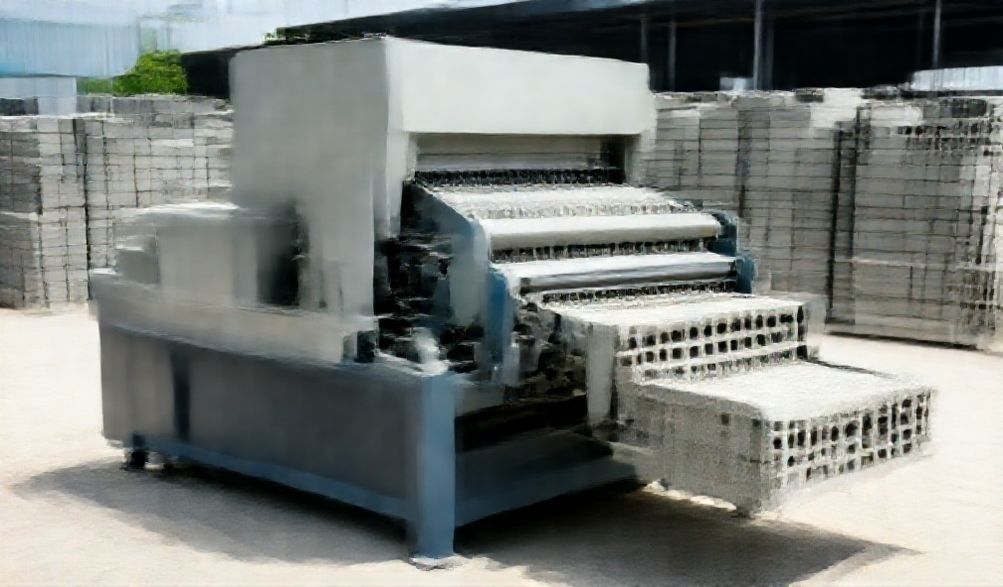
Die Ultieme Gids vir Sementsteenvervaardigingsmasjiene in Maleisië (2026)
Inleiding
Maleisië se skyline is 'n bewys van 'n konstruksiebedryf in voortdurende beweging. Van die monumentale infrastruktuurprojekte onder nasionale meesterplanne tot die bedrywige residensiële ontwikkelings wat stedelike vraag bevredig, bly bakstene die fundamentele bousteen van hierdie groei. Tog bied die afhanklikheid van tradisionele baksteenverskaffers vir baie bouers, kontrakteurs en eiendomsontwikkelaars 'n herhalende stel uitdagings: onvoorspelbare prysstygings, versuimings in die voorsieningsketting en frustrerende teenstrydighede in gehalte wat 'n hele projek se integriteit kan benadeel.
Wat as die oplossing nie net was om ’n beter verskaffer te vind nie, maar om self een te word? Terrein-sementsteenproduksie met toegewyde steenmaakmasjiene verander vinnig van ’n nis-industriële aktiwiteit in ’n strategiese voordeel vir Maleisiese ondernemings van alle groottes. Hierdie moderne benadering bied ongekende beheer, doeltreffendheid en koste-doeltreffendheid.
Hierdie omvattende gids is ontwerp om jou gesaghebbende hulpbron te wees. Saamgestel uit bedryfsinsigte, tegniese ontleding en 'n diep begrip van die plaaslike Maleisiese mark, sny dit deur die geraas. Ons sal die duidelikheid verskaf wat jy nodig het om 'n selfversekerde, ingeligte besluit te neem. Teen die einde sal jy 'n stewige begrip hê van die verskillende tipes masjiene wat beskikbaar is, sleutelkenmerke wat saak maak, 'n realistiese beeld van koste en verskaffers in Maleisië, en 'n duidelike raamwerk om die perfekte masjien te kies wat by jou projekskaal en besigheidsambisies pas.
Hoekom Oorweeg 'n Sementsteenvervaardigingsmasjien in Maleisië?
Om baksteenproduksie in-huis te verskuif, is 'n beduidende besluit. Behalwe die aanvanklike belegging, is dit 'n strategiese verskuiwing in bedrywighede. Vir die regte besigheid is die voordele aansienlik en spreek dit die knelpunte van Maleisië se dinamiese konstruksie-omgewing direk aan.
Koste-doeltreffendheid en Beheer oor Grondstowwe
Die finansiële logika is oortuigend. Om 'n masjien te besit ontkoppel jou van die wisselvalligheid van baksteenmarkpryse.
- Verminder Verskaffersafhanklikheid:Jy is nie meer onderhewig aan skielike prysverhogings van verskaffers of skaarsheid gedurende piek konstruksietydperke nie.
- Optimaliseer Materiaalverkryging:Jy kan direk grootmaat rou materiale bekom—sement, sand en steengroefstof—wat dikwels meer stabiel in prys is en wyd plaaslik beskikbaar is.
- Minimaliseer Logistieke KosteVerminder die herhalende koste om swaar voltooide bakstene van 'n fabriek na jou terrein te vervoer. Jy vervoer slegs rou materiale, wat tipies meer koste-effektief is.
Ongeëwenaarde Produksiebuigsaamheid & Aanpassing
Dit is waar eienaarskap werklik skitter. 'n Baksteenmaakmasjien verander jou produksie in 'n op-aanvraag diens.
- Produseer volgens Behoefte:Genereer stene soos u projek vereis, wat die behoefte aan groot, duur stoorkamers drasties verminder en materiaalvermorsing deur oorbestelling tot 'n minimum beperk.
- Skep Unieke Ontwerpe:Benodig 'n spesifieke grootte, vorm of kleur vir 'n argitektoniese kenmerk? Met verwisselbare vorms kan jy pasgemaakte holblokke, inmekaarpassende stene vir landskap, of spesiaal-grootte plaveiselblokke vervaardig, wat jou projekte 'n unieke voorsprong gee.
Ondersteuning van Maleisië se Konstruksie- en Volhoubaarheidsdoelwitte
U belegging stem ooreen met breër nasionale doelwitte, wat u besigheid as 'n vooruitstrewende speler posisioneer.
- Belyn met Nasionale Ontwikkeling:Ondersteun regeringsgeleide infrastruktuur en bekostigbare behuisingsinisiatiewe deur 'n betroubare, plaaslike voorsiening van boumateriaal te verseker.
- Omhels Volhoubare Praktyke:Moderne masjiene maak dit moontlik om industriële neweprodukte soos vliegas of slak in jou baksteenmengsel in te sluit. Dit verminder nie net die sementinhoud nie (wat koste en koolstofvoetspoor verlaag), maar dra ook by tot 'n meer sirkulêre ekonomie, 'n sleutelfokus vir Maleisië se volhoubare ontwikkeling.
Verseker Konsekwente Kwaliteit & Projektydlyne
Uiteindelik beteken beheer oor produksie beheer oor jou projek se uitkoms en skedule.
- Gegarandeerde Eenvormige Sterkte: You dictate the mix design, water-cement ratio, and compaction process. This results in bricks with consistent, high compressive strength, batch after batch.
- Eliminate Project Delays: Never face another work stoppage due to delayed brick deliveries. Your production schedule is in your hands, allowing for precise planning and timely project completion.
Types of Cement Brick Making Machines Available
Understanding the categories of machines is the first step in your selection process. The right choice hinges on your required output, budget, and level of automation.
Handmatige Baksteenmaakmasjiene
These are the most fundamental entry point into brick production, relying entirely on human power.
- Operasie: A lever-operated system where the operator manually fills the mold, compresses the mix using mechanical force, and releases the formed brick.
- Beste Vir: Ideal for very small-scale projects, individual homeowners, startups testing the market, or producing specialty items like garden interlocking bricks. Their portability makes them suitable for remote sites without power.
- Voors & Nadele:
- Voordele: Extremely low initial cost, no electricity needed, simple to maintain, highly portable.
- Nadele: Very low output (typically 100-500 bricks per day), physically demanding, quality heavily dependent on operator skill.
Semi-Automatiese Baksteenvervaardigingsmasjiene
This category offers the best balance for most small to medium-sized Malaysian businesses, providing mechanized assistance for consistent quality.
- Operasie: Powered by an electric motor or diesel engine, these machines use vibration and hydraulic or mechanical pressure to compact the brick. The operator manually feeds the raw mix into the hopper and removes the finished bricks for curing.
- Beste Vir: Small to medium blockyards, contractors undertaking several projects per year, and businesses looking for steady, reliable production without full automation.
- Voors & Nadele:
- Voordele: Significantly higher output than manual machines (e.g., 1,000 – 3,000 bricks per 8-hour shift), good consistency, more energy-efficient than full-auto models, moderate investment cost.
- Nadele: Still requires a dedicated operator, output is not continuous.
Volledig Outomatiese Baksteenvervaardigingsmasjiene
These are industrial production lines designed for maximum output with minimal manual intervention.
- Operasie: These are complete systems with computerized controls. They automate the entire process: feeding raw materials, mixing, conveying the mix to the mold, high-pressure compaction, curing (in integrated systems), and stacking pallets of finished bricks.
- Beste Vir: Large-scale brick manufacturing plants, businesses supplying to major developers or for export, and operations where labor cost and maximum volume are primary concerns.
- Voors & Nadele:
- Voordele: Very high, continuous output (10,000+ bricks per day), minimal labor requirements, exceptional consistency and product density, high level of automation.
- Nadele: Very high capital investment, requires significant space and stable three-phase power supply, complex maintenance requiring specialized technicians.
Key Features to Evaluate When Buying
Once you’ve identified your machine type, drilling down into these critical features will ensure you select a model that delivers long-term value and reliability.
Produksiekapasiteit (Uitset per Uur/Dag)
Don’t just look at the peak number. Industry practice shows it’s wiser to consider sustainable, daily output.
- Match Output to Demand: Calculate your average brick consumption per project or monthly sales target. Choose a machine whose realisties output meets 120-150% of your current need to allow for growth and maintenance downtime.
- Understand Cycle Time: Ask suppliers for the cycle time (seconds per brick or per mold) and how many bricks are produced per cycle. This gives a clearer picture than a theoretical maximum.
Brick Type and Size Versatility
The ability to produce multiple products future-proofs your investment.
- Common Malaysian Brick Types: Ensure the machine can produce the sizes in demand:
- Solid/Hollow Blocks: 400mm x 200mm x (100mm, 150mm, 200mm)
- Interlocking Paving Blocks
- Randstene
- Decorative bricks
- Verwisselbare Vorms: A key feature. Check the cost, lead time, and ease of changing molds. A good supplier in Malaysia should stock common mold sizes.
Power Source: Electric, Diesel, or Hybrid?
Your site conditions dictate the optimal choice.
- Elektries Cleaner, quieter, and more cost-effective to run in urban/industrial areas with reliable grid power. Requires a stable connection (often 3-phase for larger models).
- Diesel: Offers complete independence from the grid, essential for remote sites or areas with frequent power cuts. Higher fuel and maintenance costs, and generates noise/exhaust.
- Hibried: Some models offer dual-power capabilities, providing valuable flexibility.
Durability and After-Sales Support
This is the most critical E-E-A-T (Experience, Expertise, Authoritativeness, Trustworthiness) consideration for the Malaysian buyer. The machine’s build is only half the equation.
- Robust Konstruksie: Look for machines with high-grade steel frames, reinforced vibration tables, and quality hydraulic systems. The weight of the machine can often indicate material solidity.
- Local After-Sales Support is Non-Negotiable: A machine is a long-term asset. You must confirm:
- Local Service Technicians: Does the supplier have trained technicians based in Malaysia for repairs and maintenance?
- Spare Parts Inventory: Is there a local warehouse stocking wear-and-tear parts like mold liners, vibration motors, and hydraulic seals? Waiting months for a part from overseas is a business killer.
- Opleiding: Does the purchase include proper on-site training for your operators?
Navigating the Malaysian Market: Suppliers and Costs
Entering the market with clear expectations will help you negotiate effectively and find a trustworthy partner.
Overview of Local Manufacturers vs. International Importers
Both options have merits, and the right choice depends on your priorities.
- Local Malaysian Manufacturers/Assemblers:
- Voordele: Better understanding of local material conditions and standards, typically faster and cheaper service support, easier communication, parts more readily available.
- Oorweging: Technology may be based on older, proven designs rather than cutting-edge innovation.
- International Importers (e.g., from China, India, Europe):
- Voordele: Access to the latest technological features and automation, potentially lower upfront cost for comparable specs.
- Critical Considerations: Verify the importer’s local support capability. Who will handle installation, warranty claims, and major repairs? Ensure they have a strong physical presence, not just a sales office.
Understanding the Price Range
Prices vary widely based on automation, capacity, and brand. Use these indicative brackets as a starting point (prices are in Malaysian Ringgit).
- Handmatige Baksteenmaakmasjiene: RM 3,000 – RM 20,000
- Halfoutomatiese Baksteenvervaardigingsmasjiene: RM 25,000 – RM 150,000
- Volledig Outomatiese Baksteenvervaardigingsaanlegte: RM 200,000 – RM 1,000,000+
Disclaimer: These are broad estimates. Always get detailed quotations based on your specific requirements. Factors like mold customization, extra conveyors, and pallet stackers will affect the final price.
Essential Questions to Ask Your Supplier
Arm yourself with this checklist during negotiations:
- What is included in the quoted price? (Installation? Training? Initial set of molds? Delivery?)
- What is the warranty period and what does it specifically cover?
- Where is your spare parts warehouse located in Malaysia, and what is the typical availability for common parts?
- Can you provide contact details for 2-3 current customers in Malaysia for a reference check?
- Do your bricks comply with relevant Malaysian Standards (MS)? Can you assist with testing?
- Do you offer annual maintenance contracts?
The Business Case: ROI and Operational Setup
Turning your machine into a profitable asset requires planning beyond the purchase order.
Calculating Your Return on Investment (ROI)
A simplified framework helps visualize the payoff:
- Calculate Total Investment: Machine cost + installation + initial raw material stock + utility setup.
- Calculate Operational Cost per Brick: (Cost of cement + sand + quarry dust + electricity/fuel + labor + maintenance) per brick.
- Determine Your Benefit: This is either:
- Savings: The money you no longer pay to an external supplier per brick.
- Revenue: The selling price per brick if you are manufacturing for sale.
- Calculate Profit per Brick: Benefit per brick minus Operational Cost per brick.
- Estimate Payback Period: Total Investment / (Profit per brick x Monthly Production Volume).
Voorbeeld: If your machine and setup cost RM 100,000, and you net a profit of RM 0.20 per brick while producing 30,000 bricks a month, your payback period is roughly 16-17 months.
Basic Operational Requirements in Malaysia
Plan your space and utilities accordingly:
- Ruimte: You need area for the machine, raw material storage (covered), a mixing station, and a curing yard. A semi-automatic setup may require 5,000-10,000 sq. ft.
- Power & Water: Ensure your site has the required electrical supply (voltage, phase). A consistent water source for the mix is essential.
- Rou Materiaal: Establish relationships with reliable sand and aggregate suppliers. Consistency in raw material quality is key to consistent brick quality.
- Kuurgangsproses: Freshly molded bricks must be kept damp (by spraying water or covering with plastic sheets) for at least 7-14 days to gain strength properly. This is a crucial, often overlooked step.
Compliance and Standards
Producing for commercial projects requires adherence to standards.
- Malaysian Standards (MS): Familiarize yourself with the relevant MS for concrete bricks and blocks. Producing bricks that can be tested and certified to these standards significantly enhances their marketability and trust, especially for larger contractors and government projects.
- Quality Documentation: Maintain records of your mix designs and, if possible, conduct periodic compression tests at a certified lab. This builds authority and trust with your clients.
Frequently Asked Questions (FAQ)
Q1: What is the average cost of a cement brick making machine in Malaysia?
A: As outlined above, costs range dramatically from a few thousand RM for basic manual presses to over a million RM for fully automatic plants. For most small-to-medium businesses, a capable semi-automatic machine represents an investment between RM 50,000 to RM 120,000, depending on features and output.
Q2: Can I start a brick-making business with a small budget?
A: Absolutely. Many successful blockyard owners started with a single manual or small semi-automatic machine, fulfilling local orders. This allows you to validate the market, learn the process, and reinvest profits to scale up gradually.
Q3: How much profit can I make from making cement bricks?
A: Profitability is highly variable. It depends on your operational efficiency, local market prices for both raw materials and finished bricks, and your sales volume. A well-run, efficient small blockyard can see healthy margins by controlling costs and finding a steady client base.
Q4: Where can I find reliable suppliers in Malaysia?
A: Start by searching industrial machinery directories online. Attend construction and machinery trade shows, such as those endorsed by CIDB (Construction Industry Development Board). The most reliable method is to ask for referrals from others in the construction industry and always conduct the due diligence suggested in this guide.
Q5: What is the strength and quality of machine-made bricks compared to traditional ones?
A: When operated correctly, machine-made bricks typically surpass traditional sun-dried or manually produced bricks in consistency and compressive strength. The controlled vibration and high compaction force create a denser, more uniform product with fewer voids, leading to better structural performance and water resistance.
Conclusion
Investing in a cement brick making machine is more than a purchase; it’s a strategic decision to take control of a critical part of your construction supply chain. For businesses in Malaysia, it offers a powerful answer to cost volatility, quality concerns, and project delays. We’ve explored the spectrum from manual to fully automatic machines, highlighted the must-evaluate features—especially the paramount importance of local after-sales support—and provided a realistic view of the market landscape and costs.
Use this guide as your foundational knowledge. It is built on industry experience and designed for trustworthiness, presenting both opportunities and considerations. The next step is to engage with the market directly. Visit suppliers, see machines in operation, request brick samples from their demo units, and speak to their existing customers.
Ready to explore specific models and take the next step? Contact several reputable Malaysian suppliers today to discuss your unique project needs, operational setup, and request a detailed, comparative quotation.
For ongoing insights into construction materials, machinery trends, and business strategies in the Malaysian market, consider subscribing to our industry newsletter or exploring our library of related guides.
<