
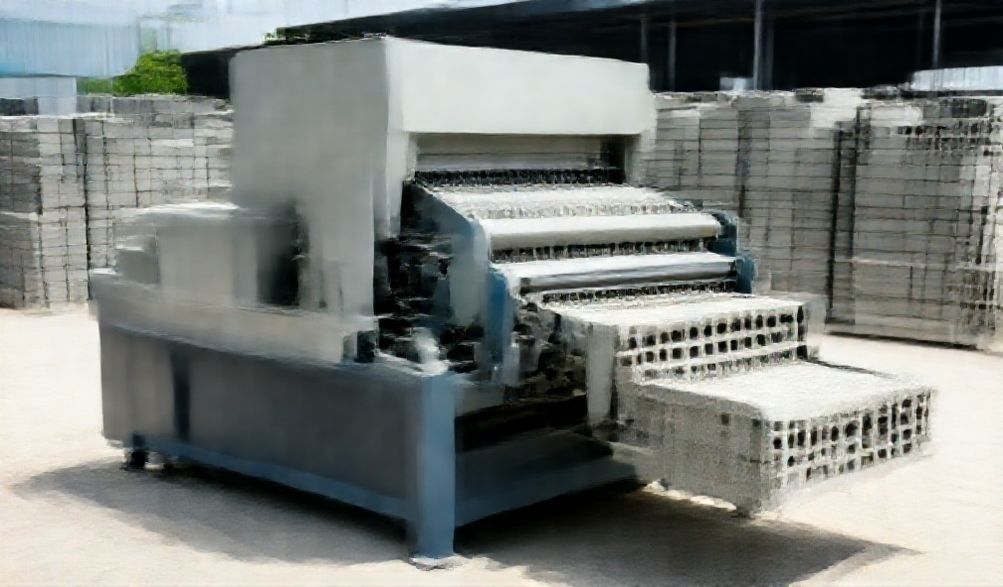
말레이시아 시멘트 벽돌 제조 기계 최종 가이드 (2026년)
소개
말레이시아의 스카이라인은 끊임없이 움직이는 건설 산업의 증거입니다. 국가 마스터 플랜 아래 추진되는 거대한 인프라 프로젝트부터 도시 수요를 충족하는 활기찬 주거 개발에 이르기까지, 벽돌은 이러한 성장의 기본 구성 요소로 남아 있습니다. 그러나 많은 건설사, 계약자 및 부동산 개발자에게 전통적인 벽돌 공급업체에 대한 의존은 예측 불가능한 가격 인상, 공급망 지연, 그리고 프로젝트 전체의 완성도를 위협할 수 있는 질적 불일치라는 반복적인 문제를 제기합니다.
더 나은 공급처를 찾는 것이 아니라, 스스로 공급처가 되는 건 어떨까요? 전용 벽돌 제조 기계를 활용한 현장 시멘트 벽돌 생산은 틈새 산업 활동에서 모든 규모의 말레이시아 기업들에게 전략적 이점으로 빠르게 변모하고 있습니다. 이 현대적인 접근 방식은 전례 없는 통제력, 효율성 및 비용 효율성을 제공합니다.
이 포괄적인 가이드는 여러분의 권위 있는 정보원이 되도록 설계되었습니다. 업계 통찰력, 기술적 분석, 그리고 말레이시아 현지 시장에 대한 깊은 이해를 바탕으로 구성되어 있어 불필요한 정보를 걸러냅니다. 우리는 여러분이 확신에 찬, 정보에 기반한 결정을 내릴 수 있도록 필요한 명확성을 제공할 것입니다. 이를 통해 여러분은 이용 가능한 다양한 기계 유형, 중요한 핵심 기능, 말레이시아 내 비용과 공급업체에 대한 현실적인 시각, 그리고 프로젝트 규모와 비즈니스 목표에 맞는 완벽한 기계를 선택하기 위한 명확한 프레임워크를 확고히 이해하게 될 것입니다.
말레이시아에서 시멘트 벽돌 제조 기계를 고려해야 하는 이유는 무엇인가요?
벽돌 생산을 사내화하는 것은 중요한 결정입니다. 초기 투자 이상으로, 이는 운영의 전략적 전환입니다. 적합한 기업에게는 혜택이 상당하며, 말레이시아의 역동적인 건설 환경이 가진 문제점들을 직접적으로 해결해 줍니다.
원가 효율성 및 원자재 통제
금융 논리는 설득력이 있습니다. 기계를 소유하면 벽돌 시장 가격의 변동성에서 벗어날 수 있습니다.
- 공급업체 의존도 낮추기더 이상 공급업체의 갑작스러운 가격 인상이나 건설 성수기 동안의 물자 부족에 영향을 받지 않습니다.
- 자재 조달 최적화대량의 원자재—시멘트, 모래, 채석장 분진—를 직접 조달할 수 있으며, 이들은 가격이 더 안정적이고 지역적으로 널리 구할 수 있습니다.
- 물류 비용 최소화공장에서 무거운 완성된 벽돌을 현장으로 운반하는 반복적인 비용을 없애세요. 원자재만 운반하면 되며, 이는 일반적으로 더 비용 효율적입니다.
뛰어난 생산 유연성 및 맞춤화
소유권의 진정한 가치가 발휘되는 곳입니다. 벽돌 제조 기계는 생산을 주문형 서비스로 전환합니다.
- 수요에 맞춘 생산프로젝트 요구에 맞춰 벽돌을 생성함으로써, 대규모의 비용이 많이 드는 저장 야드의 필요성을 크게 줄이고, 과다 주문으로 인한 자재 낭비를 최소화합니다.
- 독창적인 디자인 창조하기:건축적 특징을 위해 특정한 크기, 모양, 또는 색상이 필요하신가요? 교체 가능한 몰드를 사용하면 맞춤형 중공 블록, 조경용 인터록킹 벽돌, 또는 특별한 크기의 포장 블록을 생산할 수 있어, 프로젝트에 독특한 개성을 더할 수 있습니다.
말레이시아의 건설 및 지속 가능성 목표 지원
귀하의 투자는 광범위한 국가 목표와 일치하여, 귀사의 비즈니스를 선도적인 사고를 가진 참여자로 자리매김하게 합니다.
- 국가 발전과 조화를 이루다정부 주도의 인프라 및 저렴한 주택 구축 계획을 지원하기 위해 건축 자재의 안정적인 지역 공급을 보장합니다.
- 지속 가능한 실천을 수용하세요.현대 기계를 사용하면 플라이 애시나 슬래그와 같은 산업 부산물을 벽돌 혼합물에 첨가할 수 있습니다. 이는 시멘트 사용량을 줄여(비용과 탄소 발자국을 낮추며) 더 나아가 순환 경제에 기여하는 것으로, 말레이시아의 지속 가능한 발전을 위한 핵심 초점입니다.
일관된 품질 및 프로젝트 일정 확보
궁극적으로, 생산을 통제한다는 것은 프로젝트의 결과와 일정을 통제한다는 것을 의미합니다.
- 균일한 강도 보장혼합 설계, 물-시멘트 비율, 그리고 다짐 공정을 지정합니다. 이로 인해 배치마다 일관되고 높은 압축 강도를 가진 벽돌이 생산됩니다.
- 프로젝트 지연을 없애다벽돌 납품 지연으로 인한 작업 중단을 더 이상 겪지 마세요. 생산 일정을 직접 관리하여 정확한 계획 수립과 적시에 프로젝트를 완료할 수 있습니다.
사용 가능한 시멘트 벽돌 제조 기계의 종류
기계의 범주를 이해하는 것은 선택 과정의 첫걸음입니다. 적합한 선택은 필요한 생산량, 예산, 그리고 자동화 수준에 달려 있습니다.
수동 벽돌 제조 기계
이것들은 전적으로 인력에 의존하는 벽돌 생산의 가장 기본적인 진입점입니다.
- 작전:레버 조작식 시스템으로, 작업자가 수동으로 몰드를 채우고 기계적 힘으로 혼합물을 압축하며 성형된 벽돌을 배출하는 방식입니다.
- 최적 대상:매우 소규모 프로젝트, 개인 주택 소유자, 시장을 테스트하는 스타트업, 또는 정원용 인터로킹 벽돌과 같은 특수 제품 생산에 이상적입니다. 이들의 휴대성은 전력 공급이 없는 외딴 현장에도 적합합니다.
- 장점과 단점:
- 장점: Extremely low initial cost, no electricity needed, simple to maintain, highly portable.
- 단점: Very low output (typically 100-500 bricks per day), physically demanding, quality heavily dependent on operator skill.
반자동 벽돌 제조 기계
This category offers the best balance for most small to medium-sized Malaysian businesses, providing mechanized assistance for consistent quality.
- 작전: Powered by an electric motor or diesel engine, these machines use vibration and hydraulic or mechanical pressure to compact the brick. The operator manually feeds the raw mix into the hopper and removes the finished bricks for curing.
- 최적 대상: Small to medium blockyards, contractors undertaking several projects per year, and businesses looking for steady, reliable production without full automation.
- 장점과 단점:
- 장점: Significantly higher output than manual machines (e.g., 1,000 – 3,000 bricks per 8-hour shift), good consistency, more energy-efficient than full-auto models, moderate investment cost.
- 단점: Still requires a dedicated operator, output is not continuous.
완전 자동 벽돌 제작 기계
These are industrial production lines designed for maximum output with minimal manual intervention.
- 작전: These are complete systems with computerized controls. They automate the entire process: feeding raw materials, mixing, conveying the mix to the mold, high-pressure compaction, curing (in integrated systems), and stacking pallets of finished bricks.
- 최적 대상: Large-scale brick manufacturing plants, businesses supplying to major developers or for export, and operations where labor cost and maximum volume are primary concerns.
- 장점과 단점:
- 장점: Very high, continuous output (10,000+ bricks per day), minimal labor requirements, exceptional consistency and product density, high level of automation.
- 단점: Very high capital investment, requires significant space and stable three-phase power supply, complex maintenance requiring specialized technicians.
Key Features to Evaluate When Buying
Once you’ve identified your machine type, drilling down into these critical features will ensure you select a model that delivers long-term value and reliability.
생산 능력 (시간당/일당 생산량)
Don’t just look at the peak number. Industry practice shows it’s wiser to consider sustainable, daily output.
- Match Output to Demand: Calculate your average brick consumption per project or monthly sales target. Choose a machine whose 현실적인 output meets 120-150% of your current need to allow for growth and maintenance downtime.
- Understand Cycle Time: Ask suppliers for the cycle time (seconds per brick or per mold) and how many bricks are produced per cycle. This gives a clearer picture than a theoretical maximum.
Brick Type and Size Versatility
The ability to produce multiple products future-proofs your investment.
- Common Malaysian Brick Types: Ensure the machine can produce the sizes in demand:
- Solid/Hollow Blocks: 400mm x 200mm x (100mm, 150mm, 200mm)
- Interlocking Paving Blocks
- 연석
- Decorative bricks
- 교환 가능한 금형 A key feature. Check the cost, lead time, and ease of changing molds. A good supplier in Malaysia should stock common mold sizes.
Power Source: Electric, Diesel, or Hybrid?
Your site conditions dictate the optimal choice.
- 전기 Cleaner, quieter, and more cost-effective to run in urban/industrial areas with reliable grid power. Requires a stable connection (often 3-phase for larger models).
- 디젤: Offers complete independence from the grid, essential for remote sites or areas with frequent power cuts. Higher fuel and maintenance costs, and generates noise/exhaust.
- 하이브리드: Some models offer dual-power capabilities, providing valuable flexibility.
Durability and After-Sales Support
This is the most critical E-E-A-T (Experience, Expertise, Authoritativeness, Trustworthiness) consideration for the Malaysian buyer. The machine’s build is only half the equation.
- 견고한 구조: Look for machines with high-grade steel frames, reinforced vibration tables, and quality hydraulic systems. The weight of the machine can often indicate material solidity.
- Local After-Sales Support is Non-Negotiable: A machine is a long-term asset. You must confirm:
- Local Service Technicians: Does the supplier have trained technicians based in Malaysia for repairs and maintenance?
- Spare Parts Inventory: Is there a local warehouse stocking wear-and-tear parts like mold liners, vibration motors, and hydraulic seals? Waiting months for a part from overseas is a business killer.
- 훈련 Does the purchase include proper on-site training for your operators?
Navigating the Malaysian Market: Suppliers and Costs
Entering the market with clear expectations will help you negotiate effectively and find a trustworthy partner.
Overview of Local Manufacturers vs. International Importers
Both options have merits, and the right choice depends on your priorities.
- Local Malaysian Manufacturers/Assemblers:
- 장점: Better understanding of local material conditions and standards, typically faster and cheaper service support, easier communication, parts more readily available.
- 고려사항 Technology may be based on older, proven designs rather than cutting-edge innovation.
- International Importers (e.g., from China, India, Europe):
- 장점: Access to the latest technological features and automation, potentially lower upfront cost for comparable specs.
- Critical Considerations: Verify the importer’s local support capability. Who will handle installation, warranty claims, and major repairs? Ensure they have a strong physical presence, not just a sales office.
Understanding the Price Range
Prices vary widely based on automation, capacity, and brand. Use these indicative brackets as a starting point (prices are in Malaysian Ringgit).
- 수동 벽돌 제작 기계: RM 3,000 – RM 20,000
- 반자동 벽돌 제작 기계: RM 25,000 – RM 150,000
- 완전 자동 벽돌 제조 공장: RM 200,000 – RM 1,000,000+
Disclaimer: These are broad estimates. Always get detailed quotations based on your specific requirements. Factors like mold customization, extra conveyors, and pallet stackers will affect the final price.
Essential Questions to Ask Your Supplier
Arm yourself with this checklist during negotiations:
- What is included in the quoted price? (Installation? Training? Initial set of molds? Delivery?)
- What is the warranty period and what does it specifically cover?
- Where is your spare parts warehouse located in Malaysia, and what is the typical availability for common parts?
- Can you provide contact details for 2-3 current customers in Malaysia for a reference check?
- Do your bricks comply with relevant Malaysian Standards (MS)? Can you assist with testing?
- Do you offer annual maintenance contracts?
The Business Case: ROI and Operational Setup
Turning your machine into a profitable asset requires planning beyond the purchase order.
Calculating Your Return on Investment (ROI)
A simplified framework helps visualize the payoff:
- Calculate Total Investment: Machine cost + installation + initial raw material stock + utility setup.
- Calculate Operational Cost per Brick: (Cost of cement + sand + quarry dust + electricity/fuel + labor + maintenance) per brick.
- Determine Your Benefit: This is either:
- Savings: The money you no longer pay to an external supplier per brick.
- Revenue: The selling price per brick if you are manufacturing for sale.
- Calculate Profit per Brick: Benefit per brick minus Operational Cost per brick.
- Estimate Payback Period: Total Investment / (Profit per brick x Monthly Production Volume).
예시: If your machine and setup cost RM 100,000, and you net a profit of RM 0.20 per brick while producing 30,000 bricks a month, your payback period is roughly 16-17 months.
Basic Operational Requirements in Malaysia
Plan your space and utilities accordingly:
- 우주 You need area for the machine, raw material storage (covered), a mixing station, and a curing yard. A semi-automatic setup may require 5,000-10,000 sq. ft.
- Power & Water: Ensure your site has the required electrical supply (voltage, phase). A consistent water source for the mix is essential.
- 원자재 Establish relationships with reliable sand and aggregate suppliers. Consistency in raw material quality is key to consistent brick quality.
- 경화 과정: Freshly molded bricks must be kept damp (by spraying water or covering with plastic sheets) for at least 7-14 days to gain strength properly. This is a crucial, often overlooked step.
Compliance and Standards
Producing for commercial projects requires adherence to standards.
- Malaysian Standards (MS): Familiarize yourself with the relevant MS for concrete bricks and blocks. Producing bricks that can be tested and certified to these standards significantly enhances their marketability and trust, especially for larger contractors and government projects.
- Quality Documentation: Maintain records of your mix designs and, if possible, conduct periodic compression tests at a certified lab. This builds authority and trust with your clients.
자주 묻는 질문 (FAQ)
Q1: What is the average cost of a cement brick making machine in Malaysia?
A: As outlined above, costs range dramatically from a few thousand RM for basic manual presses to over a million RM for fully automatic plants. For most small-to-medium businesses, a capable semi-automatic machine represents an investment between RM 50,000 to RM 120,000, depending on features and output.
Q2: Can I start a brick-making business with a small budget?
A: Absolutely. Many successful blockyard owners started with a single manual or small semi-automatic machine, fulfilling local orders. This allows you to validate the market, learn the process, and reinvest profits to scale up gradually.
Q3: How much profit can I make from making cement bricks?
A: Profitability is highly variable. It depends on your operational efficiency, local market prices for both raw materials and finished bricks, and your sales volume. A well-run, efficient small blockyard can see healthy margins by controlling costs and finding a steady client base.
Q4: Where can I find reliable suppliers in Malaysia?
A: Start by searching industrial machinery directories online. Attend construction and machinery trade shows, such as those endorsed by CIDB (Construction Industry Development Board). The most reliable method is to ask for referrals from others in the construction industry and always conduct the due diligence suggested in this guide.
Q5: What is the strength and quality of machine-made bricks compared to traditional ones?
A: When operated correctly, machine-made bricks typically surpass traditional sun-dried or manually produced bricks in consistency and compressive strength. The controlled vibration and high compaction force create a denser, more uniform product with fewer voids, leading to better structural performance and water resistance.
결론
Investing in a cement brick making machine is more than a purchase; it’s a strategic decision to take control of a critical part of your construction supply chain. For businesses in Malaysia, it offers a powerful answer to cost volatility, quality concerns, and project delays. We’ve explored the spectrum from manual to fully automatic machines, highlighted the must-evaluate features—especially the paramount importance of local after-sales support—and provided a realistic view of the market landscape and costs.
Use this guide as your foundational knowledge. It is built on industry experience and designed for trustworthiness, presenting both opportunities and considerations. The next step is to engage with the market directly. Visit suppliers, see machines in operation, request brick samples from their demo units, and speak to their existing customers.
Ready to explore specific models and take the next step? Contact several reputable Malaysian suppliers today to discuss your unique project needs, operational setup, and request a detailed, comparative quotation.
For ongoing insights into construction materials, machinery trends, and business strategies in the Malaysian market, consider subscribing to our industry newsletter or exploring our library of related guides.
<