
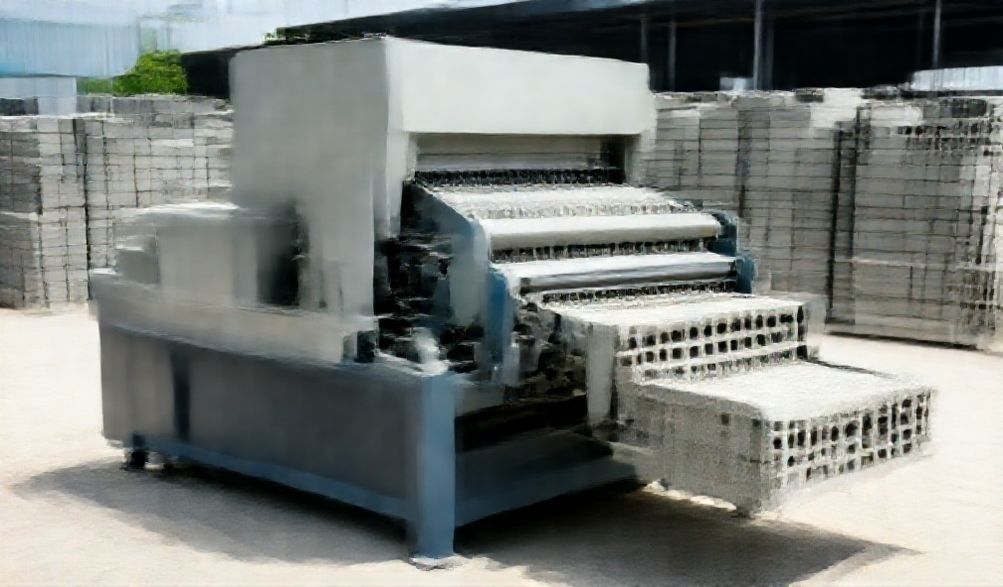
Остаточний посібник з машин для виробництва цементної цегли в Малайзії (2026)
Вступ
Малайзійська лінія горизонту є свідченням будівельної галузі у постійному русі. Від монументальних інфраструктурних проектів у рамках національних генеральних планів до жвавих житлових комплексів, що задовольняють міський попит, цегла залишається фундаментальною будівельною одиницею цього зростання. Однак для багатьох будівельників, підрядників і девелоперів покладання на традиційних постачальників цегли створює низку постійних проблем: непередбачувані підвищення цін, затримки в ланцюгах поставок і неприйнятні невідповідності в якості, які можуть підірвати цілісність всього проекту.
А якщо рішення полягає не просто у пошуку кращого постачальника, а в тому, щоб стати ним самим? Виробництво цементної цегли на місці за допомогою спеціалізованих машин для виготовлення цегли швидко перетворюється з нішевої промислової діяльності на стратегічну перевагу для малайзійських компаній будь-якого розміру. Такий сучасний підхід пропонує безпрецедентний контроль, ефективність та економічність.
Цей вичерпний посібник створений, щоб стати вашим надійним джерелом інформації. Він узагальнює галузеві знання, технічний аналіз та глибоке розуміння місцевого малайзійського ринку, відфільтровуючи зайве. Ми надамо вам чіткість, необхідну для впевненого та обґрунтованого рішення. Після ознайомлення ви отримаєте чітке уявлення про різні типи доступних машин, ключові характеристики, реальну картину вартості та постачальників у Малайзії, а також чітку схему вибору ідеальної машини, що відповідає масштабам вашого проекту та бізнес-амбіціям.
Чому варто розглянути машину для виробництва цементної цегли в Малайзії?
Переведення виробництва цегли на власні потужності є важливим рішенням. Крім початкових інвестицій, це стратегічна зміна в операційній діяльності. Для відповідного бізнесу переваги є значними і безпосередньо вирішують проблемні питання динамічного будівельного середовища Малайзії.
Економічна ефективність та контроль над сировиною
Фінансова логіка є переконливою. Володіння машиною відокремлює вас від коливань цін на ринку цегли.
- Зменшення залежності від постачальників:Ви більше не залежите від раптового підвищення цін постачальників або дефіциту під час пікових будівельних сезонів.
- Оптимізуйте постачання матеріалів:Ви можете безпосередньо закуповувати сировинні матеріали оптом — цемент, пісок і кар'єрний пил — які часто мають стабільнішу ціну та широко доступні на місцевому ринку.
- Мінімізувати логістичні витрати.Усуніть постійні витрати на транспортування важких готових цеглин з фабрики на ваш об'єкт. Ви перевозите лише сировину, що зазвичай є більш економічно вигідним.
Неперевершена гнучкість виробництва та індивідуалізація
Саме тут право власності справді сяє. Машина для виробництва цегли перетворює ваше виробництво на сервіс за запитом.
- Виробляти за потребою:Виробляйте цеглу відповідно до потреб вашого проекту, що значно зменшує необхідність у великих, дорогих складських майданчиках та мінімізує відходи матеріалів через надмірне замовлення.
- Створюйте Унікальні Дизайни:Потрібен певний розмір, форма чи колір для архітектурного елемента? Завдяки змінним формам ви можете виготовляти спеціальні пустотілі блоки, блоки для ландшафтного дизайну, що зчіплюються, або тротуарну плитку особливих розмірів, надаючи вашим проектам унікальну перевагу.
Підтримка будівельних та цілей сталого розвитку Малайзії
Your investment aligns with broader national objectives, positioning your business as a forward-thinking player.
- Align with National Development: Support government-led infrastructure and affordable housing initiatives by ensuring a reliable, local supply of building materials.
- Embrace Sustainable Practices: Modern machines allow for the incorporation of industrial by-products like fly ash or slag into your brick mix. This not only reduces the cement content (lowering cost and carbon footprint) but also contributes to a more circular economy, a key focus for Malaysia’s sustainable development.
Ensuring Consistent Quality & Project Timelines
Ultimately, control over production means control over your project’s outcome and schedule.
- Guaranteed Uniform Strength: You dictate the mix design, water-cement ratio, and compaction process. This results in bricks with consistent, high compressive strength, batch after batch.
- Eliminate Project Delays: Never face another work stoppage due to delayed brick deliveries. Your production schedule is in your hands, allowing for precise planning and timely project completion.
Types of Cement Brick Making Machines Available
Understanding the categories of machines is the first step in your selection process. The right choice hinges on your required output, budget, and level of automation.
Ручні машини для виробництва цегли
These are the most fundamental entry point into brick production, relying entirely on human power.
- Операція: A lever-operated system where the operator manually fills the mold, compresses the mix using mechanical force, and releases the formed brick.
- Найкраще для: Ideal for very small-scale projects, individual homeowners, startups testing the market, or producing specialty items like garden interlocking bricks. Their portability makes them suitable for remote sites without power.
- Переваги та недоліки:
- Переваги: Extremely low initial cost, no electricity needed, simple to maintain, highly portable.
- Недоліки: Very low output (typically 100-500 bricks per day), physically demanding, quality heavily dependent on operator skill.
Напівавтоматичні верстати для виробництва цегли
This category offers the best balance for most small to medium-sized Malaysian businesses, providing mechanized assistance for consistent quality.
- Операція: Powered by an electric motor or diesel engine, these machines use vibration and hydraulic or mechanical pressure to compact the brick. The operator manually feeds the raw mix into the hopper and removes the finished bricks for curing.
- Найкраще для: Small to medium blockyards, contractors undertaking several projects per year, and businesses looking for steady, reliable production without full automation.
- Переваги та недоліки:
- Переваги: Significantly higher output than manual machines (e.g., 1,000 – 3,000 bricks per 8-hour shift), good consistency, more energy-efficient than full-auto models, moderate investment cost.
- Недоліки: Still requires a dedicated operator, output is not continuous.
Повністю автоматичні машини для виробництва цегли
These are industrial production lines designed for maximum output with minimal manual intervention.
- Операція: These are complete systems with computerized controls. They automate the entire process: feeding raw materials, mixing, conveying the mix to the mold, high-pressure compaction, curing (in integrated systems), and stacking pallets of finished bricks.
- Найкраще для: Large-scale brick manufacturing plants, businesses supplying to major developers or for export, and operations where labor cost and maximum volume are primary concerns.
- Переваги та недоліки:
- Переваги: Very high, continuous output (10,000+ bricks per day), minimal labor requirements, exceptional consistency and product density, high level of automation.
- Недоліки: Very high capital investment, requires significant space and stable three-phase power supply, complex maintenance requiring specialized technicians.
Key Features to Evaluate When Buying
Once you’ve identified your machine type, drilling down into these critical features will ensure you select a model that delivers long-term value and reliability.
Виробнича потужність (випуск продукції за годину/день)
Don’t just look at the peak number. Industry practice shows it’s wiser to consider sustainable, daily output.
- Match Output to Demand: Calculate your average brick consumption per project or monthly sales target. Choose a machine whose реалістичний output meets 120-150% of your current need to allow for growth and maintenance downtime.
- Understand Cycle Time: Ask suppliers for the cycle time (seconds per brick or per mold) and how many bricks are produced per cycle. This gives a clearer picture than a theoretical maximum.
Brick Type and Size Versatility
The ability to produce multiple products future-proofs your investment.
- Common Malaysian Brick Types: Ensure the machine can produce the sizes in demand:
- Solid/Hollow Blocks: 400mm x 200mm x (100mm, 150mm, 200mm)
- Interlocking Paving Blocks
- Бордюри
- Decorative bricks
- Змінні форми: A key feature. Check the cost, lead time, and ease of changing molds. A good supplier in Malaysia should stock common mold sizes.
Power Source: Electric, Diesel, or Hybrid?
Your site conditions dictate the optimal choice.
- Електричний: Cleaner, quieter, and more cost-effective to run in urban/industrial areas with reliable grid power. Requires a stable connection (often 3-phase for larger models).
- Дизель: Offers complete independence from the grid, essential for remote sites or areas with frequent power cuts. Higher fuel and maintenance costs, and generates noise/exhaust.
- Гібрид: Some models offer dual-power capabilities, providing valuable flexibility.
Durability and After-Sales Support
This is the most critical E-E-A-T (Experience, Expertise, Authoritativeness, Trustworthiness) consideration for the Malaysian buyer. The machine’s build is only half the equation.
- Міцна конструкція: Look for machines with high-grade steel frames, reinforced vibration tables, and quality hydraulic systems. The weight of the machine can often indicate material solidity.
- Local After-Sales Support is Non-Negotiable: A machine is a long-term asset. You must confirm:
- Local Service Technicians: Does the supplier have trained technicians based in Malaysia for repairs and maintenance?
- Spare Parts Inventory: Is there a local warehouse stocking wear-and-tear parts like mold liners, vibration motors, and hydraulic seals? Waiting months for a part from overseas is a business killer.
- Навчання: Does the purchase include proper on-site training for your operators?
Navigating the Malaysian Market: Suppliers and Costs
Entering the market with clear expectations will help you negotiate effectively and find a trustworthy partner.
Overview of Local Manufacturers vs. International Importers
Both options have merits, and the right choice depends on your priorities.
- Local Malaysian Manufacturers/Assemblers:
- Переваги: Better understanding of local material conditions and standards, typically faster and cheaper service support, easier communication, parts more readily available.
- Розгляд: Technology may be based on older, proven designs rather than cutting-edge innovation.
- International Importers (e.g., from China, India, Europe):
- Переваги: Access to the latest technological features and automation, potentially lower upfront cost for comparable specs.
- Critical Considerations: Verify the importer’s local support capability. Who will handle installation, warranty claims, and major repairs? Ensure they have a strong physical presence, not just a sales office.
Understanding the Price Range
Prices vary widely based on automation, capacity, and brand. Use these indicative brackets as a starting point (prices are in Malaysian Ringgit).
- Ручні машини для виробництва цегли: RM 3,000 – RM 20,000
- Напівавтоматичні верстати для виробництва цегли: RM 25,000 – RM 150,000
- Повністю автоматичні заводи з виробництва цегли: RM 200,000 – RM 1,000,000+
Disclaimer: These are broad estimates. Always get detailed quotations based on your specific requirements. Factors like mold customization, extra conveyors, and pallet stackers will affect the final price.
Essential Questions to Ask Your Supplier
Arm yourself with this checklist during negotiations:
- What is included in the quoted price? (Installation? Training? Initial set of molds? Delivery?)
- What is the warranty period and what does it specifically cover?
- Where is your spare parts warehouse located in Malaysia, and what is the typical availability for common parts?
- Can you provide contact details for 2-3 current customers in Malaysia for a reference check?
- Do your bricks comply with relevant Malaysian Standards (MS)? Can you assist with testing?
- Do you offer annual maintenance contracts?
The Business Case: ROI and Operational Setup
Turning your machine into a profitable asset requires planning beyond the purchase order.
Calculating Your Return on Investment (ROI)
A simplified framework helps visualize the payoff:
- Calculate Total Investment: Machine cost + installation + initial raw material stock + utility setup.
- Calculate Operational Cost per Brick: (Cost of cement + sand + quarry dust + electricity/fuel + labor + maintenance) per brick.
- Determine Your Benefit: This is either:
- Savings: The money you no longer pay to an external supplier per brick.
- Revenue: The selling price per brick if you are manufacturing for sale.
- Calculate Profit per Brick: Benefit per brick minus Operational Cost per brick.
- Estimate Payback Period: Total Investment / (Profit per brick x Monthly Production Volume).
Приклад: If your machine and setup cost RM 100,000, and you net a profit of RM 0.20 per brick while producing 30,000 bricks a month, your payback period is roughly 16-17 months.
Basic Operational Requirements in Malaysia
Plan your space and utilities accordingly:
- Космос: You need area for the machine, raw material storage (covered), a mixing station, and a curing yard. A semi-automatic setup may require 5,000-10,000 sq. ft.
- Power & Water: Ensure your site has the required electrical supply (voltage, phase). A consistent water source for the mix is essential.
- Сировина: Establish relationships with reliable sand and aggregate suppliers. Consistency in raw material quality is key to consistent brick quality.
- Процес виліковування: Freshly molded bricks must be kept damp (by spraying water or covering with plastic sheets) for at least 7-14 days to gain strength properly. This is a crucial, often overlooked step.
Compliance and Standards
Producing for commercial projects requires adherence to standards.
- Malaysian Standards (MS): Familiarize yourself with the relevant MS for concrete bricks and blocks. Producing bricks that can be tested and certified to these standards significantly enhances their marketability and trust, especially for larger contractors and government projects.
- Quality Documentation: Maintain records of your mix designs and, if possible, conduct periodic compression tests at a certified lab. This builds authority and trust with your clients.
Часті питання (FAQ)
Q1: What is the average cost of a cement brick making machine in Malaysia?
А: As outlined above, costs range dramatically from a few thousand RM for basic manual presses to over a million RM for fully automatic plants. For most small-to-medium businesses, a capable semi-automatic machine represents an investment between RM 50,000 to RM 120,000, depending on features and output.
Q2: Can I start a brick-making business with a small budget?
А: Absolutely. Many successful blockyard owners started with a single manual or small semi-automatic machine, fulfilling local orders. This allows you to validate the market, learn the process, and reinvest profits to scale up gradually.
Q3: How much profit can I make from making cement bricks?
А: Profitability is highly variable. It depends on your operational efficiency, local market prices for both raw materials and finished bricks, and your sales volume. A well-run, efficient small blockyard can see healthy margins by controlling costs and finding a steady client base.
Q4: Where can I find reliable suppliers in Malaysia?
А: Start by searching industrial machinery directories online. Attend construction and machinery trade shows, such as those endorsed by CIDB (Construction Industry Development Board). The most reliable method is to ask for referrals from others in the construction industry and always conduct the due diligence suggested in this guide.
Q5: What is the strength and quality of machine-made bricks compared to traditional ones?
А: When operated correctly, machine-made bricks typically surpass traditional sun-dried or manually produced bricks in consistency and compressive strength. The controlled vibration and high compaction force create a denser, more uniform product with fewer voids, leading to better structural performance and water resistance.
Висновок
Investing in a cement brick making machine is more than a purchase; it’s a strategic decision to take control of a critical part of your construction supply chain. For businesses in Malaysia, it offers a powerful answer to cost volatility, quality concerns, and project delays. We’ve explored the spectrum from manual to fully automatic machines, highlighted the must-evaluate features—especially the paramount importance of local after-sales support—and provided a realistic view of the market landscape and costs.
Use this guide as your foundational knowledge. It is built on industry experience and designed for trustworthiness, presenting both opportunities and considerations. The next step is to engage with the market directly. Visit suppliers, see machines in operation, request brick samples from their demo units, and speak to their existing customers.
Ready to explore specific models and take the next step? Contact several reputable Malaysian suppliers today to discuss your unique project needs, operational setup, and request a detailed, comparative quotation.
For ongoing insights into construction materials, machinery trends, and business strategies in the Malaysian market, consider subscribing to our industry newsletter or exploring our library of related guides.
<