
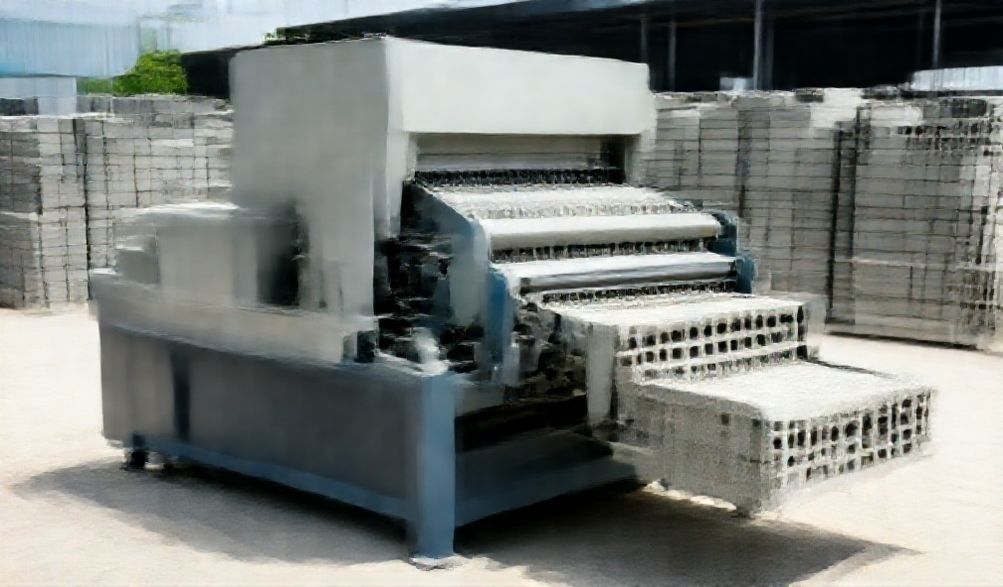
الدليل الشامل لآلات صنع الطوب الأسمنتي في ماليزيا (2026)
مقدمة
أفق ماليزيا هو شهادة على صناعة بناء في حركة دائمة. من مشاريع البنية التحتية الضخمة تحت المخططات الرئيسية الوطنية إلى التطورات السكنية النشطة التي تلبي الطلب الحضري، تظل الطوب هي اللبنة الأساسية لهذا النمو. ومع ذلك، بالنسبة للعديد من البنائين والمقاولين ومطوري العقارات، فإن الاعتماد على موردي الطوب التقليديين يطرح مجموعة متكررة من التحديات: زيادات الأسعار غير المتوقعة، وتأخيرات في سلسلة التوريد، وتناقضات محبطة في الجودة يمكن أن تهدد سلامة المشروع بأكمله.
ماذا لو لم يكن الحل مجرد العثور على مورد أفضل، بل أن تصبح أنت المورد الخاص بك؟ إن إنتاج الطوب الأسمنتي في الموقع باستخدام آلات مخصصة لصنع الطوب يتحول بسرعة من نشاط صناعي متخصص إلى ميزة استراتيجية للشركات الماليزية من جميع الأحجام. يقدم هذا النهج الحديث قدرًا غير مسبوق من السيطرة والكفاءة والفعالية من حيث التكلفة.
هذا الدليل الشامل مُصمم ليكون مصدرك الموثوق. تم تجميعه من رؤى الصناعة، والتحليل الفني، وفهم عميق للسوق المحلية الماليزية، حيث يقطع عبر الضوضاء. سنوفر لك الوضوح الذي تحتاجه لاتخاذ قرار واثق ومستنير. بنهاية هذا الدليل، سيكون لديك فهم راسخ للأنواع المختلفة من الآلات المتاحة، والميزات الرئيسية التي تهمك، ونظرة واقعية للتكاليف والموردين في ماليزيا، وإطار عمل واضح لاختيار الآلة المثالية التي تتوافق مع نطاق مشروعك وطموحاتك التجارية.
لماذا تفكر في آلة صنع الطوب الأسمنتي في ماليزيا؟
تحويل إنتاج الطوب إلى داخل الشركة قرار كبير. فهو ليس مجرد استثمار أولي، بل تحول استراتيجي في العمليات التشغيلية. بالنسبة للشركة المناسبة، فإن الفوائد كبيرة وتعالج بشكل مباشر نقاط الضعف في بيئة البناء الديناميكية في ماليزيا.
كفاءة التكلفة والتحكم في المواد الخام
المنطق المالي مقنع. امتلاك آلة يحررك من تقلبات أسعار الطوب في السوق.
- تقليل الاعتماد على الموردينأنت لم تعد عرضة لزيادات الأسعار المفاجئة من الموردين أو ندرة المواد خلال مواسم البناء الذروة.
- تحسين مصادر المواد الخام:يمكنك شراء المواد الخام بكميات كبيرة مباشرةً—مثل الأسمنت والرمل وغبار المحجر—والتي غالباً ما تكون أسعارها أكثر استقراراً ومتاحة على نطاق واسع محلياً.
- تقليل تكلفة الخدمات اللوجستيةتخلص من التكلفة المتكررة لنقل الطوب الجاهز الثقيل من المصنع إلى موقعك. أنت تنقل فقط المواد الخام، وهو ما يكون عادةً أكثر فعالية من حيث التكلفة.
مرونة إنتاج وتخصيص لا مثيل لها
هنا يتجلى حقًا جوهر الملكية، حيث يحول آلة صنع الطوب إنتاجك إلى خدمة حسب الطلب.
- الإنتاج حسب الحاجةقم بتوليد الطوب حسب متطلبات مشروعك، مما يقلل بشكل كبير من الحاجة إلى ساحات تخزين كبيرة ومكلفة ويقلل من هدر المواد الناتج عن الطلب الزائد.
- إنشاء تصاميم فريدة:هل تحتاج إلى حجم أو شكل أو لون محدد لميزة معمارية؟ مع القوالب القابلة للتبديل، يمكنك إنتاج بلوكات مفرغة مخصصة، أو طوب متشابك لأعمال التنسيق الخارجي، أو بلاطات رصف بأحجام خاصة، مما يمنح مشاريعك لمسة فريدة.
دعم أهداف البناء والاستدامة في ماليزيا
استثمارك يتوافق مع الأهداف الوطنية الأوسع، مما يضع عملك كفاعل ذي رؤية مستقبلية.
- الاندماج في التنمية الوطنيةدعم مبادرات البنية التحتية والإسكان الميسور التي تقودها الحكومة من خلال ضمان توريد محلي موثوق لمواد البناء.
- تبنى الممارسات المستدامةتسمح الآلات الحديثة بدمج المنتجات الثانوية الصناعية مثل الرماد المتطاير أو الخبث في خليط الطوب الخاص بك. هذا لا يقلل فقط من محتوى الأسمنت (مما يخفض التكلفة والبصمة الكربونية) بل يساهم أيضًا في تحقيق اقتصاد دائري أكثر، وهو محور رئيسي للتنمية المستدامة في ماليزيا.
ضمان جودة ثابتة وجداول زمنية للمشاريع
في النهاية، السيطرة على الإنتاج تعني السيطرة على نتائج مشروعك وجدوله الزمني.
- قوة موحدة مضمونةأنت تحدد تصميم الخلطة، ونسبة الماء إلى الأسمنت، وعملية الضغط. وهذا يؤدي إلى إنتاج طوب ذي قوة ضغط عالية ومتسقة، دفعة تلو الأخرى.
- القضاء على تأخيرات المشروع:لا تواجه أبدًا توقفًا آخر في العمل بسبب تأخر تسليم الطوب. جدول إنتاجك بين يديك، مما يتيح التخطيط الدقيق وإنجاز المشاريع في الوقت المحدد.
أنواع آلات صناعة الطوب الأسمنتي المتاحة
فهم فئات الآلات هو الخطوة الأولى في عملية الاختيار. يعتمد الاختيار الصحيح على الإنتاج المطلوب، والميزانية، ومستوى الأتمتة.
آلات صنع الطوب اليدوية
هذه هي نقاط الدخول الأساسية الأكثر أهمية في إنتاج الطوب، والتي تعتمد بشكل كامل على القوة البشرية.
- العملية:نظام يعمل بالرافعة حيث يقوم المشغل يدوياً بملء القالب، وضغط الخليط باستخدام القوة الميكانيكية، وإطلاق الطوبة المشكلة.
- الأفضل لـ:مثالي للمشاريع الصغيرة جدًا، وأصحاب المنازل الأفراد، والشركات الناشئة التي تختبر السوق، أو لإنتاج عناصر متخصصة مثل الطوب المتشابك للحدائق. تجعلها قابليتها للنقل مناسبة للمواقع النائية بدون كهرباء.
- إيجابيات وسلبيات:
- مزايا:تكلفة أولية منخفضة للغاية، لا حاجة للكهرباء، صيانة بسيطة، عالية التنقل.
- سلبيات: Very low output (typically 100-500 bricks per day), physically demanding, quality heavily dependent on operator skill.
آلات صنع الطوب شبه الأوتوماتيكية
This category offers the best balance for most small to medium-sized Malaysian businesses, providing mechanized assistance for consistent quality.
- العملية: Powered by an electric motor or diesel engine, these machines use vibration and hydraulic or mechanical pressure to compact the brick. The operator manually feeds the raw mix into the hopper and removes the finished bricks for curing.
- الأفضل لـ: Small to medium blockyards, contractors undertaking several projects per year, and businesses looking for steady, reliable production without full automation.
- إيجابيات وسلبيات:
- مزايا: Significantly higher output than manual machines (e.g., 1,000 – 3,000 bricks per 8-hour shift), good consistency, more energy-efficient than full-auto models, moderate investment cost.
- سلبيات: Still requires a dedicated operator, output is not continuous.
آلات صناعة الطوب الأوتوماتيكية بالكامل
These are industrial production lines designed for maximum output with minimal manual intervention.
- العملية: These are complete systems with computerized controls. They automate the entire process: feeding raw materials, mixing, conveying the mix to the mold, high-pressure compaction, curing (in integrated systems), and stacking pallets of finished bricks.
- الأفضل لـ: Large-scale brick manufacturing plants, businesses supplying to major developers or for export, and operations where labor cost and maximum volume are primary concerns.
- إيجابيات وسلبيات:
- مزايا: Very high, continuous output (10,000+ bricks per day), minimal labor requirements, exceptional consistency and product density, high level of automation.
- سلبيات: Very high capital investment, requires significant space and stable three-phase power supply, complex maintenance requiring specialized technicians.
Key Features to Evaluate When Buying
Once you’ve identified your machine type, drilling down into these critical features will ensure you select a model that delivers long-term value and reliability.
القدرة الإنتاجية (الإنتاج في الساعة/اليوم)
Don’t just look at the peak number. Industry practice shows it’s wiser to consider sustainable, daily output.
- Match Output to Demand: Calculate your average brick consumption per project or monthly sales target. Choose a machine whose واقعي output meets 120-150% of your current need to allow for growth and maintenance downtime.
- Understand Cycle Time: Ask suppliers for the cycle time (seconds per brick or per mold) and how many bricks are produced per cycle. This gives a clearer picture than a theoretical maximum.
Brick Type and Size Versatility
The ability to produce multiple products future-proofs your investment.
- Common Malaysian Brick Types: Ensure the machine can produce the sizes in demand:
- Solid/Hollow Blocks: 400mm x 200mm x (100mm, 150mm, 200mm)
- Interlocking Paving Blocks
- حواف الرصيف
- Decorative bricks
- القوالب القابلة للتبديل A key feature. Check the cost, lead time, and ease of changing molds. A good supplier in Malaysia should stock common mold sizes.
Power Source: Electric, Diesel, or Hybrid?
Your site conditions dictate the optimal choice.
- كهربائي Cleaner, quieter, and more cost-effective to run in urban/industrial areas with reliable grid power. Requires a stable connection (often 3-phase for larger models).
- ديزل Offers complete independence from the grid, essential for remote sites or areas with frequent power cuts. Higher fuel and maintenance costs, and generates noise/exhaust.
- هجين: Some models offer dual-power capabilities, providing valuable flexibility.
Durability and After-Sales Support
This is the most critical E-E-A-T (Experience, Expertise, Authoritativeness, Trustworthiness) consideration for the Malaysian buyer. The machine’s build is only half the equation.
- بناء قوي: Look for machines with high-grade steel frames, reinforced vibration tables, and quality hydraulic systems. The weight of the machine can often indicate material solidity.
- Local After-Sales Support is Non-Negotiable: A machine is a long-term asset. You must confirm:
- Local Service Technicians: Does the supplier have trained technicians based in Malaysia for repairs and maintenance?
- Spare Parts Inventory: Is there a local warehouse stocking wear-and-tear parts like mold liners, vibration motors, and hydraulic seals? Waiting months for a part from overseas is a business killer.
- تدريب Does the purchase include proper on-site training for your operators?
Navigating the Malaysian Market: Suppliers and Costs
Entering the market with clear expectations will help you negotiate effectively and find a trustworthy partner.
Overview of Local Manufacturers vs. International Importers
Both options have merits, and the right choice depends on your priorities.
- Local Malaysian Manufacturers/Assemblers:
- مزايا: Better understanding of local material conditions and standards, typically faster and cheaper service support, easier communication, parts more readily available.
- اعتبار Technology may be based on older, proven designs rather than cutting-edge innovation.
- International Importers (e.g., from China, India, Europe):
- مزايا: Access to the latest technological features and automation, potentially lower upfront cost for comparable specs.
- Critical Considerations: Verify the importer’s local support capability. Who will handle installation, warranty claims, and major repairs? Ensure they have a strong physical presence, not just a sales office.
Understanding the Price Range
Prices vary widely based on automation, capacity, and brand. Use these indicative brackets as a starting point (prices are in Malaysian Ringgit).
- آلات صناعة الطوب اليدوية: RM 3,000 – RM 20,000
- آلات صناعة الطوب شبه الأوتوماتيكية: RM 25,000 – RM 150,000
- مصانع الطوب الأوتوماتيكية بالكامل: RM 200,000 – RM 1,000,000+
Disclaimer: These are broad estimates. Always get detailed quotations based on your specific requirements. Factors like mold customization, extra conveyors, and pallet stackers will affect the final price.
Essential Questions to Ask Your Supplier
Arm yourself with this checklist during negotiations:
- What is included in the quoted price? (Installation? Training? Initial set of molds? Delivery?)
- What is the warranty period and what does it specifically cover?
- Where is your spare parts warehouse located in Malaysia, and what is the typical availability for common parts?
- Can you provide contact details for 2-3 current customers in Malaysia for a reference check?
- Do your bricks comply with relevant Malaysian Standards (MS)? Can you assist with testing?
- Do you offer annual maintenance contracts?
The Business Case: ROI and Operational Setup
Turning your machine into a profitable asset requires planning beyond the purchase order.
Calculating Your Return on Investment (ROI)
A simplified framework helps visualize the payoff:
- Calculate Total Investment: Machine cost + installation + initial raw material stock + utility setup.
- Calculate Operational Cost per Brick: (Cost of cement + sand + quarry dust + electricity/fuel + labor + maintenance) per brick.
- Determine Your Benefit: This is either:
- Savings: The money you no longer pay to an external supplier per brick.
- Revenue: The selling price per brick if you are manufacturing for sale.
- Calculate Profit per Brick: Benefit per brick minus Operational Cost per brick.
- Estimate Payback Period: Total Investment / (Profit per brick x Monthly Production Volume).
مثال: If your machine and setup cost RM 100,000, and you net a profit of RM 0.20 per brick while producing 30,000 bricks a month, your payback period is roughly 16-17 months.
Basic Operational Requirements in Malaysia
Plan your space and utilities accordingly:
- الفضاء You need area for the machine, raw material storage (covered), a mixing station, and a curing yard. A semi-automatic setup may require 5,000-10,000 sq. ft.
- الطاقة والماء: Ensure your site has the required electrical supply (voltage, phase). A consistent water source for the mix is essential.
- المواد الخام: Establish relationships with reliable sand and aggregate suppliers. Consistency in raw material quality is key to consistent brick quality.
- عملية المعالجة: Freshly molded bricks must be kept damp (by spraying water or covering with plastic sheets) for at least 7-14 days to gain strength properly. This is a crucial, often overlooked step.
Compliance and Standards
Producing for commercial projects requires adherence to standards.
- Malaysian Standards (MS): Familiarize yourself with the relevant MS for concrete bricks and blocks. Producing bricks that can be tested and certified to these standards significantly enhances their marketability and trust, especially for larger contractors and government projects.
- Quality Documentation: Maintain records of your mix designs and, if possible, conduct periodic compression tests at a certified lab. This builds authority and trust with your clients.
الأسئلة الشائعة (FAQ)
Q1: What is the average cost of a cement brick making machine in Malaysia?
أ: As outlined above, costs range dramatically from a few thousand RM for basic manual presses to over a million RM for fully automatic plants. For most small-to-medium businesses, a capable semi-automatic machine represents an investment between RM 50,000 to RM 120,000, depending on features and output.
Q2: Can I start a brick-making business with a small budget?
أ: Absolutely. Many successful blockyard owners started with a single manual or small semi-automatic machine, fulfilling local orders. This allows you to validate the market, learn the process, and reinvest profits to scale up gradually.
Q3: How much profit can I make from making cement bricks?
أ: Profitability is highly variable. It depends on your operational efficiency, local market prices for both raw materials and finished bricks, and your sales volume. A well-run, efficient small blockyard can see healthy margins by controlling costs and finding a steady client base.
Q4: Where can I find reliable suppliers in Malaysia?
أ: Start by searching industrial machinery directories online. Attend construction and machinery trade shows, such as those endorsed by CIDB (Construction Industry Development Board). The most reliable method is to ask for referrals from others in the construction industry and always conduct the due diligence suggested in this guide.
Q5: What is the strength and quality of machine-made bricks compared to traditional ones?
أ: When operated correctly, machine-made bricks typically surpass traditional sun-dried or manually produced bricks in consistency and compressive strength. The controlled vibration and high compaction force create a denser, more uniform product with fewer voids, leading to better structural performance and water resistance.
خاتمة
Investing in a cement brick making machine is more than a purchase; it’s a strategic decision to take control of a critical part of your construction supply chain. For businesses in Malaysia, it offers a powerful answer to cost volatility, quality concerns, and project delays. We’ve explored the spectrum from manual to fully automatic machines, highlighted the must-evaluate features—especially the paramount importance of local after-sales support—and provided a realistic view of the market landscape and costs.
Use this guide as your foundational knowledge. It is built on industry experience and designed for trustworthiness, presenting both opportunities and considerations. The next step is to engage with the market directly. Visit suppliers, see machines in operation, request brick samples from their demo units, and speak to their existing customers.
Ready to explore specific models and take the next step? Contact several reputable Malaysian suppliers today to discuss your unique project needs, operational setup, and request a detailed, comparative quotation.
For ongoing insights into construction materials, machinery trends, and business strategies in the Malaysian market, consider subscribing to our industry newsletter or exploring our library of related guides.
<