
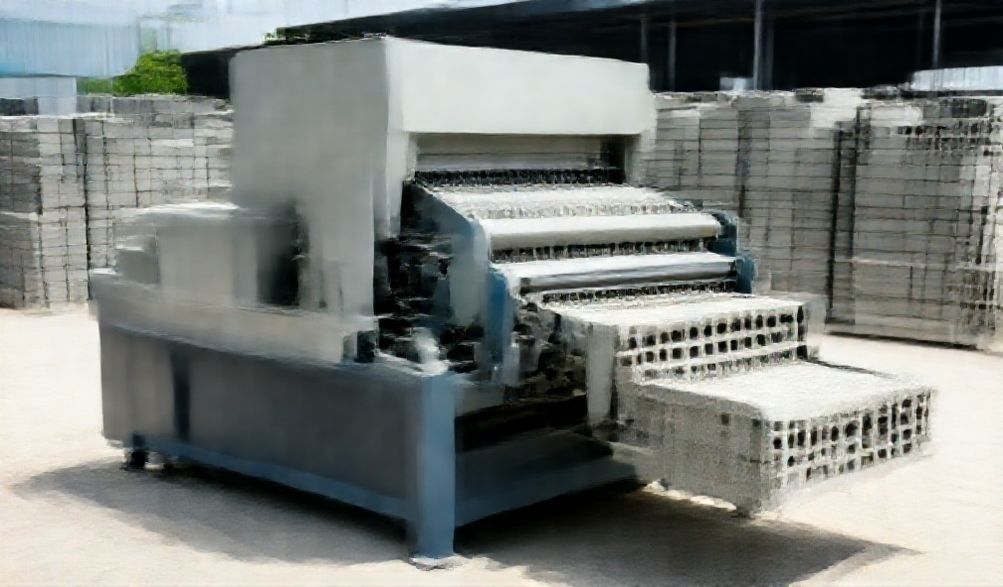
La Guía Definitiva sobre Máquinas para Hacer Ladrillos de Cemento en Malasia (2026)
Introducción
El horizonte de Malasia es un testimonio de una industria de la construcción en perpetuo movimiento. Desde los monumentales proyectos de infraestructura bajo los planes maestros nacionales hasta los bulliciosos desarrollos residenciales que satisfacen la demanda urbana, los ladrillos siguen siendo el componente fundamental de este crecimiento. Sin embargo, para muchos constructores, contratistas y promotores inmobiliarios, la dependencia de proveedores tradicionales de ladrillos presenta un conjunto recurrente de desafíos: aumentos de precios impredecibles, retrasos en la cadena de suministro y frustrantes inconsistencias en la calidad que pueden comprometer la integridad de todo un proyecto.
¿Y si la solución no fuera solo encontrar un mejor proveedor, sino convertirse en el suyo propio? La producción in situ de ladrillos de cemento mediante máquinas dedicadas para fabricar ladrillos está transformando rápidamente, de una actividad industrial de nicho, en una ventaja estratégica para empresas malasias de todos los tamaños. Este enfoque moderno ofrece un control, una eficiencia y una rentabilidad sin precedentes.
Esta guía integral está diseñada para ser su recurso autorizado. Compilada a partir de perspectivas de la industria, análisis técnico y un profundo conocimiento del mercado local malasio, elimina el ruido. Le proporcionaremos la claridad que necesita para tomar una decisión segura e informada. Al final, tendrá un sólido entendimiento de los diferentes tipos de máquinas disponibles, las características clave que importan, una visión realista de los costos y proveedores en Malasia, y un marco claro para elegir la máquina perfecta que se ajuste a la escala de su proyecto y sus ambiciones empresariales.
¿Por qué considerar una máquina para fabricar ladrillos de cemento en Malasia?
La producción interna de ladrillos es una decisión significativa. Más allá de la inversión inicial, representa un cambio estratégico en las operaciones. Para el negocio adecuado, los beneficios son sustanciales y abordan directamente los puntos críticos del dinámico entorno de la construcción en Malasia.
Eficiencia de Costos y Control Sobre Materias Primas
La lógica financiera es convincente. Poseer una máquina te desvincula de la volatilidad de los precios del mercado de ladrillos.
- Reducir la Dependencia de Proveedores:Ya no estás sujeto a aumentos repentinos de precios por parte de proveedores ni a la escasez durante las temporadas altas de construcción.
- Optimizar la Sostenibilidad de los Materiales:Puedes adquirir directamente materiales en bruto a granel—cemento, arena y polvo de cantera—que suelen tener precios más estables y están ampliamente disponibles a nivel local.
- Minimizar el Costo Logístico:Elimine el gasto recurrente de transportar ladrillos pesados terminados desde una fábrica hasta su sitio. Solo transporta materias primas, lo que generalmente es más rentable.
Flexibilidad y Personalización de Producción Inigualables
Aquí es donde la propiedad realmente brilla. Una máquina para hacer ladrillos convierte tu producción en un servicio bajo demanda.
- Producir según la Necesidad:Genere ladrillos según lo requiera su proyecto, reduciendo drásticamente la necesidad de grandes y costosos patios de almacenamiento y minimizando el desperdicio de materiales por pedidos excesivos.
- Crea Diseños Únicos:¿Necesita un tamaño, forma o color específico para un elemento arquitectónico? Con moldes intercambiables, puede producir bloques huecos personalizados, ladrillos entrelazados para paisajismo o bloques de pavimentación de tamaños especiales, dando a sus proyectos un toque único.
Apoyando los Objetivos de Construcción y Sostenibilidad de Malasia
Su inversión se alinea con los objetivos nacionales más amplios, posicionando su negocio como un actor visionario.
- Alinearse con el Desarrollo NacionalApoyar las iniciativas de infraestructura y vivienda asequible lideradas por el gobierno garantizando un suministro local confiable de materiales de construcción.
- Adopta Prácticas Sostenibles:Las máquinas modernas permiten incorporar subproductos industriales como cenizas volantes o escoria a la mezcla de ladrillos. Esto no solo reduce el contenido de cemento (disminuyendo costos y huella de carbono), sino que también contribuye a una economía más circular, un enfoque clave para el desarrollo sostenible de Malasia.
Garantizar la Calidad Constante y los Plazos del Proyecto
En última instancia, el control sobre la producción significa control sobre el resultado y el cronograma de tu proyecto.
- Garantizada Resistencia Uniforme:Tú dictas el diseño de la mezcla, la relación agua-cemento y el proceso de compactación. Esto resulta en ladrillos con una resistencia a la compresión alta y consistente, lote tras lote.
- Eliminar los Retrasos en los Proyectos:Nunca más enfrentes otra interrupción laboral debido a entregas de ladrillos retrasadas. Tu cronograma de producción está en tus manos, permitiendo una planificación precisa y la finalización oportuna de proyectos.
Tipos de Máquinas para Hacer Ladrillos de Cemento Disponibles
Comprender las categorías de las máquinas es el primer paso en su proceso de selección. La elección correcta depende de su producción requerida, presupuesto y nivel de automatización.
Máquinas Manuales para Fabricar Ladrillos
Estos son los puntos de entrada más fundamentales en la producción de ladrillos, dependiendo completamente de la fuerza humana.
- Operación:Un sistema operado por palanca donde el operador llena manualmente el molde, comprime la mezcla usando fuerza mecánica y libera el ladrillo formado.
- Mejor Para:Ideal para proyectos a muy pequeña escala, propietarios de viviendas individuales, nuevas empresas que prueban el mercado o para producir artículos especializados como ladrillos entrelazados para jardín. Su portabilidad los hace adecuados para sitios remotos sin electricidad.
- Pros y Contras:
- Pros:Costo inicial extremadamente bajo, no necesita electricidad, fácil de mantener, altamente portátil.
- Contras: Very low output (typically 100-500 bricks per day), physically demanding, quality heavily dependent on operator skill.
Máquinas Semiautomáticas para Fabricar Ladrillos
This category offers the best balance for most small to medium-sized Malaysian businesses, providing mechanized assistance for consistent quality.
- Operación: Powered by an electric motor or diesel engine, these machines use vibration and hydraulic or mechanical pressure to compact the brick. The operator manually feeds the raw mix into the hopper and removes the finished bricks for curing.
- Mejor Para: Small to medium blockyards, contractors undertaking several projects per year, and businesses looking for steady, reliable production without full automation.
- Pros y Contras:
- Pros: Significantly higher output than manual machines (e.g., 1,000 – 3,000 bricks per 8-hour shift), good consistency, more energy-efficient than full-auto models, moderate investment cost.
- Contras: Still requires a dedicated operator, output is not continuous.
Máquinas para Fabricar Ladrillos Completamente Automáticas
These are industrial production lines designed for maximum output with minimal manual intervention.
- Operación: These are complete systems with computerized controls. They automate the entire process: feeding raw materials, mixing, conveying the mix to the mold, high-pressure compaction, curing (in integrated systems), and stacking pallets of finished bricks.
- Mejor Para: Large-scale brick manufacturing plants, businesses supplying to major developers or for export, and operations where labor cost and maximum volume are primary concerns.
- Pros y Contras:
- Pros: Very high, continuous output (10,000+ bricks per day), minimal labor requirements, exceptional consistency and product density, high level of automation.
- Contras: Very high capital investment, requires significant space and stable three-phase power supply, complex maintenance requiring specialized technicians.
Key Features to Evaluate When Buying
Once you’ve identified your machine type, drilling down into these critical features will ensure you select a model that delivers long-term value and reliability.
Capacidad de Producción (Producción por Hora/Día)
Don’t just look at the peak number. Industry practice shows it’s wiser to consider sustainable, daily output.
- Coincidir la Producción con la Demanda. Calculate your average brick consumption per project or monthly sales target. Choose a machine whose realista output meets 120-150% of your current need to allow for growth and maintenance downtime.
- Comprender el Tiempo de Ciclo. Ask suppliers for the cycle time (seconds per brick or per mold) and how many bricks are produced per cycle. This gives a clearer picture than a theoretical maximum.
Brick Type and Size Versatility
The ability to produce multiple products future-proofs your investment.
- Common Malaysian Brick Types: Ensure the machine can produce the sizes in demand:
- Solid/Hollow Blocks: 400mm x 200mm x (100mm, 150mm, 200mm)
- Interlocking Paving Blocks
- Bordillos
- Decorative bricks
- Moldes Intercambiables: A key feature. Check the cost, lead time, and ease of changing molds. A good supplier in Malaysia should stock common mold sizes.
Power Source: Electric, Diesel, or Hybrid?
Your site conditions dictate the optimal choice.
- Eléctrico: Cleaner, quieter, and more cost-effective to run in urban/industrial areas with reliable grid power. Requires a stable connection (often 3-phase for larger models).
- Diésel: Offers complete independence from the grid, essential for remote sites or areas with frequent power cuts. Higher fuel and maintenance costs, and generates noise/exhaust.
- Híbrido: Some models offer dual-power capabilities, providing valuable flexibility.
Durabilidad y Soporte Postventa
This is the most critical E-E-A-T (Experience, Expertise, Authoritativeness, Trustworthiness) consideration for the Malaysian buyer. The machine’s build is only half the equation.
- Construcción Robusta: Look for machines with high-grade steel frames, reinforced vibration tables, and quality hydraulic systems. The weight of the machine can often indicate material solidity.
- Local After-Sales Support is Non-Negotiable: A machine is a long-term asset. You must confirm:
- Local Service Technicians: Does the supplier have trained technicians based in Malaysia for repairs and maintenance?
- Spare Parts Inventory: Is there a local warehouse stocking wear-and-tear parts like mold liners, vibration motors, and hydraulic seals? Waiting months for a part from overseas is a business killer.
- Entrenamiento: Does the purchase include proper on-site training for your operators?
Navigating the Malaysian Market: Suppliers and Costs
Entering the market with clear expectations will help you negotiate effectively and find a trustworthy partner.
Overview of Local Manufacturers vs. International Importers
Both options have merits, and the right choice depends on your priorities.
- Local Malaysian Manufacturers/Assemblers:
- Ventajas: Better understanding of local material conditions and standards, typically faster and cheaper service support, easier communication, parts more readily available.
- Consideración: Technology may be based on older, proven designs rather than cutting-edge innovation.
- International Importers (e.g., from China, India, Europe):
- Ventajas: Access to the latest technological features and automation, potentially lower upfront cost for comparable specs.
- Critical Considerations: Verify the importer’s local support capability. Who will handle installation, warranty claims, and major repairs? Ensure they have a strong physical presence, not just a sales office.
Understanding the Price Range
Prices vary widely based on automation, capacity, and brand. Use these indicative brackets as a starting point (prices are in Malaysian Ringgit).
- Máquinas Manuales para Fabricar Ladrillos: RM 3,000 – RM 20,000
- Máquinas Semiautomáticas para Fabricar Ladrillos: RM 25,000 – RM 150,000
- Plantas de Fabricación de Ladrillos Completamente Automáticas: RM 200,000 – RM 1,000,000+
Descargo de responsabilidad: These are broad estimates. Always get detailed quotations based on your specific requirements. Factors like mold customization, extra conveyors, and pallet stackers will affect the final price.
Essential Questions to Ask Your Supplier
Arm yourself with this checklist during negotiations:
- What is included in the quoted price? (Installation? Training? Initial set of molds? Delivery?)
- What is the warranty period and what does it specifically cover?
- Where is your spare parts warehouse located in Malaysia, and what is the typical availability for common parts?
- Can you provide contact details for 2-3 current customers in Malaysia for a reference check?
- Do your bricks comply with relevant Malaysian Standards (MS)? Can you assist with testing?
- Do you offer annual maintenance contracts?
The Business Case: ROI and Operational Setup
Turning your machine into a profitable asset requires planning beyond the purchase order.
Calculating Your Return on Investment (ROI)
A simplified framework helps visualize the payoff:
- Calculate Total Investment: Machine cost + installation + initial raw material stock + utility setup.
- Calculate Operational Cost per Brick: (Cost of cement + sand + quarry dust + electricity/fuel + labor + maintenance) per brick.
- Determine Your Benefit: This is either:
- Savings: The money you no longer pay to an external supplier per brick.
- Revenue: The selling price per brick if you are manufacturing for sale.
- Calculate Profit per Brick: Benefit per brick minus Operational Cost per brick.
- Estimate Payback Period: Total Investment / (Profit per brick x Monthly Production Volume).
Ejemplo: If your machine and setup cost RM 100,000, and you net a profit of RM 0.20 per brick while producing 30,000 bricks a month, your payback period is roughly 16-17 months.
Basic Operational Requirements in Malaysia
Plan your space and utilities accordingly:
- Espacio: You need area for the machine, raw material storage (covered), a mixing station, and a curing yard. A semi-automatic setup may require 5,000-10,000 sq. ft.
- Power & Water: Ensure your site has the required electrical supply (voltage, phase). A consistent water source for the mix is essential.
- Materias Primas: Establish relationships with reliable sand and aggregate suppliers. Consistency in raw material quality is key to consistent brick quality.
- Proceso de Curado: Freshly molded bricks must be kept damp (by spraying water or covering with plastic sheets) for at least 7-14 days to gain strength properly. This is a crucial, often overlooked step.
Compliance and Standards
Producing for commercial projects requires adherence to standards.
- Malaysian Standards (MS): Familiarize yourself with the relevant MS for concrete bricks and blocks. Producing bricks that can be tested and certified to these standards significantly enhances their marketability and trust, especially for larger contractors and government projects.
- Quality Documentation: Maintain records of your mix designs and, if possible, conduct periodic compression tests at a certified lab. This builds authority and trust with your clients.
Frequently Asked Questions (FAQ)
Q1: What is the average cost of a cement brick making machine in Malaysia?
A: As outlined above, costs range dramatically from a few thousand RM for basic manual presses to over a million RM for fully automatic plants. For most small-to-medium businesses, a capable semi-automatic machine represents an investment between RM 50,000 to RM 120,000, depending on features and output.
Q2: Can I start a brick-making business with a small budget?
A: Absolutely. Many successful blockyard owners started with a single manual or small semi-automatic machine, fulfilling local orders. This allows you to validate the market, learn the process, and reinvest profits to scale up gradually.
Q3: How much profit can I make from making cement bricks?
A: Profitability is highly variable. It depends on your operational efficiency, local market prices for both raw materials and finished bricks, and your sales volume. A well-run, efficient small blockyard can see healthy margins by controlling costs and finding a steady client base.
Q4: Where can I find reliable suppliers in Malaysia?
A: Start by searching industrial machinery directories online. Attend construction and machinery trade shows, such as those endorsed by CIDB (Construction Industry Development Board). The most reliable method is to ask for referrals from others in the construction industry and always conduct the due diligence suggested in this guide.
Q5: What is the strength and quality of machine-made bricks compared to traditional ones?
A: When operated correctly, machine-made bricks typically surpass traditional sun-dried or manually produced bricks in consistency and compressive strength. The controlled vibration and high compaction force create a denser, more uniform product with fewer voids, leading to better structural performance and water resistance.
Conclusión
Investing in a cement brick making machine is more than a purchase; it’s a strategic decision to take control of a critical part of your construction supply chain. For businesses in Malaysia, it offers a powerful answer to cost volatility, quality concerns, and project delays. We’ve explored the spectrum from manual to fully automatic machines, highlighted the must-evaluate features—especially the paramount importance of local after-sales support—and provided a realistic view of the market landscape and costs.
Use this guide as your foundational knowledge. It is built on industry experience and designed for trustworthiness, presenting both opportunities and considerations. The next step is to engage with the market directly. Visit suppliers, see machines in operation, request brick samples from their demo units, and speak to their existing customers.
Ready to explore specific models and take the next step? Contact several reputable Malaysian suppliers today to discuss your unique project needs, operational setup, and request a detailed, comparative quotation.
For ongoing insights into construction materials, machinery trends, and business strategies in the Malaysian market, consider subscribing to our industry newsletter or exploring our library of related guides.
<