
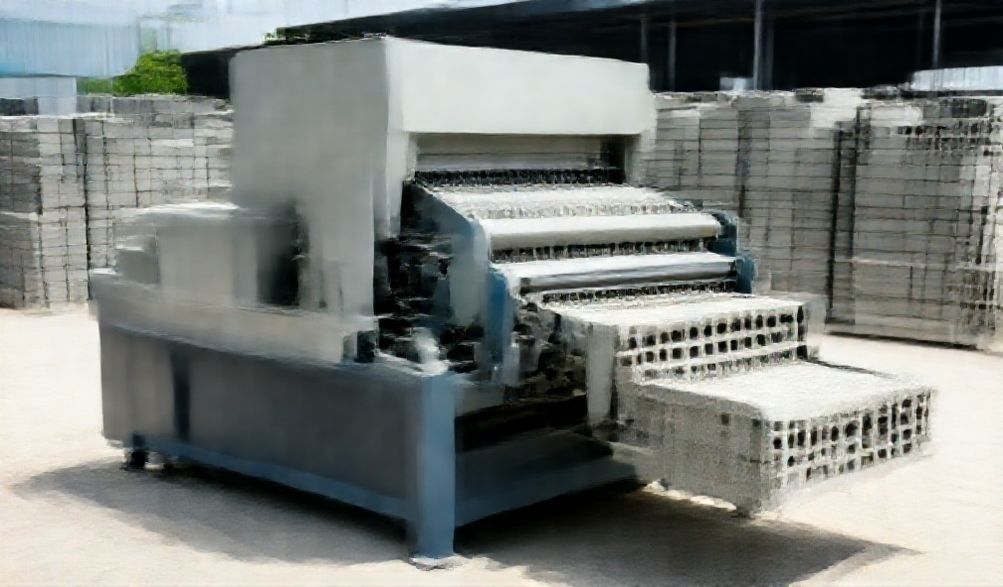
Малайзиядағы цементті кірпіш жасау машиналары туралы жан-жақты нұсқаулық (2026)
Кіріспе
Малайзияның аспан сызымы тұрақты дамып келе жатқан құрылыс саласының айғағы болып табылады. Ұлттық жоспарлар аясындағы ірі инфрақұрылымдық жобалардан бастап, қалалық сұранысты қанағаттандыратын қарқынды тұрғын үй құрылыстарына дейін, кірпіш осы өсушінің негізгі құрылыс материалы болып қала береді. Алайда, көптеген құрылысшылар, мердігерлер және жылжымайтын мүлік әзірлеушілері үшін дәстүрлі кірпіш жеткізушілерге тәуелділік бірқатар қайталанатын мәселелерді тудырады: болжамсыз баға өсімдері, жеткізу тізбегіндегі кідірістер және бүкіл жобаның сенімділігіне нұқсан келтіруі мүмкін сапасыздықтың тұрақсыздығы.
Шешім жай ғана жақсы жеткізуші табу емес, өзіңіздің жеткізушіңізге айналу болса ше? Арнайы кірпіш жасау машиналарын пайдалана отырып, құрылыс алаңында цемент кірпішін өндіру тар нарықтық индустриялық әрекеттен Малайзияның барлық өлшемдегі бизнес үшін стратегиялық артықшылыққа айналуда. Бұл заманауи тәсіл бұрын-соңды болмаған бақылау, тиімділік және қолайлы құнды ұсынады.
Бұл жан-жақты нұсқаулық сіздің сенімді ақпарат көзіңіз болу үшін жасалған. Ол саладағы тәжірибелерден, техникалық талдаулардан және Малайзияның жергілікті нарығын терең түсінуден құрастырылып, қажетсіз ақпараттан тазартылған. Біз сізге сенімді және негізделген шешім қабылдау үшін қажетті анықтықты ұсынамыз. Оны оқып болған соң, сіз қол жетімді әртүрлі машиналардың түрлерін, маңызды сипаттамаларын, Малайзиядағы шығындар мен жеткізушілердің нақты көрінісін, сондай-ақ жобаңыздың ауқымы мен бизнес мақсаттарыңызға сәйкес келетін тамаша машинаны таңдау үшін анық бір құрылымды түсінесіз.
Малайзияда цементті кірпіш жасау машинасын неге қарастыру керек?
Кірпіш өндірісін ішкі түрде ұйымдастыру маңызды шешім болып табылады. Бастапқы инвестициядан тыс, бұл операциялық қызметтегі стратегиялық өзгеріс. Дұрыс бизнес үшін артықшылықтар айтарлықтай және Малайзияның динамикалық құрылыс ортасының мәселелеріне тікелей қатысты.
Шығындардың тиімділігі мен шикізатқа бақылау
Қаржылық логика өте қолайлы. Машинаға ие болу сізді кірпіш нарығының бағасының өзгергіштігінен бөліп тастайды.
- Жеткізушіге тәуелділікті азайту:Сіз бұдан былай жеткізушілерден күтпеген баға өсімдеріне немесе құрылыс маусымының шыңы кезіндегі тапшылыққа ұшырамайсыз.
- Материалдарды сатып алуды оңтайландыруСіз тікелей көлемді шикізаттарды — цемент, құм және тас шаңын — сатып ала аласыз, олардың бағасы жиі тұрақты және жергілікті түрде кең таралған.
- Логистикалық шығындарды азайту:Ауыр дайын кірпішті зауыттан өз алаңыңа тасымалдаудың үнемі қайталанатын шығысын жойыңыз. Сіз тек шикізатты тасымалдайсыз, бұл әдетте тиімдірек.
Салынбаған Өндірістік Икемділік пен Жекелендіру
Міне, меншіктің шынымен жарқыраған жері. Кірпіш жасау машинасы сіздің өндірісіңізді тапсырыс бойынша қызметке айналдырады.
- Қажеттілікке қарай өндіру:Жобаңыздың қажеттілігіне сәйкес кірпіштерді өндіріңіз, осылайша үлкен, қымбат қоймалардың қажеттілігін айтарлықтай азайтып, артық тапсырыс беруден туындайтын материалдық шығындарды азайтыңыз.
- Бірегей Дизайндар Жасаңыз:Архитектуралық элементке арнайы өлшем, пішін немесе түс қажет пе? Ауыстырылатын қалыптарды пайдаланып, сіз жобаларыңызға ерекшелік қосатын тапсырыс бойынша қуыс блоктар, ландшафттық жобаларға арналған ілінісетін кірпіштер немесе арнайы өлшемдегі тротуар плиткаларын өндіре аласыз.
Малайзияның Құрылыс және Тұрақты Даму Мақсаттарын Қолдау
Сіздің инвестицияңыз ұлттық мақсаттармен үйлесімді, бұл бизнесіңізді болашаққа бағдарланған ойыншы ретінде орналастырады.
- Ұлттық дамумен үйлестіру:Үкімет басшылығымен жүргізілетін инфрақұрылымдық және қолжетімді тұрғын үй бастамаларын қолдау үшін құрылыс материалдарының сенімді жергілікті жеткізуін қамтамасыз ету.
- Тұрақты тәжірибелерді қабылдаңыз:Қазіргі заманғы машиналар ұшқын немесе қож сияқты өнеркәсіптік қосымша өнімдерді кірпіш қоспасына қосуға мүмкіндік береді. Бұл тек цемент мөлшерін азайтып (шығынды және көміртеқ ізін төмендетіп) қана қоймай, сонымен қатар Малайзияның тұрақты дамуының негізгі бағыты болып табылатын айналымды экономикаға да үлес қосады.
Тұрақты Сапа мен Жоба Кестелерін Қамтамасыз Ету
Соңында, өндірісті басқару сіздің жобаңыздың нәтижесі мен кестесін басқаруды білдіреді.
- Кепілденген біркелкі беріктік:Сіз араласудың құрамын, су-цемент қатынасын және тығыздау процесін анықтап бередіз. Бұл партиядан партияға біркелкі, жоғары қысу беріктігі бар кірпіштердің алынуына әкеледі.
- Жобаның кешігуін жою:Келесі жұмыс тоқтатуды кірпіш жеткізу кешігуіне байланысты ешқашан бастан кешірмеңіз. Өндіріс жоспары сіздің қолыңызда, дәл жоспарлауға және жобаны уақытында аяқтауға мүмкіндік береді.
Цементтен кірпіш жасау машиналарының түрлері
Машиналардың санаттарын түсіну сіздің таңдау процесіңіздің бірінші қадамы болып табылады. Дұрыс таңдау сіздің қажетті өнімділік, бюджет және автоматтандыру деңгейіңізге байланысты.
Қолдан жасалған кірпіш жасау машиналары
Бұл кірпіш өндірісіне ең негізгі кіру нүктесі болып табылады, ол толығымен адам күшіне сүйенеді.
- Операция:Оператордың қалыпты қолмен толтырып, механикалық күш арқылы қоспаны сығатын және дайын кірпішті босататын тетіктік жүйе.
- Үздік:Өте шағын жобаларға, жеке үй иелеріне, нарықты сынап көріп жатқан стартаптарға немесе бақша интерлоктық кірпіштері сияқты арнайы бұйымдарды өндіруге өте қолайлы. Олардың тасымалдануы мүмкіндігі электр қуаты жоқ қашық аймақтарда пайдалануға ыңғайлы.
- Артықшылықтары мен кемшіліктері:
- Артықшылықтары:Өте төмен бастапқы құны, электр қуаты қажет емес, қарапайым техникалық қызмет көрсету, жоғары тасымалданатындық.
- Кемшіліктері:Өте төмен өнім (күніне 100-500 кірпіш), физикалық жұмысты қажет етеді, сапа оператордың шеберлігіне тәуелді.
Жартылай автоматты кірпіш жасау машиналары
Бұл санат Малайзияның көптеген шағын және орта бизнесі үшін ең жақсы теңгерімді ұсынады, тұрақты сапаны қамтамасыз ету үшін механикаландырылған көмекпен қамтамасыз етеді.
- Операция:Бұл машиналар электр қозғалтқышы немесе дизельдік қозғалтқыш арқылы жұмыс істейді және кірпішті тығыздау үшін діріл мен гидравликалық немесе механикалық қысымды пайдаланады. Оператор шикі қоспаны қоректендіргішке қолмен салып, дайын кірпіштерді қатаю үшін алып тастайды.
- Үздік:Шағын және орташа блок өндіру орындары, жылына бірнеше жобаны жүзеге асыратын келісімшартшылар және толық автоматтандырусыз тұрақты, сенімді өндірісті іздейтін кәсіпорындар.
- Артықшылықтары мен кемшіліктері:
- Артықшылықтары:Қол машиналарына қарағанда айтарлықтай жоғары өнімділік (мысалы, 8 сағаттық ауысымда 1 000 – 3 000 кірпіш), жақсы біртектілік, толық автоматты модельдерге қарағанда энергия тиімділігі жоғары, орташа инвестициялық шығын.
- Кемшіліктері:Әлі де арнайы оператор қажет, шығыс үздіксіз емес.
Толық автоматты кірпіш жасау машиналары
Бұл өндіріс желілері минималды қолмен араласумен максималды өнім шығаруға арналған.
- Операция: These are complete systems with computerized controls. They automate the entire process: feeding raw materials, mixing, conveying the mix to the mold, high-pressure compaction, curing (in integrated systems), and stacking pallets of finished bricks.
- Үздік: Large-scale brick manufacturing plants, businesses supplying to major developers or for export, and operations where labor cost and maximum volume are primary concerns.
- Артықшылықтары мен кемшіліктері:
- Артықшылықтары: Very high, continuous output (10,000+ bricks per day), minimal labor requirements, exceptional consistency and product density, high level of automation.
- Кемшіліктері: Very high capital investment, requires significant space and stable three-phase power supply, complex maintenance requiring specialized technicians.
Key Features to Evaluate When Buying
Once you’ve identified your machine type, drilling down into these critical features will ensure you select a model that delivers long-term value and reliability.
Өндірістік қуат (Сағат/Күндегі өнім)
Don’t just look at the peak number. Industry practice shows it’s wiser to consider sustainable, daily output.
- Match Output to Demand: Calculate your average brick consumption per project or monthly sales target. Choose a machine whose реалистік output meets 120-150% of your current need to allow for growth and maintenance downtime.
- Understand Cycle Time: Ask suppliers for the cycle time (seconds per brick or per mold) and how many bricks are produced per cycle. This gives a clearer picture than a theoretical maximum.
Brick Type and Size Versatility
The ability to produce multiple products future-proofs your investment.
- Common Malaysian Brick Types: Ensure the machine can produce the sizes in demand:
- Solid/Hollow Blocks: 400mm x 200mm x (100mm, 150mm, 200mm)
- Interlocking Paving Blocks
- Жол жиегі тастары
- Decorative bricks
- Interchangeable Molds: A key feature. Check the cost, lead time, and ease of changing molds. A good supplier in Malaysia should stock common mold sizes.
Power Source: Electric, Diesel, or Hybrid?
Your site conditions dictate the optimal choice.
- Электрлік: Cleaner, quieter, and more cost-effective to run in urban/industrial areas with reliable grid power. Requires a stable connection (often 3-phase for larger models).
- Дизель: Offers complete independence from the grid, essential for remote sites or areas with frequent power cuts. Higher fuel and maintenance costs, and generates noise/exhaust.
- Гибридтік: Some models offer dual-power capabilities, providing valuable flexibility.
Durability and After-Sales Support
This is the most critical E-E-A-T (Experience, Expertise, Authoritativeness, Trustworthiness) consideration for the Malaysian buyer. The machine’s build is only half the equation.
- Берік Құрылыс: Look for machines with high-grade steel frames, reinforced vibration tables, and quality hydraulic systems. The weight of the machine can often indicate material solidity.
- Local After-Sales Support is Non-Negotiable: A machine is a long-term asset. You must confirm:
- Local Service Technicians: Does the supplier have trained technicians based in Malaysia for repairs and maintenance?
- Spare Parts Inventory: Is there a local warehouse stocking wear-and-tear parts like mold liners, vibration motors, and hydraulic seals? Waiting months for a part from overseas is a business killer.
- Training: Does the purchase include proper on-site training for your operators?
Navigating the Malaysian Market: Suppliers and Costs
Entering the market with clear expectations will help you negotiate effectively and find a trustworthy partner.
Overview of Local Manufacturers vs. International Importers
Both options have merits, and the right choice depends on your priorities.
- Local Malaysian Manufacturers/Assemblers:
- Артықшылықтары: Better understanding of local material conditions and standards, typically faster and cheaper service support, easier communication, parts more readily available.
- Қарастыру: Technology may be based on older, proven designs rather than cutting-edge innovation.
- International Importers (e.g., from China, India, Europe):
- Артықшылықтары: Access to the latest technological features and automation, potentially lower upfront cost for comparable specs.
- Critical Considerations: Verify the importer’s local support capability. Who will handle installation, warranty claims, and major repairs? Ensure they have a strong physical presence, not just a sales office.
Understanding the Price Range
Prices vary widely based on automation, capacity, and brand. Use these indicative brackets as a starting point (prices are in Malaysian Ringgit).
- Қолдан жасалған кірпіш жасау машиналары: RM 3,000 – RM 20,000
- Жартылай автоматты кірпіш жасау машиналары: RM 25,000 – RM 150,000
- Толық автоматты кірпіш жасау зауыттары: RM 200,000 – RM 1,000,000+
Disclaimer: These are broad estimates. Always get detailed quotations based on your specific requirements. Factors like mold customization, extra conveyors, and pallet stackers will affect the final price.
Essential Questions to Ask Your Supplier
Arm yourself with this checklist during negotiations:
- What is included in the quoted price? (Installation? Training? Initial set of molds? Delivery?)
- What is the warranty period and what does it specifically cover?
- Where is your spare parts warehouse located in Malaysia, and what is the typical availability for common parts?
- Can you provide contact details for 2-3 current customers in Malaysia for a reference check?
- Do your bricks comply with relevant Malaysian Standards (MS)? Can you assist with testing?
- Do you offer annual maintenance contracts?
The Business Case: ROI and Operational Setup
Turning your machine into a profitable asset requires planning beyond the purchase order.
Calculating Your Return on Investment (ROI)
A simplified framework helps visualize the payoff:
- Calculate Total Investment: Machine cost + installation + initial raw material stock + utility setup.
- Calculate Operational Cost per Brick: (Cost of cement + sand + quarry dust + electricity/fuel + labor + maintenance) per brick.
- Determine Your Benefit: This is either:
- Savings: The money you no longer pay to an external supplier per brick.
- Revenue: The selling price per brick if you are manufacturing for sale.
- Calculate Profit per Brick: Benefit per brick minus Operational Cost per brick.
- Estimate Payback Period: Total Investment / (Profit per brick x Monthly Production Volume).
Мысал: If your machine and setup cost RM 100,000, and you net a profit of RM 0.20 per brick while producing 30,000 bricks a month, your payback period is roughly 16-17 months.
Basic Operational Requirements in Malaysia
Plan your space and utilities accordingly:
- Ғарыш: You need area for the machine, raw material storage (covered), a mixing station, and a curing yard. A semi-automatic setup may require 5,000-10,000 sq. ft.
- Power & Water: Ensure your site has the required electrical supply (voltage, phase). A consistent water source for the mix is essential.
- Шикізаттар: Establish relationships with reliable sand and aggregate suppliers. Consistency in raw material quality is key to consistent brick quality.
- Кептіру процесі: Freshly molded bricks must be kept damp (by spraying water or covering with plastic sheets) for at least 7-14 days to gain strength properly. This is a crucial, often overlooked step.
Compliance and Standards
Producing for commercial projects requires adherence to standards.
- Malaysian Standards (MS): Familiarize yourself with the relevant MS for concrete bricks and blocks. Producing bricks that can be tested and certified to these standards significantly enhances their marketability and trust, especially for larger contractors and government projects.
- Quality Documentation: Maintain records of your mix designs and, if possible, conduct periodic compression tests at a certified lab. This builds authority and trust with your clients.
Жиі қойылатын сұрақтар (ЖҚС)
Q1: What is the average cost of a cement brick making machine in Malaysia?
A: As outlined above, costs range dramatically from a few thousand RM for basic manual presses to over a million RM for fully automatic plants. For most small-to-medium businesses, a capable semi-automatic machine represents an investment between RM 50,000 to RM 120,000, depending on features and output.
Q2: Can I start a brick-making business with a small budget?
A: Absolutely. Many successful blockyard owners started with a single manual or small semi-automatic machine, fulfilling local orders. This allows you to validate the market, learn the process, and reinvest profits to scale up gradually.
Q3: How much profit can I make from making cement bricks?
A: Profitability is highly variable. It depends on your operational efficiency, local market prices for both raw materials and finished bricks, and your sales volume. A well-run, efficient small blockyard can see healthy margins by controlling costs and finding a steady client base.
Q4: Where can I find reliable suppliers in Malaysia?
A: Start by searching industrial machinery directories online. Attend construction and machinery trade shows, such as those endorsed by CIDB (Construction Industry Development Board). The most reliable method is to ask for referrals from others in the construction industry and always conduct the due diligence suggested in this guide.
Q5: What is the strength and quality of machine-made bricks compared to traditional ones?
A: When operated correctly, machine-made bricks typically surpass traditional sun-dried or manually produced bricks in consistency and compressive strength. The controlled vibration and high compaction force create a denser, more uniform product with fewer voids, leading to better structural performance and water resistance.
Қорытынды
Investing in a cement brick making machine is more than a purchase; it’s a strategic decision to take control of a critical part of your construction supply chain. For businesses in Malaysia, it offers a powerful answer to cost volatility, quality concerns, and project delays. We’ve explored the spectrum from manual to fully automatic machines, highlighted the must-evaluate features—especially the paramount importance of local after-sales support—and provided a realistic view of the market landscape and costs.
Use this guide as your foundational knowledge. It is built on industry experience and designed for trustworthiness, presenting both opportunities and considerations. The next step is to engage with the market directly. Visit suppliers, see machines in operation, request brick samples from their demo units, and speak to their existing customers.
Ready to explore specific models and take the next step? Contact several reputable Malaysian suppliers today to discuss your unique project needs, operational setup, and request a detailed, comparative quotation.
For ongoing insights into construction materials, machinery trends, and business strategies in the Malaysian market, consider subscribing to our industry newsletter or exploring our library of related guides.
<