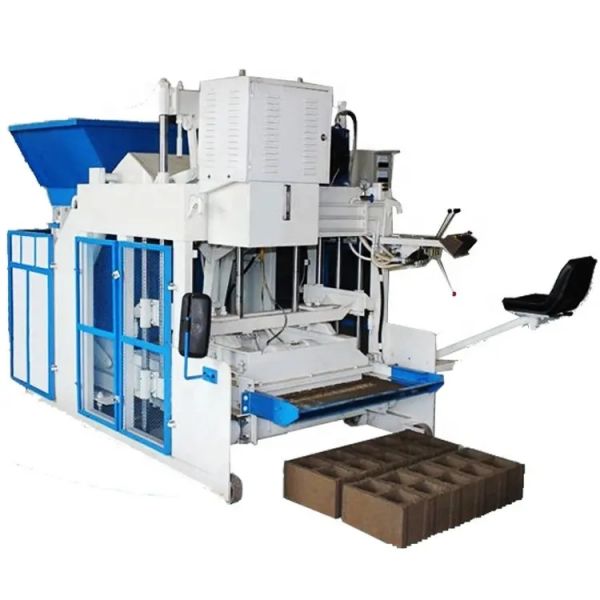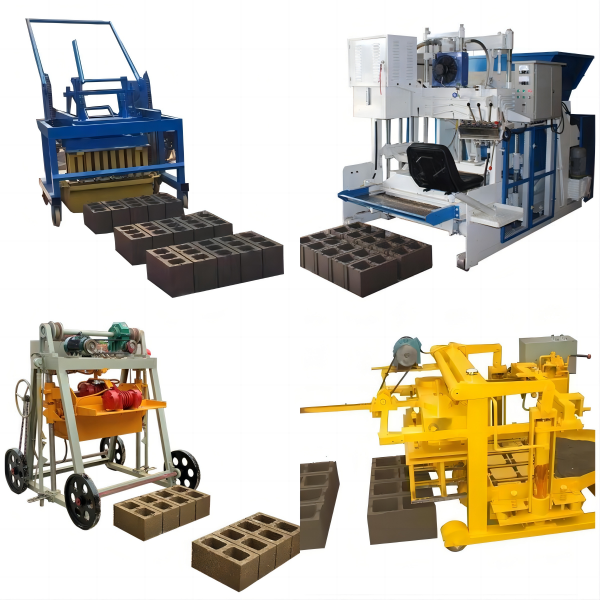
Introducción a la Tecnología de Fabricación de Ladrillos Móviles
En el panorama cambiante de la construcción global, la accesibilidad y la flexibilidad operativa se han vuelto tan valiosas como el volumen de producción puro. Aquí surge la máquina para colocar ladrillos, una categoría de equipo distinta de las plantas estacionarias a gran escala, diseñada para la producción en obra y modelos de fabricación descentralizados. Esta maquinaria, caracterizada por su portabilidad y operación sencilla, representa una oportunidad de mercado significativa para los distribuidores que se enfocan en pequeñas y medianas empresas (PYMES), desarrolladores rurales y proyectos de construcción centrados en la comunidad.
Un Análisis Profundo de la Tecnología de Máquinas para Colocar Ladrillos
1.1 Mecanismo Operativo Central y Características Distintivas
A diferencia de sus contrapartes completamente automatizadas, la máquina para colocar ladrillos opera bajo un principio de producción localizada, lote por lote. Su característica definitoria es su movilidad; toda la unidad puede reubicarse fácilmente a lo largo de un sitio de trabajo o a un nuevo proyecto, a menudo sin requerir desmontaje.
- El Proceso de "Puesta" Desmitificado:El término "colocación" es literal. La máquina se posiciona sobre un terreno nivelado o una losa de concreto preparada. El operador llena la cámara del molde con la mezcla de concreto preparada. Luego, se acciona una palanca mecánica o un sistema hidráulico compacto, aplicando presión significativa para compactar el material. Una vez formado el ladrillo, la máquina se levanta o se desplaza sobre ruedas, "colocando" el ladrillo fresco recién moldeado directamente sobre el suelo en su ubicación exacta de curado. Esto elimina la necesidad de sistemas complejos de transporte o robots de paletizado.
- Manejo Simplificado de Materiales y Flujo de Trabajo:El flujo de trabajo de producción es lineal y sencillo. Las materias primas (cemento, tierra o arena) se mezclan en una mezcladora central, a menudo manual, de tipo artesanal. La mezcla luego se transporta a la ubicación de la máquina. El ciclo de llenado, compactado y colocación se repite, mientras la máquina se desplaza hacia atrás en línea recta, dejando un rastro de ladrillos terminados tras de sí. Este método reduce drásticamente la necesidad de transportar los ladrillos antes del curado, optimizando el flujo de trabajo en el sitio.
- Componentes Clave de Diseño:La arquitectura de la máquina es robusta pero sencilla. Generalmente consta de un bastidor de acero resistente, una caja de molde de ingeniería de precisión (a menudo capaz de producir múltiples ladrillos por ciclo), un mecanismo de compactación (manual, mecánico o hidráulico) y un sistema de expulsión simple. El diseño prioriza la durabilidad y la facilidad de uso sobre la automatización compleja, lo que resulta en una máquina con una larga vida operativa y puntos de mantenimiento mínimos.
1.2 Posicionamiento de Mercado y Escenarios de Aplicación Ideales
La máquina para colocar ladrillos ocupa un nicho específico y vital en el ecosistema de la construcción, atendiendo a segmentos donde las plantas a gran escala son poco prácticas o antieconómicas.
- El Campeón de la Construcción Rural y Remota:En áreas con infraestructura subdesarrollada o acceso limitado a proveedores centralizados de ladrillos, esta máquina permite la producción local. Las comunidades pueden fabricar sus propios materiales de construcción utilizando tierra o arena de origen local, lo que fomenta la autosuficiencia y reduce drásticamente los costos de transporte.
- El Motor de las Empresas Emprendedoras de Pequeña Escala: For individual entrepreneurs, the low capital investment required for a laying brick machine presents a compelling business opportunity. An individual can establish a small brick-making yard, producing bricks on demand for local homebuilders, fencing projects, and small commercial structures, creating a sustainable micro-enterprise.
- The Solution for On-Demand, On-Site Production: For construction projects where the exact number of bricks is uncertain or where just-in-time production is beneficial, this machine is ideal. It allows contractors to produce bricks directly on the construction site, ensuring a perfect match of brick batches for a single project and eliminating material waste and storage issues.
- Specialized Applications and Disaster Relief: Its portability makes it suitable for producing specialized bricks for landscaping, garden pathways, and small-scale infrastructure. Furthermore, in post-disaster reconstruction scenarios, these machines can be rapidly deployed to produce building materials locally, accelerating recovery efforts.
1.3 Strategic Advantages for Distributors and End-Users
The commercial appeal of the laying brick machine is built on a foundation of low barriers to entry and high operational flexibility.
- Minimal Initial Capital Outlay: This is the most significant advantage. The cost of a single laying brick machine is a fraction of that of a semi- or fully-automatic system, making it an accessible product for a vast segment of the market. For distributors, this means a larger potential customer base and faster sales cycles.
- Unmatched Operational Flexibility and Low Overhead: The machine does not require a dedicated factory shed or a permanent concrete foundation. It can operate in open spaces, requiring only a source of raw materials and a few square meters of level ground. This results in extremely low setup and overhead costs for the end-user.
- Reduced Reliance on Complex Logistics and Energy Grids: Since production is decentralized and the bricks are cured in place, the complex logistics of transporting fragile green bricks are eliminated. Furthermore, most models are entirely mechanical or use low-power hydraulics, making them suitable for operation in areas with unreliable or no electricity.
- Robust Construction and Ease of Maintenance: With fewer moving parts and no sophisticated electronics, these machines are inherently durable. Maintenance is straightforward, often requiring only basic tools and mechanical knowledge. This translates to high machine uptime, customer satisfaction, and a lower burden on the distributor’s after-sales service network.
1.4 Critical Technical and Commercial Evaluation Parameters
For a distributor or procurement manager, assessing the quality and suitability of a laying brick machine requires a focused set of criteria.
- Production Output and Cycle Time: Output is measured in bricks per day rather than per hour. A critical metric is the cycle time—how long it takes to produce one batch of bricks (e.g., 3-5 bricks) and reposition the machine. A faster cycle time directly increases daily yield.
- Build Quality and Material Specifications: The quality of the steel used in the frame and mold determines the machine’s longevity. The hardness and precision of the mold liners are crucial for producing bricks with consistent dimensions and smooth surfaces. A robust vibration system (if present) ensures proper compaction.
- Versatilidad en la Producción de Productos: Many modern laying-type machines come with interchangeable molds. A single base unit can potentially produce solid blocks, hollow blocks, and paving stones. This versatility increases the value proposition for the end-user, allowing them to serve diverse customer needs.
- Ergonomics and Operator Safety: The design should prioritize operator safety and ease of use. Features like ergonomic lever handles, safety guards on moving parts, and a design that minimizes strenuous lifting are important differentiators that reduce the risk of workplace injury and operator fatigue.
Conclusión
The laying brick machine is a testament to the principle that appropriate technology can be as transformative as high-tech solutions. It democratizes the production of construction materials, placing the capability to manufacture bricks directly into the hands of small entrepreneurs, rural communities, and pragmatic contractors. For distributors and B2B stakeholders, this segment represents a dynamic and resilient market less susceptible to the economic fluctuations that can affect large-scale industrial projects. By understanding the unique operational logic, target applications, and commercial drivers of the laying brick machine, businesses can effectively cultivate a valuable and growing customer base, providing them with the tools to build not just structures, but sustainable local economies.
Frequently Asked Questions (FAQ)
Q1: What is the primary difference between a “laying” machine and a “stationary” block making machine?
A: The core difference lies in mobility and brick handling. A laying machine is mobile, compacting and then ejecting bricks directly onto the ground for curing. A stationary machine is fixed in place, requiring a system to transport the freshly molded (green) bricks to a separate curing area, often involving pallets, racks, or conveyor belts.
Q2: What is the typical production output a single operator can achieve with a manual laying machine?
A: Output is highly dependent on the operator’s efficiency and the machine’s cycle time. A skilled operator using a manual machine producing 3-4 bricks per cycle can typically manufacture between 500 and 1,000 bricks in an 8-hour workday. Hydraulically-assisted models can increase this output.
Q3: Are the bricks produced by these machines of sufficient quality for permanent residential construction?
A: Yes, provided the correct raw material mix and compaction pressure are used. The bricks must be properly cured, typically by keeping them moist and covered for a minimum of 7-14 days. It is recommended that sample bricks be tested for compressive strength at a local laboratory to ensure they meet regional building standards.
Q4: What kind of raw material mix is required for optimal performance?
A: These machines are versatile but work best with a semi-dry concrete mix. A common ratio is 1 part cement to 6-8 parts of a well-graded aggregate (such as a mix of sand and fine gravel). The mixture must have just enough moisture to hold its shape when compacted but not be wet or sloppy.
Q5: What does the typical after-sales support package for this category of machine include?
A: A comprehensive support package should include detailed operational manuals, a set of basic tools, and a starter kit of critical wear parts (like replacement mold liners or seals for hydraulic models). Additionally, suppliers should offer remote troubleshooting support and ready access to a catalog of spare parts.
Q6: Can these machines be easily exported and used in different international markets?
A: Absolutely. Their simple design, lack of dependency on specific voltage standards, and robust construction make them ideal for export. The main considerations are ensuring the accompanying documentation is in the local language and that the distributor has a clear understanding of the local demand for specific brick sizes and types to supply the correct molds.