Pengenalan Teknologi Pembuatan Bata Bergerak
Dalam lanskap konstruksi global yang terus berkembang, aksesibilitas dan fleksibilitas operasional telah menjadi sama berharganya dengan volume produksi semata. Muncul mesin bata laying, kategori peralatan yang berbeda dari pabrik stasioner skala besar, dirancang untuk produksi di lokasi dan model manufaktur terdesentralisasi. Mesin ini, yang dicirikan oleh portabilitas dan operasi yang sederhana, mewakili peluang pasar yang signifikan bagi distributor yang menargetkan usaha kecil dan menengah (UKM), pengembang pedesaan, dan proyek konstruksi yang berfokus pada komunitas.
Analisis Mendalam tentang Teknologi Mesin Pemasang Bata
1.1 Mekanisme Operasional Inti dan Fitur Pembeda
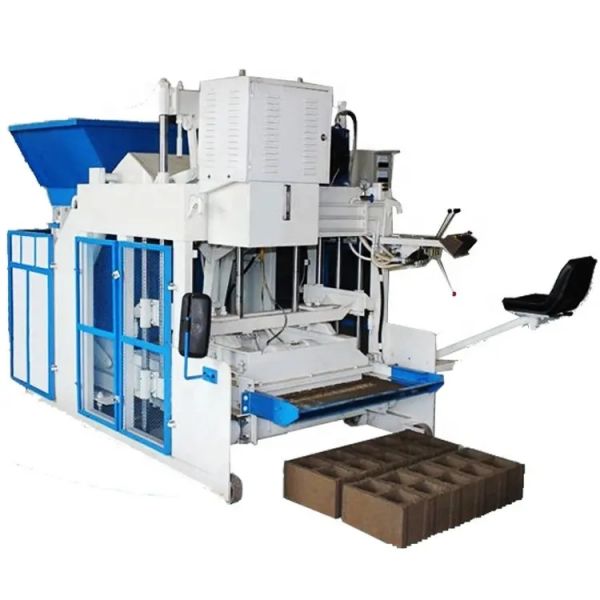
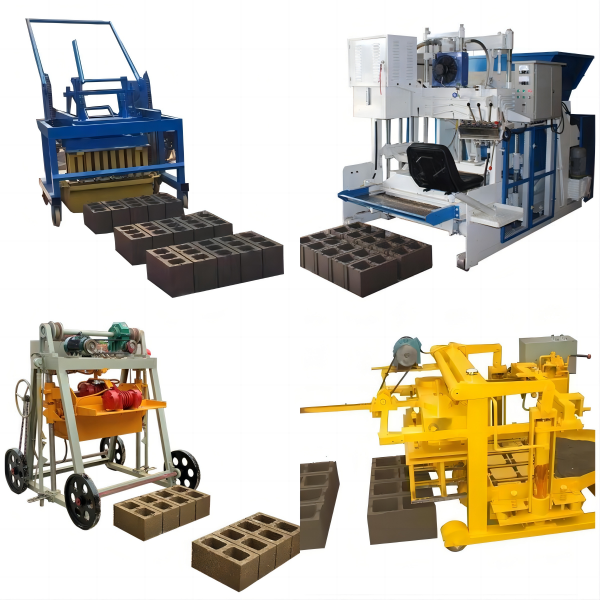
Berbeda dengan rekan-rekannya yang sepenuhnya otomatis, mesin peletak batu bata beroperasi berdasarkan prinsip produksi lokal, batch demi batch. Karakteristik utamanya adalah mobilitasnya; seluruh unit dapat dengan mudah dipindahkan di sepanjang lokasi pekerjaan atau ke lokasi proyek baru, sering kali tanpa memerlukan pembongkaran.
- Proses "Peneluran" Dijelaskan Secara Sederhana:Istilah "meletakkan" bersifat harfiah. Mesin ditempatkan di atas tanah yang rata atau pelat beton yang telah disiapkan. Operator mengisi ruang cetakan dengan campuran beton yang telah disiapkan. Kemudian tuas mekanis atau sistem hidrolik kompak diaktifkan, memberikan tekanan signifikan untuk memadatkan material. Setelah bata terbentuk, mesin diangkat atau dipindahkan dengan roda, "meletakkan" bata hijau yang baru dicetak langsung ke tanah di lokasi pengeringannya yang tepat. Ini menghilangkan kebutuhan akan sistem konveyor yang rumit atau robot paletisasi.
- Penyederhanaan Penanganan Material dan Alur Kerja:Alur produksinya linier dan tidak rumit. Bahan baku (semen, tanah, atau pasir) dicampur dalam pengaduk sentral, seringkali manual. Campuran kemudian diangkut ke lokasi mesin. Siklus pengisian, pemadatan, dan peletakan diulang, dengan mesin bergerak mundur dalam garis lurus, meninggalkan jejak batu bata jadi di belakangnya. Metode ini secara drastis mengurangi kebutuhan transportasi batu bata sebelum pengeringan, menyederhanakan alur kerja di lokasi.
- Komponen Desain Utama:Arsitektur mesin ini kokoh namun sederhana. Biasanya terdiri dari rangka baja yang kuat, kotak cetak yang dirancang presisi (seringkali mampu menghasilkan beberapa bata per siklus), mekanisme pemadatan (manual, mekanis, atau hidrolik), dan sistem pengeluaran yang sederhana. Desainnya mengutamakan daya tahan dan kemudahan penggunaan daripada otomatisasi yang kompleks, menghasilkan mesin dengan masa operasional panjang dan titik perawatan yang minimal.
1.2 Posisi Pasar dan Skenario Aplikasi Ideal
Mesin penata bata menempati ceruk yang spesifik dan vital dalam ekosistem konstruksi, melayani segmen-segmen di mana pabrik skala besar tidak praktis atau tidak ekonomis.
- Juara Konstruksi Pedesaan dan Terpencil:Di daerah dengan infrastruktur yang kurang berkembang atau akses terbatas ke pemasok bata terpusat, mesin ini memungkinkan produksi lokal. Masyarakat dapat memproduksi sendiri bahan bangunan menggunakan tanah atau pasir yang bersumber dari daerah setempat, memberdayakan kemandirian dan secara drastis mengurangi biaya transportasi.
- Mesin Penggerak Usaha Wirausaha Skala Kecil: For individual entrepreneurs, the low capital investment required for a laying brick machine presents a compelling business opportunity. An individual can establish a small brick-making yard, producing bricks on demand for local homebuilders, fencing projects, and small commercial structures, creating a sustainable micro-enterprise.
- The Solution for On-Demand, On-Site Production: For construction projects where the exact number of bricks is uncertain or where just-in-time production is beneficial, this machine is ideal. It allows contractors to produce bricks directly on the construction site, ensuring a perfect match of brick batches for a single project and eliminating material waste and storage issues.
- Specialized Applications and Disaster Relief: Its portability makes it suitable for producing specialized bricks for landscaping, garden pathways, and small-scale infrastructure. Furthermore, in post-disaster reconstruction scenarios, these machines can be rapidly deployed to produce building materials locally, accelerating recovery efforts.
1.3 Strategic Advantages for Distributors and End-Users
The commercial appeal of the laying brick machine is built on a foundation of low barriers to entry and high operational flexibility.
- Minimal Initial Capital Outlay: This is the most significant advantage. The cost of a single laying brick machine is a fraction of that of a semi- or fully-automatic system, making it an accessible product for a vast segment of the market. For distributors, this means a larger potential customer base and faster sales cycles.
- Unmatched Operational Flexibility and Low Overhead: The machine does not require a dedicated factory shed or a permanent concrete foundation. It can operate in open spaces, requiring only a source of raw materials and a few square meters of level ground. This results in extremely low setup and overhead costs for the end-user.
- Reduced Reliance on Complex Logistics and Energy Grids: Since production is decentralized and the bricks are cured in place, the complex logistics of transporting fragile green bricks are eliminated. Furthermore, most models are entirely mechanical or use low-power hydraulics, making them suitable for operation in areas with unreliable or no electricity.
- Robust Construction and Ease of Maintenance: With fewer moving parts and no sophisticated electronics, these machines are inherently durable. Maintenance is straightforward, often requiring only basic tools and mechanical knowledge. This translates to high machine uptime, customer satisfaction, and a lower burden on the distributor’s after-sales service network.
1.4 Critical Technical and Commercial Evaluation Parameters
For a distributor or procurement manager, assessing the quality and suitability of a laying brick machine requires a focused set of criteria.
- Production Output and Cycle Time: Output is measured in bricks per day rather than per hour. A critical metric is the cycle time—how long it takes to produce one batch of bricks (e.g., 3-5 bricks) and reposition the machine. A faster cycle time directly increases daily yield.
- Build Quality and Material Specifications: The quality of the steel used in the frame and mold determines the machine’s longevity. The hardness and precision of the mold liners are crucial for producing bricks with consistent dimensions and smooth surfaces. A robust vibration system (if present) ensures proper compaction.
- Versatility in Product Output: Many modern laying-type machines come with interchangeable molds. A single base unit can potentially produce solid blocks, hollow blocks, and paving stones. This versatility increases the value proposition for the end-user, allowing them to serve diverse customer needs.
- Ergonomics and Operator Safety: The design should prioritize operator safety and ease of use. Features like ergonomic lever handles, safety guards on moving parts, and a design that minimizes strenuous lifting are important differentiators that reduce the risk of workplace injury and operator fatigue.
Kesimpulan
The laying brick machine is a testament to the principle that appropriate technology can be as transformative as high-tech solutions. It democratizes the production of construction materials, placing the capability to manufacture bricks directly into the hands of small entrepreneurs, rural communities, and pragmatic contractors. For distributors and B2B stakeholders, this segment represents a dynamic and resilient market less susceptible to the economic fluctuations that can affect large-scale industrial projects. By understanding the unique operational logic, target applications, and commercial drivers of the laying brick machine, businesses can effectively cultivate a valuable and growing customer base, providing them with the tools to build not just structures, but sustainable local economies.
Pertanyaan yang Sering Diajukan (FAQ)
Q1: What is the primary difference between a “laying” machine and a “stationary” block making machine?
A: The core difference lies in mobility and brick handling. A laying machine is mobile, compacting and then ejecting bricks directly onto the ground for curing. A stationary machine is fixed in place, requiring a system to transport the freshly molded (green) bricks to a separate curing area, often involving pallets, racks, or conveyor belts.
Q2: What is the typical production output a single operator can achieve with a manual laying machine?
A: Output is highly dependent on the operator’s efficiency and the machine’s cycle time. A skilled operator using a manual machine producing 3-4 bricks per cycle can typically manufacture between 500 and 1,000 bricks in an 8-hour workday. Hydraulically-assisted models can increase this output.
Q3: Are the bricks produced by these machines of sufficient quality for permanent residential construction?
A: Yes, provided the correct raw material mix and compaction pressure are used. The bricks must be properly cured, typically by keeping them moist and covered for a minimum of 7-14 days. It is recommended that sample bricks be tested for compressive strength at a local laboratory to ensure they meet regional building standards.
Q4: What kind of raw material mix is required for optimal performance?
A: These machines are versatile but work best with a semi-dry concrete mix. A common ratio is 1 part cement to 6-8 parts of a well-graded aggregate (such as a mix of sand and fine gravel). The mixture must have just enough moisture to hold its shape when compacted but not be wet or sloppy.
Q5: What does the typical after-sales support package for this category of machine include?
A: A comprehensive support package should include detailed operational manuals, a set of basic tools, and a starter kit of critical wear parts (like replacement mold liners or seals for hydraulic models). Additionally, suppliers should offer remote troubleshooting support and ready access to a catalog of spare parts.
Q6: Can these machines be easily exported and used in different international markets?
A: Absolutely. Their simple design, lack of dependency on specific voltage standards, and robust construction make them ideal for export. The main considerations are ensuring the accompanying documentation is in the local language and that the distributor has a clear understanding of the local demand for specific brick sizes and types to supply the correct molds.