
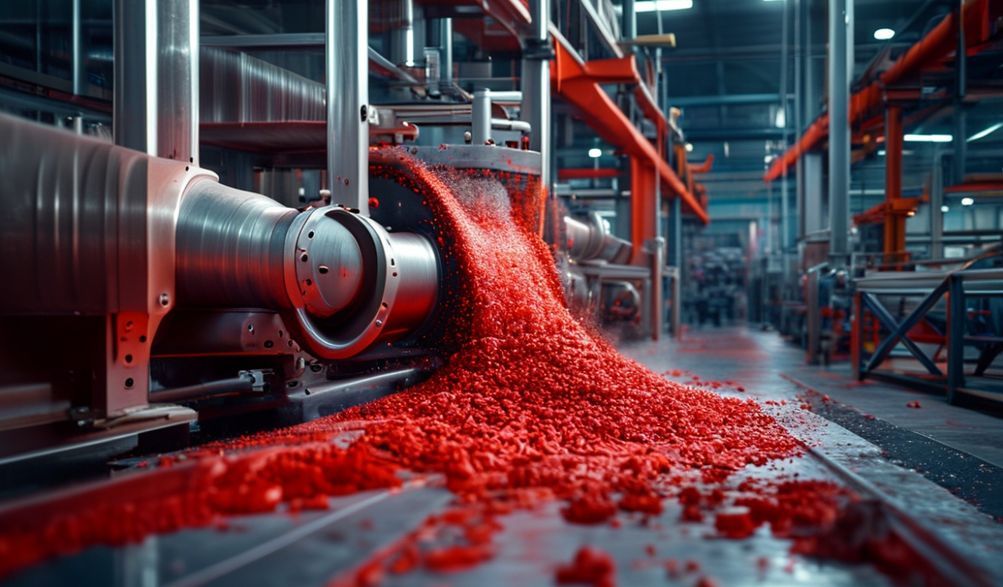
Tu Guía Definitiva sobre la Máquina de Ladrillos de Arcilla y la Fábrica de Ladrillos FUDA
Durante milenios, el ladrillo de arcilla ha sido la base de la civilización. Desde los arcos antiguos hasta los rascacielos modernos, su durabilidad, masa térmica y estética atemporal han demostrado ser insustituibles. Hoy, esta demanda continúa, pero el desafío ha pasado de fabricar ladrillos a fabricarlos de manera eficiente, consistente y rentable. Para las empresas constructoras, los fabricantes emergentes y los especialistas en adquisiciones, el núcleo de este desafío radica en una decisión crítica: elegir la máquina adecuada para fabricar ladrillos de arcilla.
Navegar por el mundo de la maquinaria para ladrillos puede ser abrumador. Las afirmaciones de alta producción y bajo costo abundan, pero encontrar un socio confiable que cumpla con las promesas de calidad, durabilidad y soporte es la verdadera clave para una operación exitosa. Aquí es donde entran en foco fabricantes establecidos como la fábrica de ladrillos FUDA.
Esta guía está compilada a partir de análisis de la industria, especificaciones técnicas y conocimientos sobre excelencia en manufactura para ayudarte a tomar una decisión informada. Iremos más allá de los folletos de ventas para proporcionar un recurso experto y exhaustivo. Ya sea que estés escalando una planta existente o iniciando un nuevo proyecto, aprenderás sobre la mecánica de la producción de ladrillos, la propuesta de valor específica de la maquinaria FUDA y los factores críticos para una inversión sólida.
Comprensión de las Máquinas para Hacer Ladrillos de Arcilla
Antes de evaluar a cualquier fabricante, es fundamental comprender los fundamentos de la tecnología. Una máquina para fabricar ladrillos de arcilla es más que una simple prensa; es un sistema diseñado para transformar arcilla cruda y plástica en unidades de construcción perfectamente formadas y estructuralmente sólidas.
¿Cómo Funciona una Máquina para Hacer Ladrillos de Arcilla?
El proceso más común para la producción moderna de ladrillos es la extrusión. Aquí hay un desglose de las etapas principales:
- Alimentación y Mezcla:La arcilla cruda, a menudo mezclada con agua y a veces con aditivos como cenizas volantes o arena, se alimenta a una mezcladora. Esto crea una masa homogénea y plástica con la consistencia adecuada para el moldeo.
- Extrusión:La arcilla mezclada se transporta luego a una extrusora. Un potente tornillo sinfín empuja la arcilla a través de una cámara de vacío para eliminar las burbujas de aire—lo cual es crucial para la resistencia final—y luego la fuerza a pasar por un troquel. Este troquel define la forma de la sección transversal del ladrillo (hueco, macizo, con llave, etc.).
- Corte:La columna continua de arcilla (o "lingote") que sale del molde se corta en unidades individuales de ladrillo. Esto se hace con alambres de precisión o una mesa de corte, asegurando una longitud uniforme de los ladrillos.
- Apilado y Secado:Los ladrillos verdes (sin cocer) se apilan automáticamente en carros de horno o estantes mediante apiladoras o brazos robóticos, listos para el proceso de secado y posterior cocción en un horno.
Un método alternativo, frecuentemente para adoquines o formas especiales, esprensado hidráulicodonde la arcilla se compacta bajo alta presión en un molde.
Tipos de Máquinas para Ladrillos de Arcilla
Las máquinas se clasifican según su nivel de automatización y producción.
- Máquinas Manuales/A Pequeña Escala:Operado principalmente a mano, adecuado para producción de muy bajo volumen o proyectos artesanales. Bajo costo de capital pero alta intensidad de mano de obra.
- Máquinas Semiautomáticas:Un equilibrio entre automatización e intervención manual. A menudo automatizan la extrusión y el corte, pero pueden requerir manejo manual para el apilado. Ideal para pequeñas y medianas empresas (PYMES) que buscan optimizar su producción con una inversión moderada.
- Líneas de Producción Completamente Automáticas: Integrated systems where the process from feeding to stacking is automated, controlled by Programmable Logic Controllers (PLCs). Designed for high-volume, consistent output with minimal labor. This is the choice for large-scale commercial factories.
Furthermore, machines are designed for specific products:
* Hollow Brick Machines: Create bricks with cavities, reducing weight and material use while improving insulation.
* Máquinas para Ladrillos Sólidos: Produce dense, high-strength bricks for structural applications.
* Paver/Block Making Machines: Typically use hydraulic pressing to create interlocking pavers, landscaping blocks, and curb stones.
Why Choose a FUDA Brick Making Factory Machine?
In a crowded market, a manufacturer’s reputation is built on engineering, reliability, and the tangible quality of the end product. Here’s how a factory like FUDA positions itself to meet these industry demands.
Proven Engineering and Durability
The foundation of any industrial machine is its build. A brick machine operates in a harsh, high-vibration, and dusty environment.
- Construcción Robusta: Reputable manufacturers use high-grade steel for critical components like the extruder barrel, auger shafts, and machine frame. This resists wear, deformation, and corrosion over years of operation.
- Ingeniería de Precisión: Key components like gearboxes, bearings, and cutting mechanisms are sourced from trusted suppliers and assembled to tight tolerances. This reduces vibration, noise, and premature failure.
- Compliance & Safety: Adherence to international machinery safety and design standards (like CE marking for export) is a strong indicator of a manufacturer’s commitment to quality and user safety.
Innovación e Integración Tecnológica
Modern brick making is about precision and control. Leading factories integrate technology to enhance efficiency and product quality.
- Sistemas de Control por PLC: In automatic lines, a PLC allows for precise control over extrusion speed, vacuum levels, and cutting sequences. It enables troubleshooting, production data logging, and consistent repeatability.
- Energy-Efficient Drives: Variable Frequency Drives (VFDs) on motors allow the machine to use only the power needed for the specific load, reducing electricity consumption and mechanical stress.
- Advanced Cutting Mechanisms: Servo-driven cutting systems provide exceptional accuracy in brick length, minimizing waste and ensuring every brick meets dimensional standards.
Focus on Output Quality and Consistency
The ultimate test of a machine is the quality of the bricks it produces. A superior machine delivers consistency.
- Densidad y Resistencia Uniformes: A powerful, stable vacuum system and consistent extrusion pressure ensure the clay column is free of laminations and air pockets. This results in bricks with uniform density, which directly translates to consistent compressive strength—critical for meeting ASTM C62 or equivalent local standards.
- Precisión Dimensional: Precision-machined dies and accurate cutting systems produce bricks with tight dimensional tolerances. This makes bricklaying faster, reduces mortar use, and improves the aesthetic of the finished wall.
Key Models and Specifications from FUDA
While specific model numbers and specs should always be verified directly with the factory, product lines from a manufacturer like FUDA typically cater to a spectrum of business needs.
High-Volume Automatic Production Lines
These are the flagship systems for establishing a major brick manufacturing facility.
* Salida:Capaz de producir20,000 to 80,000+ standard bricks per 8-hour shift, depending on the model and configuration.
* Automatización: Fully integrated lines featuring automatic feeders, extruders, multi-wire cutters, robotic stackers, and transfer systems.
* Poder: Require significant industrial power supply (e.g., 380V/50Hz or 440V/60Hz) and substantial factory floor space with reinforced foundations.
* Ideal Para: Large construction firms backward-integrating their supply or established brick manufacturers expanding capacity.
Versatile Semi-Automatic Machines for SMEs
This category offers the best balance for growing businesses.
* Salida: Typically range from 5,000 to 20,000 bricks per shift. They automate the core forming process but may use manual or semi-auto brick carts and stacking.
* Flexibilidad: Often easier to set up and maintain. They allow operators to change brick types or dies with relative ease.
* Relación Costo-Beneficio: Lower initial investment and operational complexity than full lines, while still providing a substantial leap in productivity over manual methods.
* Ideal Para: Entrepreneurs starting a brick yard, medium-sized plants, or businesses in regions with lower labor costs.
Customizable Solutions for Special Bricks
Beyond standard bricks, demand exists for specialized products.
* Capabilities: A technically adept factory can provide solutions for:
* Perforated bricks (for improved insulation and lighter weight).
* Textured or rustic-faced bricks.
* Special shapes for corners, sills, or decorative purposes.
* Requirement: This involves custom die design, potential adjustments to the extrusion parameters, and sometimes different cutting setups. It highlights a manufacturer’s engineering depth.
Critical Factors Before You Invest
Purchasing a brick machine is a major capital expenditure. A disciplined evaluation framework is essential to protect your investment.
Evaluando Sus Necesidades de Producción
Comienza con un plan de negocios claro.
* Salida requerida: Calculate your daily/weekly brick needs based on market demand or internal projects. Don’t just buy the biggest machine; buy the right size for your growth trajectory.
* Tipo de Ladrillo: What will you primarily produce? Hollow blocks for partitions, solid bricks for load-bearing walls, or pavers for landscaping? This dictates the machine type.
* Materia Prima: Test your clay. Its plasticity, shrinkage, and mineral content will influence machine settings and may require specific feeder or mixer attachments.
Análisis del Costo Total de Propiedad
Look far beyond the sticker price.
* Initial Price: The cost of the machine itself.
* Instalación y Puesta en Marcha: Includes foundation work, electrical hookup, and potential on-site technician costs from the supplier.
* Entrenamiento: Are operators and maintenance staff trained by the supplier?
* Mantenimiento y Refacciones: What is the expected annual maintenance cost? How available and affordable are wear parts like augers, liners, and cutting wires? A manufacturer with a strong parts supply chain is invaluable.
* Consumo de Energía: A more efficient machine may have a higher upfront cost but lower operating expenses for years.
* Soporte Postventa: This is where trust is earned. What is the warranty period? Is remote (video) support available? How quickly can a technician be dispatched if needed?
Site and Operational Requirements
Ensure your facility is ready.
* Espacio: You need space for the machine, raw material storage, green brick drying, and the kiln. Include space for material handling equipment.
* Poder: Verify the voltage, phase, and amperage requirements. You may need a transformer or upgraded electrical service.
* Cimiento Industrial machines require a solid, level concrete foundation, often with specific bolt patterns, to operate smoothly and safely.
* Manejo de Materias Primas: Plan for how clay will be delivered, stored, and fed into the machine (e.g., forklifts, conveyor belts).
Maximizing Your Investment with FUDA
Your relationship with the manufacturer shouldn’t end at the point of sale. A successful installation is a partnership.
Installation, Training, and Commissioning
A professional supplier manages this process.
* Expectations: The process should include detailed foundation drawings in advance, supervised installation by factory engineers, thorough operational training for your team, and a production run to commission the machine and ensure it meets agreed-upon output and quality benchmarks.
Routine Maintenance and Care Checklist
Preventive maintenance is the key to uptime.
* Diariamente Lubricate all grease points as per manual, check for loose bolts, clean sensors, and inspect the cutting wires.
* Weekly/Monthly: Check wear on the auger and liner, inspect hydraulic fluid levels and filters (if applicable), tighten drive chains.
* Annually: A comprehensive inspection of gearboxes, motors, and bearings. Follow the manufacturer’s scheduled maintenance plan meticulously.
Sourcing Quality Spare Parts and Technical Support
Downtime is lost revenue.
* Genuine Parts: Always use OEM-recommended spare parts. Non-genuine parts may seem cheaper but can cause accelerated wear or machine damage.
* Red de Apoyo: Before purchasing, investigate the supplier’s support structure. Do they have regional agents or service centers? What is their typical response time for technical queries? Request contact information for existing customers in a similar region to verify their service experience.
Frequently Asked Questions (FAQ)
Q1: What is the average production capacity of a FUDA clay brick machine?
A: Capacity varies dramatically by model. Semi-automatic machines may produce 5,000-20,000 bricks per 8-hour shift, while fully automatic lines can range from 20,000 to over 80,000 bricks per shift. The specific output depends on brick type, clay quality, and machine configuration.
Q2: Can FUDA machines use different types of clay or raw materials?
A: Quality extruder-based machines are designed to handle a range of plastic clays. Many can also process mixes incorporating industrial by-products like fly ash or shale. It is crucial to provide your raw material sample to the factory for testing and machine calibration recommendations.
Q3: What kind of after-sales service and warranty does FUDA offer?
A: This must be confirmed in your purchase agreement. Reputable manufacturers typically offer a standard warranty (e.g., 12 months on major components) against manufacturing defects. Service packages vary but may include remote video support, detailed manuals, and the availability of on-site technician visits.
Q4: How do I choose between a semi-automatic and a fully automatic model?
A: Consider four factors: Presupuesto (automatic lines cost significantly more), Labor (automatic reduces labor count but requires skilled technicians), Output Needs (match the machine to your sales forecast), and Long-term Scale (if planning rapid growth, investing in higher automation sooner may be prudent).
Q5: Are FUDA machines suitable for export and operation in my country?
A: Established manufacturers regularly export worldwide. Key checks are: Power Compatibility (machines can be built for 380V/50Hz, 440V/60Hz, etc.), Language & Documentation (manuals should be available in your language), and most importantly, Local Agent Support (having a local representative for parts and service is a major advantage).
Conclusión
Selecting a clay brick making machine is a decision that will define your production capability, product quality, and profitability for years to come. It requires moving beyond basic specifications to evaluate engineering integrity, technological reliability, and the manufacturer’s commitment to being a true long-term partner. As we’ve explored, factories like FUDA build their reputation on these very pillars: durable construction, precision engineering, and a focus on delivering consistent, high-quality output.
Remember, you’re not just buying a machine; you’re forming a partnership for business growth. The right equipment becomes the reliable heart of your operation.
For the most accurate and current specifications, pricing, and to verify technical support for your region, we recommend contacting the official FUDA brick making factory directly. Request detailed brochures, ask for customer references, and if possible, visit a working installation to see the machines in operation. This guide aimed to equip you with the knowledge to have informed, confident discussions with manufacturers, ensuring your investment builds a solid foundation for success.
<