
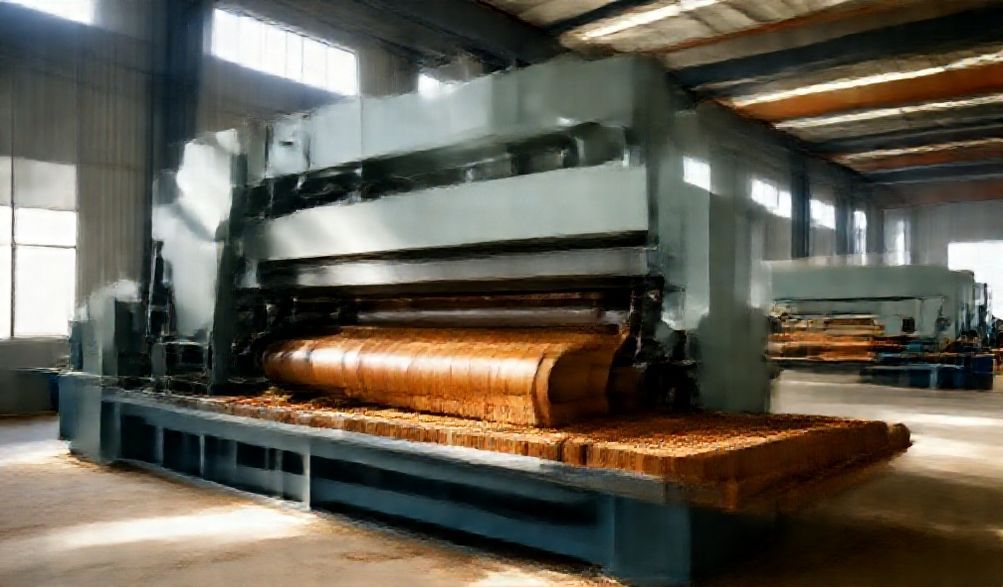
Le Guide Ultime des Usines de Fabrication de Machines à Briques de Boue en Chine
Introduction
À une époque marquée par la conscience climatique et la recherche de solutions de logement abordables, les techniques de construction anciennes connaissent une renaissance remarquable. Les blocs de terre comprimée (BTC), ou briques de terre, sont à l'avant-garde de ce mouvement. Ils offrent une durabilité inégalée, une masse thermique exceptionnelle et une énergie grise considérablement plus faible comparativement aux briques cuites ou au béton.
Pourtant, pour les constructeurs, les ONG de développement, les entrepreneurs sociaux et les entrepreneurs prêts à exploiter ce potentiel, un obstacle majeur se présente : s'approvisionner en machines fiables, efficaces et rentables. L'écart entre un projet visionnaire de construction écologique et sa réalisation est souvent comblé par des questions sur la qualité de l'équipement, la capacité de production et le soutien technique.
C'est là que l'écosystème industriel chinois entre en jeu. Il est devenu le centre mondial incontesté de la fabrication de machines à fabriquer des briques de terre crue, répondant à tous les besoins – d'une simple presse manuelle pour un projet communautaire à une usine hydraulique entièrement automatisée pour la production commerciale.
Parcourir ce vaste marché peut toutefois sembler intimidant. Ce guide ultime n'est pas le fruit de spéculations, mais bien d'une analyse approfondie du secteur, de protocoles éprouvés d'engagement avec les usines et d'une expertise en approvisionnement acquise de haute lutte. Notre objectif est de vous fournir les connaissances nécessaires pour prendre des décisions éclairées, assurées et fiables. Vous apprendrez comment identifier des usines réputées, comprendre les différents types de machines, naviguer dans le processus d'approvisionnement et calculer le coût réel de votre investissement.
Pourquoi se procurer des machines à briques de boue en Chine ?
Choisir une destination d'approvisionnement est une décision stratégique. Pour les machines de fabrication de briques de terre, la Chine présente un argument convaincant, fondé sur une échelle, une innovation et une valeur difficiles à égaler ailleurs.
Échelle de fabrication inégalée et grappes industrielles
La force de la Chine réside dans ses grappes industrielles concentrées. Des régions clés comme山东,河南,福建abritent des réseaux denses de fonderies, de fournisseurs de composants hydrauliques et d'usines d'assemblage spécialisées.
- Cette concentration crée une synergie puissante.
- Les usines bénéficient de chaînes d'approvisionnement rationalisées, ce qui réduit les coûts des composants et les délais de livraison.
- Pour vous, cela se traduit par des prix plus compétitifs et une plus grande efficacité dans la fabrication et le remplacement des pièces après-vente.
Spectre de la technologie et de l'innovation
Le marché chinois n'est pas monolithique. Il offre une échelle technologique complète :
- Solutions de base :Presses manuelles et semi-automatiques robustes, parfaites pour les projets à faible volume ou hors réseau.
- Systèmes avancés :Lignes hydrauliques hautement programmables, entièrement automatiques, avec des débits atteignant des milliers de briques par heure.
- Innovation Spécialisée :Les usines adaptent continuellement les conceptions pour divers types de sols (argileux, sableux, latéritique) et agents stabilisants (comme le ciment ou la chaux), offrant des machines spécifiquement destinées à la production de blocs de terre stabilisée à emboîtement (BTSE).
Rentabilités et considérations sur le retour sur investissement
L'investissement initial en capital est souvent le facteur le plus convaincant. Une machine à briques hydraulique automatique comparable, provenant d'Europe ou d'Amérique du Nord, peut coûter plusieurs fois le prix de son équivalent chinois.
- Ce point d'entrée inférieur améliore considérablement le retour sur investissement (RSI) pour votre entreprise ou projet.
- Une vision holistique de laCoût total de possession (CTP)est crucial. Bien que le prix de la machine soit inférieur, vous devez prendre en compte de manière réfléchie :
- Expédition internationale et assurance.
- Droits d'importation et dédouanement dans votre pays.
- Coûts potentiels pour la supervision de l'installation.
- Même avec ces coûts supplémentaires, la dépense totale demeure généralement très avantageuse.
Types de machines de fabrication de briques en terre crue fabriquées en Chine
Comprendre les catégories de machinerie disponibles est la première étape pour préciser vos besoins.
Presses manuelles et semi-automatiques
Ce sont les chevaux de bataille de la construction à petite échelle et axée sur la communauté.
- Idéal pour :Les passionnés de bricolage, les petites exploitations agricoles, les projets de logement communautaires et les ONG avec des initiatives à forte intensité de main-d'œuvre mais à faible capital.
- Opération :S’appuie sur un levier humain (manuel) ou un petit moteur électrique pour la compression (semi-automatique). Souvent mobile et ne nécessite pas de fondation complexe.
- Sortie :En général, 300 à 800 briques par jour de 8 heures.
- Gamme de prix :Très accessible, généralement à partir de1 000 $ à 5 000 $.
Machines à fabriquer des briques entièrement automatiques et hydrauliques
C’est le choix pour la rentabilité commerciale et des résultats constants de haute qualité.
- Idéal pour :Entreprises fournissant des briques aux entreprises de construction, aux projets de développement à grande échelle et aux entrepreneurs visant une production en volume élevé.
- Opération :Intègre les systèmes d'alimentation, de compression et d'éjection. Une unité de puissance hydraulique centrale et un contrôleur logique programmable (PLC) automatisent l'ensemble du cycle. Offre un contrôle précis de la densité et de la forme des briques.
- Sortie :Varie deDe 1 000 à plus de 5 000 briques par heure, depending on model and brick size.
- Gamme de prix : Significant investment, from $15,000 to $80,000+.
Specialized Machines: Interlocking Block Machines & Mobile Units
- Interlocking Block Machines: These produce bricks with designed ridges and grooves that lock together without mortar. This speeds up construction, reduces skilled labor needs, and enhances seismic resistance. They are a popular sub-category of both semi-automatic and automatic machines.
- Mobile Units: Built on a trailer chassis, these machines can be towed directly to a construction site. They eliminate brick transportation costs, allowing production directly where the soil is excavated. Perfect for large, remote projects like dam construction, road building, or large housing estates.
How to Identify Reputable Chinese Factories
With thousands of suppliers online, separating credible partners from trading companies or unreliable workshops is critical.
Verifying Factory Credentials and Experience
Start with the fundamentals. A legitimate factory should transparently provide:
- Permis d'exploitation : Verify its scope includes “manufacturing” and “export.”
- Certifications : While not always mandatory, ISO 9001 for quality management is a strong positive indicator.
- Patents: Look for patents on machine design or key components—a sign of R&D investment.
- History: A track record of 8-10+ years in heavy machinery manufacturing suggests stability and experience.
- Export Proof: Request documented evidence of past exports (blurred commercial invoices or port records) to your region or similar markets.
Evaluating Technical Expertise and R&D
The quality of the machine is determined in the engineering office. Probe their technical depth:
- In-House Team: Do they have mechanical, hydraulic, and electrical engineers on staff?
- Personnalisation : Will they modify standard designs based on your soil test report?
- Documentation: Request samples of their English manuals, electrical diagrams, and parts lists. Professional documentation reflects a professional operation.
- Material Guidance: A good supplier will advise on optimal soil mix ratios and moisture content for their machine.
The Critical Role of Factory Audits and Virtual Tours
A physical audit is ideal, but a rigorous virtual process is highly effective.
- Due Diligence Checklist: Create a list of items to verify: workshop size, inventory of raw materials (steel plate, hydraulic cylinders), quality control stations, and testing areas.
- Live Video Tour: Insist on a real-time video call, not a pre-recorded video. Walk through the production floor, ask to see welding quality, and observe assembly lines.
- Live Machine Test: The gold standard. Request a live demonstration where they produce bricks, preferably using a soil sample similar to yours. Observe the machine’s operation, brick ejection, and final brick quality.
The Procurement Process: From Inquiry to Delivery
A structured approach minimizes risk and ensures clarity for both parties.
Crafting a Detailed Inquiry and Getting Quotes
A vague inquiry gets vague quotes. Provide a clear specification sheet:
- Desired brick size (L x W x H) and type (solid, hollow, interlocking).
- Soil characteristics (provide a soil test report if available).
- Required capacité de production (bricks per day/hour).
- Available power source (voltage, phase, e.g., 380V/3Phase/50Hz).
- Level of automation (manual, semi-auto, full-auto).
- Analyze the Proforma Invoice (PI) carefully. It should detail the machine specs, payment terms, warranty, delivery time, and shipping terms.
Navigating Communication, Contracts, and Payment Terms
- Communication: Use clear, simple English. Confirm important details in writing (email). Tools like WeChat are common but ensure formal agreements are emailed.
- Contract: The PI, once accepted, becomes a contract. Ensure it includes all agreed-upon specs, a detailed warranty clause, a firm delivery date, and penalties for significant delays.
- Payment Terms: The most common and secure structure is:
- 30% deposit via T/T (Telegraphic Transfer) to confirm the order.
- 70% balance paid before shipment, after you receive and approve photos/videos of the finished, packed machine.
Quality Control, Shipping, and After-Sales Support
- Pre-Shipment Inspection (PSI): For orders over $20,000, hiring a local third-party QC agent (e.g., SGS, BV, or a reputable freelancer) is highly recommended. They will check construction quality, perform a test run, and verify packing.
- Shipping Terms:
- FOB (Franco à bord) : You control the shipping and bear the cost and risk from the Chinese port onward. Offers more control and often lower freight costs.
- CIF (Coût, assurance et fret) : The supplier arranges and pays for shipping to a port in your country. Simpler but usually more expensive.
- After-Sales: Evaluate their support package:
- Garantie : Typically 12 months for core parts (excluding wear items like molds).
- Pièces de rechange : Are parts readily available? What is the pricing?
- Support technique : Do they provide online support (video call)? Will they send an engineer for installation (at an additional cost)?
Key Considerations Before Placing Your Order
Soil Testing and Machine Compatibility
This is the single most important technical step. Machine performance is intrinsically linked to your local soil.
- Conduct a professional soil analysis to determine its composition (clay, silt, sand content) and plasticity.
- Share this report with your shortlisted factories. Their recommendation on machine pressure and necessary mix additives (e.g., 5-10% cement) is a key test of their expertise.
Calculating Total Project Cost (Beyond the Machine Price)
Avoid budget surprises by modeling all costs:
- Machine Price (FOB or CIF).
- Shipping & Marine Insurance (if FOB).
- Import Duties & Taxes (varies by country; consult a local customs broker).
- Inland Transportation from your port to site.
- Installation & Commissioning (factory engineer travel or local technician fees).
- Initial Stock of Spare Parts and Wear Parts (molds, hydraulic seals).
Planning for Installation, Training, and Maintenance
- Installation: Discuss if the machine requires a special foundation. Clarify who will assemble it—your local team with remote guidance, or a factory engineer?
- Formation : Ensure comprehensive operational and safety training is part of the deal, either via detailed videos/manuals or on-site instruction.
- Maintenance Spares: Order a critical spare parts kit with the machine. This should include spare hydraulic hoses, seals, relays, and a mold or two.
FAQ Section
Q1: What is the average price range for a mud brick making machine from China?
A : Prices vary dramatically with specifications. Manual presses range from 1 000 $ à 5 000 $. Semi-automatic machines range from 5 000 $ à 15 000 $. Fully automatic hydraulic production lines start around $15,000 and can exceed $80,000 for large, customized systems.
Q2: Can Chinese machines handle different types of soil, like clay or sandy soil?
A : Yes, but proper configuration is essential. Reputable factories will adjust the machine’s compression ratio, moisture control systems, and even mold design based on your soil analysis report. Sandy soil may require more stabilization (cement/lime) and different pressure settings than clay-rich soil.
Q3: How do I ensure the machine quality without visiting the factory?
A : Implement a multi-step verification: 1) Insist on a live video machine test, 2) Scrutinize all certifications and export records, 3) Contact provided references from your region, 4) For significant orders, hire a third-party inspection company for a pre-shipment check.
Q4: What is the typical lead time and warranty period?
A : Lead times vary: 15-30 days for standard models in stock, 45-60 days for standard production, and up to 90 days for highly customized lines. The standard warranty is 12 months for core components (engine, hydraulic cylinder, PLC), excluding consumable wear parts like molds.
Q5: Do factories provide installation guides and operational training?
A : Professional suppliers provide comprehensive English manuals, electrical schematics, and parts catalogs. Most offer detailed instructional videos. On-site installation and training by a factory engineer can almost always be negotiated for an additional fee covering their travel and time.
Conclusion
Sourcing a mud brick making machine from China represents a strategic opportunity to access advanced, scalable technology at a transformative price point. The journey’s success hinges on meticulous preparation—from understanding your soil to thoroughly vetting factories on their technical merit and transparency, not just their initial price quote.
Remember, you are not just buying a machine; you are forming a technical partnership. Prioritize suppliers who demonstrate a commitment to engineering excellence and clear communication. Treat the procurement process with the diligence it deserves: define your specs, conduct live virtual audits, and secure clear contractual terms.
Ready to take the next step? Begin by preparing a detailed project specification sheet outlining your brick requirements, soil conditions, and production goals. Use this guide as a framework to engage with a shortlist of pre-vetted factories. By investing time in this foundational phase, you are paving the way for a successful project that will deliver sustainable, affordable building materials for years to come, making a tangible positive impact on your local environment and economy.
<