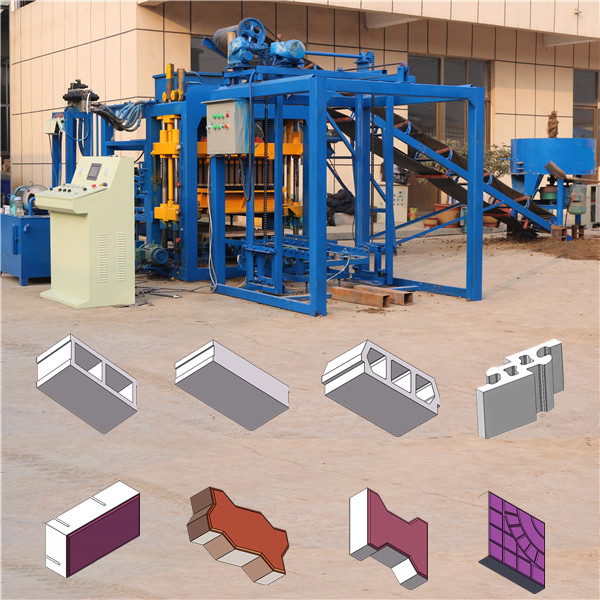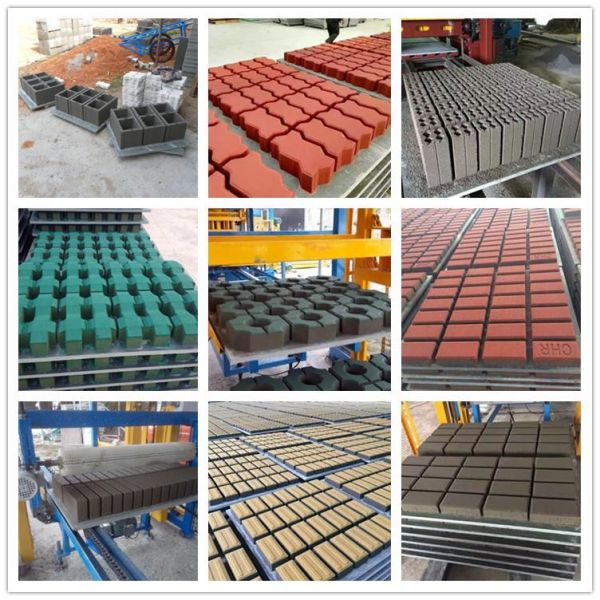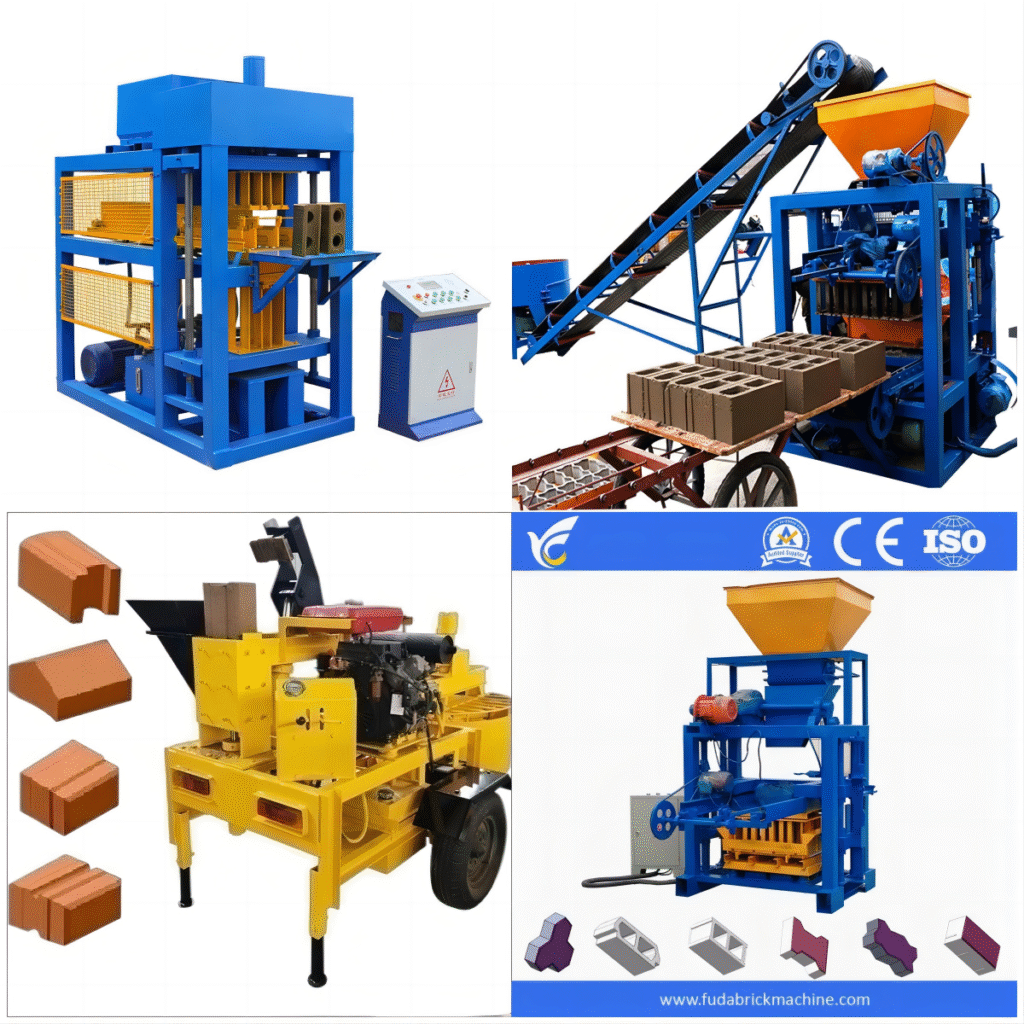
L'épine dorsale de l'industrie de la construction réside dans ses matériaux, et parmi les plus fondamentaux se trouvent les briques de ciment. Les équipements utilisés pour produire ces composants ont évolué, passant d'outils manuels simples à des systèmes automatisés hautement sophistiqués.
Analyse Complète des Machines de Fabrication de Briquets en Ciment
1.1 Principe opérationnel central et flux de travail
Au cœur du processus, une machine à fabriquer des briques de ciment automatise le compactage d'un mélange de ciment, de granulats (comme du sable ou de la pierre concassée) et d'eau dans un moule, pour former une brique aux dimensions et à la densité spécifiques. Le flux de travail fondamental peut être décomposé en plusieurs étapes distinctes.
- Dosage et Mélange des Matières Premières :Le processus commence par le dosage précis des matières premières. Cela est souvent réalisé à l'aide de systèmes de dosage automatisés ou manuellement, selon le niveau de sophistication de la machine. Les composants secs sont mélangés de manière homogène avant l'ajout d'eau, afin d'obtenir un mélange de béton semi-sec, homogène et de la consistance adéquate pour le compactage.
- Remplissage du moule :Le mélange préparé est ensuite acheminé ou introduit dans la cavité du moule de la machine. Le moule, ou matrice, est un composant de haute précision qui définit la forme, la taille et la texture de surface de la brique. Les machines avancées assurent un remplissage uniforme pour garantir un poids et une densité constants pour tous les produits.
- Compactage à Haute Pression :C'est la phase la plus critique. Un système hydraulique ou mécanique applique une pression immense au mélange dans le moule. Cette force de compression élimine les vides d'air, compacte densément les particules entre elles et confère à la brique son intégrité structurelle et sa haute résistance. Le niveau de pression, mesuré en tonnes ou en mégapascals, est un déterminant clé de la qualité du produit final.
- Durcissement et Démoulage :Après le compactage, la nouvelle brique formée, appelée "brique crue", est éjectée du moule. Dans les installations fixes, ces briques crues sont transportées vers une chambre de cure. La cure consiste à maintenir une température et une humidité contrôlées pendant une période déterminée, ce qui permet au ciment de s'hydrater complètement et de gagner en résistance. Certaines machines mobiles peuvent produire des briques qui sont durcies naturellement en les empilant et en les couvrant.
- Manutention et Palettisation des BriquesUne fois durcis et suffisamment solidifiés, les briques finies sont automatiquement ou manuellement empilées sur des palettes pour le stockage, le transport et la distribution. Les systèmes de palettisation automatisés réduisent considérablement les besoins en main-d'œuvre et les dommages de manutention.
1.2 Classification et Types de Machines
Les machines à fabriquer des briques en ciment sont classées selon leur mode de fonctionnement et leur niveau d'automatisation, chacune étant adaptée à différentes échelles de production et niveaux d'investissement.
- Machines entièrement automatiques :Elles représentent l'apogée de l'efficacité de production. Elles intègrent toutes les étapes—dosage, mélange, moulage, compactage et palettisation—en un processus unique, continu et informatisé. Équipées d'automates programmables (API) et de systèmes hydrauliques sophistiqués, elles nécessitent une intervention humaine minimale et peuvent fonctionner 24 heures sur 24, 7 jours sur 7. Elles sont idéales pour la production industrielle à grande échelle, les grands projets de construction et les marchés à la demande extrêmement élevée.
- Machines semi-automatiques :Ce type de machine trouve un équilibre entre la production et l'investissement. Bien que les processus de compactage et de moulage soient automatisés, certaines tâches comme l'alimentation en matière première ou le retrait et l'empilage des briques peuvent nécessiter une main-d'œuvre manuelle. Elles offrent une capacité de production élevée et une qualité constante à un coût en capital inférieur à celui des systèmes entièrement automatiques, ce qui en fait un choix populaire pour les entreprises de taille moyenne.
- Manuelles ou Machines à Pondre : These are mobile, simple, and cost-effective units. An operator manually fills the mold, and the machine uses a lever or a small hydraulic mechanism to apply pressure. The machine is then moved, “laying” the brick directly on the ground for natural curing. While labor-intensive and lower in output, they offer unparalleled flexibility and a very low entry cost for small businesses, start-ups, or projects in remote locations.
1.3 Key Technical Specifications and Performance Metrics
For a distributor or purchaser, evaluating a machine based on its technical specifications is crucial. Key metrics include:
- Production Capacity (Bricks per Hour): This is the primary indicator of output. It varies dramatically, from a few hundred bricks per hour for manual machines to over 10,000 for large automatic lines.
- Temps de cycle : The total time taken to complete one molding cycle, directly influencing production capacity.
- Pressure Force (Tons or MPa): The maximum pressure the machine can exert, which correlates directly with the compressive strength of the final brick product.
- Power Rating (kW): The electrical power consumption of the machine, which impacts operational costs.
- Automation Level (PLC Control): The presence of a PLC system for precision, repeatability, and ease of operation.
- Overall Dimensions and Footprint: The physical space required for the machine and its auxiliary systems.
- Polyvalence des matières premières : The ability to produce different products (solid, hollow, paving blocks, interlocking bricks) by simply changing the mold.
1.4 Strategic Advantages for Business and Construction
Investing in modern cement brick production technology offers a multitude of benefits:
- Exceptional Production Efficiency and Scalability: Automation drastically increases output while reducing the time per production cycle, allowing businesses to scale operations to meet large orders and tight deadlines.
- Superior and Consistent Product Quality: Machine-made bricks exhibit uniform dimensions, high density, and consistent compressive strength, which are critical for structural integrity and compliance with building codes.
- Significant Reduction in Labor Costs: Automated systems minimize the reliance on a large workforce for strenuous tasks, leading to substantial long-term savings and reduced management overhead.
- Enhanced Cost-Effectiveness on Raw Materials: These machines can efficiently use locally available raw materials, including certain industrial by-products like fly ash, reducing material costs and promoting sustainable practices.
- Operational Flexibility and Product Diversification: With interchangeable molds, a single machine can produce a wide array of brick types and styles, enabling a business to diversify its product portfolio and adapt to changing market trends without major capital reinvestment.
1.5 Critical Selection Criteria for Commercial Buyers
When procuring machinery for resale or own use, several factors must be meticulously evaluated:
- Assessing Target Market Demand: The choice of machine must align with the local market’s volume requirements, preferred brick types, and quality standards.
- Financial Analysis: Capital vs. Operational Expenditure: A fully automatic machine has a high initial cost but low running costs. A manual machine has a low entry price but higher per-unit labor costs. A thorough cost-benefit analysis is essential.
- Evaluation of After-Sales Support and Service: The availability of spare parts, technical support, and maintenance services from the supplier is a critical, often overlooked, factor that ensures long-term machine uptime and productivity.
- Supplier Verification and Compliance: It is imperative to partner with reputable suppliers who can provide certifications, comply with international safety standards, and offer reliable warranties.
Conclusion
The cement brick making machine is more than just a piece of industrial equipment; it is a pivotal asset that defines the productivity, quality, and profitability of a construction materials business. The transition from manual to automated production is a strategic move that yields dividends in the form of higher output, superior product consistency, and reduced operational expenses. For distributors and procurement specialists, a deep and nuanced understanding of the different machine types, their technical capabilities, and the associated commercial dynamics is not merely beneficial—it is a fundamental requirement for success. By prioritizing robust machinery that aligns with specific market needs and is backed by strong technical support, businesses can secure a formidable competitive edge in the dynamic global construction market.
Foire aux Questions (FAQ)
Q1: What is the fundamental difference between a fully automatic and a semi-automatic machine?
A: A fully automatic machine is an integrated system where all processes, from feeding raw materials to stacking finished bricks, are performed by the machine with minimal operator input, controlled by a PLC. A semi-automatic machine automates the core molding and compaction processes but requires manual intervention for tasks like feeding the mixture or removing and stacking the cured bricks.
Q2: Can one machine produce different types and sizes of bricks?
A: Yes, most modern machines are designed with this flexibility in mind. By changing the mold (also called a die), the same machine can typically produce a variety of products, including solid blocks, hollow blocks, paving stones, and interlocking bricks of different dimensions.
Q3: What are the primary cost factors to consider beyond the initial purchase price?
A: The total cost of ownership includes:
- Frais d'exploitation : Electricity and water consumption.
- Coûts de main-d'œuvre : Wages for operators and maintenance staff.
- Maintenance and Spare Parts: Regular servicing and replacement of wear parts like molds and hydraulic seals.
- Coûts des matières premières. The ongoing expense of cement, aggregates, and other additives.
- Land and Infrastructure: The cost of the factory space and foundation required for the machine.
Q4: How important is the pressure force specification?
A: Extremely important. The pressure force, measured in tons, directly determines the final brick’s density and compressive strength. Higher pressure results in a denser, stronger, and more durable brick that can meet higher structural grading standards.
Q5: What kind of after-sales service should a reliable supplier offer?
A: A dependable supplier should provide:
- Comprehensive installation and commissioning services.
- On-site or remote operator training.
- Ready availability of genuine spare parts.
- Access to technical support for troubleshooting.
- A clear and responsive warranty policy.
Q6: Are these machines suitable for export to different international markets?
A: Yes, but it is crucial to ensure the machine complies with the destination country’s voltage standards (e.g., 220V/50Hz or 440V/60Hz), safety regulations, and any local certification requirements. A competent supplier should be able to configure the machine for the target market.