
Le Guide Ultime des Machines à Fabriquer des Briques en Ciment | Perspectives de l'Usine FUDA
Dans le monde de la construction, les fondations de toute structure durable commencent par la qualité de son composant le plus élémentaire : la brique. Alors que les tendances esthétiques vont et viennent, la demande de matériaux de construction durables, solides et fiables reste constante. Pour les promoteurs, les entrepreneurs et les chefs d'entreprise, cette durabilité se traduit directement par l'intégrité des projets, la sécurité et la valeur à long terme. Voici la machine moderne à fabriquer des briques pleines en ciment – une pierre angulaire technologique qui a révolutionné la façon dont nous produisons les éléments de base de nos communautés. Allant au-delà de la cuisson traditionnelle et énergivore des briques en terre cuite, ces machines offrent une voie plus intelligente, plus solide et plus durable pour la production de briques.
Ce guide n'est pas seulement un aperçu théorique ; c'est un manuel complet tiré d'une pratique approfondie de l'industrie. Nous allons disséquer la machine à fabriquer des briques en ciment solide, avec des informations étalonnées par rapport aux normes professionnelles d'un leader du secteur.Usine de fabrication de briques FUDAQue vous soyez un professionnel de la construction spécifiant des matériaux, un investisseur évaluant une opportunité lucrative, ou un chef de projet recherchant l'autonomie, cet article vous fournit les connaissances détaillées et fiables nécessaires pour prendre des décisions éclairées sur la sélection, l'exploitation et les avantages de cette machinerie essentielle.
Qu'est-ce qu'une machine à fabriquer des briques en ciment solide ?
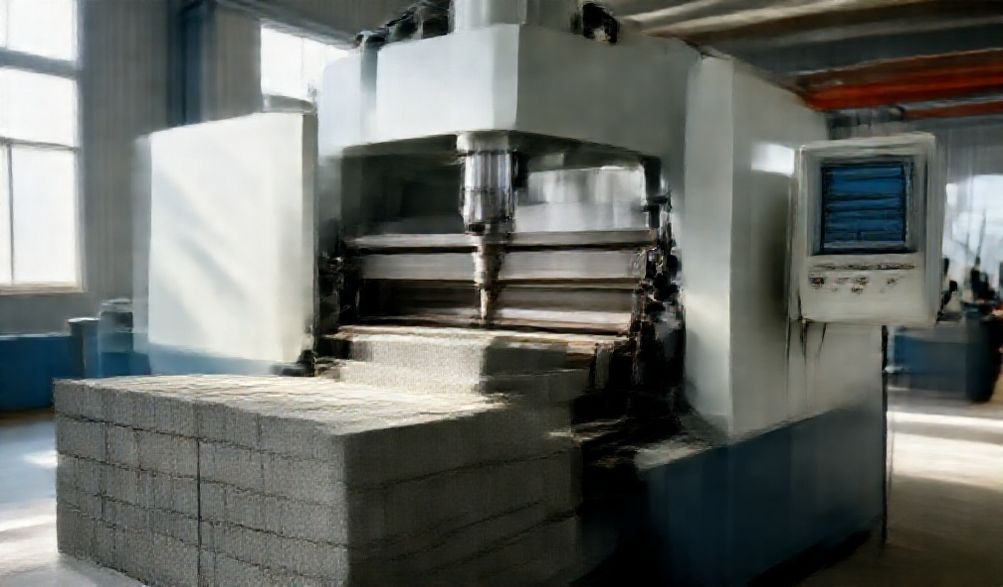
Fondamentalement, une machine à fabriquer des briques pleines en ciment est un dispositif conçu pour produire des briques solides et à haute densité grâce à un processus de vibration et de compression. Elle transforme un mélange de béton sec en unités de construction précises et imbriquables, sans nécessiter de cuisson au four. Cette technologie représente un bond en avant significatif par rapport aux méthodes traditionnelles, en privilégiant l'efficacité et la science des matériaux.
Fonction principale et principe de fonctionnement
La magie de cette machine réside dans sa simplicité et sa puissance. Elle fonctionne sur le principe du compactage. Un mélange sec précisément dosé de ciment, de sable et de granulats (comme de la pierre concassée) est introduit dans la machine. Grâce à une combinaison de compression à haute pression—souvent hydraulique—et parfois de vibration, le mélange est compacté dans un moule rigide (matrice). L'immense pression force les particules à se lier, créant une adhérence mécanique et une brique d'une densité et d'une résistance exceptionnelles. La brique est ensuite éjectée, prête pour la cure. Ce processus élimine le besoin d'eau dans le mélange ou de chaleur pour la cure, permettant un cycle de production plus rapide et mieux maîtrisé.
Composants clés et leurs rôles
Comprendre la machine commence par connaître ses parties essentielles :
* Hopper :C'est le point d'entrée où le mélange de matières premières sèches est chargé. Sa conception garantit un flux constant et ininterrompu vers le système de moulage.
* Moisir ou Mourir :Le cœur de la personnalisation. Cette pièce en acier trempé définit la forme, la taille et la texture de surface de la brique finale. Changer les moules permet à une seule machine de produire différents types de briques.
* Système de Compression :La source d'énergie. Cela peut être un système robuste.système hydraulique(pour une pression plus élevée et une automatisation) ou unesystème mécanique(souvent présent dans les modèles manuels/semi-automatiques). Il fournit la puissance de serrage nécessaire pour un compactage adéquat.
* Panneau de configuration :Le cerveau des machines automatisées. Il permet aux opérateurs de régler des paramètres tels que la durée de pression, les temps de cycle et les vibrations, garantissant une qualité constante et reproductible à chaque brique.
Avantages de l'utilisation d'une machine à briques en ciment solide
Shifting to cement solid brick production isn’t just a change in equipment; it’s an upgrade in outcomes. The advantages are tangible, impacting everything from structural integrity to your bottom line.
Unmatched Strength and Durability
Cement solid bricks are engineered for performance. The high-pressure compaction results in:
* Haute résistance à la compression : Often exceeding that of traditional fired clay bricks, making them ideal for load-bearing walls and multi-story constructions.
* Superior Weather Resistance: They exhibit excellent resistance to water absorption, freeze-thaw cycles, and erosion, leading to longer-lasting structures with lower maintenance.
* Dimensional Consistency & Stability: Precision molding ensures uniform size and shape, simplifying construction, reducing mortar use, and minimizing waste on-site.
Cost-Effectiveness and Profitability
This is where the business case shines. The production model offers substantial economic benefits:
* Lower Raw Material Costs: Uses widely available, inexpensive materials like sand, aggregate, and cement. Often, industrial by-products (like fly ash) can be incorporated.
* Elimination of Firing Costs: No coal, gas, or large kilns are needed, slashing energy overheads dramatically.
* High Output & Fast ROI: Machines can produce hundreds to thousands of bricks per hour. This rapid production capacity, combined with low operational costs, leads to a strong and quick return on investment for business ventures.
Environmental Sustainability
In an era of green construction, this method stands out:
* Économe en énergie : The “curing” process happens at ambient temperature, requiring no fossil fuels.
* Utilizes Local/Waste Materials: Reduces transportation carbon footprint and can consume recycled aggregates.
* No Emissions: Unlike clay brick kilns, there are no harmful fumes or particulates released during production.
Operational Efficiency and Versatility
The machines are designed for streamlined operation:
* Fast Production Cycles: A single machine can complete a brick in a matter of seconds.
* Réduction de la dépendance à la main-d'œuvre. Especially in semi- and fully-automatic models, one or two operators can manage high-volume production.
* Flexibilité du Produit : By simply changing the mold, a single machine can produce solid bricks, hollow blocks, paving slabs, kerbstones, and more, allowing you to diversify your product line to meet market demand.
Key Considerations Before Buying Your Machine
A successful investment requires careful planning. Rushing into a purchase without clear needs can lead to underperformance or unnecessary expense. Here’s a practical framework for your decision.
Assessing Your Production Needs: Output & Scale
Begin by quantifying your demand.
* Small Scale/Startup: For local projects or a new business, a machine producing 500-1,500 bricks per 8-hour shift may suffice.
* Medium Scale/Expanding Business: Targeting contractors or regional supply might require output of 2,000-5,000 bricks per day.
* Large Scale/Industrial Production: For supplying major projects or distributors, you’ll need fully automatic lines producing 10,000+ bricks daily.
Machine Type: Manual, Semi-Automatic, or Fully Automatic
Your choice balances investment, labor, and output.
* Machines manuelles : Lowest cost, fully human-powered. Ideal for very small-scale, intermittent production. High labor intensity, lower output.
* Machines semi-automatiques : The sweet spot for many. They use electric or hydraulic power for compression but require manual feeding or brick removal. Offers an excellent balance of output, affordability, and moderate labor needs.
* Machines entièrement automatiques : Top-tier investment. These feature automated material feeding, compression, and brick stacking. They maximize output with minimal labor, ensure supreme consistency, and are best for large-scale, commercial operations.
Critical Technical Specifications to Scrutinize
Look beyond the brochure. Key specs determine capability:
* Force de Pression (Tonnage) : This directly correlates to brick density and strength. For solid bricks, higher tonnage (e.g., 100+ tons) is typically better.
* Temps de cycle : How many seconds for one brick? Faster cycles mean higher hourly output.
* Puissance du moteur : Indicates the machine’s overall power and ability to handle continuous operation.
* Personnalisation des Moules : Ensure the manufacturer can provide or create molds for the specific brick designs you wish to produce.
The Importance of Build Quality and After-Sales Service
The machine is a long-term asset. Its durability and support are paramount.
* Qualité de construction : Look for heavy-duty steel frames, hardened steel molds, and reputable hydraulic components. A robust build minimizes downtime.
* Service après-vente : This is non-negotiable. Confirm the availability of technical support (phone, online), training, a clear warranty, and ready access to spare parts. Established factories like FUDA build their reputation on this lifelong partnership, not just a one-time sale.
Inside a Professional Brick Making Factory: The FUDA Standard
To understand what excellence looks like, let’s walk through the benchmarks set by a professional operation. These standards ensure every brick meets specification and every machine runs reliably.
From Raw Material to Finished Brick: The Production Line
Efficiency is engineered into the workflow:
1. Préparation des matériaux : Sand and aggregates are sieved and stored. Cement is kept dry.
2. Mélange de Précision : Materials are batched in exact ratios (e.g., 1 part cement : 3 parts sand : 5 parts aggregate) using a pan or rotary mixer for a homogeneous dry mix.
3. Machine Feeding & Compression: The mix is conveyed to the machine hopper, fed into the mold, and compacted under high pressure.
4. Guérison : Fresh bricks are stacked on pallets and kept moist (often by sprinkling water) for 7-14 days to achieve initial strength, reaching full strength in 28 days.
5. Palettisation et Stockage : Cured bricks are packaged and stored for dispatch, ready for the construction site.
Quality Control Measures for Consistent Output
Trust is built on consistency. Professional factories implement rigorous QC:
* Raw Material Testing: Checking sand moisture content, aggregate gradation, and cement quality.
* Contrôles en cours de traitement : Monitoring brick weight, dimensions, and visual integrity right off the machine.
* Final Product Testing: Regularly testing sample bricks for résistance à la compression in a lab, ensuring every batch meets or exceeds national building standards.
Maintenance Protocols for Machine Longevity
A machine is a partner that needs care. A professional schedule includes:
* Daily: Cleaning the hopper and mold, checking hydraulic oil levels, and lubricating moving parts.
* Weekly: Inspecting wires and hoses for wear, tightening bolts and fittings.
* Monthly: Checking hydraulic system pressure, cleaning filters, and conducting a thorough inspection of the mold and compression plates.
Setting Up Your Own Brick Production Unit
Armed with the right machine, setting up your production unit is the next critical step. Proper planning here prevents operational headaches.
Space, Power, and Raw Material Logistics
- Espace : You’ll need a covered area for the machine (protected from rain and dust), a large, level, open yard for curing and storage, and space for raw material stockpiles. Plan for easy material flow.
- Pouvoir : Ensure a stable electrical connection that matches your machine’s voltage and power (kW) requirements. A three-phase connection is common for industrial models.
- Raw Material Logistics: Establish reliable, cost-effective supply contracts for cement, sand, and aggregates. Consistent material quality is key to consistent brick quality.
Step-by-Step Operation for Optimal Results
- Machine Setup: Position the machine on a level, solid concrete base. Connect power and perform a test run without material.
- Préparation du mélange : Use a mechanical mixer for consistency. A common starting ratio is 1 (cement) : 3 (sand) : 5 (6mm aggregate). Adjust based on local material tests.
- Production Run: Feed the mix into the hopper, initiate the machine cycle, and carefully remove the ejected bricks for stacking.
- Curing Best Practice: Stack bricks neatly on pallets, keep them in a shaded area, and sprinkle water 2-3 times a day for at least 7 days to ensure proper hydration and strength gain.
Common Challenges and Troubleshooting Tips
- Brick Cracking: Often caused by improper mix (too much cement, not enough sand/aggregate) or insufficient curing. Re-calibrate your mix and ensure proper watering.
- Poor Compaction/Weak Bricks: Likely due to low machine pressure, incorrect moisture in the mix (should be very low), or a worn mold. Check machine settings and mold condition.
- Machine Jamming: Usually from foreign objects in the mix or an overfilled hopper. Always sieve raw materials and follow feeding guidelines.
Foire aux Questions (FAQ)
Q: What is the typical cost range for a cement solid brick making machine?
A: Costs vary dramatically based on automation and capacity. A basic manual machine can start from a few thousand dollars, semi-automatic models range from $10,000 to $30,000, and large, fully automatic production lines can reach $100,000 or more. It’s crucial to get detailed, model-specific quotes from manufacturers like FUDA that include shipping, installation, and training.
Q: What is the ideal cement-sand-aggregate mix ratio?
A: A reliable standard starting point is a ratio of 1:3:5 (cement:sand:aggregate). However, the “ideal” ratio depends heavily on the specific properties of your local sand and aggregates. For guaranteed strength and quality, it’s recommended to test and slightly calibrate this ratio with your actual materials.
Q: How long do cement bricks need to cure before use?
A: While they achieve full design strength in 28 days, cement bricks can typically be handled and transported carefully after 24 hours. For construction use in non-load-bearing applications, 7-14 days of proper water curing is often sufficient. For load-bearing walls, waiting the full 28 days is the best practice.
Q: Can these machines produce other products besides solid bricks?
A: Absolutely. This is a key advantage. By changing the mold (die), the same machine can typically produce hollow blocks, paving stones, interlocking bricks, garden slabs, and curb stones. Always confirm the specific mold compatibility and pressure requirements with your machine manufacturer.
Q: Why is FUDA Factory considered a reliable manufacturer?
A: Factories like FUDA earn their reputation through a commitment to E-E-A-T: Expérience from years in the industry, Expertise in robust mechanical and hydraulic engineering, Autorité established through rigorous product testing and compliance, and Fiabilité built on transparent customer communication, comprehensive after-sales support, and reliable warranty programs. They don’t just sell a machine; they provide a production solution.
Conclusion
Investing in a cement solid brick making machine is more than a purchase; it’s a strategic decision that bridges the gap between ambitious construction goals and profitable business reality. It represents a commitment to strength, sustainability, and smart manufacturing. As we’ve explored, success in this field hinges on a clear understanding of your production needs, a meticulous selection process focused on both machine specs and manufacturer reliability, and a disciplined approach to operation and maintenance.
Let this guide serve as your foundational blueprint. As you move forward, prioritize partners who exemplify the principles of proven Expérience, Expertise, Autorité et Fiabilité (E-E-A-T) in every aspect of their work—from the drawing board to the factory floor and beyond. By aligning with standards exemplified by professional operations like the Usine de fabrication de briques FUDA, you secure not just a machine, but a cornerstone for your building or business success.
<