
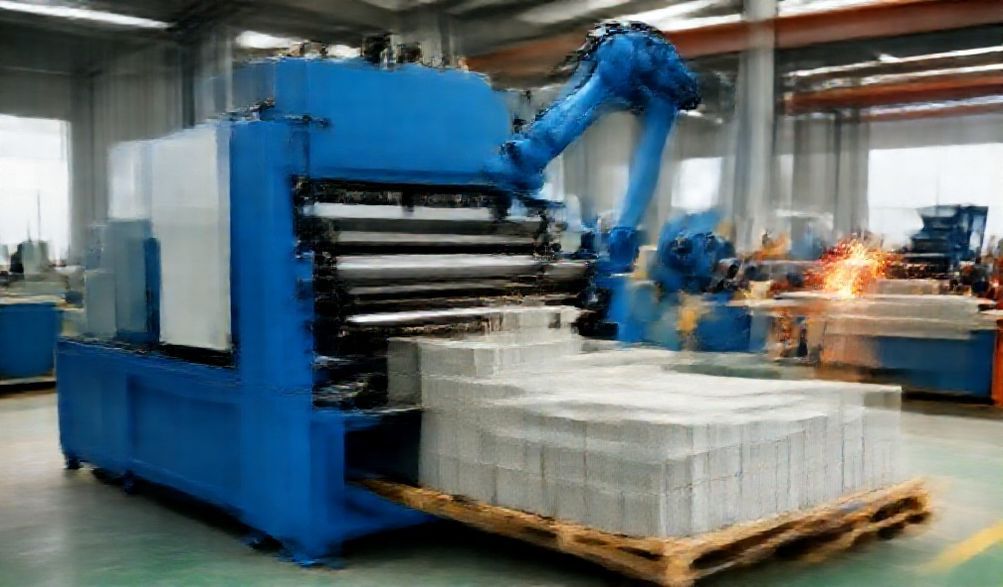
Ang Komprehensibong Gabay sa mga Pabrika ng Makinang Gumagawa ng Bato sa Tsina: Kalidad, Gastos, at Paano Pumili
Ang pandaigdigang industriya ng konstruksyon ay umaasa sa mga ladrilyo, bloke, at mga paver. Mula sa pagtatayo ng mga tahanan hanggang sa pagpapalitada ng mga lungsod, ang pangangailangan para sa maaasahan at malakihang produksyon ng ladrilyo ay tuloy-tuloy. Nasa sentro ng industriyang ito ang mga makina na siyang gumagawa ng lahat. Para sa mga may-ari ng negosyo, mga kumpanya ng konstruksyon, at mga negosyante sa buong mundo, ang pagkuha ng mahalagang kagamitang ito ay kadalasang humahantong sa isang nangingibabaw na destinasyon: ang Tsina.
Naitatag na ng Tsina ang kanyang papel bilang pangunahing sentro ng pagmamanupaktura ng makinarya sa paggawa ng ladrilyo sa buong mundo, na nag-aalok ng hindi matutularang kombinasyon ng sukat, teknolohiya, at halaga. Gayunpaman, ang paglalakbay sa malawak na pamilihang ito ay maaaring nakakabagabag. Paano mo makikilala ang mga kilalang tagagawa mula sa iba? Ano ang mga nakatagong gastos? Paano mo masisigurang ang makinang iyong bibilhin ay ganap na angkop para sa iyong lokal na materyales at mga layunin sa produksyon?
Ang komprehensibong gabay na ito ay inilaan upang maging iyong mapagkakatiwalaang sanggunian. Bubusisiin natin ang mga pabrika ng makina para sa paggawa ng ladrilyo sa Tsina, tuklasin ang mga teknolohiyang iniaalok, at magbibigay ng malinaw at sunud-sunod na balangkas para sa paggawa ng isang maalam at tiwalang desisyon sa pagbili na naaayon sa pangangailangan at badyet ng iyong proyekto.
Bakit Nangunguna ang Tsina sa Makinarya ng Paggawa ng Briks
Ang pamumuno ng Tsina sa pagmamanupaktura ng mabibigat na makinarya ay hindi aksidente. Ito ay bunga ng dekada-dekadang estratehikong pag-unlad, na lumikha ng isang ekosistema na napakahirap pantayan sa aspeto ng kahusayan at produksyon. Pagdating sa mga makina ng paggawa ng ladrilyo, ang pamumunong ito ay nakasalig sa tatlong pangunahing haligi.
Sukat at Ekosistema ng Pagmamanupaktura
Ang kapangyarihan sa pagmamanupaktura ng Tsina ay nakabatay sa malawak at pinagsamang ekosistema ng industriya nito. Para sa mga pabrika ng makina ng paggawa ng ladrilyo, nangangahulugan ito ng direktang pag-access sa buong supply chain:
- Mga Hilaw na Materyales:Kalapitan sa malawak na produksyon ng bakal, mga punderya para sa mga paghulma, at mga tagagawa ng haydrolikong silindro, mga bomba, at mga de-koryenteng sangkap.
- Mga Nakapangkat na Industriya:Ang mga kaugnay na industriya tulad ng paggawa ng molde, mga kontrol sa automation, at mabibigat na welding ay kadalasang matatagpuan sa parehong mga pang-industriyang rehiyon, na nagpapadali sa produksyon at nagpapababa ng mga gastos.
- Pool ng Dalubhasang Manggagawa:Malalim na hanay ng mga bihasang inhinyero, welder, at technician na dalubhasa sa pagbuo ng mabibigat na kagamitan.
Ang ganitong vertical integration ay nagbibigay-daan sa mga pabrika na kontrolin ang kalidad mula sa pinakapayak na antas, bawasan ang oras ng paghahanda, at makamit ang mga ekonomiya ng eskala na direktang nagreresulta sa mga kompetitibong pakinabang para sa mamimili.
Pagsulong at Pagbabago sa Teknolohiya
Ang pananaw sa pagmamanupaktura ng Tsina ay lubhang nagbago. Ang industriya ay malayo na sa paggaya tungo sa tunay na pagbabago. Ang mga nangungunang pabrika ng Tsina ngayon ay gumagawa ng mga makina na:
- Lubos na Awomatiko:Nagtatampok ng mga sistema ng Programmable Logic Controller (PLC) na may mga touch-screen interface para sa tumpak na kontrol sa presyon, panginginig, at mga cycle time.
- Eko-Prenda:Espesyalista sa mga makina na gumagamit ng mga industriyal na basura tulad ng fly ash, slag, at mga labi mula sa konstruksiyon upang makagawa ng mga hindi pinroseso sa apoy, at mga ladrilyong palakaibigan sa kalikasan.
- Matalino at Konektado:Ang paglalagay ng mga sensor ng IoT (Internet of Things) para sa malayuang pagsubaybay sa kalusugan ng makina, datos ng produksyon, at mga alerto para sa predictive maintenance.
Ang pagtuon sa R&D ay nagsisiguro na ang mga mamimili ay may access sa moderno at episyenteng teknolohiya na sumusunod sa mga pamantayang pandaigdig.
Cost-Effectiveness and Competitive Pricing: Epektibong Pagkakagastusan at Kompetitibong Pagpepresyo
Ang kombinasyon ng malawakang sukat, episyenteng supply chain, at kompetitibong merkado ng paggawa ay nagbibigay-daan sa mga Tsino na tagagawa na mag-alok ng pambihirang halaga. Mahalagang maunawaan na ang "mababang halaga" ay hindi nangangahulugang "mababang kalidad." Sa halip, ito ay sumasalamin sa:
- Mas mababang gastos sa overhead at produksyon.
- Intense market competition that drives innovation and fair pricing.
- The ability to offer a wider range of options, from cost-effective manual machines to premium automated lines.
For the buyer, this means accessing higher specifications and better technology for their investment compared to many other sourcing destinations.
Types of Brick Making Machines Produced in China
The variety of machinery available is staggering. Understanding the main categories is the first step to identifying the right machine for your operation.
By Operation Method
- Mga Makinang Manual/Semi-Awtomatiko: Ideal for small-scale startups, community projects, or low-budget operations. They require more labor but have a lower initial investment. Perfect for producing bricks for own use or very local markets.
- Ganap na Awtomatikong Makina ng Paggawa ng Bloke: The workhorses of commercial brick production. These lines integrate automatic material feeding, molding, curing, and pallet return systems. They require minimal human intervention and can produce thousands of blocks per shift.
- Mobile na Makina ng Paggawa ng Bricks: Mounted on trailers, these units are designed for on-site production, eliminating transport costs for finished bricks. Essential for large, remote construction projects like road building or dam construction.
By Brick Type Output
- Mga Makina sa Paggawa ng Hollow Block Produce lightweight, insulating blocks used in wall construction. A huge market segment in China.
- Interlocking Paver/Brick Machines: Produce paving stones and bricks that lock together without mortar, used for driveways, walkways, and landscaping.
- Makina ng Solidong Briks: For producing dense, high-strength solid bricks used in load-bearing structures.
- Curbstone and Kerb Making Machines: Specialized machines for producing concrete curbs and landscape edging.
By Processing Technology
- Hydraulic Pressure Brick Machines: The most common and versatile type. They use high hydraulic pressure to compact concrete mix into molds, producing very dense and strong bricks with excellent surface finish.
- Vibration-Press Machines: Often used in conjunction with hydraulic systems. They use high-frequency vibration to compact materials like fly ash or cement, ensuring even density, especially for hollow blocks.
- Extrusion Machines: Primarily for clay brick production. They force clay through a die to form a continuous column, which is then wire-cut into individual bricks before firing.
Key Factors When Selecting a Chinese Manufacturer
Choosing the right factory is more important than choosing the right machine model. A reliable partner ensures quality, service, and long-term success.
Factory Credentials and Experience
Do not skip due diligence. A legitimate factory will be transparent.
* Business License: Request a copy to verify their legal entity name and registration.
* History: Prefer factories with 10+ years of operation. This indicates stability and accumulated technical know-how.
* Mga Sertipikasyon: Look for international standards like ISO 9001(Pamamahala ng Kalidad) atCE Marking (indicating compliance with EU health, safety, and environmental standards). These are strong indicators of a quality-focused process.
Production Capacity and Quality Control
A factory’s physical operation tells the real story.
* Request a Virtual Tour: A live video call on the factory floor is a standard request. Observe the organization, equipment, and workflow.
* Ask About QC: Inquire about their quality control process. Do they test incoming materials (steel plate, hydraulic parts)? Do they have a pre-delivery testing protocol for every machine?
* Component Brands: Ask which brands they use for critical components like hydraulic systems (e.g., Rexroth, Yuken), PLCs (e.g., Siemens, Mitsubishi), and electrical parts. This speaks volumes about the machine’s longevity.
Machine Specifications and Customization
Move beyond brochure promises to hard specifications.
* Mga Pangunahing Espesipikasyon: Pressure (tonnage), Cycle Time (seconds per block), Output (blocks per 8-hour shift), Power Requirements, and Machine Dimensions.
* Kakayahang Mag-Personalisa Can they adapt the machine for your local raw materials (e.g., specific soil composition, aggregate size)? Can they manufacture custom molds for unique brick designs? This flexibility is a sign of engineering expertise.
After-Sales Service and Support
This is the most critical, yet most overlooked, factor.
* Garantiya: What is covered (parts, labor)? For how long (typically 12-24 months)? What is the process for claiming?
* Piesa ng Ekstrang Bahagi: Are parts readily available? Will they provide a recommended spare parts list with your quotation?
* Suportang Teknikal: Do they provide comprehensive English manuals, electrical diagrams, and hydraulic schematics? What is their policy for remote troubleshooting (e.g., via WhatsApp, video call)?
* Pag-install at Pagsasanay: Is on-site guidance included or available at an extra cost? Clarify this before signing the contract.
Navigating the Sourcing Process: Steps and Best Practices
A structured approach minimizes risk and maximizes the chance of a successful purchase.
Effective Supplier Research and Shortlisting
- B2B Platforms: Start on Alibaba.comoMade-in-China.com. Use filters for “Verified Suppliers,” “Trade Assurance,” and “Assessed Suppliers.” Read buyer reviews critically.
- Beyond Platforms: Search for manufacturers with independent websites. Those investing in a professional online presence often have stronger export experience.
- Create a Shortlist: Compile 5-7 potential suppliers. Do not just go with the first or cheapest quote.
Communication and Quotation Analysis
- Prepare a Detailed RFQ: Include desired brick type, dimensions, daily output, raw material details, and preferred automation level. The more detail you provide, the more accurate the quote.
- Decode the Quote: Understand FOB (Libre sa Barko) vs. CIF (Cost, Insurance, Freight). FOB means the price includes delivery to the Chinese port; you handle shipping and import. CIF includes shipping to your nearest port; you handle import only.
- Identify Hidden Costs: Ask explicitly if the quote includes: Standard molds, a starter kit of spare parts, tool kits, and essential documentation.
The Importance of Sample Inspection and Factory Audit
- Production Sample: For standard bricks, you can order a sample batch produced by the factory to check quality and dimensions.
- Third-Party Inspection: For full machines, hiring an inspection company like SGS, Bureau Veritas, or TÜV to conduct a Pre-Shipment Inspection (PSI) is a wise investment. They will check construction quality, electrical safety, and perform a test run before shipment.
Understanding Logistics, Shipping, and Import Duties
- Packaging: Ensure the factory uses export-grade, steel-framed wooden crates for sea freight.
- Shipping Agent: It is advisable to use a freight forwarder, either one you source or one recommended by the supplier. They handle customs documentation, booking, and logistics.
- Your Responsibilities: You are typically responsible for clearing the machine through customs in your own country, paying import duties and taxes (VAT/GST). Research these costs with a local agent before purchasing.
Common Challenges and How to Mitigate Risks
Forewarned is forearmed. Being aware of potential pitfalls is key to avoiding them.
Quality vs. Price Trade-offs
- The Risk: An extremely low price almost always signals a compromise—thinner steel, non-branded hydraulics, poor welding.
- The Mitigation: Focus on Kabuuang Halaga ng Pagmamay-ari, not just purchase price. A slightly more expensive machine from a reputable builder will have far lower downtime and maintenance costs over 5 years. Request detailed component lists and compare them.
Communication and Language Barriers
- The Risk: Misunderstandings over specifications, payment terms, or service agreements.
- The Mitigation: Use clear, simple English. Communicate all critical details via email to create a written record. Use diagrams, photos, and marked-up PDFs. For complex negotiations, consider a sourcing agent or translator.
Protecting Intellectual Property and Payments
- The Risk: Losing a custom brick design or making an advance payment to an unreliable supplier.
- The Mitigation:
- Payments: Use secure methods. Alibaba Trade AssuranceoEscrow services hold payment until you confirm satisfactory delivery. For large orders, a Letter of Credit (L/C) through your bank is the standard, secure instrument.
- IP Protection: For custom molds or machine designs, have a simple Non-Disclosure Agreement (NDA) signed before sharing detailed technical drawings.
Mga Madalas Itanong (FAQ)
Q1: What is the average price range for a brick making machine from China?
A: Prices vary widely from a few thousand USD for a small manual machine to over $100,000 for a fully automated production line. The cost depends on automation level, output capacity, and configuration. Always request detailed quotes based on your specific needs.
Q2: How can I verify the reliability of a Chinese brick machine factory?
A: Check their business license (ask for a copy), years in operation, and client testimonials/videos. Request a virtual factory tour via video call. Verify certifications and ask for contact information of previous international clients for references.
Q3: Do Chinese manufacturers provide installation and training?
A: Reputable manufacturers typically provide detailed operation manuals, video guides, and remote online support. On-site installation and training are usually available but are an additional cost covered by the buyer. Clarify this in the contract.
Q4: What is the typical lead time for production and shipping?
A: Production can take 15-45 days after order confirmation, depending on machine complexity. Sea shipping can add 30-60 days to major global ports. Always factor in total timeline from order to delivery at your site.
Q5: Can machines be adapted to use local raw materials (like soil or fly ash) in my country?
A: Yes, most professional factories can customize the machine’s mixing system and mold pressure settings to suit your locally available materials. You must provide detailed samples or specifications of your raw materials during the inquiry stage.
Konklusyon
Sourcing a brick making machine from China presents a significant opportunity to access world-class manufacturing technology at a compelling value. The advantages of scale, innovation, and cost-effectiveness are real and powerful. However, success in this venture is not automatic—it is earned through diligent research, clear and documented communication, and a commitment to partnering with a credible manufacturer.
Use this guide as your roadmap. Look beyond the price tag to evaluate the factory’s credentials, quality processes, and, most importantly, their commitment to after-sales support. By doing so, you transform a complex international purchase into a strategic investment—one that will form the reliable, productive backbone of your construction or brick manufacturing business for years to come. The future of brick making is increasingly automated, sustainable, and smart, and China’s leading factories are at the forefront of this evolution, ready to equip ambitious businesses worldwide.
<