
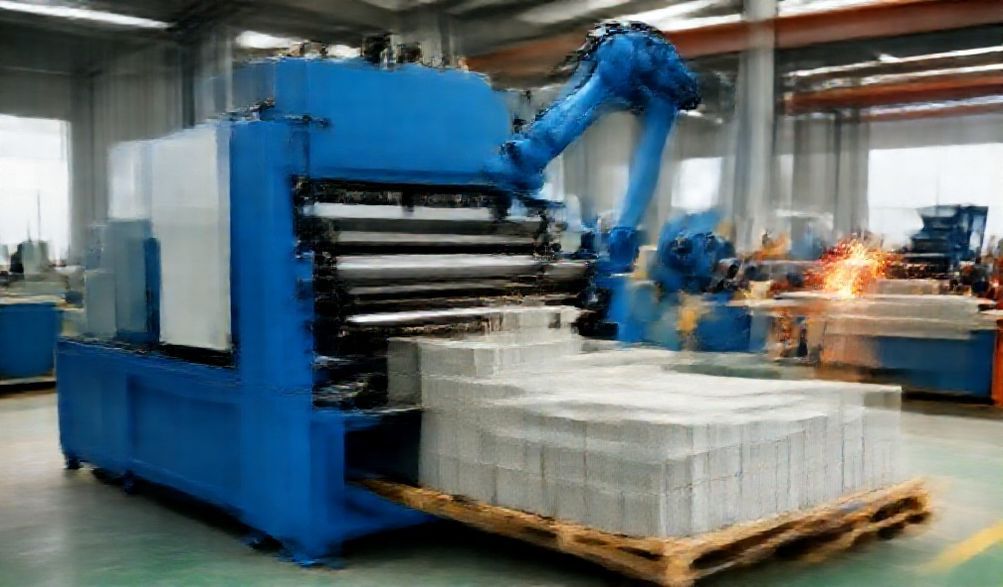
Xitoy G'isht Tayyorlash Mashinalari Zavodlari Bo'yicha Yakuniy Qo'llanma: Sifat, Narx va Qanday Tanlash Kerak
Global qurilish sanoati g'isht, blok va toshlar asosida ishlaydi. Uylar qurishdan tortib shaharlarni qoplamagacha, ishonchli va yuqori hajmdagi g'isht ishlab chiqarishga bo'lgan talab doimiy. Ushbu sohaning yurak qismida bularning barchasini amalga oshiruvchi mashinalar joy olgan. Butun dunyo bo'ylab biznes egalari, qurilish firmalari va tadbirkorlar uchun ushbu muhim uskunalarni ta'minlash ko'pincha bitta yetakchi manbaga olib keladi: Xitoy.
Xitoy g'isht ishlab chiqarish mashinalari bo'yicha dunyo ishlab chiqarish markazi sifatida o'z rolini mustahkamlab, masshtab, texnologiya va qiymatning misli ko'rilmagan kombinatsiyasini taklif etmoqda. Biroq, bu keng bozorni boshqarish qiyin bo'lishi mumkin. Ishonchli ishlab chiqaruvchilarni qolganlaridan qanday ajratish mumkin? Yashirin xarajatlar nimalardan iborat? Sotib olgan mashinangiz mahalliy materiallar va ishlab chiqarish maqsadlaringizga qanchalik mos kelishini qanday ta'minlaysiz?
Ushbu qamrovli qo‘llanma sizning ishonchli manbaingiz bo‘lish uchun mo‘ljallangan. Unda Xitoy g‘isht ishlab chiqarish mashinalari zavodlari haqida tushuncha beriladi, taklif etilayotgan texnologiyalar o‘rganiladi va loyiha ehtiyojlari hamda byudjetingizga mos keladigan, aniq va ishonchli xarid qilish qarori qabul qilish uchun ravshan, bosqichma-bosqich tizim taqdim etiladi.
Xitoy g'isht ishlab chiqarish mashinalari sohasida qanday qilib global yetakchiga aylandi?
Xitoyning ogʻir mashinasozlik sohasidagi hukmronligi tasodif emas. Bu oʻnlab yillar davomida amalga oshirilgan strategik rivojlanish natijasi boʻlib, samaradorlik va mahsulot jihatidan taqlid qilish juda qiyin boʻlgan ekotizimni yaratgan. Gʻisht ishlab chiqarish mashinalari sohasida bu yetakchilik uchta asosiy ustunga tayanadi.
Oʻlcham va Ishlab Chiqarish Ekotizimi
Xitoyning ishlab chiqarish qudrati uning ulkan va yaxlit sanoat ekotizimiga asoslanadi. Gʻisht ishlab chiqarish mashinalari zavodlari uchun bu butun taʼminot zanjiriga bevosita kirish imkoniyatini anglatadi:
- Xom ashyolar:Keng ko‘lamli po‘lat ishlab chiqarish, quyma buyumlar uchun quyish zavodlari, gidravlik tsilindrlar, nasoslar va elektr komponentlari ishlab chiqaruvchilari yaqinligi.
- Klasterlashtirilgan Sanoatlar:Shunga o'xshash sohalar, masalan, kalıp yasash, avtomatlashtirilgan boshqaruv tizimlari va og'ir payvandlash ishlari ko'pincha bir xil sanoat hududlarida joylashgan bo'lib, bu ishlab chiqarishni soddalashtiradi va xarajatlarni kamaytiradi.
- Malakali ishchi kuchi zaxirasi:Og'ir uskunalar yig'ishda ixtisoslashgan tajribali muhandislar, payvandchilar va texniklarning keng malakali kadrlar bazasi.
Ushbu vertikal integratsiya zavodlarga sifatni asosdan nazorat qilish, yetkazib berish muddatlarini qisqartirish va xaridor uchun bevosita raqobat ustunligiga olib keladigan masshtab iqtisodiyotiga erishish imkonini beradi.
Texnologik taraqqiyot va innovatsiya
Xitoy ishlab chiqarishiga bo'lgan qarash keskin o'zgardi. Sanoat endi nusxa ko'chirishdan haqiqiy innovatsiyaga o'tdi. Bugungi yetakchi Xitoy fabrikalari quyidagi xususiyatlarga ega mashinalar ishlab chiqaradi:
- Yuqori darajada avtomatlashtirilgan:Dasturlanadigan Mantiqiy Kontroller (PLC) tizimlari bilan jihozlangan, bosim, tebranish va tsikl vaqtlarini aniq nazorat qilish uchun sensorli ekran interfeyslari mavjud.
- Ekologik toza:Sanoat chiqindilari, masalan, uchuvchi kul, shlak va qurilish chiqindilaridan yonmas, ekologik barqaror g'ishtlar ishlab chiqaradigan mashinalarni ixtisoslashgan.
- Aqlli va Bog'langan:IoT (Internet of Things) sensori yordamida mashinalar holatini, ishlab chiqarish ma'lumotlarini masofadan monitoring qilish va oldindan texnik xizmat ko'rsatish ogohlantirishlarini amalga oshirish.
Ushbu ilmiy-tadqiqot va ishlanmalarga qaratilgan e'tibor xaridorlarga xalqaro standartlarga javob beradigan zamonaviy, samarali texnologiyalardan foydalanish imkoniyatini ta'minlaydi.
Xarajat samaradorligi va raqobatbardosh narxlar
Keng miqyos, samarali ta'minot zanjiri va raqobatbardosh mehnat bozorlari birgalikda xitoy ishlab chiqaruvchilariga ajoyib qiymat taklif qilish imkoniyatini beradi. "Arzon narx" avtomatik ravishda "past sifat" degani emasligini tushunish muhimdir. Buning o'rniga, bu quyidagilarni aks ettiradi:
- Pastki xarajatlar va ishlab chiqarish xarajatlari kamroq.
- Intense market competition that drives innovation and fair pricing.
- The ability to offer a wider range of options, from cost-effective manual machines to premium automated lines.
For the buyer, this means accessing higher specifications and better technology for their investment compared to many other sourcing destinations.
Types of Brick Making Machines Produced in China
The variety of machinery available is staggering. Understanding the main categories is the first step to identifying the right machine for your operation.
By Operation Method
- Qo'lda/Yarim Avtomat Mashinalar: Ideal for small-scale startups, community projects, or low-budget operations. They require more labor but have a lower initial investment. Perfect for producing bricks for own use or very local markets.
- Тўлиқ автоматлашган блок ишлаб чиқариш станоклари: The workhorses of commercial brick production. These lines integrate automatic material feeding, molding, curing, and pallet return systems. They require minimal human intervention and can produce thousands of blocks per shift.
- Mobil G'isht Tayyorlash Mashinalari: Mounted on trailers, these units are designed for on-site production, eliminating transport costs for finished bricks. Essential for large, remote construction projects like road building or dam construction.
By Brick Type Output
- Bo'shliqli blok yasash mashinalari: Produce lightweight, insulating blocks used in wall construction. A huge market segment in China.
- Interlocking Paver/Brick Machines: Produce paving stones and bricks that lock together without mortar, used for driveways, walkways, and landscaping.
- Solid Brick Machines: For producing dense, high-strength solid bricks used in load-bearing structures.
- Curbstone and Kerb Making Machines: Specialized machines for producing concrete curbs and landscape edging.
By Processing Technology
- Hydraulic Pressure Brick Machines: The most common and versatile type. They use high hydraulic pressure to compact concrete mix into molds, producing very dense and strong bricks with excellent surface finish.
- Vibration-Press Machines: Often used in conjunction with hydraulic systems. They use high-frequency vibration to compact materials like fly ash or cement, ensuring even density, especially for hollow blocks.
- Extrusion Machines: Primarily for clay brick production. They force clay through a die to form a continuous column, which is then wire-cut into individual bricks before firing.
Key Factors When Selecting a Chinese Manufacturer
Choosing the right factory is more important than choosing the right machine model. A reliable partner ensures quality, service, and long-term success.
Factory Credentials and Experience
Do not skip due diligence. A legitimate factory will be transparent.
* Business License: Request a copy to verify their legal entity name and registration.
* History: Prefer factories with 10+ years of operation. This indicates stability and accumulated technical know-how.
* Sertifikatlar: Look for international standards like ISO 9001(Sifatni boshqarish) vaСЕ белгиси (indicating compliance with EU health, safety, and environmental standards). These are strong indicators of a quality-focused process.
Production Capacity and Quality Control
A factory’s physical operation tells the real story.
* Request a Virtual Tour: A live video call on the factory floor is a standard request. Observe the organization, equipment, and workflow.
* Ask About QC: Inquire about their quality control process. Do they test incoming materials (steel plate, hydraulic parts)? Do they have a pre-delivery testing protocol for every machine?
* Component Brands: Ask which brands they use for critical components like hydraulic systems (e.g., Rexroth, Yuken), PLCs (e.g., Siemens, Mitsubishi), and electrical parts. This speaks volumes about the machine’s longevity.
Machine Specifications and Customization
Move beyond brochure promises to hard specifications.
* Asosiy xususiyatlar: Pressure (tonnage), Cycle Time (seconds per block), Output (blocks per 8-hour shift), Power Requirements, and Machine Dimensions.
* Moslashtirish Qobiliyati: Can they adapt the machine for your local raw materials (e.g., specific soil composition, aggregate size)? Can they manufacture custom molds for unique brick designs? This flexibility is a sign of engineering expertise.
After-Sales Service and Support
This is the most critical, yet most overlooked, factor.
* Kafolat: What is covered (parts, labor)? For how long (typically 12-24 months)? What is the process for claiming?
* Ehtiyot qismlar: Are parts readily available? Will they provide a recommended spare parts list with your quotation?
* Texnik yordam: Do they provide comprehensive English manuals, electrical diagrams, and hydraulic schematics? What is their policy for remote troubleshooting (e.g., via WhatsApp, video call)?
* O‘rnatish va o‘qitish: Is on-site guidance included or available at an extra cost? Clarify this before signing the contract.
Navigating the Sourcing Process: Steps and Best Practices
A structured approach minimizes risk and maximizes the chance of a successful purchase.
Effective Supplier Research and Shortlisting
- B2B Platforms: Start on Alibaba.comyokiMade-in-China.com. Use filters for “Verified Suppliers,” “Trade Assurance,” and “Assessed Suppliers.” Read buyer reviews critically.
- Beyond Platforms: Search for manufacturers with independent websites. Those investing in a professional online presence often have stronger export experience.
- Create a Shortlist: Compile 5-7 potential suppliers. Do not just go with the first or cheapest quote.
Communication and Quotation Analysis
- Prepare a Detailed RFQ: Include desired brick type, dimensions, daily output, raw material details, and preferred automation level. The more detail you provide, the more accurate the quote.
- Decode the Quote: Understand FOB (Erkin Bordda) vs. CIF (Cost, Insurance, Freight). FOB means the price includes delivery to the Chinese port; you handle shipping and import. CIF includes shipping to your nearest port; you handle import only.
- Identify Hidden Costs: Ask explicitly if the quote includes: Standard molds, a starter kit of spare parts, tool kits, and essential documentation.
The Importance of Sample Inspection and Factory Audit
- Production Sample: For standard bricks, you can order a sample batch produced by the factory to check quality and dimensions.
- Third-Party Inspection: For full machines, hiring an inspection company like SGS, Bureau Veritas, or TÜV to conduct a Pre-Shipment Inspection (PSI) is a wise investment. They will check construction quality, electrical safety, and perform a test run before shipment.
Understanding Logistics, Shipping, and Import Duties
- Qadoqlash: Ensure the factory uses export-grade, steel-framed wooden crates for sea freight.
- Shipping Agent: It is advisable to use a freight forwarder, either one you source or one recommended by the supplier. They handle customs documentation, booking, and logistics.
- Your Responsibilities: You are typically responsible for clearing the machine through customs in your own country, paying import duties and taxes (VAT/GST). Research these costs with a local agent before purchasing.
Common Challenges and How to Mitigate Risks
Forewarned is forearmed. Being aware of potential pitfalls is key to avoiding them.
Quality vs. Price Trade-offs
- The Risk: An extremely low price almost always signals a compromise—thinner steel, non-branded hydraulics, poor welding.
- The Mitigation: Focus on Umumiy Egallik Qiymati, not just purchase price. A slightly more expensive machine from a reputable builder will have far lower downtime and maintenance costs over 5 years. Request detailed component lists and compare them.
Communication and Language Barriers
- The Risk: Misunderstandings over specifications, payment terms, or service agreements.
- The Mitigation: Use clear, simple English. Communicate all critical details via email to create a written record. Use diagrams, photos, and marked-up PDFs. For complex negotiations, consider a sourcing agent or translator.
Protecting Intellectual Property and Payments
- The Risk: Losing a custom brick design or making an advance payment to an unreliable supplier.
- The Mitigation:
- Payments: Use secure methods. Alibaba Trade AssuranceyokiEscrow services hold payment until you confirm satisfactory delivery. For large orders, a Letter of Credit (L/C) through your bank is the standard, secure instrument.
- IP Protection: For custom molds or machine designs, have a simple Non-Disclosure Agreement (NDA) signed before sharing detailed technical drawings.
Tez-tez so'raladigan savollar (FAQ)
Q1: What is the average price range for a brick making machine from China?
A: Prices vary widely from a few thousand USD for a small manual machine to over $100,000 for a fully automated production line. The cost depends on automation level, output capacity, and configuration. Always request detailed quotes based on your specific needs.
Q2: How can I verify the reliability of a Chinese brick machine factory?
A: Check their business license (ask for a copy), years in operation, and client testimonials/videos. Request a virtual factory tour via video call. Verify certifications and ask for contact information of previous international clients for references.
Q3: Do Chinese manufacturers provide installation and training?
A: Reputable manufacturers typically provide detailed operation manuals, video guides, and remote online support. On-site installation and training are usually available but are an additional cost covered by the buyer. Clarify this in the contract.
Q4: What is the typical lead time for production and shipping?
A: Production can take 15-45 days after order confirmation, depending on machine complexity. Sea shipping can add 30-60 days to major global ports. Always factor in total timeline from order to delivery at your site.
Q5: Can machines be adapted to use local raw materials (like soil or fly ash) in my country?
A: Yes, most professional factories can customize the machine’s mixing system and mold pressure settings to suit your locally available materials. You must provide detailed samples or specifications of your raw materials during the inquiry stage.
Xulosa
Sourcing a brick making machine from China presents a significant opportunity to access world-class manufacturing technology at a compelling value. The advantages of scale, innovation, and cost-effectiveness are real and powerful. However, success in this venture is not automatic—it is earned through diligent research, clear and documented communication, and a commitment to partnering with a credible manufacturer.
Use this guide as your roadmap. Look beyond the price tag to evaluate the factory’s credentials, quality processes, and, most importantly, their commitment to after-sales support. By doing so, you transform a complex international purchase into a strategic investment—one that will form the reliable, productive backbone of your construction or brick manufacturing business for years to come. The future of brick making is increasingly automated, sustainable, and smart, and China’s leading factories are at the forefront of this evolution, ready to equip ambitious businesses worldwide.
<