
Panduan Utama Mesin Batako: Jenis, Harga, dan Cara Memilih
Pengantar
Dari gedung pencakar langit yang menjulang tinggi hingga rumah hunian sederhana, lingkungan buatan modern bergantung pada komponen fundamental: bata beton berongga. Dihargai karena kekuatan, sifat insulasi, dan efektivitas biayanya, material bangunan yang ada di mana-mana ini adalah tulang punggung konstruksi di seluruh dunia. Namun di balik setiap dinding yang kokoh terdapat mesin penciptaannya—mesin pembuat bata berongga. Bagi para pengusaha, firma konstruksi, dan investor, memilih mesin yang tepat adalah keputusan kritis yang bergantung pada pengetahuan teknis, perencanaan keuangan yang jelas, dan wawasan praktis.
Panduan ini berfungsi sebagai sumber daya komprehensif dan tidak memihak, yang disusun dari spesifikasi industri, data produsen, dan keahlian operasional. Panduan ini dirancang untuk mengungkap dunia produksi bata ringan secara jelas. Di dalamnya, Anda akan menemukan eksplorasi mendetail tentang cara kerja mesin-mesin tersebut, analisis perbandingan jenis yang tersedia, tinjauan transparan mengenai biaya dan investasi, serta saran praktis tentang operasi dan pemilihan pemasok. Baik Anda meluncurkan bisnis manufaktur bata ringan atau mencari peralatan untuk proyek besar, panduan ini memberikan pengetahuan dasar yang diperlukan untuk mengambil keputusan yang terinformasi dan penuh keyakinan.
Apa itu Mesin Bata Ringan dan Bagaimana Cara Kerjanya?
Mesin bata ringan adalah peralatan industri khusus yang dirancang untuk memproduksi bata beton berongga dengan memadatkan campuran semen, agregat, dan air ke dalam bentuk cetakan di bawah tekanan dan getaran yang signifikan.
Fungsi Inti dan Keluaran: Mendefinisikan Blok Berongga
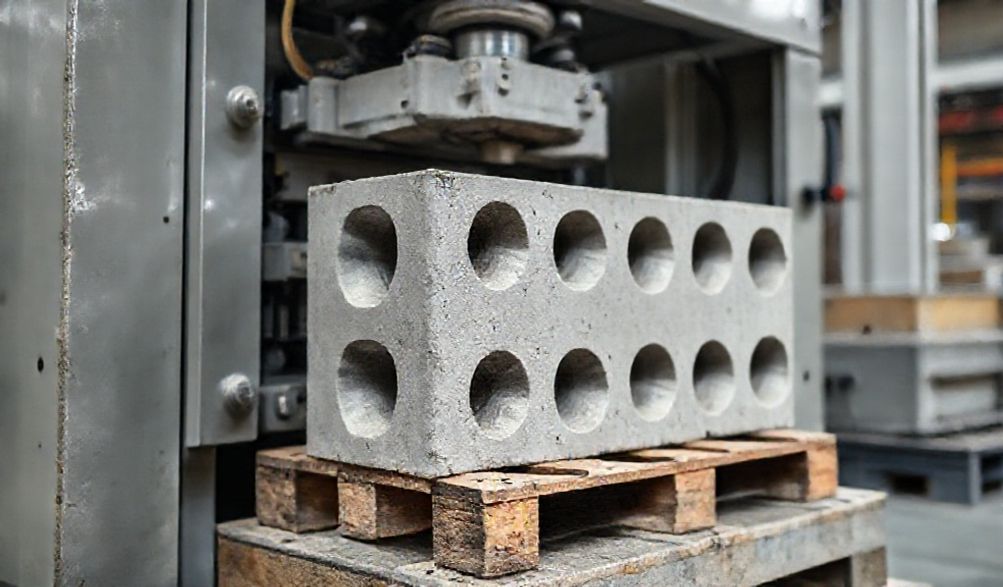
Bata beton berongga adalah unit pasangan bata dengan satu atau lebih lubang besar atau rongga. Rongga-rongga ini mengurangi berat total blok, meningkatkan sifat isolasi termal dan akustiknya, serta membuatnya lebih ekonomis dengan menggunakan lebih sedikit bahan baku. Peran utama mesin bata berongga adalah memproduksi blok-blok ini secara konsisten, efisien, dan sesuai standar struktural yang diperlukan. Hasil produksi mesin secara langsung mempengaruhi jadwal proyek dan profitabilitas bisnis.
Prinsip Operasional Dasar
Proses produksi, meskipun bervariasi berdasarkan tingkat otomatisasi, mengikuti urutan tahapan yang konsisten:
- Mencampur:Bahan baku (biasanya semen, pasir, kerikil, dan air) dicampur dalam rasio yang tepat untuk membentuk campuran beton semi-kering. Konsistensi di sini sangat penting untuk kekuatan blok akhir.
- Pemberian Makan:Beton campuran dimasukkan ke dalam corong mesin, yang berfungsi sebagai ruang penampung dan penyalur.
- Memadatkan dan Menggetarkan:Inilah inti dari prosesnya. Campuran tersebut dipindahkan ke dalam cetakan (atau "kotak cetakan"). Kombinasi getaran frekuensi tinggi dan tekanan hidrolik memadatkan beton, menghilangkan kantong udara dan memastikan bentuk balok yang padat dan kokoh di sekitar rongga berongga.
- Pembentukan dan Pengeluaran:Setelah dipadatkan, cetakan diangkat atau ditarik kembali, dan balok "hijau" yang baru terbentuk dikeluarkan ke palet atau lantai pabrik.
- Menyembuhkan:Blok yang dikeluarkan belum mencapai kekuatan penuh. Mereka harus menjalani proses pengawetan, yang sering melibatkan pengendalian kelembapan dan suhu selama 24-48 jam, sebelum dapat ditumpuk, diangkut, dan digunakan dalam konstruksi.
Komponen Utama dari Mesin Standar
Memahami bagian-bagian utama memperjelas kemampuan mesin dan kebutuhan perawatannya:
- Hopper:Wadah yang menampung dan memasukkan campuran beton mentah ke dalam sistem pencetakan.
- Mikser:Unit terintegrasi atau terpisah yang memastikan pencampuran semua bahan baku secara homogen.
- Cetakan / Kotak Cetakan:Komponen penentu. Kotak baja yang dapat dipertukarkan ini memberikan bentuk, ukuran, dan desain rongga pada balok. Cetakan yang berbeda memungkinkan satu mesin untuk memproduksi berbagai jenis balok.
- Sistem Getaran:Biasanya terdiri dari vibrator listrik bertenaga yang dipasang pada meja cetakan atau ruang cetakan. Getaran frekuensi tinggi sangat penting untuk pemadatan yang tepat dan penyelesaian blok yang halus.
- Sistem Hidrolik:Pembangkit tenaga. Terdiri dari pompa, silinder, dan katup yang menghasilkan tekanan besar (diukur dalam ton) yang diperlukan untuk memadatkan beton.
- Panel Kontrol:Berisi sistem kelistrikan dan antarmuka (mulai dari tuas sederhana hingga pengontrol logika terprogram) untuk mengoperasikan mesin.
Jenis-Jenis Mesin Batako Berlubang: Perbandingan Detail
Memilih jenis mesin yang tepat adalah keputusan paling penting yang akan Anda buat. Spektrumnya berkisar dari sistem yang sepenuhnya digerakkan oleh manusia hingga yang sepenuhnya otomatis.
Mesin Bata Ringan Manual
- Operasi & Keluaran:Mesin-mesin ini sepenuhnya mekanis. Operator mengisi cetakan dengan beton secara manual, mengaktifkan tuas untuk memberikan tekanan, lalu mengeluarkan balok yang sudah jadi. Produksinya lambat, sangat bergantung pada tenaga kerja, dengan hasil biasanya berkisar antara 500 hingga 1.500 balok per shift 8 jam.
- Kelebihan & Kekurangan:
- Kelebihan:Investasi awal yang sangat rendah, desain sederhana dengan perawatan minimal, tidak memerlukan daya listrik pada model dasar.
- Kekurangan:Sangat padat karya, hasil produksi rendah dan tidak konsisten, sangat bergantung pada keahlian operator, menghasilkan balok dengan kualitas yang bervariasi.
- Terbaik Untuk:Usaha mikro, proyek pribadi berskala sangat kecil, atau lokasi terpencil tanpa pasokan listrik yang andal dan tenaga kerja murah yang melimpah.
Mesin Bata Ringan Semi-Otomatis
- Operasi & Keluaran: This category strikes a balance. Key processes like vibration, compression, and block ejection are powered (electrically or hydraulically), but tasks like feeding raw material and removing finished blocks are often manual. Output can range from 1,500 to 5,000 blocks per shift, depending on model and crew size.
- Kelebihan & Kekurangan:
- Kelebihan: Significant increase in production and consistency over manual machines. More efficient use of labor, better block quality due to controlled vibration/pressure. Moderate capital cost.
- Kekurangan: Still requires a steady crew, not as fast as fully automatic lines, output can be bottlenecked by manual handling stages.
- Terbaik Untuk: Small to medium-sized block manufacturing businesses, construction companies producing for their own projects, and entrepreneurs making a serious entry into the market.
Mesin Batako Berongga Sepenuhnya Otomatis
- Operasi & Keluaran: These are integrated production lines. They often include automatic batching and mixing systems, conveyor belts for material feeding, robotic pallet handling, and stackers. Human intervention is primarily for monitoring, maintenance, and quality checks. Output can easily exceed 10,000 blocks per shift and can reach up to 30,000 or more for large systems.
- Kelebihan & Kekurangan:
- Kelebihan: Maximum production capacity and consistent, high-quality output. Drastically reduced direct labor costs. Highly efficient and scalable for large-volume contracts.
- Kekurangan: Very high initial capital investment. Requires significant space, stable three-phase power, and skilled technicians for maintenance and troubleshooting. Complex setup.
- Terbaik Untuk: Large-scale commercial block yards supplying regional markets, major infrastructure projects with on-site production plants, and established manufacturers expanding capacity.
Stationary vs. Mobile Block Making Machines
This is another key distinction based on application:
* Mesin Stasioner: These are fixed installations, typically found in a factory or dedicated production shed. They are the foundation for semi- and fully-automatic systems, designed for high-volume, long-term production.
* Mesin Bergerak: Mounted on a trailer or truck bed, these are designed for on-site production. They eliminate transport costs for blocks and are ideal for large, remote projects like dams, highways, or rural housing developments. They are almost always semi-automatic in function.
Critical Factors to Consider Before Buying a Hollow Block Machine
Moving beyond type, a deep dive into specifications and context is necessary for a sound investment.
Menilai Kebutuhan Produksi Anda
Begin by asking fundamental questions:
* What is my target output in blocks per hour or per day?
* What specific block sizes, types (e.g., 4″, 6″, 8″ hollow blocks, solid blocks, pavers), and strengths do my customers or projects demand?
* Is this for a fixed factory location or does it need to be mobile for on-site work?
* What is the scale of my business or project? A startup’s needs differ from an expanding enterprise’s.
Spesifikasi dan Fitur Mesin
Scrutinize the technical details:
* Kapasitas Tekanan (Tonase): This directly affects block density and strength. A 150-ton machine produces stronger blocks than a 50-ton machine, all else being equal.
* Sistem Getaran: Look for adjustable frequency and amplitude. Multiple vibrators (often 2-4) ensure even compaction.
* Daya Motor: Must be adequate to drive the hydraulic pump and vibrators without strain. Underpowered motors will fail prematurely.
* Tingkat Otomasi: Be clear on what is automated. Is it just vibration, or does it include feeding, pallet rotation, and stacking?
* Versatilitas Cetakan: Check how easily molds can be changed and what range of mold designs the machine’s frame and system can accommodate.
Kualitas Konstruksi dan Daya Tahan
The machine’s build determines its lifespan. Prioritize:
* Tingkat Baja: Main frames and mold boxes should be made from high-grade, wear-resistant steel plate.
* Welding Quality: Inspect for clean, continuous, and robust welds, especially at stress points.
* Component Brands: Reputable machines use known brands for critical parts like hydraulic pumps (e.g., Rexroth, Parker), electrical components (Siemens, Schneider), and bearings.
Supplier Reputation and After-Sales Service
This factor can outweigh a slightly lower price. A common pitfall is choosing a cheap machine with no local support.
* History & Reviews: Research the supplier’s track record. How long have they been in business? Seek out independent client testimonials.
* Garansi: Understand exactly what is covered (parts, labor) and for how long.
* Suku Cadang: Are spare parts readily available locally or must they be shipped from overseas, causing costly downtime?
* Dukungan Teknis: Does the supplier offer installation supervision, operator training, and prompt troubleshooting assistance?
Hollow Block Machine Price Range and Investment Analysis
Costs vary dramatically based on type, capacity, brand, and region. The figures below are approximate global ranges for the machine unit only.
Price Breakdown by Machine Type
- Mesin Bata Ringan Manual: $1,000 – $5,000 USD. The price depends on build quality and included features.
- Mesin Bata Ringan Semi-Otomatis: $10,000 – $50,000+ USD. This wide range covers small stationary models to large, high-output mobile units.
- Mesin Blok Hollow Otomatis Penuh: $50,000 – $300,000+ USD. The price escalates with the level of integration (batching plant, conveyors, robotic stackers).
Crucially, always request detailed quotations from multiple suppliers, as final prices are highly configurable.
Beyond the Machine: Calculating Total Investment
The machine cost is only part of the capital outlay. Budget for:
* Bahan Baku: Initial stockpile of cement, aggregates (sand, gravel).
* Tanah & Infrastruktur Cost of land or shed rental, concrete flooring, and a reliable power connection (often three-phase).
* Ancillary Equipment: Forklift or pallet jack, curing racks or chambers, mixing equipment if not integrated.
* Labor & Operating Costs: Wages, electricity, water, and maintenance supplies.
* Maintenance Fund: A reserve for unexpected repairs and spare parts.
Understanding ROI (Return on Investment)
A basic ROI framework involves:
1. Calculate Revenue: (Number of blocks produced per month) x (Selling price per block in your market).
2. Calculate Monthly Operating Costs: Sum of raw material costs, labor, utilities, maintenance, and overheads.
3. Calculate Gross Monthly Profit: Revenue – Operating Costs.
4. Consider Initial Investment: Total cost of machine + setup + other capital expenses.
5. Estimate Payback Period: Initial Investment / Gross Monthly Profit. This gives the number of months to recover your investment.
Catatan: Market demand, operational efficiency, and cost control are the true drivers of profitability. Never rely on a supplier’s generic “guaranteed profit” claims.
Operation, Maintenance, and Safety Best Practices
Proper operation extends machine life and ensures consistent product quality.
Pemeliharaan Harian dan Berkala yang Esensial
- Harian: Clean all concrete residue from the mold, hopper, and table. Check hydraulic oil levels and for leaks. Inspect electrical connections for tightness.
- Mingguan: Lubricate all moving parts (pivots, guide rods) as per the manual. Tighten any loose bolts or nuts.
- Bulanan: Change hydraulic oil and filters as recommended. Inspect mold liners for wear and vibrator mounts for cracks.
A common oversight is neglecting to clean the mold thoroughly, leading to built-up concrete that affects block dimensions and causes sticking.
Common Operational Issues and Troubleshooting
- Poor Block Strength: Usually caused by an incorrect water-cement ratio, insufficient vibration time, or low compaction pressure.
- Surface Cracks: Can result from too much water in the mix, improper curing (drying too fast), or excessive vibration.
- Blocks Sticking in Mold: Often due to a worn or damaged mold liner, insufficient mold release agent, or a wet concrete mix.
- Uneven Block Height: Typically indicates an unlevel machine, uneven feeding of the mold, or worn-out vibration mounts causing uneven compaction.
Non-Negotiable Safety Protocols
- Lockout/Tagout (LOTO): Always disconnect and lock the power source before performing any maintenance or clearing a jam.
- Perlengkapan Pelindung Diri (APD): Operators must wear safety glasses, hearing protection (due to loud vibrators), heavy-duty gloves, and steel-toe boots.
- Penanganan Material yang Aman: Use proper lifting techniques or mechanical aids when handling heavy molds or bags of cement to prevent injury.
Frequently Asked Questions (FAQ) About Hollow Block Machines
What is the average production capacity of a standard hollow block machine?
Capacity is not standard; it’s defined by type. A manual machine may produce 600-800 blocks per day. A semi-automatic machine can produce 2,000-4,000 blocks in an 8-hour shift. A fully automatic line can produce 8,000-15,000 blocks or more in the same period.
Can one machine produce different block sizes and types?
Yes, most machines are designed to work with interchangeable molds. By changing the mold box, the same machine can typically produce different sizes of hollow blocks, solid blocks, paving stones, and curb stones, provided the machine’s pressure and feed system are compatible.
What is the typical lead time for delivery and installation?
For standard models from local stock, delivery can be within weeks. For custom-configured or imported machines, lead times can range from 60 to 120 days. Installation and commissioning by a technician may add additional time.
How much profit can I make from a hollow block business?
Profitability is highly variable and depends on your local market price for blocks, your operational efficiency, raw material costs, and overheads. Focus on controlling your production costs and understanding your local demand. Use the ROI framework provided earlier to model different scenarios based on your specific numbers.
What are the most trusted brands or how do I verify a supplier’s credibility?
Rather than recommending specific brands, which vary by region, focus on verification methods:
1. Request and actually contact client references.
2. Ask to visit an existing installation to see the machine running and speak to the owner.
3. Check for membership in relevant industry associations or possession of quality management certifications (like ISO).
4. Search for independent reviews or complaints about the supplier online.
5. Assess the professionalism and technical depth of their sales and support team.
Kesimpulan
Selecting a hollow block machine is a strategic investment that requires aligning technology with ambition. The journey begins by honestly assessing your production needs, financial capacity, and market context. From the labor-dependent manual press to the humming fully automatic plant, each machine type serves a distinct purpose.
Remember, the lowest purchase price can often lead to the highest long-term cost through downtime and poor support. Prioritize suppliers who demonstrate proven expertise, offer robust warranties, and have a tangible commitment to after-sales service. The most prudent path forward involves diligent research: visit industry trade shows, consult with established block manufacturers, and obtain multiple detailed quotations. By applying the insights in this guide, you are equipped to make a decision that lays a solid foundation for a profitable, efficient, and sustainable venture in the essential business of building.
<