
Ultima Ductor ad Machinas Laterum Cavorum: Genera, Pretia, et Quomodo Eligere
Introductio
A turribus excelsis ad humiles domos habitandas, hodiernum aedificatum ambitus fundamentali elemento nititur: laterculo cavo ex concreto. Quod robur, proprietates insulationis, et efficacitas sumptuum magni aestimatur, hic ubique aedificandi materia columna constructionis per orbem terrarum est. Sed post omnem parietem durabilem latet machina creationis suae—machina laterculi cavi. Pro negotiatoribus, firmis constructionis, et investoribus, rectam machinam eligere decisionem criticam est quae in scientia technica, consilio pecuniario claro, ac perspicientia practica pendet.
Hic ductor est completus et aequus subsidium, ex industriae specificationibus, fabricatorum notitiis, et usu perito collectus. Ad mundum productionis laterum cavorum illustrandum comparatur. Invenies hic perscrutationem accuratam quomodo haec machinamenta operentur, comparationem generum in promptu positorum, perspicuam inspectionem sumptuum et collocationis pecuniae, et consilia utilia de operatione ac delectu suppeditatoris. Sive negotium fabricandi latera inchoas sive instrumenta pro magno opere conquiris, hic ductor praebet cognitionem fundamentalem quae ad consilium certum et informatum capiendum requiritur.
Quid est Machina Laterum Cavorum et Quomodo Operatur?
Machina laterum cavorum est instrumentum industriale proprium, quod ad fabricanda latera cava ex caemento destinatur, permixtione cementi, aggregatorum et aquae in formam expressam sub magno pressionis et vibrationis impulsu comprimendo.
Functio Principalis et Productum: Definientes Lateres Cavos
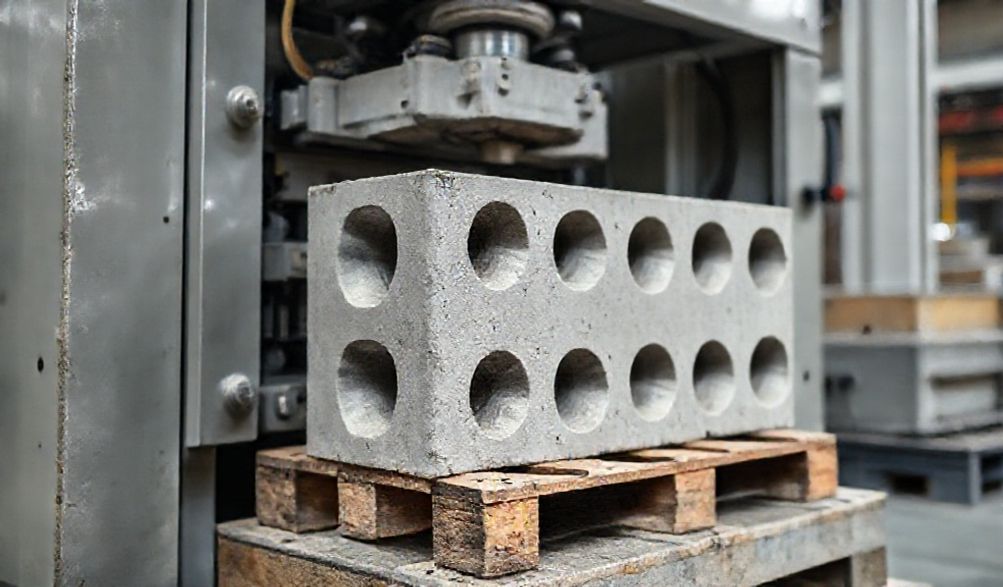
Lateres cavi sunt structurae caementiciae cum uno vel pluribus foraminibus magnis vel cavitatibus. Hae cavitates pondus totius lateris minuunt, proprietates eius thermicas et acusticas insulandas augent, et eum magis oeconomicum faciunt, minus materiae crudae adhibentes. Praecipuum munus machinae lateris cavi est hos lateres constanter, efficaciter, et ad debitum normam structuralem producere. Exitus machinae tempora propositi et lucra negotii directe afficit.
Fundamentalis Operandi Principium
Processus productionis, quamquam per gradus automationis variat, constantem seriem stadiorum sequitur:
- Miscens:Materiae crudae (plerumque caementum, harena, glarea, et aqua) certis proportionibus coniunguntur ut mixtura concreti semisicca formetur. Constantia hic ad ultimam laterculi firmitatem maxime refert.
- Alimentatio:Concretum mixtum in infundibulum machinae immittitur, quod ut receptaculum et canalis cavus agit.
- Comprimere et Vibrare:Hoc est cor processus. Mixtura in formam (vel "formam arculam") transfertur. Mixtura altae frequentiae vibrationis et pressionis hydraulicae concretionem comprimit, removens aeris cavitates et densam solidamque massam circa cavitates concavas efficiens.
- Formandi et Eiciendi:Mox compacta, forma tollitur vel retrahitur, et novus caespes "viridis" in palletum vel pavimentum officinae eicitur.
- Sanatio:Massa eiecta nondum plenam vim habent. Subire debent curationis processum, saepe cum moderata umore et temperatura per XXIV-XLVIII horas, antequam congeri, transportari, et in aedificatione adhiberi possint.
Partes Claves Machinae Normatae
Cognitio partium principalium facultatem machinae et necessitates curationis elucidat.
- Saltator:Receptaculum quod crudam concretam mixturam tenet et in systema formandi immittit.
- Miscellator:Unitas integra vel separata quae omnes materias primas homogeneo modo permiscet.
- Forma / Capsa FormaeElementum definitivum. Haec cista ferrea commutabilis formam, magnitudinem, et cavitatis dispositionem lateri praebet. Variae formae unam machinam permittunt ut varios laterum typos efficiat.
- Systema Vibratorium:Saepe constat ex validis vibratoriis electricis in mensa vel camera formae positis. Vibratio altae frequentiae necessaria est ad compactionem propriam et ad finem laevem lateris.
- Systema Hydraulicorum:Potentaria. Constat ex sentina, cylindris, valvisque, quae ingentem pressionem (tonnis metiendam) ad calcem comprimendam necessariam generant.
- Tabula Moderatoria:Domos systematum electricorum et interfaciei (a vectibus simplicibus ad programmabiles logicos moderatores) ad machinam operandam.
Machinarum Caecarum Genera: Collatio Diligentia
Choosing the correct type of machine is the most significant decision you will make. The spectrum ranges from purely human-powered to fully automated systems.
Machinae Manuales Laterum Cavorum
- Operatio & Productio These are purely mechanical machines. Operators manually fill the mold with concrete, engage a lever to apply pressure, and then remove the finished block. Production is slow, heavily reliant on labor, with an output typically ranging from 500 to 1,500 blocks per 8-hour shift.
- Pros & Cons:
- Pros: Very low initial investment, simple design with minimal maintenance, no need for electrical power in basic models.
- Incommodis: Extremely labor-intensive, low and inconsistent output, highly dependent on operator skill, produces blocks of variable quality.
- Optimum Pro: Micro-enterprises, very small-scale personal projects, or remote locations with no reliable power supply and abundant cheap labor.
Machinae Semi-Automaticae Laterum Cavorum
- Operatio & Productio This category strikes a balance. Key processes like vibration, compression, and block ejection are powered (electrically or hydraulically), but tasks like feeding raw material and removing finished blocks are often manual. Output can range from 1,500 to 5,000 blocks per shift, depending on model and crew size.
- Pros & Cons:
- Pros: Significant increase in production and consistency over manual machines. More efficient use of labor, better block quality due to controlled vibration/pressure. Moderate capital cost.
- Incommodis: Still requires a steady crew, not as fast as fully automatic lines, output can be bottlenecked by manual handling stages.
- Optimum Pro: Small to medium-sized block manufacturing businesses, construction companies producing for their own projects, and entrepreneurs making a serious entry into the market.
Machinae Plenae Automatae Laterum Cavorum
- Operatio & Productio These are integrated production lines. They often include automatic batching and mixing systems, conveyor belts for material feeding, robotic pallet handling, and stackers. Human intervention is primarily for monitoring, maintenance, and quality checks. Output can easily exceed 10,000 blocks per shift and can reach up to 30,000 or more for large systems.
- Pros & Cons:
- Pros: Maximum production capacity and consistent, high-quality output. Drastically reduced direct labor costs. Highly efficient and scalable for large-volume contracts.
- Incommodis: Very high initial capital investment. Requires significant space, stable three-phase power, and skilled technicians for maintenance and troubleshooting. Complex setup.
- Optimum Pro: Large-scale commercial block yards supplying regional markets, major infrastructure projects with on-site production plants, and established manufacturers expanding capacity.
Stationariae contra Mobiles Machinae Laterum Faciendarum
This is another key distinction based on application:
* Machinae Stantes: These are fixed installations, typically found in a factory or dedicated production shed. They are the foundation for semi- and fully-automatic systems, designed for high-volume, long-term production.
* Machinulae Mobilae: Mounted on a trailer or truck bed, these are designed for on-site production. They eliminate transport costs for blocks and are ideal for large, remote projects like dams, highways, or rural housing developments. They are almost always semi-automatic in function.
Critical Factors to Consider Before Buying a Hollow Block Machine
Moving beyond type, a deep dive into specifications and context is necessary for a sound investment.
Tuas Exigentias Productionis Perpendens
Begin by asking fundamental questions:
* What is my target output in blocks per hour or per day?
* What specific block sizes, types (e.g., 4″, 6″, 8″ hollow blocks, solid blocks, pavers), and strengths do my customers or projects demand?
* Is this for a fixed factory location or does it need to be mobile for on-site work?
* What is the scale of my business or project? A startup’s needs differ from an expanding enterprise’s.
Machinae Specificationes et Notae
Scrutinize the technical details:
* Vis Pressoria (Pondus): This directly affects block density and strength. A 150-ton machine produces stronger blocks than a 50-ton machine, all else being equal.
* Systema Vibratorium: Look for adjustable frequency and amplitude. Multiple vibrators (often 2-4) ensure even compaction.
* Vis Motrix: Must be adequate to drive the hydraulic pump and vibrators without strain. Underpowered motors will fail prematurely.
* Automationis Gradus: Be clear on what is automated. Is it just vibration, or does it include feeding, pallet rotation, and stacking?
* Moldis Versatilitas: Check how easily molds can be changed and what range of mold designs the machine’s frame and system can accommodate.
Quality of Construction and Durability
The machine’s build determines its lifespan. Prioritize:
* Ferri Genus: Main frames and mold boxes should be made from high-grade, wear-resistant steel plate.
* Qualitas Coniunctionis: Inspect for clean, continuous, and robust welds, especially at stress points.
* Componentes Notae Reputable machines use known brands for critical parts like hydraulic pumps (e.g., Rexroth, Parker), electrical components (Siemens, Schneider), and bearings.
Supplier Reputation and After-Sales Service
This factor can outweigh a slightly lower price. A common pitfall is choosing a cheap machine with no local support.
* History & Reviews: Research the supplier’s track record. How long have they been in business? Seek out independent client testimonials.
* Cautio: Understand exactly what is covered (parts, labor) and for how long.
* Partes Suppetiales: Are spare parts readily available locally or must they be shipped from overseas, causing costly downtime?
* Auxilium Technicum: Does the supplier offer installation supervision, operator training, and prompt troubleshooting assistance?
Hollow Block Machine Price Range and Investment Analysis
Costs vary dramatically based on type, capacity, brand, and region. The figures below are approximate global ranges for the machine unit only.
Price Breakdown by Machine Type
- Machinae Manuales Laterum Cavorum $1,000 – $5,000 USD. The price depends on build quality and included features.
- Machinae Semi-Automatice ad Lateres Cavos Faciendos: $10,000 – $50,000+ USD. This wide range covers small stationary models to large, high-output mobile units.
- Plene Automata Foramina Laterum Machinae: $50,000 – $300,000+ USD. The price escalates with the level of integration (batching plant, conveyors, robotic stackers).
Crucially, always request detailed quotations from multiple suppliers, as final prices are highly configurable.
Beyond the Machine: Calculating Total Investment
The machine cost is only part of the capital outlay. Budget for:
* Materiae Crudae Initial stockpile of cement, aggregates (sand, gravel).
* Terra & Infrastructura Cost of land or shed rental, concrete flooring, and a reliable power connection (often three-phase).
* Ancillary Equipment: Forklift or pallet jack, curing racks or chambers, mixing equipment if not integrated.
* Labor & Operating Costs: Wages, electricity, water, and maintenance supplies.
* Maintenance Fund: A reserve for unexpected repairs and spare parts.
Understanding ROI (Return on Investment)
A basic ROI framework involves:
1. Calculate Revenue: (Number of blocks produced per month) x (Selling price per block in your market).
2. Calculate Monthly Operating Costs: Sum of raw material costs, labor, utilities, maintenance, and overheads.
3. Calculate Gross Monthly Profit: Revenue – Operating Costs.
4. Consider Initial Investment: Total cost of machine + setup + other capital expenses.
5. Estimate Payback Period: Initial Investment / Gross Monthly Profit. This gives the number of months to recover your investment.
Nota: Market demand, operational efficiency, and cost control are the true drivers of profitability. Never rely on a supplier’s generic “guaranteed profit” claims.
Operation, Maintenance, and Safety Best Practices
Proper operation extends machine life and ensures consistent product quality.
Essential Daily and Periodic Maintenance
- Daily: Clean all concrete residue from the mold, hopper, and table. Check hydraulic oil levels and for leaks. Inspect electrical connections for tightness.
- Weekly: Lubricate all moving parts (pivots, guide rods) as per the manual. Tighten any loose bolts or nuts.
- Monthly: Change hydraulic oil and filters as recommended. Inspect mold liners for wear and vibrator mounts for cracks.
A common oversight is neglecting to clean the mold thoroughly, leading to built-up concrete that affects block dimensions and causes sticking.
Common Operational Issues and Troubleshooting
- Poor Block Strength: Usually caused by an incorrect water-cement ratio, insufficient vibration time, or low compaction pressure.
- Surface Cracks: Can result from too much water in the mix, improper curing (drying too fast), or excessive vibration.
- Blocks Sticking in Mold: Often due to a worn or damaged mold liner, insufficient mold release agent, or a wet concrete mix.
- Uneven Block Height: Typically indicates an unlevel machine, uneven feeding of the mold, or worn-out vibration mounts causing uneven compaction.
Non-Negotiable Safety Protocols
- Lockout/Tagout (LOTO): Always disconnect and lock the power source before performing any maintenance or clearing a jam.
- Instrumenta Praesidii Personalis (IPP) Operators must wear safety glasses, hearing protection (due to loud vibrators), heavy-duty gloves, and steel-toe boots.
- Safe Material Handling: Use proper lifting techniques or mechanical aids when handling heavy molds or bags of cement to prevent injury.
Frequently Asked Questions (FAQ) About Hollow Block Machines
What is the average production capacity of a standard hollow block machine?
Capacity is not standard; it’s defined by type. A manual machine may produce 600-800 blocks per day. A semi-automatic machine can produce 2,000-4,000 blocks in an 8-hour shift. A fully automatic line can produce 8,000-15,000 blocks or more in the same period.
Can one machine produce different block sizes and types?
Yes, most machines are designed to work with interchangeable molds. By changing the mold box, the same machine can typically produce different sizes of hollow blocks, solid blocks, paving stones, and curb stones, provided the machine’s pressure and feed system are compatible.
What is the typical lead time for delivery and installation?
For standard models from local stock, delivery can be within weeks. For custom-configured or imported machines, lead times can range from 60 to 120 days. Installation and commissioning by a technician may add additional time.
How much profit can I make from a hollow block business?
Profitability is highly variable and depends on your local market price for blocks, your operational efficiency, raw material costs, and overheads. Focus on controlling your production costs and understanding your local demand. Use the ROI framework provided earlier to model different scenarios based on your specific numbers.
What are the most trusted brands or how do I verify a supplier’s credibility?
Rather than recommending specific brands, which vary by region, focus on verification methods:
1. Request and actually contact client references.
2. Ask to visit an existing installation to see the machine running and speak to the owner.
3. Check for membership in relevant industry associations or possession of quality management certifications (like ISO).
4. Search for independent reviews or complaints about the supplier online.
5. Assess the professionalism and technical depth of their sales and support team.
Conclusio.
Selecting a hollow block machine is a strategic investment that requires aligning technology with ambition. The journey begins by honestly assessing your production needs, financial capacity, and market context. From the labor-dependent manual press to the humming fully automatic plant, each machine type serves a distinct purpose.
Remember, the lowest purchase price can often lead to the highest long-term cost through downtime and poor support. Prioritize suppliers who demonstrate proven expertise, offer robust warranties, and have a tangible commitment to after-sales service. The most prudent path forward involves diligent research: visit industry trade shows, consult with established block manufacturers, and obtain multiple detailed quotations. By applying the insights in this guide, you are equipped to make a decision that lays a solid foundation for a profitable, efficient, and sustainable venture in the essential business of building.
<