
Hướng Dẫn Toàn Diện Về Máy Sản Xuất Gạch Bê Tông: Phân Loại, Giá Cả và Cách Lựa Chọn
Giới thiệu
Từ những tòa nhà chọc trời sừng sững đến những ngôi nhà dân khiêm tốn, môi trường xây dựng hiện đại đều dựa vào một thành phần cơ bản: gạch bê tông rỗng. Được đánh giá cao nhờ độ bền, khả năng cách nhiệt và hiệu quả về chi phí, vật liệu xây dựng phổ biến này chính là xương sống của ngành xây dựng toàn cầu. Nhưng đằng sau mỗi bức tường bền vững là động cơ sáng tạo ra nó – máy sản xuất gạch rỗng. Đối với các doanh nhân, công ty xây dựng và nhà đầu tư, việc lựa chọn đúng loại máy là một quyết định quan trọng, phụ thuộc vào kiến thức kỹ thuật, kế hoạch tài chính rõ ràng và những hiểu biết thực tế.
Hướng dẫn này đóng vai trò là một nguồn tài nguyên toàn diện và khách quan, được biên soạn từ các thông số kỹ thuật ngành, dữ liệu nhà sản xuất và chuyên môn vận hành. Nó được thiết kế để làm sáng tỏ thế giới sản xuất gạch block rỗng. Trong đây, bạn sẽ tìm thấy một khám phá chi tiết về cách thức hoạt động của các máy móc này, phân tích so sánh các loại có sẵn, cái nhìn minh bạch về chi phí và đầu tư, cùng lời khuyên thiết thực về vận hành và lựa chọn nhà cung cấp. Dù bạn đang khởi nghiệp sản xuất gạch block hay tìm nguồn thiết bị cho một dự án lớn, hướng dẫn này cung cấp kiến thức nền tảng cần thiết để đưa ra quyết định sáng suốt và tự tin.
Máy Sản Xuất Gạch Block Rỗng Là Gì và Nó Hoạt Động Như Thế Nào?
Máy sản xuất gạch bê tông rỗng là một thiết bị công nghiệp chuyên dụng, được thiết kế để sản xuất các khối bê tông rỗng bằng cách nén hỗn hợp xi măng, cốt liệu và nước vào khuôn định hình dưới áp lực và rung động lớn.
Chức Năng Cốt Lõi và Đầu Ra: Định Nghĩa Khối Rỗng
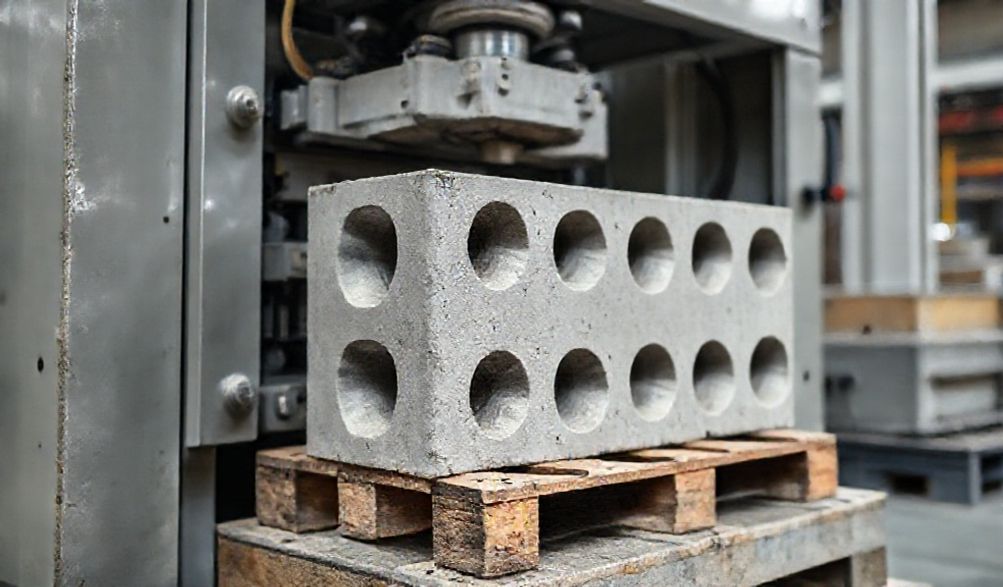
Gạch bê tông rỗng là các đơn vị xây dựng có một hoặc nhiều lỗ hoặc khoang rỗng lớn. Những khoang rỗng này giúp giảm trọng lượng tổng thể của viên gạch, cải thiện khả năng cách nhiệt và cách âm, đồng thời tiết kiệm chi phí nhờ sử dụng ít nguyên liệu thô hơn. Vai trò chính của máy sản xuất gạch rỗng là tạo ra những viên gạch này một cách đồng đều, hiệu quả và đạt tiêu chuẩn kết cấu yêu cầu. Sản lượng của máy ảnh hưởng trực tiếp đến tiến độ dự án và lợi nhuận kinh doanh.
Nguyên lý hoạt động cơ bản
Quy trình sản xuất, mặc dù có sự khác biệt theo mức độ tự động hóa, nhưng vẫn tuân theo một chuỗi các giai đoạn nhất quán:
- Pha trộn:Các nguyên liệu thô (thường là xi măng, cát, sỏi và nước) được kết hợp theo tỷ lệ chính xác để tạo thành hỗn hợp bê tông bán khô. Độ đồng nhất ở đây rất quan trọng đối với độ bền của khối cuối cùng.
- Cho ăn:Hỗn hợp bê tông được đưa vào phễu của máy, nơi đóng vai trò như một buồng chứa và dẫn hướng.
- Đầm nén và Rung.Đây là phần cốt lõi của quy trình. Hỗn hợp được chuyển vào khuôn (hay "hộp khuôn"). Sự kết hợp giữa rung động tần số cao và áp lực thủy lực nén chặt bê tông, loại bỏ các túi khí và đảm bảo hình dạng khối đặc, chắc chắn bao quanh các khoang rỗng.
- Đúc và Đẩy khuôn:Sau khi được nén chặt, khuôn được nâng lên hoặc rút ra, và khối "xanh" mới hình thành được đẩy ra trên pallet hoặc sàn nhà máy.
- Chữa bệnh: The ejected blocks are not yet at full strength. They must undergo a curing process, often involving controlled moisture and temperature for 24-48 hours, before they can be stacked, transported, and used in construction.
Các Thành Phần Chính của Một Máy Tiêu Chuẩn
Understanding the main parts clarifies machine capability and maintenance needs:
- Hopper: The receptacle that holds and feeds the raw concrete mix into the molding system.
- Máy trộn: An integrated or separate unit that ensures a homogeneous blend of all raw materials.
- Khuôn / Hộp Khuôn: The defining component. This interchangeable steel box gives the block its shape, size, and cavity design. Different molds allow one machine to produce various block types.
- Hệ thống Rung Usually comprised of powerful electric vibrators mounted on the mold table or chamber. High-frequency vibration is essential for proper compaction and a smooth block finish.
- Hệ thống thủy lực: The powerhouse. It consists of a pump, cylinders, and valves that generate the immense pressure (measured in tons) needed to compress the concrete.
- Bảng điều khiển: Houses the electrical systems and interfaces (from simple levers to programmable logic controllers) for operating the machine.
Types of Hollow Block Machines: A Detailed Comparison
Choosing the correct type of machine is the most significant decision you will make. The spectrum ranges from purely human-powered to fully automated systems.
Máy Sản Xuất Gạch Block Rỗng Thủ Công
- Hoạt động & Đầu ra: These are purely mechanical machines. Operators manually fill the mold with concrete, engage a lever to apply pressure, and then remove the finished block. Production is slow, heavily reliant on labor, with an output typically ranging from 500 to 1,500 blocks per 8-hour shift.
- Ưu điểm & Nhược điểm:
- Ưu điểm: Very low initial investment, simple design with minimal maintenance, no need for electrical power in basic models.
- Nhược điểm: Extremely labor-intensive, low and inconsistent output, highly dependent on operator skill, produces blocks of variable quality.
- Tốt Nhất Cho: Micro-enterprises, very small-scale personal projects, or remote locations with no reliable power supply and abundant cheap labor.
Máy Đúc Gạch Block Rỗng Bán Tự Động
- Hoạt động & Đầu ra: This category strikes a balance. Key processes like vibration, compression, and block ejection are powered (electrically or hydraulically), but tasks like feeding raw material and removing finished blocks are often manual. Output can range from 1,500 to 5,000 blocks per shift, depending on model and crew size.
- Ưu điểm & Nhược điểm:
- Ưu điểm: Significant increase in production and consistency over manual machines. More efficient use of labor, better block quality due to controlled vibration/pressure. Moderate capital cost.
- Nhược điểm: Still requires a steady crew, not as fast as fully automatic lines, output can be bottlenecked by manual handling stages.
- Tốt Nhất Cho: Small to medium-sized block manufacturing businesses, construction companies producing for their own projects, and entrepreneurs making a serious entry into the market.
Máy Làm Gạch Block Rỗng Tự Động Hoàn Toàn
- Hoạt động & Đầu ra: These are integrated production lines. They often include automatic batching and mixing systems, conveyor belts for material feeding, robotic pallet handling, and stackers. Human intervention is primarily for monitoring, maintenance, and quality checks. Output can easily exceed 10,000 blocks per shift and can reach up to 30,000 or more for large systems.
- Ưu điểm & Nhược điểm:
- Ưu điểm: Maximum production capacity and consistent, high-quality output. Drastically reduced direct labor costs. Highly efficient and scalable for large-volume contracts.
- Nhược điểm: Very high initial capital investment. Requires significant space, stable three-phase power, and skilled technicians for maintenance and troubleshooting. Complex setup.
- Tốt Nhất Cho: Large-scale commercial block yards supplying regional markets, major infrastructure projects with on-site production plants, and established manufacturers expanding capacity.
Máy làm gạch cố định so với di động
This is another key distinction based on application:
* Máy Cố Định These are fixed installations, typically found in a factory or dedicated production shed. They are the foundation for semi- and fully-automatic systems, designed for high-volume, long-term production.
* Máy Móc Di Động: Mounted on a trailer or truck bed, these are designed for on-site production. They eliminate transport costs for blocks and are ideal for large, remote projects like dams, highways, or rural housing developments. They are almost always semi-automatic in function.
Critical Factors to Consider Before Buying a Hollow Block Machine
Moving beyond type, a deep dive into specifications and context is necessary for a sound investment.
Đánh Giá Yêu Cầu Sản Xuất Của Bạn
Begin by asking fundamental questions:
* What is my target output in blocks per hour or per day?
* What specific block sizes, types (e.g., 4″, 6″, 8″ hollow blocks, solid blocks, pavers), and strengths do my customers or projects demand?
* Is this for a fixed factory location or does it need to be mobile for on-site work?
* What is the scale of my business or project? A startup’s needs differ from an expanding enterprise’s.
Thông số kỹ thuật và tính năng của máy
Scrutinize the technical details:
* Áp lực ép (Tấn): This directly affects block density and strength. A 150-ton machine produces stronger blocks than a 50-ton machine, all else being equal.
* Hệ thống Rung Look for adjustable frequency and amplitude. Multiple vibrators (often 2-4) ensure even compaction.
* Công suất động cơ: Must be adequate to drive the hydraulic pump and vibrators without strain. Underpowered motors will fail prematurely.
* Mức độ Tự động hóa: Be clear on what is automated. Is it just vibration, or does it include feeding, pallet rotation, and stacking?
* Tính Linh Hoạt của Khuôn Mẫu: Check how easily molds can be changed and what range of mold designs the machine’s frame and system can accommodate.
Quality of Construction and Durability
The machine’s build determines its lifespan. Prioritize:
* Cấp Thép: Main frames and mold boxes should be made from high-grade, wear-resistant steel plate.
* Welding Quality: Inspect for clean, continuous, and robust welds, especially at stress points.
* Component Brands: Reputable machines use known brands for critical parts like hydraulic pumps (e.g., Rexroth, Parker), electrical components (Siemens, Schneider), and bearings.
Supplier Reputation and After-Sales Service
This factor can outweigh a slightly lower price. A common pitfall is choosing a cheap machine with no local support.
* History & Reviews: Research the supplier’s track record. How long have they been in business? Seek out independent client testimonials.
* Bảo hành: Understand exactly what is covered (parts, labor) and for how long.
* Phụ Tùng Thay Thế: Are spare parts readily available locally or must they be shipped from overseas, causing costly downtime?
* Hỗ trợ Kỹ thuật: Does the supplier offer installation supervision, operator training, and prompt troubleshooting assistance?
Hollow Block Machine Price Range and Investment Analysis
Costs vary dramatically based on type, capacity, brand, and region. The figures below are approximate global ranges for the machine unit only.
Price Breakdown by Machine Type
- Máy Đúc Gạch Block Rỗng Thủ Công $1,000 – $5,000 USD. The price depends on build quality and included features.
- Máy Sản Xuất Gạch Block Rỗng Bán Tự Động: $10,000 – $50,000+ USD. This wide range covers small stationary models to large, high-output mobile units.
- Máy Làm Gạch Block Rỗng Tự Động Hoàn Toàn: $50,000 – $300,000+ USD. The price escalates with the level of integration (batching plant, conveyors, robotic stackers).
Crucially, always request detailed quotations from multiple suppliers, as final prices are highly configurable.
Beyond the Machine: Calculating Total Investment
The machine cost is only part of the capital outlay. Budget for:
* Nguyên liệu thô: Initial stockpile of cement, aggregates (sand, gravel).
* Land & Infrastructure: Cost of land or shed rental, concrete flooring, and a reliable power connection (often three-phase).
* Ancillary Equipment: Forklift or pallet jack, curing racks or chambers, mixing equipment if not integrated.
* Labor & Operating Costs: Wages, electricity, water, and maintenance supplies.
* Maintenance Fund: A reserve for unexpected repairs and spare parts.
Understanding ROI (Return on Investment)
A basic ROI framework involves:
1. Calculate Revenue: (Number of blocks produced per month) x (Selling price per block in your market).
2. Calculate Monthly Operating Costs: Sum of raw material costs, labor, utilities, maintenance, and overheads.
3. Calculate Gross Monthly Profit: Revenue – Operating Costs.
4. Consider Initial Investment: Total cost of machine + setup + other capital expenses.
5. Estimate Payback Period: Initial Investment / Gross Monthly Profit. This gives the number of months to recover your investment.
Note: Market demand, operational efficiency, and cost control are the true drivers of profitability. Never rely on a supplier’s generic “guaranteed profit” claims.
Operation, Maintenance, and Safety Best Practices
Proper operation extends machine life and ensures consistent product quality.
Essential Daily and Periodic Maintenance
- Hàng ngày: Clean all concrete residue from the mold, hopper, and table. Check hydraulic oil levels and for leaks. Inspect electrical connections for tightness.
- Hàng tuần: Lubricate all moving parts (pivots, guide rods) as per the manual. Tighten any loose bolts or nuts.
- Monthly: Change hydraulic oil and filters as recommended. Inspect mold liners for wear and vibrator mounts for cracks.
A common oversight is neglecting to clean the mold thoroughly, leading to built-up concrete that affects block dimensions and causes sticking.
Common Operational Issues and Troubleshooting
- Poor Block Strength: Usually caused by an incorrect water-cement ratio, insufficient vibration time, or low compaction pressure.
- Surface Cracks: Can result from too much water in the mix, improper curing (drying too fast), or excessive vibration.
- Blocks Sticking in Mold: Often due to a worn or damaged mold liner, insufficient mold release agent, or a wet concrete mix.
- Uneven Block Height: Typically indicates an unlevel machine, uneven feeding of the mold, or worn-out vibration mounts causing uneven compaction.
Non-Negotiable Safety Protocols
- Lockout/Tagout (LOTO): Always disconnect and lock the power source before performing any maintenance or clearing a jam.
- Thiết bị Bảo hộ Cá nhân (PPE) Operators must wear safety glasses, hearing protection (due to loud vibrators), heavy-duty gloves, and steel-toe boots.
- Safe Material Handling: Use proper lifting techniques or mechanical aids when handling heavy molds or bags of cement to prevent injury.
Frequently Asked Questions (FAQ) About Hollow Block Machines
What is the average production capacity of a standard hollow block machine?
Capacity is not standard; it’s defined by type. A manual machine may produce 600-800 blocks per day. A semi-automatic machine can produce 2,000-4,000 blocks in an 8-hour shift. A fully automatic line can produce 8,000-15,000 blocks or more in the same period.
Can one machine produce different block sizes and types?
Yes, most machines are designed to work with interchangeable molds. By changing the mold box, the same machine can typically produce different sizes of hollow blocks, solid blocks, paving stones, and curb stones, provided the machine’s pressure and feed system are compatible.
What is the typical lead time for delivery and installation?
For standard models from local stock, delivery can be within weeks. For custom-configured or imported machines, lead times can range from 60 to 120 days. Installation and commissioning by a technician may add additional time.
How much profit can I make from a hollow block business?
Profitability is highly variable and depends on your local market price for blocks, your operational efficiency, raw material costs, and overheads. Focus on controlling your production costs and understanding your local demand. Use the ROI framework provided earlier to model different scenarios based on your specific numbers.
What are the most trusted brands or how do I verify a supplier’s credibility?
Rather than recommending specific brands, which vary by region, focus on verification methods:
1. Request and actually contact client references.
2. Ask to visit an existing installation to see the machine running and speak to the owner.
3. Check for membership in relevant industry associations or possession of quality management certifications (like ISO).
4. Search for independent reviews or complaints about the supplier online.
5. Assess the professionalism and technical depth of their sales and support team.
Conclusion
Selecting a hollow block machine is a strategic investment that requires aligning technology with ambition. The journey begins by honestly assessing your production needs, financial capacity, and market context. From the labor-dependent manual press to the humming fully automatic plant, each machine type serves a distinct purpose.
Remember, the lowest purchase price can often lead to the highest long-term cost through downtime and poor support. Prioritize suppliers who demonstrate proven expertise, offer robust warranties, and have a tangible commitment to after-sales service. The most prudent path forward involves diligent research: visit industry trade shows, consult with established block manufacturers, and obtain multiple detailed quotations. By applying the insights in this guide, you are equipped to make a decision that lays a solid foundation for a profitable, efficient, and sustainable venture in the essential business of building.
<