
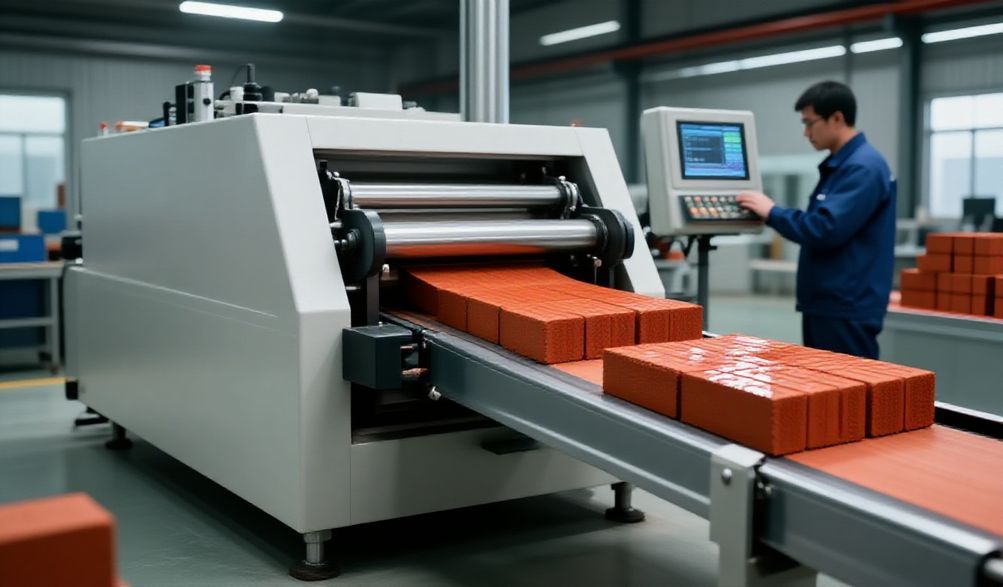
Jou Uiteindelike Gids vir Kleibaksteenmaakmasjiene & Die Regte Vervaardiger Kies
Inleiding
Om te belê in 'n kleibaksteenproduksielyn is 'n beduidende kapitaalbesluit wat die sukses van jou konstruksiebesigheid, baksteenplant of entrepreneursonderneming vir dekades kan bepaal. Die hart van hierdie operasie is die baksteenmaakmasjien, en die siel van sy langtermynprestasie is die vervaardiger agter dit.
Hierdie omvattende gids is geskep vir konstruksieprofessionele, baksteenplaaseienaars en entrepreneurs wat wil belê in betroubare kleibaksteenproduksie. Ons duik diep in die wêreld van kleibaksteenmaakmasjiene, met 'n gefokusde lens op wat 'n topvlak vervaardiger onderskei. Terwyl ons verwys na industrie-standaarde en die reputasie van gevestigde fabrieke soosFUDAOns doel is om jou toe te rus met die kundigheid om 'n ingeligte, selfversekerde aankoopbesluit te neem wat produktiwiteit, kwaliteit en langtermyn-ROI vir jou projek verseker.
Om die mark te navigeer, verg meer as net om prys-etikette te vergelyk. Dit vereis 'n begrip van ingenieursbeginsels, produksieprosesse en die kritieke faktore wat gesiene vennote van bloot verskaffers onderskei. Kom ons begin.
Verstaan van Kleibaksteenproduksie: Kernprosesse & Masjinerie
Voordat jy vervaardigers evalueer, moet jy verstaan wat jy koop. 'n Kleistene-masjien is deel van 'n gesofistikeerde stelsel wat ontwerp is om rou grond in 'n duursame, gestandaardiseerde boublok te omskep.
Die Reis van Rou Klei na Voltooide Baksteen
Die moderne baksteenmaakproses is 'n wonderwerk van industriële ingenieurswese, wat tipies hierdie sleutelfases volg:
- Kleivoorbereiding:Ruwe klei word ontgin, vergruis en gesif om klippe en puin te verwyder. Dit word dan met water gemeng en soms bymiddels (soos sand of vliegas) bygevoeg om die perfekte plastisiteit en samestelling vir vorming te verkry.
- Vorming/Vormgee:Dit is die kernfunksie van die baksteenmaakmasjien. Die voorbereide klei word onder hoë druk in 'n vorm gedwing om 'n deurlopende kolom (ekstrusie) of individuele stene (persing) te vorm. 'n Sleutelsubproses hier isontlugtingwat lugpakkies verwyder om krake drasties te verminder en baksteensterkte te verhoog.
- Droogmaak:Die nat, gevormde bakstene (bekend as "groen bakstene") word versigtig gedroog om vog te verwyder. Dit word dikwels in beheerde kamerdroeërs gedoen om kromtrek of krake as gevolg van ongelyke vogverlies te voorkom.
- Brand/ Oonde:Die gedroogde stene word in 'n oond gebak teen temperature tussen 900°C en 1200°C. Hierdie proses verander die klei in glas, wat die stene hul finale hardheid, sterkte, kleur en weerstand teen die weerstand gee.
Tipes Kleibaksteenvervaardigingsmasjiene
Die keuse van die regte tipe masjien hang heeltemal af van jou skaal, begroting en gewenste uitsetkwaliteit.
-
Ekstrudeerders teenoor Persmasjiene:
- Ekstrudersdwing plastiese klei deur 'n matrys om 'n deurlopende kolom te vorm, wat dan in individuele stene gesny word. Hulle is uitstekend vir hoë-volume produksie van soliede, geperforeerde of hol stene en is die industrie-standaard vir die meeste grootskaalse aanlegte.
- Pers(soos hidrouliese of meganiese perse) pers minder plastiese klei in 'n vorm onder uiterste druk. Hulle word dikwels gebruik vir die vervaardiging van hoëdigtheid, skerp gedefinieerde stene (soos plaveisel- of vuurvaste stene) en kan 'n groter verskeidenheid grondstowwe hanteer.
-
Handmatige, Semi-Automatiese en Volle Outomatiese Masjiene:
- Handmatige Masjiene:Lae-koste, lae-produksie-opsies geskik vir baie klein-skaalse of ambagtelike produksie. Arbeidsintensief en wisselvallig.
- Halfoutomatiese Masjiene:'n Gebalanseerde keuse vir klein tot medium operasies. Hulle outomatiseer die kernvormingsproses (soos ekstrusie en sny) maar mag handhantering vir stapeling of voeding vereis.
- Volledig Outomatiese Masjiene:Die toppunt van doeltreffendheid. Hierdie stelsels integreer klei-voeding, vorming, sny, stapeling, en soms selfs palletisering met robotarms. Hulle maksimeer uitset, verminder arbeid, en verseker konsekwente kwaliteit. Dit is waar vervaardigers soosFUDAen ander industrieleiers fokus hul ingenieurs.
Sleutel Masjienkomponente wat Prestasie Definieer
Die kwaliteit van 'n masjien is die som van sy onderdele. Ondersoek hierdie komponente:
* Menger: A robust, double-shaft mixer ensures homogeneous and perfectly tempered clay, which is foundational for quality extrusion.
* Extruder & De-Airing Unit: The heart of the machine. Look for a powerful, wear-resistant auger and a vacuum chamber that achieves a high level of de-airing (measured in vacuum pressure, e.g., -0.092 MPa or better).
* Cutter: A precision wire or gang cutter that creates clean, dimensionally accurate bricks without deforming the soft clay column.
* Beheerstelsel: A modern, user-friendly PLC (Programmable Logic Controller) interface allows for easy operation, troubleshooting, and adjustment of speed, pressure, and cutting length.
What Defines a Leading Clay Bricks Making Machine Manufacturer?
With the process understood, the critical question becomes: who do you trust to build this complex system? A leading manufacturer is defined by more than just a sales brochure.
Bewese Ervaring & Bedryfsduursaamheid
In heavy machinery, history matters. A manufacturer with decades of operation has:
* Encountered and solved countless technical challenges.
* Refined their designs through real-world feedback.
* Built a global portfolio of working installations. When researching a name like FUDA baksteenvervaardigingsfabriek, their track record of delivered projects across different continents speaks directly to tested reliability and adaptability.
Engineering Expertise & R&D Investment
The best manufacturers are not just workshops; they are innovation hubs. Key indicators include:
* A dedicated R&D team focused on improving energy efficiency, automation, and ease of maintenance.
* Patents on unique machine components or processes.
* Continuous updates to machine lines, incorporating newer, more durable materials and smarter control systems.
Vervaardigingstandaarde en Kwaliteitsbeheer
The factory floor tells the true story. A top manufacturer will:
* Hold relevant international certifications (like ISO 9001 for quality management systems).
* Use premium, wear-resistant materials for critical components (e.g., Hardox steel for liners, high-grade alloys for augers).
* Employ rigorous in-house testing, including running machines under load before disassembly for shipping.
Comprehensive Service & Support
The machine’s purchase price is just the entry ticket. Long-term value comes from support.
* Installasie & Inbedryfstelling: Do they provide expert engineers to supervise setup and ensure your plant runs from day one?
* Opleiding: Comprehensive, hands-on training for your operators and maintenance staff is non-negotiable.
* Onderdele: A readily available, logically priced inventory of spare parts is crucial for minimizing costly downtime.
* Tegniese Ondersteuning: Access to responsive, knowledgeable support via phone, email, or remote diagnostics.
Spotlight on Key Considerations for Your Investment
Armed with manufacturer criteria, you must now align it with your specific needs.
Assessering van U Produksiebehoeftes
Be precise. Ambiguity here leads to an undersized or inefficient investment.
* Uitsetvermoë: Calculate your required bricks per hour or per 8-hour shift. Factor in future growth.
* Brick Type & Versatility: Will you produce only standard solid bricks, or do you need to switch to perforated, hollow, or special shapes? Ensure the machine is adaptable.
* Rou Materiaal: Share samples of your clay with the manufacturer. Its composition (shale, soft mud, etc.) directly affects machine recommendations.
* Power & Utility Requirements: Understand the total connected load (electricity) and any requirements for water or compressed air.
Total Cost of Ownership (TCO) Analysis
Look beyond the initial quote. The true cost includes:
* Energieverbruik: An efficient drive system and well-designed extruder can save significant electricity costs over years of operation.
* Onderhoud & Onderdele Machines built with quality components wear slower, and manufacturers with fair spare parts pricing reduce your ongoing OpEx.
* Masjien se Lewensduur: A machine that runs reliably for 15+ years offers far better ROI than one that requires major overhauls after 5.
The Importance of Factory Visits & Client References
This is your most powerful due diligence tool.
* Factory Visit: Inspect the manufacturing facility. Observe the workflow, quality of welding, and housekeeping. Meet the engineering team.
* Kliëntverwysings: Insist on contacting 2-3 recent clients, preferably in a region similar to yours. Ask them about:
* Machine performance and uptime.
* Accuracy of the manufacturer’s claims.
* Responsiveness and effectiveness of after-sales service.
* Their overall ondervinding and satisfaction.
Ensuring a Successful Partnership with Your Manufacturer
The goal is a long-term partnership, not a one-time transaction. Set the stage for success.
Clear Communication & Customization Options
A good partner listens. They should ask detailed questions about your project and be willing to offer customized solutions, whether it’s a special die design, a unique brick size, or a specific plant layout. Their proposals should feel tailored, not generic.
Transparency in Quotations & Contracts
Scrutinize the quotation. It should clearly itemize:
* EXW/FOB/CIF pricing and responsibilities.
* A detailed scope of supply (every motor, cable, and tool included).
* Warranty terms (duration, what’s covered, and what’s excluded).
* Costs for installation, training, and commissioning if not included.
Post-Purchase Relationship
The relationship strengthens after payment. A trustworthy manufacturer will:
* Proactively check in during the first few months of operation.
* Have a system for you to easily order spare parts.
* Inform you of software updates or upgrade kits for your machine model in the future.
Frequently Asked Questions (FAQ)
Q: What is the typical lead time for a clay brick making machine from order to delivery?
A: Lead times vary significantly based on machine complexity and manufacturer backlog. For a standard automatic machine, expect 30-60 days for production after order confirmation, plus 30-45 days for sea shipping. Fully customized or large turnkey plants will take longer. Always get a written timeline estimate.
Q: Can a manufacturer like FUDA provide a complete turnkey plant solution, not just individual machines?
A: Reputable, established manufacturers often offer turnkey solutions. This includes plant design, all machinery (from crusher and mixer to the brick machine and stacker), kiln recommendations, installation, and commissioning. This single-point responsibility can streamline the entire project.
Q: How do I evaluate the energy efficiency of different clay brick machines?
A: Request the specific power rating (in kW) of the main drive motor and vacuum pump. Compare these figures for machines of similar output. Also, inquire about energy-saving features like variable frequency drives (VFDs) on motors, which match power consumption to the load, reducing waste.
Q: What kind of after-sales training is usually provided for operating and maintaining the equipment?
A: Comprehensive training should cover daily operation, routine maintenance (greasing, inspection), basic troubleshooting, and safety procedures. It typically involves both classroom instruction and hands-on practice at your installed plant, conducted by the commissioning engineers. Training manuals and video guides should also be provided.
Q: Are there machines suitable for small-scale startup operations that can be scaled up later?
A: Yes. Many manufacturers offer modular semi-automatic lines with a clear upgrade path. You might start with a core extruder and manual handling, then later add an automatic cutter, stacker, and palletizer. Discuss your growth vision upfront so the initial machine can be selected with future compatibility in mind.
Conclusion
Choosing the right clay bricks making machine manufacturer is a strategic decision that impacts your operational efficiency and product quality for years. It is an investment in a partnership as much as in a piece of equipment.
Prioritize manufacturers who demonstrate deep kundigheid in engineering, a proven track record of ondervinding with successful global installations, and a commitment to betroubaarheid through robust support, transparent dealings, and a client-first approach. The most reliable path to success is thorough research, including factory visits and direct conversations with existing customers.
Use this guide as a framework to ask the right questions. By doing so, you will find a manufacturing partner that truly aligns with your production goals and becomes a cornerstone of your growth vision.
<