
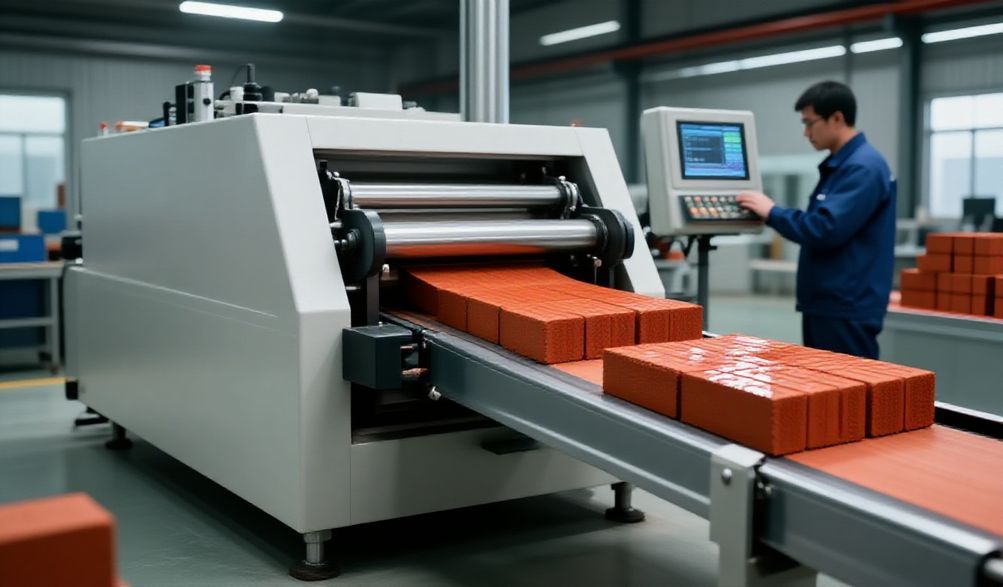
Jagorar Cikakkiyar Ku Na Injin Yin Tubalin Yumbu & Zaɓar Mai Ƙera Daidai
Gabatarwa
Zuba jari a cikin layin samar da bulo na yumbu babbar yanke shawara ce ta babban jari wacce za ta iya ayyana nasarar kasuwancin gine-ginenku, masana'antar bulo, ko kasuwancin kasuwanci na shekaru da yawa. Zuciyar wannan aikin ita ce injin yin bulo, kuma ruhin aikin ta na dogon lokaci shine masana'anta a bayansa.
Wannan cikakken jagora an tsara shi ne don ƙwararrun masu gine-gine, masu shukar bulo, da ƴan kasuwa waɗanda ke neman saka hannun jari a cikin ingantaccen samar da bulo na yumbu. Mun zurfafa cikin duniyar injinan yin bulo na yumbu, tare da mai da hankali kan abin da ke bambanta babban masana'anta. Yayin da muke yin la'akari da ka'idojin masana'antu da sunan kamfanonin da suka kafa kamarFUDDAManufarmu shi ne mu ba ku gogewa da kwarewa don yanke shawara mai inganci, mai kwarin gwiwa na siye wanda zai tabbatar da yawan aiki, inganci, da dawowar kuɗi na dogon lokaci aikin ku.
Kewayon kasuwa yana buƙatar fiye da kwatanta farashin kawai. Yana buƙatar fahimtar ƙa'idodin injiniya, hanyoyin samarwa, da muhimman abubuwan da ke raba abokan hulɗa masu daraja da masu kaya kawai. Mu fara.
Fahimtar Samar da Tubalin Yumɓu: Tsarin Aiki da Kayan Aiki na Asali
Kafin kimanta masana'anta, dole ne ku fahimci abin da kuke siye. Na'urar yin bulo na yumbu wani bangare ne na tsarin da aka tsara don canza kasa danye zuwa wani katako na gini mai karko, daidaitacce.
Tafiya daga Laka Mai Danye zuwa Bulo Da Aka Gama
Tsarin yin bulo na zamani abin al'ajabi ne na injiniyan masana'antu, yawanci yana bin waɗannan matakai masu mahimmanci:
- Shirya da Yumbu:Ana hako yumbu danye, ana murƙushe shi, kuma ana tace shi don cire duwatsu da tarkace. Daga nan sai a haɗa shi da ruwa kuma wani lokaci ana ƙara wasu abubuwa (kamar yashi ko tokar ƙura) don samun cikakkiyar lallausan daidaitaccen abun da ke ciki don gyare-gyare.
- Tsari/Gyare-gyare:Wannan shine ainihin aikin na'urar yin bulo. Ana tilasta yin yumbu da aka shirya cikin wani nau'i a ƙarƙashin matsi mai girma don samar da ginshiƙi mai ci gaba (tsawaitawa) ko bulo ɗaya-ɗaya (danna). Wani muhimmin tsari na ƙasa a nan shinekawar da iskawanda ke kawar da iskar iska don rage fashewa sosai da kuma ƙarfafa ƙarfin bulo.
- Bushewa:Brick-brick ɗin da aka yi da ruwa (wanda aka fi sani da "green bricks") ana bushe su a hankali don cire danshi. Ana yin hakan sau da yawa a cikin ɗakunan bushewa masu sarrafawa don hana karkacewa ko fashewa saboda rashin daidaiton asarar danshi.
- Kona/Kiln:Ana gasa busassun bulo a cikin murhu a yanayin zafi tsakanin digiri 900°C zuwa 1200°C. Wannan tsari yana ƙarfafa yumbu, yana ba wa bulo ƙarfinsa na ƙarshe, ƙarfi, launi, da juriyar yanayi.
Nau'ikan Injinan Yin Tubalin Yumbu
Zaɓar daidai nau'in na'ura ya dogara gaba ɗaya akan sikelin ku, kasafin ku, da ingancin abin da kuke so a fitar.
-
Matsatsawa da Latsawa:
- Matsalolin fitar da abutsoma yumbu ta cikin mataci don samar da ginshiƙi mai ci gaba, wanda daga nan ake yankewa zuwa bulo ɗaya-ɗaya. Suna da kyau sosai don samar da bulo mai ƙarfi, mai ramuka, ko maras tushe da yawa, kuma su ne ma'auni na masana'antu ga yawancin manyan masana'antu.
- Matsawa (like hydraulic or mechanical presses) compact less plastic clay into a mold under extreme pressure. They are often used for producing high-density, sharply defined bricks (like paving or refractory bricks) and can handle a wider variety of raw materials.
-
Na Hannu, Na Rabin Atomati, da Na Cikakken Atomati na'urori:
- Na'urorin Hannu: Low-cost, low-output options suitable for very small-scale or artisanal production. Labor-intensive and inconsistent.
- Matsin Injin Mai Ƙaramin Gudanarwa: A balanced choice for small to medium operations. They automate the core forming process (like extrusion and cutting) but may require manual handling for stacking or feeding.
- Matsarori Masu Sarrafa Kansu Gabaɗaya: The pinnacle of efficiency. These systems integrate clay feeding, forming, cutting, stacking, and sometimes even palletizing with robotic arms. They maximize output, minimize labor, and ensure consistent quality. This is where manufacturers like FUDDA and other industry leaders focus their engineering.
Key Machine Components That Define Performance
The quality of a machine is the sum of its parts. Scrutinize these components:
* Mixer: A robust, double-shaft mixer ensures homogeneous and perfectly tempered clay, which is foundational for quality extrusion.
* Extruder & De-Airing Unit: The heart of the machine. Look for a powerful, wear-resistant auger and a vacuum chamber that achieves a high level of de-airing (measured in vacuum pressure, e.g., -0.092 MPa or better).
* Cutter: A precision wire or gang cutter that creates clean, dimensionally accurate bricks without deforming the soft clay column.
* Tsarin Gudanarwa: A modern, user-friendly PLC (Programmable Logic Controller) interface allows for easy operation, troubleshooting, and adjustment of speed, pressure, and cutting length.
What Defines a Leading Clay Bricks Making Machine Manufacturer?
With the process understood, the critical question becomes: who do you trust to build this complex system? A leading manufacturer is defined by more than just a sales brochure.
Gogewa da Tabbacin Ƙwarewa & Tsawon Aiki a Masana'antu
In heavy machinery, history matters. A manufacturer with decades of operation has:
* Encountered and solved countless technical challenges.
* Refined their designs through real-world feedback.
* Built a global portfolio of working installations. When researching a name like KAMFANIN YIN BULALO NA FUDA, their track record of delivered projects across different continents speaks directly to tested reliability and adaptability.
Engineering Expertise & R&D Investment
The best manufacturers are not just workshops; they are innovation hubs. Key indicators include:
* A dedicated R&D team focused on improving energy efficiency, automation, and ease of maintenance.
* Patents on unique machine components or processes.
* Continuous updates to machine lines, incorporating newer, more durable materials and smarter control systems.
Ka'idojin Masana'antu da Kula da Ingancin Kayayyaki
The factory floor tells the true story. A top manufacturer will:
* Hold relevant international certifications (like ISO 9001 for quality management systems).
* Use premium, wear-resistant materials for critical components (e.g., Hardox steel for liners, high-grade alloys for augers).
* Employ rigorous in-house testing, including running machines under load before disassembly for shipping.
Comprehensive Service & Support
The machine’s purchase price is just the entry ticket. Long-term value comes from support.
* Shigarwa & Kaddamarwa: Do they provide expert engineers to supervise setup and ensure your plant runs from day one?
* Horarwa: Comprehensive, hands-on training for your operators and maintenance staff is non-negotiable.
* Kayan Gyara: A readily available, logically priced inventory of spare parts is crucial for minimizing costly downtime.
* Tallafin Fasaha: Access to responsive, knowledgeable support via phone, email, or remote diagnostics.
Spotlight on Key Considerations for Your Investment
Armed with manufacturer criteria, you must now align it with your specific needs.
Ƙididdigar Bukatun Samarwa
Be precise. Ambiguity here leads to an undersized or inefficient investment.
* Ƙarfin Fitowa: Calculate your required bricks per hour or per 8-hour shift. Factor in future growth.
* Brick Type & Versatility: Will you produce only standard solid bricks, or do you need to switch to perforated, hollow, or special shapes? Ensure the machine is adaptable.
* Kayan Aiki: Share samples of your clay with the manufacturer. Its composition (shale, soft mud, etc.) directly affects machine recommendations.
* Power & Utility Requirements: Understand the total connected load (electricity) and any requirements for water or compressed air.
Total Cost of Ownership (TCO) Analysis
Look beyond the initial quote. The true cost includes:
* Amfani da Makamashi: An efficient drive system and well-designed extruder can save significant electricity costs over years of operation.
* Kulawa da Kayayyakin Gyara: Machines built with quality components wear slower, and manufacturers with fair spare parts pricing reduce your ongoing OpEx.
* Machine Lifespan: A machine that runs reliably for 15+ years offers far better ROI than one that requires major overhauls after 5.
The Importance of Factory Visits & Client References
This is your most powerful due diligence tool.
* Factory Visit: Inspect the manufacturing facility. Observe the workflow, quality of welding, and housekeeping. Meet the engineering team.
* Abokan Kasuwanci: Insist on contacting 2-3 recent clients, preferably in a region similar to yours. Ask them about:
* Machine performance and uptime.
* Accuracy of the manufacturer’s claims.
* Responsiveness and effectiveness of after-sales service.
* Their overall kwarewa and satisfaction.
Ensuring a Successful Partnership with Your Manufacturer
The goal is a long-term partnership, not a one-time transaction. Set the stage for success.
Clear Communication & Customization Options
A good partner listens. They should ask detailed questions about your project and be willing to offer customized solutions, whether it’s a special die design, a unique brick size, or a specific plant layout. Their proposals should feel tailored, not generic.
Transparency in Quotations & Contracts
Scrutinize the quotation. It should clearly itemize:
* EXW/FOB/CIF pricing and responsibilities.
* A detailed scope of supply (every motor, cable, and tool included).
* Warranty terms (duration, what’s covered, and what’s excluded).
* Costs for installation, training, and commissioning if not included.
Post-Purchase Relationship
The relationship strengthens after payment. A trustworthy manufacturer will:
* Proactively check in during the first few months of operation.
* Have a system for you to easily order spare parts.
* Inform you of software updates or upgrade kits for your machine model in the future.
Tambayoyin da ake yawan yi (FAQ)
Q: What is the typical lead time for a clay brick making machine from order to delivery?
A: Lead times vary significantly based on machine complexity and manufacturer backlog. For a standard automatic machine, expect 30-60 days for production after order confirmation, plus 30-45 days for sea shipping. Fully customized or large turnkey plants will take longer. Always get a written timeline estimate.
Q: Can a manufacturer like FUDA provide a complete turnkey plant solution, not just individual machines?
A: Reputable, established manufacturers often offer turnkey solutions. This includes plant design, all machinery (from crusher and mixer to the brick machine and stacker), kiln recommendations, installation, and commissioning. This single-point responsibility can streamline the entire project.
Q: How do I evaluate the energy efficiency of different clay brick machines?
A: Request the specific power rating (in kW) of the main drive motor and vacuum pump. Compare these figures for machines of similar output. Also, inquire about energy-saving features like variable frequency drives (VFDs) on motors, which match power consumption to the load, reducing waste.
Q: What kind of after-sales training is usually provided for operating and maintaining the equipment?
A: Comprehensive training should cover daily operation, routine maintenance (greasing, inspection), basic troubleshooting, and safety procedures. It typically involves both classroom instruction and hands-on practice at your installed plant, conducted by the commissioning engineers. Training manuals and video guides should also be provided.
Q: Are there machines suitable for small-scale startup operations that can be scaled up later?
A: Yes. Many manufacturers offer modular semi-automatic lines with a clear upgrade path. You might start with a core extruder and manual handling, then later add an automatic cutter, stacker, and palletizer. Discuss your growth vision upfront so the initial machine can be selected with future compatibility in mind.
Ƙarshe
Choosing the right clay bricks making machine manufacturer is a strategic decision that impacts your operational efficiency and product quality for years. It is an investment in a partnership as much as in a piece of equipment.
Prioritize manufacturers who demonstrate deep Ƙwarewa in engineering, a proven track record of kwarewa with successful global installations, and a commitment to amintacce through robust support, transparent dealings, and a client-first approach. The most reliable path to success is thorough research, including factory visits and direct conversations with existing customers.
Use this guide as a framework to ask the right questions. By doing so, you will find a manufacturing partner that truly aligns with your production goals and becomes a cornerstone of your growth vision.
<