
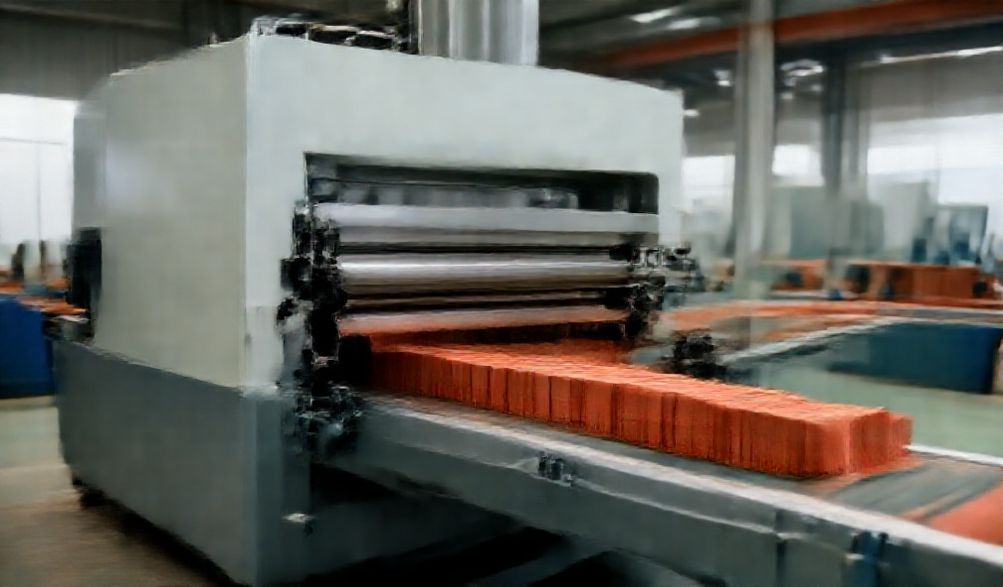
Die Ultieme Gids vir China Vaste Baksteenmaakmasjiene: Kwaliteit, Koste & Hoe om te Kies
In 'n era van vinnige globale verstedeliking en infrastruktuurontwikkeling, was die vraag na duursame, bekostigbare en geredelik beskikbare konstruksiemateriaal nog nooit hoër nie. Die kern van hierdie voorsieningsketting is 'n fundamentele komponent: die soliede baksteen. Vir entrepreneurs, konstruksiemaatskappye en regerings wat baksteenproduksie wil vestig of uitbrei, het die masjineriebron oorweldigend duidelik geword. China het sy posisie as die onbetwiste episentrum vir die vervaardiging van robuuste, innoverende en koste-effektiewe soliede baksteenmaakmasjinerie verskans.
Tog bied die navigering van hierdie uitgestrekte en dinamiese mark 'n beduidende uitdaging. Die landskap is gevul met duisende vervaardigers, wat wissel van wêreldklas-ingenieursfirmas tot minder gesogte werkswinkels. Variasies in gehalte, prys, deursigtigheid en navoringsondersteuning kan 'n belowende belegging in 'n duur kopseer omskep. Hierdie gids dien as jou omvattende, kundige-geleide hulpbron. Ons sal deur die geraas sny, met behulp van diep bedryfsinsigte, tegniese analise en praktiese verkrygingswysheid, om jou in staat te stel om 'n ingeligte, selfversekerde en suksesvolle aankoopbesluit te neem. Kom ons bou daardie kennis van die grond af op.
Hoekom China die Soliede Baksteenmasjienmark Oorheers
VerstaanhoekomChina lei hierdie bedryf is die eerste stap om wys te bekom. Dit is nie toevallig nie; dit is die resultaat van dekades van strategiese ontwikkeling en industriële evolusie.
'n Erfenis van Vervaardigingskaal en Kennis
China se titel as die "wêreld se fabriek" is besonder van toepassing op swaar masjinerie. Vir meer as 30 jaar het die land ongeëwenaarde ekosisteme vir vervaardiging ontwikkel. In die baksteenmasjinerie-sektor het dit gelei tot die vorming van kragtige industriële groepe in provinsies soosShandong, Fujian en Henan..
Hierdie trosse skep 'n kragtige sinergie. Binne 'n gekonsentreerde geografiese gebied vind jy:
* Gespesialiseerde gieterye en staalverskaffers.
* Vervaardigers van hidrouliese komponente en elektriese panele.
* Deskundige vorm- en matryswerkswinkels.
* 'n Diep poel van bekwame sweisers, passers en ingenieurs.
Hierdie geïntegreerde voorsieningsketting verminder drasties produksietyd en koste, terwyl dit 'n omgewing van voortdurende innovasie en mededinging onder vervaardigers bevorder.
Onklopbare Prys-tot-Prestasie-Verhouding
Dit is dikwels die hoofaantrekkingskrag vir internasionale kopers, en met goeie rede. Chinese soliede baksteenmasjiene bied tipies 'n oortuigende waarde-proposisie wat moeilik is om te ewenaar.
Die mededingende pryse spruit voort uit:
* Skaalvoordele:Massiewe produksievolumes versprei vaste koste (navorsing en ontwikkeling, gereedskap) oor baie eenhede.
* Geïntegreerde Voorsieningskettings:Soos genoem, plaaslike en doeltreffende verkryging van komponente hou insetkoste laag.
* Geskoold Arbeid teen Mededingende Tariewe:'n Groot arbeidsmag met relevante tegniese vaardighede dra by tot laer monteringskoste.
Dit is noodsaaklik om dit korrek te raam: dit is nienetdit gaan nie oor om die goedkoopste te wees nie. Dit gaan oor toegang tot 'n vlak van masjienvermoë en outomatisering wat, wanneer dit uit Europa of Noord-Amerika verkry word, dikwels 'n premie het wat tot 2 of 3 keer hoër kan wees. Chinese vervaardigers het dit bemeester om robuuste funksionaliteit teen 'n toeganklike prys te lewer.
Tegnologiese Vooruitgang en Aanpasbaarheid
Verby is die dae toe "Made in China" basiese, na-aap-tegnologie beteken het. Die voorste Chinese vervaardigers is aan die voorpunt van baksteenmasjien-innovasie.
Moderne masjiene beskik nou gereeld oor:
* PLC (Programmable Logic Controller) Stelsels:Vir geoutomatiseerde, presiese en herhaalbare bedryfssiklusse.
* Energie-Doeltreffende Ontwerpe:Die inkorporering van veranderlike spoed-aandrywing en geoptimaliseerde hidrouliese stelsels om kragverbruik te verminder—’n groot operasionele koste.
* Semi- en Volle Outomatisering:Van outomatiese materiaaltoevoer en baksteenstapeling tot robotmatige palethantering, wat arbeidsbehoeftes verminder en veiligheid verbeter.
Verder het Chinese ingenieurs kundiges geword inaanpassingHulle kan 'n masjien se ontwerp aanpas om optimaal te werk met jou spesifieke plaaslike grondstowwe, of dit nou klei, vliegas, skalie of 'n betonmengsel is, en om die presiese baksteen grootte, vorm en druksterkte te vervaardig wat jou mark vereis.
Sleuteltipes Vaste Baksteenvervaardigingsmasjiene uit China
Nie alle baksteenmasjiene is gelyk geskep nie. Die sukses van jou projek hang af van die keuse van die regte tipe tegnologie vir jou behoeftes. Hier is 'n uiteensetting van die hoofkategorieë.
Hidrouliese Persmasjiene (Vir Hoëdigtheid, Presisie Bakstene)
Werkbeginsel:Hierdie masjiene gebruik 'n hoëdruk hidrouliese stelsel om rou materiaal in 'n vorm saam te pers. Die druk word bestendig toegepas en kan presies beheer word.
- Beste Vir:Produseer hoësterkte, eenvormige soliede bakstene, hoëkwaliteit plaveisels, randstene en ineenvoublokke waar presisie en voortreflike afwerking van kritieke belang is.
- Voordele:
- Produces bricks with excellent density and compressive strength.
- Smooth, consistent finish on all brick faces.
- Generally quieter operation than vibratory machines.
- Highly versatile for different products with mold changes.
- Nadele:
- Higher initial investment cost.
- Cycle time can be slower than vibratory compaction, potentially yielding lower hourly output for standard bricks.
- The hydraulic system requires careful maintenance.
Vibratory Compaction Machines (For High-Volume Output)
Werkbeginsel: These machines use a combination of powerful vibration and mechanical pressure to compact material inside a mold. The vibration helps to remove air pockets and densely pack the material.
- Beste Vir: Large-scale production of standard solid clay or concrete bricks where high output volume is the primary goal.
- Voordele:
- Very high production speed (cycle time can be under 15 seconds).
- Rugged construction designed for 24/7 continuous operation.
- Often more straightforward mechanically than complex hydraulic systems.
- Highly effective for standard brick formats.
- Nadele:
- Operation can be significantly noisier.
- Bricks may have slightly lower density and surface finish compared to top-tier hydraulic presses.
- More limited in producing highly intricate or large-format blocks.
Manual & Semi-Automatic Machines (For Small Business & Startups)
Werkbeginsel: These are simple, often lever-operated or small electrically-powered machines that require significant human intervention for material feeding, compaction, and brick ejection.
- Beste Vir: Entrepreneurs with low startup capital, very small-scale projects, community-based building initiatives, or areas with unreliable electricity.
- Voordele:
- Extremely low purchase cost.
- Simple to maintain and repair locally.
- Minimal or no power requirements for manual models.
- Portable and easy to set up.
- Nadele:
- Very low output (often hundreds of bricks per day, not per hour).
- Labor-intensive and physically demanding.
- Brick quality is highly dependent on operator skill, leading to potential inconsistency.
The Essential Buyer’s Checklist: How to Select a Reliable Supplier
This is the most critical phase of your journey. Diligent supplier vetting is your primary shield against risk.
Verifying Manufacturer Credentials & Experience
Don’t take a website at face value. Conduct due diligence:
* Business License & Factory Audit: Insist on seeing their official business license (you can ask a local agent to verify it via China’s Administration for Industry and Commerce – AIC). A mandatory virtual factory tour via video call is non-negotiable. Look for organization, workflow, and the quality of work in progress.
* Industry Certifications: While not a guarantee, certifications like ISO 9001(Kwaliteitsbestuur) enCE (for export to many markets) indicate a commitment to systematic processes and safety standards.
* Portfolio & Client References: Ask for detailed photos and videos of machines they have produced and installed. Most importantly, request contact information for 2-3 past international clients in a region similar to yours. Take the time to speak with them.
Assessing Machine Quality Beyond the Brochure
The specification sheet tells only part of the story. Drill down into the details:
* Kernkomponente: Specify and verify the brands of critical parts. For hydraulics, ask for Rexroth, Kawasaki, or Yuken. For PLCs, Siemens or Mitsubishi are top-tier. For molds, inquire about the grade and hardness of the steel used. A machine built with reputable components will last longer and perform better.
* Production Data & Testing: Request actual, verified production data (bricks per hour under specific conditions) and a brick quality report. The gold standard is to send a sample of your raw materials to the factory for them to conduct a live test and send you the resulting bricks for your own evaluation.
* Build Quality & Safety: During your video tour, look at weld quality (should be clean and even), the thickness of structural steel, and the presence of essential safety features like mechanical guards, emergency stop buttons, and electrical safety interlocks.
Understanding the Total Cost of Ownership (TCO)
The machine price is just the entry ticket. Smart buyers budget for the TCO:
* Cost Breakdown:
* Machine FOB Price
* Shipping, Insurance, and Logistics to your port
* Import Duties and Taxes (consult a local customs broker)
* Installation & Commissioning (by their engineer or a local technician)
* Initial Spare Parts Kit (at least 1-2% of machine cost)
* Operator & Maintenance Training
* After-Sales Service Agreement: This is your long-term safety net. The contract must clearly state:
* Warranty period (typically 12 months for parts, excluding wear items).
* Response time for technical support (e.g., 24-hour remote support via WhatsApp/Video).
* Spare parts pricing policy and guaranteed lead time for shipment.
* Terms for an engineer’s on-site visit (cost, duration, responsibilities).
* Bedryfskoste: Calculate estimated energy consumption (kW per hour) and understand the routine maintenance schedule (daily greasing, weekly checks, etc.).
Navigating the Procurement Process: From Inquiry to Installation
A structured process prevents misunderstandings and ensures a smooth transaction.
Step 1: Detailed RFQ and Technical Communication
Start with a comprehensive Request for Quotation (RFQ). A good RFQ should include:
* Raw Material Analysis: Type, composition, moisture content, particle size.
* Brikspesifikasies: Desired final size, weight, density, and minimum compressive strength.
* Production Requirement: Target output (bricks per 8-hour shift).
* Site Conditions: Available power supply (voltage, phase), factory space, and ceiling height.
* Preferred Level of Automation: Manual feeding? Automatic stacking?
This clarity allows suppliers to provide accurate proposals and shows you are a serious buyer.
Step 2: Negotiation, Contract, and Payment Security
- Payment Terms: Standard terms are often 30% deposit via T/T (Telegraphic Transfer), 70% balance against copy of Bill of Lading. Consider using Escrow services (like Alibaba Trade Assurance) for added security, especially with new suppliers.
- The Contract: This must be detailed and in English. It should include, as appendices: Final Technical Specifications, Warranty Terms, Accepted Payment Terms, Delivery Schedule, and Penalty Clauses for late delivery or performance shortfalls. Do not proceed without a signed contract.
Step 3: Logistics, Customs Clearance, and Installation
- Shipping: Understand Incoterms. FOB (Vry aan Boord) is common, where you control the main shipping and insurance. CIF (Koste, Versekering en Vrag) means the supplier arranges it to your port. Using a reliable freight forwarder is highly recommended.
- Key Documents: Ensure you receive and check: Commercial Invoice, Packing List, Bill of Lading, Certificate of Origin, and any required manuals in advance.
- Installation: Clarify who is responsible. Will the supplier send an engineer (at whose cost?), or will they provide detailed installation manuals and video guides for your local team? On-site commissioning is invaluable for starting up correctly.
Frequently Asked Questions (FAQ)
Q1: What is the typical price range for a China-made solid brick making machine?
A: Prices vary dramatically based on type and automation. A small manual machine can start around $3 000 – $8 000. A robust semi-automatic vibratory machine may range from $15,000 – $40,000. A fully automatic hydraulic production line with feeding and stacking systems can range from $50,000 to $150,000+. The key is to get detailed quotes based on your specific RFQ.
Q2: How can I ensure the machine quality without visiting China?
A: A comprehensive virtual factory tour is essential. Furthermore, insist on a live performance test using a sample of your raw materials, which they should courier back to you. Request high-resolution videos of the machine in action for other clients, focusing on the operation, the bricks produced, and the final packing for shipment.
Q3: What is the lead time for production and delivery?
A: For a standard model, production typically takes 20-35 days. Sea freight can add 30-45 days to major ports worldwide, plus time for customs clearance at your destination (5-10 days). For large, custom-designed lines, production can take 60-90 days. Always build buffer time into your project plan.
Q4: Do Chinese suppliers provide training and operational manuals?
A: Reputable suppliers absolutely should. Your contract must stipulate the provision of clear English-language operation manuals, maintenance guides, electrical circuit diagrams, and parts lists. Basic training is often included—either via detailed videos, online sessions, or, preferably, from their engineer during on-site installation.
Q5: How do I handle machine breakdowns and spare parts?
A: This underscores the importance of the after-sales agreement. Start by purchasing a recommended initial spare parts kit. For breakdowns, the supplier should first provide remote troubleshooting via video call. If a part is needed under warranty, they should ship it promptly. Post-warranty, you should have a clear process and price list for ordering spare parts. Building a good relationship with your supplier is key here.
Conclusion
Sourcing a solid brick making machine from China presents a tremendous opportunity: access to advanced, reliable, and highly customizable manufacturing technology at a value-driven price point. However, this opportunity is only fully realized through meticulous supplier vetting, clear technical communication, and a focus on building a partnership, not just making a one-time purchase.
Remember, the true measure of your investment is not the sticker price, but the Totale Eienaarskyskoste and the strength of the After-Sales Support behind it. By applying the insights from this guide—verifying credentials, understanding the technology, and managing the procurement process step-by-step—you transform from a hopeful buyer into an informed partner. You are now equipped to make a decision that will lay a solid, profitable foundation for your brick-making business for years to come.
<