
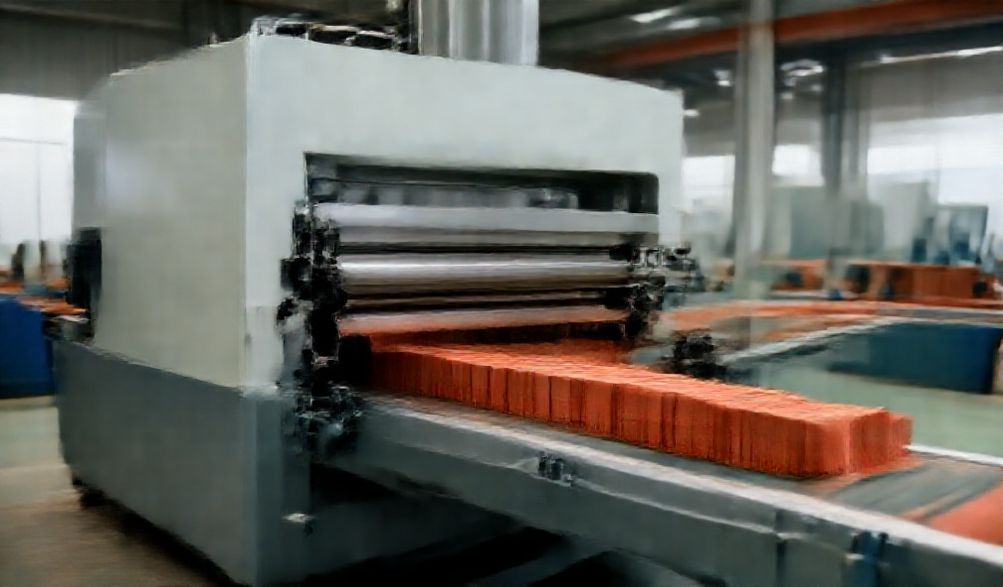
中国实心砖制砖机终极指南:品质、成本与选购技巧
Dans une ère d'urbanisation mondiale rapide et de développement des infrastructures, la demande de matériaux de construction durables, abordables et facilement disponibles n'a jamais été aussi forte. Au cœur de cette chaîne d'approvisionnement se trouve un composant fondamental : la brique pleine. Pour les entrepreneurs, les entreprises de construction et les gouvernements qui cherchent à établir ou à développer une production de briques, la source de la machinerie est devenue extrêmement évidente. La Chine a consolidé sa position en tant qu'épicentre incontesté de la fabrication de machines à fabriquer des briques pleines, robustes, innovantes et rentables.
Cependant, naviguer sur ce vaste marché dynamique représente un défi de taille. Le paysage est rempli de milliers de fabricants, allant d'entreprises d'ingénierie de classe mondiale à des ateliers moins réputés. Les variations de qualité, de prix, de transparence et de support après-vente peuvent transformer un investissement prometteur en un casse-tête coûteux. Ce guide constitue votre ressource complète, guidée par des experts. Nous allons couper court au bruit ambiant, en nous appuyant sur une connaissance approfondie du secteur, des analyses techniques et une sagesse pratique en matière d'approvisionnement, pour vous permettre de prendre une décision d'achat éclairée, confiante et réussie. Bâtissons ces connaissances à partir des bases.
Pourquoi la Chine Domine le Marché des Machines à Briques Pleines
ComprendrePourquoiLa Chine mène cette industrie, ce qui est la première étape pour s'approvisionner judicieusement. Ce n'est pas une coïncidence ; c'est le résultat de décennies de développement stratégique et d'évolution industrielle.
Un héritage d'échelle et d'expertise manufacturière
Le titre de la Chine en tant qu'"usine du monde" est particulièrement adapté pour les machines lourdes. Depuis plus de 30 ans, le pays a développé des écosystèmes de fabrication sans équivalent. Dans le secteur des machines à briques, cela a conduit à la formation de puissants clusters industriels dans des provinces comme山东,福建,河南.
Ces regroupements créent une synergie puissante. Dans une zone géographique concentrée, on trouve :
* Fonderies et fournisseurs d'acier spécialisés.
* Fabricants de composants hydrauliques et de tableaux électriques.
* Ateliers experts en moules et matrices.
* Un vivier important de soudeurs, monteurs et ingénieurs qualifiés.
Cette chaîne d'approvisionnement intégrée réduit considérablement le temps et le coût de production, tout en favorisant un environnement d'innovation continue et de concurrence entre les fabricants.
Rapport qualité-prix imbattable
C'est souvent l'attrait principal pour les acheteurs internationaux, et pour une bonne raison. Les machines chinoises de fabrication de briques pleines offrent généralement un rapport qualité-prix convaincant, difficile à égaler.
La compétitivité des prix provient de :
* Économies d'échelle :Les volumes de production massifs répartissent les coûts fixes (R&D, outillage) sur de nombreuses unités.
* Chaînes d'Approvisionnement Intégrées:Comme mentionné, s'approvisionner en composants localement et efficacement permet de maintenir les coûts des intrants à un niveau bas.
* Main-d'œuvre qualifiée à des tarifs compétitifs :Une main-d'œuvre nombreuse dotée de compétences techniques pertinentes contribue à réduire les coûts d'assemblage.
Il est crucial de bien cadrer cela : ce n'est pasjusteIl ne s'agit pas d'être le moins cher. Il s'agit d'accéder à un niveau de capacité et d'automatisation des machines qui, lorsqu'il provient d'Europe ou d'Amérique du Nord, s'accompagne souvent d'une prime pouvant être 2 à 3 fois plus élevée. Les fabricants chinois ont maîtrisé l'art de fournir des fonctionnalités robustes à un prix accessible.
Avancement technologique et adaptabilité
"Fabriqué en Chine" ne signifie plus des technologies basiques et des copies. Les principaux fabricants chinois sont à la pointe de l'innovation dans les machines à briques.
Les machines modernes intègrent désormais couramment :
* Systèmes PLC (Contrôleurs Logiques Programmables) :Pour des cycles d'opération automatisés, précis et reproductibles.
* Conceptions Écoénergétiques :Intégrer des variateurs de vitesse et des systèmes hydrauliques optimisés pour réduire la consommation d'énergie, un coût opérationnel majeur.
* Semi et Automatisation Complète :De l'alimentation automatique des matériaux à l'empilage des briques, en passant par la manutention robotisée des palettes, cela réduit les besoins en main-d'œuvre et améliore la sécurité.
De plus, les ingénieurs chinois sont devenus des experts danspersonnalisationIls peuvent adapter la conception d'une machine pour qu'elle fonctionne de manière optimale avec vos matières premières locales spécifiques, qu'il s'agisse d'argile, de cendres volantes, de schiste ou d'un mélange de béton, et pour produire la taille, la forme et la résistance à la compression exactes de brique que votre marché exige.
Principaux Types de Machines à Fabriquer des Briques Pleines en Chine
Toutes les machines à briques ne sont pas créées égales. Le succès de votre projet dépend du choix de la technologie adaptée à vos besoins. Voici un aperçu des principales catégories.
Presses Hydrauliques (Pour Briques de Haute Densité et de Précision)
Principe de fonctionnement :Ces machines utilisent un système hydraulique haute pression pour comprimer la matière première dans un moule. La pression est appliquée de manière constante et peut être contrôlée avec précision.
- Idéal pour : Producing high-strength, uniform solid bricks, high-quality pavers, kerbstones, and interlocking blocks where precision and superior finish are critical.
- Avantages :
- Produces bricks with excellent density and compressive strength.
- Smooth, consistent finish on all brick faces.
- Generally quieter operation than vibratory machines.
- Highly versatile for different products with mold changes.
- Inconvénients :
- Higher initial investment cost.
- Cycle time can be slower than vibratory compaction, potentially yielding lower hourly output for standard bricks.
- The hydraulic system requires careful maintenance.
Vibratory Compaction Machines (For High-Volume Output)
Principe de fonctionnement : These machines use a combination of powerful vibration and mechanical pressure to compact material inside a mold. The vibration helps to remove air pockets and densely pack the material.
- Idéal pour : Large-scale production of standard solid clay or concrete bricks where high output volume is the primary goal.
- Avantages :
- Very high production speed (cycle time can be under 15 seconds).
- Rugged construction designed for 24/7 continuous operation.
- Often more straightforward mechanically than complex hydraulic systems.
- Highly effective for standard brick formats.
- Inconvénients :
- Operation can be significantly noisier.
- Bricks may have slightly lower density and surface finish compared to top-tier hydraulic presses.
- More limited in producing highly intricate or large-format blocks.
Manual & Semi-Automatic Machines (For Small Business & Startups)
Principe de fonctionnement : These are simple, often lever-operated or small electrically-powered machines that require significant human intervention for material feeding, compaction, and brick ejection.
- Idéal pour : Entrepreneurs with low startup capital, very small-scale projects, community-based building initiatives, or areas with unreliable electricity.
- Avantages :
- Extremely low purchase cost.
- Simple to maintain and repair locally.
- Minimal or no power requirements for manual models.
- Portable and easy to set up.
- Inconvénients :
- Very low output (often hundreds of bricks per day, not per hour).
- Labor-intensive and physically demanding.
- Brick quality is highly dependent on operator skill, leading to potential inconsistency.
The Essential Buyer’s Checklist: How to Select a Reliable Supplier
This is the most critical phase of your journey. Diligent supplier vetting is your primary shield against risk.
Verifying Manufacturer Credentials & Experience
Don’t take a website at face value. Conduct due diligence:
* Business License & Factory Audit: Insist on seeing their official business license (you can ask a local agent to verify it via China’s Administration for Industry and Commerce – AIC). A mandatory virtual factory tour via video call is non-negotiable. Look for organization, workflow, and the quality of work in progress.
* Certifications Professionnelles : While not a guarantee, certifications like ISO 9001(Gestion de la Qualité) etCE (for export to many markets) indicate a commitment to systematic processes and safety standards.
* Portfolio & Client References: Ask for detailed photos and videos of machines they have produced and installed. Most importantly, request contact information for 2-3 past international clients in a region similar to yours. Take the time to speak with them.
Assessing Machine Quality Beyond the Brochure
The specification sheet tells only part of the story. Drill down into the details:
* Composants de base : Specify and verify the brands of critical parts. For hydraulics, ask for Rexroth, Kawasaki, or Yuken. For PLCs, Siemens or Mitsubishi are top-tier. For molds, inquire about the grade and hardness of the steel used. A machine built with reputable components will last longer and perform better.
* Production Data & Testing: Request actual, verified production data (bricks per hour under specific conditions) and a brick quality report. The gold standard is to send a sample of your raw materials to the factory for them to conduct a live test and send you the resulting bricks for your own evaluation.
* Build Quality & Safety: During your video tour, look at weld quality (should be clean and even), the thickness of structural steel, and the presence of essential safety features like mechanical guards, emergency stop buttons, and electrical safety interlocks.
Understanding the Total Cost of Ownership (TCO)
The machine price is just the entry ticket. Smart buyers budget for the TCO:
* Cost Breakdown:
* Machine FOB Price
* Shipping, Insurance, and Logistics to your port
* Import Duties and Taxes (consult a local customs broker)
* Installation & Commissioning (by their engineer or a local technician)
* Initial Spare Parts Kit (at least 1-2% of machine cost)
* Operator & Maintenance Training
* After-Sales Service Agreement: This is your long-term safety net. The contract must clearly state:
* Warranty period (typically 12 months for parts, excluding wear items).
* Response time for technical support (e.g., 24-hour remote support via WhatsApp/Video).
* Spare parts pricing policy and guaranteed lead time for shipment.
* Terms for an engineer’s on-site visit (cost, duration, responsibilities).
* Coûts opérationnels : Calculate estimated energy consumption (kW per hour) and understand the routine maintenance schedule (daily greasing, weekly checks, etc.).
Navigating the Procurement Process: From Inquiry to Installation
A structured process prevents misunderstandings and ensures a smooth transaction.
Step 1: Detailed RFQ and Technical Communication
Start with a comprehensive Request for Quotation (RFQ). A good RFQ should include:
* Raw Material Analysis: Type, composition, moisture content, particle size.
* Spécifications des Briques : Desired final size, weight, density, and minimum compressive strength.
* Production Requirement: Target output (bricks per 8-hour shift).
* Conditions du site : Available power supply (voltage, phase), factory space, and ceiling height.
* Preferred Level of Automation: Manual feeding? Automatic stacking?
This clarity allows suppliers to provide accurate proposals and shows you are a serious buyer.
Step 2: Negotiation, Contract, and Payment Security
- Payment Terms: Standard terms are often 30% deposit via T/T (Telegraphic Transfer), 70% balance against copy of Bill of Lading. Consider using Escrow services (like Alibaba Trade Assurance) for added security, especially with new suppliers.
- The Contract: This must be detailed and in English. It should include, as appendices: Final Technical Specifications, Warranty Terms, Accepted Payment Terms, Delivery Schedule, and Penalty Clauses for late delivery or performance shortfalls. Do not proceed without a signed contract.
Step 3: Logistics, Customs Clearance, and Installation
- Shipping: Understand Incoterms. FOB (Franco à Bord) is common, where you control the main shipping and insurance. CIF (Coût, Assurance et Fret) means the supplier arranges it to your port. Using a reliable freight forwarder is highly recommended.
- Key Documents: Ensure you receive and check: Commercial Invoice, Packing List, Bill of Lading, Certificate of Origin, and any required manuals in advance.
- Installation: Clarify who is responsible. Will the supplier send an engineer (at whose cost?), or will they provide detailed installation manuals and video guides for your local team? On-site commissioning is invaluable for starting up correctly.
Foire aux Questions (FAQ)
Q1: What is the typical price range for a China-made solid brick making machine?
A: Prices vary dramatically based on type and automation. A small manual machine can start around 3 000 $ – 8 000 $. A robust semi-automatic vibratory machine may range from 15 000 $ – 40 000 $. A fully automatic hydraulic production line with feeding and stacking systems can range from $50,000 to $150,000+. The key is to get detailed quotes based on your specific RFQ.
Q2: How can I ensure the machine quality without visiting China?
A: A comprehensive virtual factory tour is essential. Furthermore, insist on a live performance test using a sample of your raw materials, which they should courier back to you. Request high-resolution videos of the machine in action for other clients, focusing on the operation, the bricks produced, and the final packing for shipment.
Q3: What is the lead time for production and delivery?
A: For a standard model, production typically takes 20-35 days. Sea freight can add 30-45 days to major ports worldwide, plus time for customs clearance at your destination (5-10 days). For large, custom-designed lines, production can take 60-90 days. Always build buffer time into your project plan.
Q4: Do Chinese suppliers provide training and operational manuals?
A: Reputable suppliers absolutely should. Your contract must stipulate the provision of clear English-language operation manuals, maintenance guides, electrical circuit diagrams, and parts lists. Basic training is often included—either via detailed videos, online sessions, or, preferably, from their engineer during on-site installation.
Q5: How do I handle machine breakdowns and spare parts?
A: This underscores the importance of the after-sales agreement. Start by purchasing a recommended initial spare parts kit. For breakdowns, the supplier should first provide remote troubleshooting via video call. If a part is needed under warranty, they should ship it promptly. Post-warranty, you should have a clear process and price list for ordering spare parts. Building a good relationship with your supplier is key here.
Conclusion
Sourcing a solid brick making machine from China presents a tremendous opportunity: access to advanced, reliable, and highly customizable manufacturing technology at a value-driven price point. However, this opportunity is only fully realized through meticulous supplier vetting, clear technical communication, and a focus on building a partnership, not just making a one-time purchase.
Remember, the true measure of your investment is not the sticker price, but the Coût Total de Possession and the strength of the After-Sales Support behind it. By applying the insights from this guide—verifying credentials, understanding the technology, and managing the procurement process step-by-step—you transform from a hopeful buyer into an informed partner. You are now equipped to make a decision that will lay a solid, profitable foundation for your brick-making business for years to come.
<