
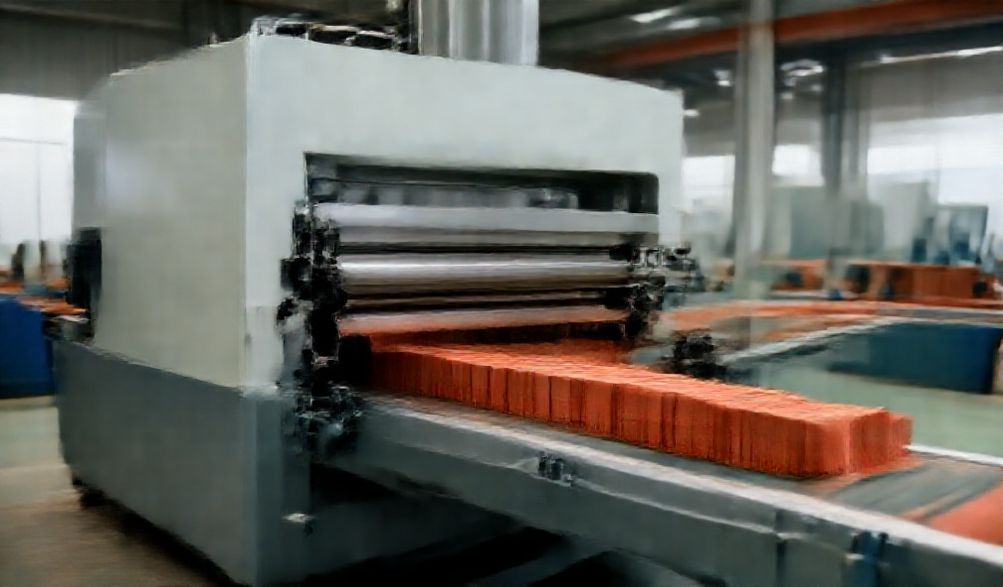
Guia Definitivo para Máquinas de Fabricação de Tijolos Maciços na China: Qualidade, Custo e Como Escolher
Em uma era de rápida urbanização global e desenvolvimento de infraestrutura, a demanda por materiais de construção duráveis, acessíveis e prontamente disponíveis nunca foi tão alta. No centro dessa cadeia de suprimentos está um componente fundamental: o tijolo maciço. Para empreendedores, construtoras e governos que buscam estabelecer ou expandir a produção de tijolos, a fonte de maquinário tornou-se esmagadoramente clara. A China consolidou sua posição como o epicentro inquestionável para a fabricação de máquinas robustas, inovadoras e de custo-benefício para a produção de tijolos maciços.
No entanto, navegar por esse vasto e dinâmico mercado apresenta um desafio significativo. O cenário está repleto de milhares de fabricantes, variando desde empresas de engenharia de classe mundial até oficinas menos renomadas. Variações na qualidade, preço, transparência e suporte pós-venda podem transformar um investimento promissor em uma dor de cabeça dispendiosa. Este guia serve como seu recurso abrangente e orientado por especialistas. Vamos cortar o ruído, baseando-nos em insights profundos do setor, análises técnicas e sabedoria prática de compras para capacitá-lo a tomar uma decisão de compra informada, confiante e bem-sucedida. Vamos construir esse conhecimento desde a base.
Por que a China Domina o Mercado de Máquinas de Tijolos Maciços
Compreensãopor queA China liderar esta indústria é o primeiro passo para um fornecimento inteligente. Não é coincidência; é o resultado de décadas de desenvolvimento estratégico e evolução industrial.
Um Legado de Escala e Expertise em Manufatura
O título da China como a "fábrica do mundo" é especialmente adequado para maquinário pesado. Por mais de 30 anos, o país desenvolveu ecossistemas de manufatura incomparáveis. No setor de máquinas para tijolos, isso levou à formação de poderosos aglomerados industriais em províncias comoShandong, Fujian e Henan.
Esses aglomerados criam uma sinergia poderosa. Em uma área geográfica concentrada, você encontra:
* Fundições e fornecedores de aço especializados.
* Fabricantes de componentes hidráulicos e painéis elétricos.
* Oficinas especializadas em moldes e matrizes.
* Um grande contingente de soldadores, montadores e engenheiros qualificados.
Esta cadeia de suprimentos integrada reduz drasticamente o tempo e o custo de produção, ao mesmo tempo que promove um ambiente de inovação contínua e competição entre os fabricantes.
Relação Preço-Desempenho Imbatível
Este é frequentemente o principal atrativo para compradores internacionais, e por uma boa razão. As máquinas chinesas para fabricação de tijolos maciços geralmente oferecem uma proposta de valor convincente que é difícil de igualar.
A precificação competitiva decorre de:
* Economias de Escala:Os grandes volumes de produção distribuem os custos fixos (P&D, ferramentaria) por muitas unidades.
* Cadeias de Abastecimento Integradas:Como mencionado, a obtenção de componentes localmente e de forma eficiente mantém os custos de insumos baixos.
* Mão de Obra Qualificada a Preços Competitivos:Uma grande força de trabalho com habilidades técnicas relevantes contribui para custos de montagem mais baixos.
É crucial enquadrar isso corretamente: não éapenasNão se trata de ser o mais barato. Trata-se de acessar um nível de capacidade da máquina e automação que, quando proveniente da Europa ou América do Norte, frequentemente vem com um preço premium que pode ser 2 a 3 vezes maior. Os fabricantes chineses dominaram a entrega de funcionalidades robustas a um preço acessível.
Avanço Tecnológico e Adaptabilidade
Os dias em que "Made in China" implicava tecnologia básica e copiada já se foram. Os principais fabricantes chineses estão na vanguarda da inovação em máquinas de tijolos.
As máquinas modernas agora apresentam rotineiramente:
* Sistemas PLC (Controlador Lógico Programável):Para ciclos de operação automatizados, precisos e repetíveis.
* Projetos de Eficiência Energética:Incorporando acionamentos de velocidade variável e sistemas hidráulicos otimizados para reduzir o consumo de energia—um grande custo operacional.
* Semi e Automação Total:Desde a alimentação automática de materiais e empilhamento de tijolos até o manuseio robótico de paletes, reduzindo a necessidade de mão de obra e melhorando a segurança.
Além disso, os engenheiros chineses se tornaram especialistas empersonalizaçãoEles podem adaptar o design de uma máquina para funcionar de forma ideal com suas matérias-primas locais específicas, seja argila, cinzas volantes, xisto ou uma mistura de concreto, e para produzir o tamanho exato do tijolo, formato e resistência à compressão que o seu mercado exige.
Principais Tipos de Máquinas de Fabricação de Tijolos Maciços da China
Nem todas as máquinas de tijolos são criadas iguais. O sucesso do seu projeto depende da escolha do tipo certo de tecnologia para suas necessidades. Aqui está uma análise das principais categorias.
Máquinas de Prensagem Hidráulica (Para Tijolos de Alta Densidade e Precisão)
Princípio de Funcionamento:Essas máquinas utilizam um sistema hidráulico de alta pressão para comprimir a matéria-prima em um molde. A pressão é aplicada de forma constante e pode ser controlada com precisão.
- Melhor Para:Produção de tijolos maciços de alta resistência e uniformidade, pavimentadores de alta qualidade, meio-fios e blocos de encaixe onde a precisão e o acabamento superior são críticos.
- Prós:
- Produz tijolos com excelente densidade e resistência à compressão.
- Acabamento liso e uniforme em todas as faces dos tijolos.
- Operação geralmente mais silenciosa do que máquinas vibratórias.
- Altamente versátil para diferentes produtos com troca de moldes.
- Contras:
- Custo inicial de investimento mais alto.
- O tempo de ciclo pode ser mais lento do que a compactação vibratória, potencialmente resultando em uma produção horária menor para tijolos padrão.
- O sistema hidráulico requer manutenção cuidadosa.
Máquinas de Compactação Vibratória (Para Produção de Alto Volume)
Princípio de Funcionamento:Estas máquinas utilizam uma combinação de vibração potente e pressão mecânica para compactar material dentro de um molde. A vibração ajuda a remover bolsas de ar e compactar densamente o material.
- Melhor Para:Produção em larga escala de tijolos padrão de argila sólida ou concreto, onde o alto volume de produção é o objetivo principal.
- Prós:
- Altíssima velocidade de produção (tempo de ciclo pode ser inferior a 15 segundos).
- Construção robusta projetada para operação contínua 24/7.
- Geralmente mais diretos mecanicamente do que sistemas hidráulicos complexos.
- Altamente eficaz para formatos padrão de tijolos.
- Contras:
- Operation can be significantly noisier.
- Bricks may have slightly lower density and surface finish compared to top-tier hydraulic presses.
- More limited in producing highly intricate or large-format blocks.
Manual & Semi-Automatic Machines (For Small Business & Startups)
Princípio de Funcionamento: These are simple, often lever-operated or small electrically-powered machines that require significant human intervention for material feeding, compaction, and brick ejection.
- Melhor Para: Entrepreneurs with low startup capital, very small-scale projects, community-based building initiatives, or areas with unreliable electricity.
- Prós:
- Extremely low purchase cost.
- Simple to maintain and repair locally.
- Minimal or no power requirements for manual models.
- Portable and easy to set up.
- Contras:
- Very low output (often hundreds of bricks per day, not per hour).
- Labor-intensive and physically demanding.
- Brick quality is highly dependent on operator skill, leading to potential inconsistency.
The Essential Buyer’s Checklist: How to Select a Reliable Supplier
This is the most critical phase of your journey. Diligent supplier vetting is your primary shield against risk.
Verifying Manufacturer Credentials & Experience
Don’t take a website at face value. Conduct due diligence:
* Business License & Factory Audit: Insist on seeing their official business license (you can ask a local agent to verify it via China’s Administration for Industry and Commerce – AIC). A mandatory virtual factory tour via video call is non-negotiable. Look for organization, workflow, and the quality of work in progress.
* Certificações da Indústria: While not a guarantee, certifications like ISO 9001(Gestão da Qualidade) eCE (for export to many markets) indicate a commitment to systematic processes and safety standards.
* Portfolio & Client References: Ask for detailed photos and videos of machines they have produced and installed. Most importantly, request contact information for 2-3 past international clients in a region similar to yours. Take the time to speak with them.
Assessing Machine Quality Beyond the Brochure
The specification sheet tells only part of the story. Drill down into the details:
* Componentes Principais: Specify and verify the brands of critical parts. For hydraulics, ask for Rexroth, Kawasaki, or Yuken. For PLCs, Siemens or Mitsubishi are top-tier. For molds, inquire about the grade and hardness of the steel used. A machine built with reputable components will last longer and perform better.
* Production Data & Testing: Request actual, verified production data (bricks per hour under specific conditions) and a brick quality report. The gold standard is to send a sample of your raw materials to the factory for them to conduct a live test and send you the resulting bricks for your own evaluation.
* Build Quality & Safety: During your video tour, look at weld quality (should be clean and even), the thickness of structural steel, and the presence of essential safety features like mechanical guards, emergency stop buttons, and electrical safety interlocks.
Understanding the Total Cost of Ownership (TCO)
The machine price is just the entry ticket. Smart buyers budget for the TCO:
* Cost Breakdown:
* Machine FOB Price
* Shipping, Insurance, and Logistics to your port
* Import Duties and Taxes (consult a local customs broker)
* Installation & Commissioning (by their engineer or a local technician)
* Initial Spare Parts Kit (at least 1-2% of machine cost)
* Operator & Maintenance Training
* After-Sales Service Agreement: This is your long-term safety net. The contract must clearly state:
* Warranty period (typically 12 months for parts, excluding wear items).
* Response time for technical support (e.g., 24-hour remote support via WhatsApp/Video).
* Spare parts pricing policy and guaranteed lead time for shipment.
* Terms for an engineer’s on-site visit (cost, duration, responsibilities).
* Custos Operacionais: Calculate estimated energy consumption (kW per hour) and understand the routine maintenance schedule (daily greasing, weekly checks, etc.).
Navigating the Procurement Process: From Inquiry to Installation
A structured process prevents misunderstandings and ensures a smooth transaction.
Step 1: Detailed RFQ and Technical Communication
Start with a comprehensive Request for Quotation (RFQ). A good RFQ should include:
* Raw Material Analysis: Type, composition, moisture content, particle size.
* Especificações do Tijolo: Desired final size, weight, density, and minimum compressive strength.
* Production Requirement: Target output (bricks per 8-hour shift).
* Condições do Local: Available power supply (voltage, phase), factory space, and ceiling height.
* Preferred Level of Automation: Manual feeding? Automatic stacking?
This clarity allows suppliers to provide accurate proposals and shows you are a serious buyer.
Step 2: Negotiation, Contract, and Payment Security
- Payment Terms: Standard terms are often 30% deposit via T/T (Telegraphic Transfer), 70% balance against copy of Bill of Lading. Consider using Escrow services (like Alibaba Trade Assurance) for added security, especially with new suppliers.
- The Contract: This must be detailed and in English. It should include, as appendices: Final Technical Specifications, Warranty Terms, Accepted Payment Terms, Delivery Schedule, and Penalty Clauses for late delivery or performance shortfalls. Do not proceed without a signed contract.
Step 3: Logistics, Customs Clearance, and Installation
- Shipping: Understand Incoterms. FOB (Livre a Bordo) is common, where you control the main shipping and insurance. CIF (Custo, Seguro e Frete) means the supplier arranges it to your port. Using a reliable freight forwarder is highly recommended.
- Key Documents: Ensure you receive and check: Commercial Invoice, Packing List, Bill of Lading, Certificate of Origin, and any required manuals in advance.
- Installation: Clarify who is responsible. Will the supplier send an engineer (at whose cost?), or will they provide detailed installation manuals and video guides for your local team? On-site commissioning is invaluable for starting up correctly.
Perguntas Frequentes (FAQ)
Q1: What is the typical price range for a China-made solid brick making machine?
A: Prices vary dramatically based on type and automation. A small manual machine can start around $3.000 – $8.000. A robust semi-automatic vibratory machine may range from US$ 15.000 – US$ 40.000. A fully automatic hydraulic production line with feeding and stacking systems can range from $50,000 to $150,000+. The key is to get detailed quotes based on your specific RFQ.
Q2: How can I ensure the machine quality without visiting China?
A: A comprehensive virtual factory tour is essential. Furthermore, insist on a live performance test using a sample of your raw materials, which they should courier back to you. Request high-resolution videos of the machine in action for other clients, focusing on the operation, the bricks produced, and the final packing for shipment.
Q3: What is the lead time for production and delivery?
A: For a standard model, production typically takes 20-35 days. Sea freight can add 30-45 days to major ports worldwide, plus time for customs clearance at your destination (5-10 days). For large, custom-designed lines, production can take 60-90 days. Always build buffer time into your project plan.
Q4: Do Chinese suppliers provide training and operational manuals?
A: Reputable suppliers absolutely should. Your contract must stipulate the provision of clear English-language operation manuals, maintenance guides, electrical circuit diagrams, and parts lists. Basic training is often included—either via detailed videos, online sessions, or, preferably, from their engineer during on-site installation.
Q5: How do I handle machine breakdowns and spare parts?
A: This underscores the importance of the after-sales agreement. Start by purchasing a recommended initial spare parts kit. For breakdowns, the supplier should first provide remote troubleshooting via video call. If a part is needed under warranty, they should ship it promptly. Post-warranty, you should have a clear process and price list for ordering spare parts. Building a good relationship with your supplier is key here.
Conclusão
Sourcing a solid brick making machine from China presents a tremendous opportunity: access to advanced, reliable, and highly customizable manufacturing technology at a value-driven price point. However, this opportunity is only fully realized through meticulous supplier vetting, clear technical communication, and a focus on building a partnership, not just making a one-time purchase.
Remember, the true measure of your investment is not the sticker price, but the Custo Total de Propriedade and the strength of the After-Sales Support behind it. By applying the insights from this guide—verifying credentials, understanding the technology, and managing the procurement process step-by-step—you transform from a hopeful buyer into an informed partner. You are now equipped to make a decision that will lay a solid, profitable foundation for your brick-making business for years to come.
<