
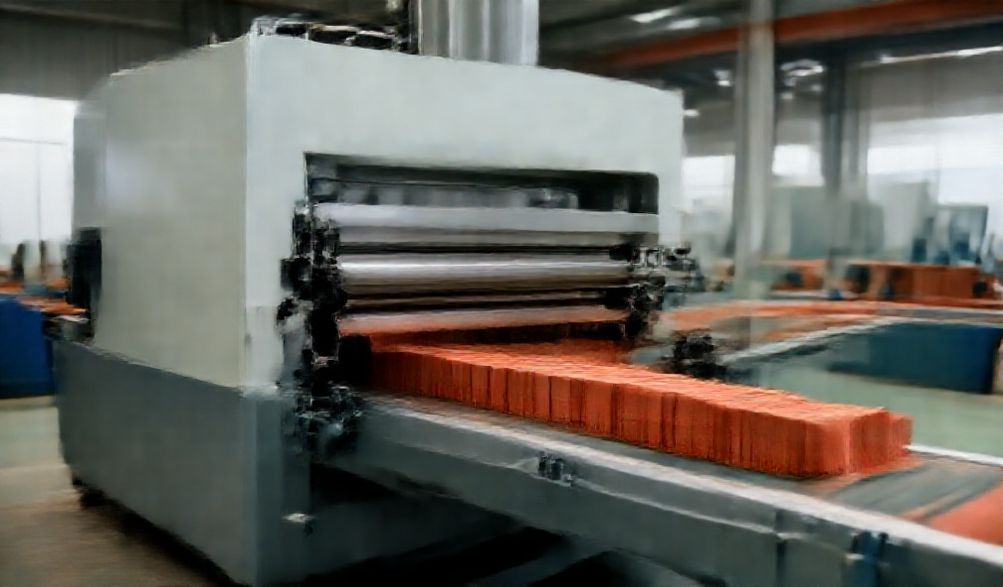
Panduan Utama Mesin Pembuat Batu Bata Padat China: Kualitas, Biaya & Cara Memilih
Di era urbanisasi global dan pembangunan infrastruktur yang pesat, permintaan akan material konstruksi yang tahan lama, terjangkau, dan mudah tersedia tidak pernah lebih tinggi. Di jantung rantai pasokan ini terdapat komponen fundamental: bata padat. Bagi para pengusaha, perusahaan konstruksi, dan pemerintah yang ingin mendirikan atau memperluas produksi bata, sumber mesin telah menjadi sangat jelas. China telah mengukuhkan posisinya sebagai pusat tak terbantahkan untuk manufaktur mesin pembuat bata padat yang kokoh, inovatif, dan hemat biaya.
Namun, menavigasi pasar yang luas dan dinamis ini menghadirkan tantangan yang signifikan. Lanskapnya dipenuhi ribuan produsen, mulai dari perusahaan teknik kelas dunia hingga bengkel yang kurang terpercaya. Variasi dalam kualitas, harga, transparansi, dan dukungan purna jual dapat mengubah investasi yang menjanjikan menjadi masalah yang mahal. Panduan ini berfungsi sebagai sumber daya komprehensif yang dipandu ahli. Kami akan menembus kebisingan, dengan menggali wawasan industri mendalam, analisis teknis, dan kebijaksanaan pengadaan praktis untuk memberdayakan Anda membuat keputusan pembelian yang terinformasi, percaya diri, dan sukses. Mari membangun pengetahuan itu dari dasar.
Mengapa China Mendominasi Pasar Mesin Bata Padat
MemahamimengapaChina memimpin industri ini adalah langkah pertama untuk mencari sumber secara bijak. Ini bukan kebetulan; ini adalah hasil dari puluhan tahun pengembangan strategis dan evolusi industri.
Warisan Skala dan Keahlian Manufaktur
Gelar China sebagai "pabrik dunia" sangat tepat untuk mesin berat. Selama lebih dari 30 tahun, negara ini telah mengembangkan ekosistem manufaktur yang tak tertandingi. Di sektor mesin bata, hal ini telah membentuk klaster industri yang kuat di provinsi-provinsi seperti山东、福建、河南.
Klaster-klaster ini menciptakan sinergi yang kuat. Dalam area geografis yang terkonsentrasi, Anda menemukan:
* Pengecoran khusus dan pemasok baja.
* Produsen komponen hidrolik dan panel listrik.
* Bengkel cetakan dan mati ahli.
* Kumpulan besar tukang las, pemasang, dan insinyur yang terampil.
Rantai pasokan terintegrasi ini secara drastis mengurangi waktu dan biaya produksi sambil menciptakan lingkungan inovasi berkelanjutan dan persaingan di antara para produsen.
Rasio Harga-ke-Kinerja yang Tak Terkalahkan
Ini sering menjadi daya tarik utama bagi pembeli internasional, dan dengan alasan yang kuat. Mesin pembuat bata padat Tiongkok umumnya menawarkan proposisi nilai yang menarik dan sulit ditandingi.
Harga kompetitif berasal dari:
* Skala Ekonomi:Volume produksi yang besar menyebarkan biaya tetap (R&D, peralatan) ke banyak unit.
* Rantai Pasokan Terintegrasi:Seperti yang disebutkan, mengamankan komponen secara lokal dan efisien menjaga biaya input tetap rendah.
* Tenaga Kerja Terampil dengan Tarif Kompetitif:Tenaga kerja yang besar dengan keterampilan teknis yang relevan berkontribusi pada biaya perakitan yang lebih rendah.
Penting untuk menyusun ini dengan tepat: ini bukanhanyaIni bukan tentang menjadi yang termurah. Ini tentang mengakses tingkat kemampuan mesin dan otomatisasi yang, jika didatangkan dari Eropa atau Amerika Utara, seringkali dibanderol dengan harga premium yang bisa 2 hingga 3 kali lipat lebih tinggi. Produsen China telah menguasai penyediaan fungsionalitas yang tangguh dengan titik harga yang terjangkau.
Kemajuan Teknologi dan Kemampuan Beradaptasi
Sudah berlalu masa ketika "Made in China" menyiratkan teknologi dasar dan tiruan. Produsen-produsen terkemuka Tiongkok kini berada di garis depan inovasi mesin bata.
Mesin modern kini secara rutin dilengkapi dengan:
* Sistem PLC (Programmable Logic Controller):Untuk siklus operasi yang otomatis, presisi, dan dapat diulang.
* Desain Hemat Energi:Menggabungkan penggerak kecepatan variabel dan sistem hidrolik yang dioptimalkan untuk mengurangi konsumsi daya—biaya operasional utama.
* Semi dan Otomasi Penuh:Dari pengumpanan material otomatis dan penumpukan bata hingga penanganan palet robotik, mengurangi kebutuhan tenaga kerja dan meningkatkan keselamatan.
Selain itu, para insinyur Tiongkok telah menjadi ahli dalampenyesuaianMereka dapat menyesuaikan desain mesin agar bekerja optimal dengan bahan baku lokal spesifik Anda, baik itu tanah liat, abu terbang, serpih, atau campuran beton, serta untuk menghasilkan ukuran bata, bentuk, dan kekuatan tekan yang tepat sesuai kebutuhan pasar Anda.
Jenis-Jenis Utama Mesin Pembuat Batu Bata Padat dari China
Tidak semua mesin bata diciptakan sama. Kesuksesan proyek Anda bergantung pada pemilihan jenis teknologi yang tepat sesuai kebutuhan. Berikut adalah rincian kategori utamanya.
Mesin Press Hidrolik (Untuk Batu Bata Berkerapatan Tinggi dan Presisi)
Prinsip Kerja:Mesin-mesin ini menggunakan sistem hidrolik bertekanan tinggi untuk memadatkan bahan baku ke dalam cetakan. Tekanan diterapkan secara stabil dan dapat dikendalikan dengan presisi.
- Terbaik Untuk:Memproduksi bata padat berkekuatan tinggi dan seragam, paving berkualitas tinggi, batu tepi jalan, dan blok interlock di mana ketepatan dan penyelesaian superior sangat penting.
- Kelebihan:
- Menghasilkan bata dengan kepadatan dan kekuatan tekan yang sangat baik.
- Permukaan bata yang halus dan konsisten pada semua sisi bata.
- Secara umum, pengoperasiannya lebih senyap dibandingkan mesin getar.
- Sangat serbaguna untuk berbagai produk dengan perubahan cetakan.
- Kekurangan:
- Biaya investasi awal yang lebih tinggi.
- Waktu siklus bisa lebih lambat dibandingkan pemadatan getar, yang berpotensi menghasilkan output per jam yang lebih rendah untuk bata standar.
- Sistem hidrolik memerlukan perawatan yang hati-hati.
Mesin Pemadat Getaran (Untuk Produksi Volume Tinggi)
Prinsip Kerja: These machines use a combination of powerful vibration and mechanical pressure to compact material inside a mold. The vibration helps to remove air pockets and densely pack the material.
- Terbaik Untuk: Large-scale production of standard solid clay or concrete bricks where high output volume is the primary goal.
- Kelebihan:
- Very high production speed (cycle time can be under 15 seconds).
- Rugged construction designed for 24/7 continuous operation.
- Often more straightforward mechanically than complex hydraulic systems.
- Highly effective for standard brick formats.
- Kekurangan:
- Operation can be significantly noisier.
- Bricks may have slightly lower density and surface finish compared to top-tier hydraulic presses.
- More limited in producing highly intricate or large-format blocks.
Manual & Semi-Automatic Machines (For Small Business & Startups)
Prinsip Kerja: These are simple, often lever-operated or small electrically-powered machines that require significant human intervention for material feeding, compaction, and brick ejection.
- Terbaik Untuk: Entrepreneurs with low startup capital, very small-scale projects, community-based building initiatives, or areas with unreliable electricity.
- Kelebihan:
- Extremely low purchase cost.
- Simple to maintain and repair locally.
- Minimal or no power requirements for manual models.
- Portable and easy to set up.
- Kekurangan:
- Very low output (often hundreds of bricks per day, not per hour).
- Labor-intensive and physically demanding.
- Brick quality is highly dependent on operator skill, leading to potential inconsistency.
The Essential Buyer’s Checklist: How to Select a Reliable Supplier
This is the most critical phase of your journey. Diligent supplier vetting is your primary shield against risk.
Verifying Manufacturer Credentials & Experience
Don’t take a website at face value. Conduct due diligence:
* Business License & Factory Audit: Insist on seeing their official business license (you can ask a local agent to verify it via China’s Administration for Industry and Commerce – AIC). A mandatory virtual factory tour via video call is non-negotiable. Look for organization, workflow, and the quality of work in progress.
* Sertifikasi Industri: While not a guarantee, certifications like ISO 9001(Manajemen Mutu) danCE (for export to many markets) indicate a commitment to systematic processes and safety standards.
* Portfolio & Client References: Ask for detailed photos and videos of machines they have produced and installed. Most importantly, request contact information for 2-3 past international clients in a region similar to yours. Take the time to speak with them.
Assessing Machine Quality Beyond the Brochure
The specification sheet tells only part of the story. Drill down into the details:
* Komponen Inti: Specify and verify the brands of critical parts. For hydraulics, ask for Rexroth, Kawasaki, or Yuken. For PLCs, Siemens or Mitsubishi are top-tier. For molds, inquire about the grade and hardness of the steel used. A machine built with reputable components will last longer and perform better.
* Production Data & Testing: Request actual, verified production data (bricks per hour under specific conditions) and a brick quality report. The gold standard is to send a sample of your raw materials to the factory for them to conduct a live test and send you the resulting bricks for your own evaluation.
* Build Quality & Safety: During your video tour, look at weld quality (should be clean and even), the thickness of structural steel, and the presence of essential safety features like mechanical guards, emergency stop buttons, and electrical safety interlocks.
Understanding the Total Cost of Ownership (TCO)
The machine price is just the entry ticket. Smart buyers budget for the TCO:
* Cost Breakdown:
* Machine FOB Price
* Shipping, Insurance, and Logistics to your port
* Import Duties and Taxes (consult a local customs broker)
* Installation & Commissioning (by their engineer or a local technician)
* Initial Spare Parts Kit (at least 1-2% of machine cost)
* Operator & Maintenance Training
* After-Sales Service Agreement: This is your long-term safety net. The contract must clearly state:
* Warranty period (typically 12 months for parts, excluding wear items).
* Response time for technical support (e.g., 24-hour remote support via WhatsApp/Video).
* Spare parts pricing policy and guaranteed lead time for shipment.
* Terms for an engineer’s on-site visit (cost, duration, responsibilities).
* Biaya Operasional: Calculate estimated energy consumption (kW per hour) and understand the routine maintenance schedule (daily greasing, weekly checks, etc.).
Navigating the Procurement Process: From Inquiry to Installation
A structured process prevents misunderstandings and ensures a smooth transaction.
Step 1: Detailed RFQ and Technical Communication
Start with a comprehensive Request for Quotation (RFQ). A good RFQ should include:
* Raw Material Analysis: Type, composition, moisture content, particle size.
* Spesifikasi Bata: Desired final size, weight, density, and minimum compressive strength.
* Production Requirement: Target output (bricks per 8-hour shift).
* Kondisi Situs: Available power supply (voltage, phase), factory space, and ceiling height.
* Preferred Level of Automation: Manual feeding? Automatic stacking?
This clarity allows suppliers to provide accurate proposals and shows you are a serious buyer.
Step 2: Negotiation, Contract, and Payment Security
- Payment Terms: Standard terms are often 30% deposit via T/T (Telegraphic Transfer), 70% balance against copy of Bill of Lading. Consider using Escrow services (like Alibaba Trade Assurance) for added security, especially with new suppliers.
- The Contract: This must be detailed and in English. It should include, as appendices: Final Technical Specifications, Warranty Terms, Accepted Payment Terms, Delivery Schedule, and Penalty Clauses for late delivery or performance shortfalls. Do not proceed without a signed contract.
Step 3: Logistics, Customs Clearance, and Installation
- Shipping: Understand Incoterms. FOB (Free On Board) is common, where you control the main shipping and insurance. CIF (Biaya, Asuransi, dan Pengangkutan) means the supplier arranges it to your port. Using a reliable freight forwarder is highly recommended.
- Key Documents: Ensure you receive and check: Commercial Invoice, Packing List, Bill of Lading, Certificate of Origin, and any required manuals in advance.
- Installation: Clarify who is responsible. Will the supplier send an engineer (at whose cost?), or will they provide detailed installation manuals and video guides for your local team? On-site commissioning is invaluable for starting up correctly.
Pertanyaan yang Sering Diajukan (FAQ)
Q1: What is the typical price range for a China-made solid brick making machine?
A: Prices vary dramatically based on type and automation. A small manual machine can start around $3.000 – $8.000. A robust semi-automatic vibratory machine may range from $15.000 – $40.000. A fully automatic hydraulic production line with feeding and stacking systems can range from $50,000 to $150,000+. The key is to get detailed quotes based on your specific RFQ.
Q2: How can I ensure the machine quality without visiting China?
A: A comprehensive virtual factory tour is essential. Furthermore, insist on a live performance test using a sample of your raw materials, which they should courier back to you. Request high-resolution videos of the machine in action for other clients, focusing on the operation, the bricks produced, and the final packing for shipment.
Q3: What is the lead time for production and delivery?
A: For a standard model, production typically takes 20-35 days. Sea freight can add 30-45 days to major ports worldwide, plus time for customs clearance at your destination (5-10 days). For large, custom-designed lines, production can take 60-90 days. Always build buffer time into your project plan.
Q4: Do Chinese suppliers provide training and operational manuals?
A: Reputable suppliers absolutely should. Your contract must stipulate the provision of clear English-language operation manuals, maintenance guides, electrical circuit diagrams, and parts lists. Basic training is often included—either via detailed videos, online sessions, or, preferably, from their engineer during on-site installation.
Q5: How do I handle machine breakdowns and spare parts?
A: This underscores the importance of the after-sales agreement. Start by purchasing a recommended initial spare parts kit. For breakdowns, the supplier should first provide remote troubleshooting via video call. If a part is needed under warranty, they should ship it promptly. Post-warranty, you should have a clear process and price list for ordering spare parts. Building a good relationship with your supplier is key here.
Kesimpulan
Sourcing a solid brick making machine from China presents a tremendous opportunity: access to advanced, reliable, and highly customizable manufacturing technology at a value-driven price point. However, this opportunity is only fully realized through meticulous supplier vetting, clear technical communication, and a focus on building a partnership, not just making a one-time purchase.
Remember, the true measure of your investment is not the sticker price, but the Total Biaya Kepemilikan and the strength of the After-Sales Support behind it. By applying the insights from this guide—verifying credentials, understanding the technology, and managing the procurement process step-by-step—you transform from a hopeful buyer into an informed partner. You are now equipped to make a decision that will lay a solid, profitable foundation for your brick-making business for years to come.
<