
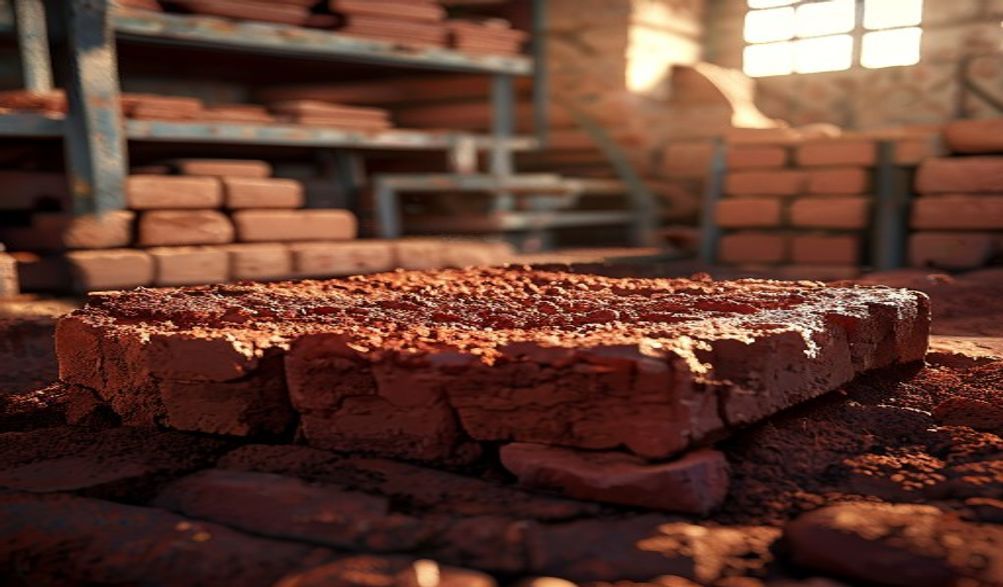
Comment choisir une machine à fabriquer des briques en terre : Guide d'achat pour constructeurs et entrepreneurs
Introduction
Le paysage mondial de la construction est en train de changer. Avec un accent croissant mis sur la durabilité, l'abordabilité et la résistance, les constructeurs et entrepreneurs redécouvrent l'un des plus anciens matériaux de construction de l'humanité : la terre. Les briques de terre compressée modernes offrent une solution convaincante : faible énergie grise, excellente masse thermique et économies de coûts significatives. Cependant, le pont entre la terre brute et une brique solide et fiable est la machine qui la fabrique.
Choisir le mauvais équipement peut faire dérailler votre projet, entraînant un gaspillage de capital, une qualité de brique inégale et des retards frustrants. Avec plus de dix ans d'expérience dans les machines de construction durables et en conseillant des projets allant de petites exploitations familiales à des développements commerciaux, j'ai été témoin des écueils et des réussites. Ce guide condense cette expertise pratique en un cadre clair et étape par étape.
Notre objectif est de vous doter des connaissances nécessaires pour naviguer sur le marché en toute confiance. Nous irons au-delà des brochures commerciales pour aborder les facteurs techniques et pratiques essentiels qui déterminent le succès sur le terrain. À la fin de ce guide, vous disposerez d'une liste de contrôle précise pourcomment choisir une machine à fabriquer des briques en terrequi s'aligne parfaitement avec votre sol, votre projet et vos ambitions.
Comprendre la Fabrication de Briques en Terre : Types et Procédés
Avant de comparer les machines, il est essentiel de comprendre leur fonction et les différentes technologies disponibles.
Qu'est-ce qu'une machine à fabriquer des briques en terre ?
Fondamentalement, une machine à fabriquer des briques en terre est un appareil qui comprime un mélange de terre humide et d’un faible pourcentage de stabilisant (comme du ciment ou de la chaux) en un bloc dense et solide. Le procédé n’utilise pas de cuisson, ce qui le rend économe en énergie. La fonction principale de la machine est d’appliquer une pression immense et uniforme, qui réorganise les particules de terre, réduit les vides et crée une forte liaison mécanique, particulièrement en présence d’un stabilisant.
Types Clés de Machines : Manuel vs. Semi-Automatique vs. Entièrement Automatique
Votre choix ici façonne fondamentalement l'échelle de votre opération, ses besoins en main-d'œuvre et son budget.
-
Machines manuelles :
- Comment ils fonctionnent :Actionné entièrement par la force humaine, généralement à l'aide d'un levier ou d'un vérin hydraulique.
- Avantages :Coût initial le plus bas, pas besoin d'électricité, entretien simple, très portable.
- Inconvénients :Production très faible (50 à 200 briques par jour), exigeante physiquement, la qualité peut varier avec la fatigue de l'opérateur.
- Idéal pour :Projets de bricolage, micro-fermes autonomes, initiatives communautaires avec une main-d'œuvre bénévole abondante et tests de prototypes.
-
Machines semi-automatiques :
- Comment ils fonctionnent :Ces machines électriques ou diesel automatisent le cycle de compression (souvent via un système hydraulique) mais nécessitent un opérateur pour alimenter le mélange et retirer la brique finie.
- Avantages :Bon équilibre entre coût et production (300 à 800 briques par jour), qualité constante des briques grâce à une pression uniforme, moins physiquement exigeant.
- Inconvénients :Investissement initial plus élevé que le manuel, nécessite une source d'alimentation, requiert une formation de base à l'utilisation.
- Idéal pour :Les petites et moyennes entreprises, les projets de logement et les entreprises sociales à la recherche d'un modèle de production durable.
-
Machines entièrement automatiques :
- Comment ils fonctionnent :Ce sont des lignes de production complètes avec alimentation, compression et éjection des briques automatisées, souvent équipées de systèmes de convoyeur.
- Avantages :Production à haut volume (plus de 1 000 briques par jour), cohérence maximale, main-d'œuvre directe minimale par brique.
- Inconvénients :Investissement en capital important, nécessite une alimentation triphasée fiable, installation et maintenance complexes, nécessite plus d'espace.
- Idéal pour :Grands chantiers de production de briques industrielles approvisionnant des projets de construction majeurs.
Le Rôle de la Stabilisation des Sols
Toute terre n'est pas immédiatement prête pour la fabrication de briques. La "stabilisation" est la clé pour transformer la terre brute en un bloc de construction durable et résistant aux intempéries.
- Pourquoi Stabiliser ?Les stabilisants (généralement 5 à 10 % de ciment ou 5 à 15 % de chaux) se lient chimiquement aux particules du sol. Cela augmente considérablement la résistance à la compression, réduit l'érosion due à la pluie et minimise les fissures de retrait.
- Impact sur le choix de la machineLe niveau de stabilisation requis dépend de la composition de votre sol. Un sol riche en argile nécessite une stabilisation plus importante et une machine capable d'exercer une pression plus élevée pour atteindre la densité souhaitée. La machine doit être suffisamment robuste pour supporter le mélange stabilisé, légèrement plus abrasif.
Facteurs essentiels à considérer avant d'acheter
C'est l'étape fondamentale où une évaluation honnête évite des erreurs coûteuses.
Évaluation de Vos Besoins en Matière de Projet
-
Objectifs de Production et de Rendement des Briques
- Calculate your daily or weekly brick requirement based on your construction timeline. Be realistic.
- Crucial Match: A machine’s rated capacity (bricks/hour) must meet this need with room for efficiency loss. Buying an oversized machine wastes money; an undersized one delays your project.
-
Spécifications des Briques :
- Determine the standard brick size in your region (e.g., 230mm x 110mm x 75mm) or if you need interlocking shapes for mortar-less construction.
- The machine’s mold options dictate this. Also, the required résistance à la compression (e.g., for a single-story vs. a three-story building) is directly determined by the machine’s pressure capacity.
Analyzing Your Soil Composition
This is the most critical, and most often overlooked, step.
- Soil Testing is Non-Negotiable. A simple, inexpensive test will reveal the percentages of clay, silt, and sand.
- Ideal Mix: A “sandy-clay loam” often provides a good balance. Too much clay leads to excessive shrinkage; too much sand reduces cohesion.
- Informing Your Purchase: Your soil report tells you:
- The type and percentage of stabilizer needed.
- The minimum pressure required from your machine to properly compact your specific soil mix.
Evaluating Your Operational Context
- Disponibilité de la source d'alimentation Do you have reliable grid electricity? If not, factor in the cost of a generator capable of running a semi- or fully-automatic machine.
- Labor Skill & Availability: Who will operate and maintain it? Manual machines need muscle; automated ones need someone comfortable with basic mechanics and controls.
- Space and Setup: You need space for:
- The machine itself.
- Raw material storage (soil, stabilizer).
- A covered area for curing bricks (a critical 28-day process for cement-stabilized blocks).
Technical Specifications and Features Deep Dive
Now, let’s decode the technical details that separate a quality machine from a problematic one.
Pressure Capacity (The Key to Strength)
Pressure, measured in PSI (pounds per square inch) or MPa (Megapascals), is the engine of brick quality.
- The Direct Correlation: Higher pressure = denser brick = higher compressive strength and better water resistance.
- General Guidelines:
- Non-Load Bearing (e.g., infill walls): 500 – 1,000 PSI (3.5 – 7 MPa) may suffice.
- Murs porteurs : Look for machines capable of 1,500 PSI (10 MPa) and above. For multi-story buildings, 2,000+ PSI (14+ MPa) is often recommended.
- Conseil de Pro : Ensure the stated pressure is the applied pressure during compaction, not just the hydraulic system pressure.
Machine Build Quality and Durability
This determines your machine’s lifespan and uptime.
- Construction de l'ossature : Look for thick, reinforced steel sections, not light-gauge metal. Welds should be clean and robust.
- Système Hydraulique : The heart of the machine. Quality seals, valves, and a reliable pump are essential. Ask about the brand of key components.
- Protection contre la corrosion : Powder coating or paint should be thick and even, especially if operating in a humid or coastal environment.
Mold Versatility and Customization
The mold defines your product. Standard rectangular molds are common, but consider:
- Interlocking Molds: Allow for faster, mortar-less construction with improved wall strength.
- Custom Sizes: Can you order different molds later from the supplier? This adds long-term business flexibility.
- Matériau : Molds should be made from hardened steel to withstand abrasion.
After-Sales Support: A Non-Negotiable Factor
A machine is a long-term investment. Support is your safety net.
- Garantie : A minimum 1-year warranty on parts and workmanship is standard. Longer is better.
- Disponibilité des pièces détachées : Are common wear parts (seals, mold liners) readily available? What is the lead time?
- Assistance technique : Does the supplier offer installation guidance, troubleshooting, and operator training (even if remote)?
Financial Planning and ROI Analysis
Look beyond the sticker price to the true cost and potential earnings.
Understanding the Total Cost of Ownership
| Cost Category | Details & Considerations |
| :— | :— |
| Machine Purchase | Base price of the machine. |
| Shipping & Import | Can be substantial for international orders. Clarify Incoterms (e.g., FOB, CIF). |
| Installation | May require a technician’s visit or local tradesperson. |
| Raw Materials | Cost of soil (often free), stabilizer (cement/lime), and water. |
| Labor | Wages for operators. |
| Energy | Electricity or fuel for generators. |
| Maintenance | Annual budget for lubricants, spare parts, etc. |
Calculating Potential Return on Investment (ROI)
A simplified framework for entrepreneurs:
- Cost Per Brick: Add up all monthly operational costs (materials, labor, energy, maintenance amortization). Divide by your monthly production volume.
- Example: ($800 monthly cost) / (10,000 bricks) = $0.08 per brick.
- Market Price Per Brick: Research the local price for comparable fired clay or concrete bricks.
- Example: $0.25 per brick.
- Gross Profit Per Brick: Market Price – Your Cost.
- Example: $0.25 – $0.08 = $0.17 profit per brick.
- Période de récupération : Divide the total initial investment (machine + shipping + setup) by your monthly gross profit.
- Example: $10,000 investment / ($0.17 x 10,000 bricks/month = $1,700) = ~5.9 months.
Budgeting for Quality and Longevity
Never buy on price alone. A cheaper, lightly-built machine will have higher downtime, more frequent breakdowns, and a shorter life, making it more expensive in the long run. Invest in robust engineering.
The Supplier Selection Checklist
Your relationship with the supplier is as important as the machine itself.
Researching and Vetting Manufacturers
- Company History: How long have they been manufacturing these specific machines?
- Client Portfolio & Testimonials: Ask for case studies or contact details of past buyers, especially in a similar climate.
- Certifications : Do they have ISO or other quality management certifications? It indicates process discipline.
The Importance of Requesting a Demo or Sample
- The Gold Standard: If possible, send your stabilized soil mix to the manufacturer for a test run. Evaluate the resulting brick’s strength, finish, and dimensional consistency.
- Questions for a Demo:
- “Can you walk me through the daily maintenance routine?”
- “What are the most common wear parts and their cost?”
- “How do you handle technical support requests?”
Reviewing Contracts and Warranties
Read the fine print. The warranty should clearly state:
* Coverage period for different components.
* What is excluded (e.g., damage from improper operation, wear parts).
* Who pays for shipping defective parts.
* Response time for support queries.
Frequently Asked Questions (FAQ)
Q1: What is the best soil mix for making compressed earth bricks?
A: While a well-graded “sandy-clay loam” (approx. 70% sand/gravel, 30% clay/silt) is often cited as a good starting point, there is no universal “best” mix. The only reliable method is a professional soil test. This test will provide a precise recipe for stabilization and confirm if your local soil is suitable.
Q2: Can I make bricks without adding cement or other stabilizers?
A: For traditional Adobe bricks (sun-dried), yes. However, for modern Compressed Stabilized Earth Blocks (CSEBs) designed for structural, durable construction, a stabilizer is essential. Cement or lime provides the chemical strength and weather resistance needed for load-bearing walls, especially in areas with rainfall. Machines for CSEBs are built to handle the higher pressures required.
Q3: How much does a good soil brick making machine cost?
A: Prices vary dramatically based on type and capacity:
* Presses manuelles : $1,000 – $4,000 USD.
* Machines semi-automatiques : $5,000 – $20,000 USD.
* Lignes entièrement automatiques : $25,000 – $100,000+ USD.
Remember to budget for shipping, installation, and initial spare parts.
Q4: What is the typical maintenance required?
A: Daily and weekly routines are key:
* Daily: Clean the mold and machine frame of residual soil. Check hydraulic fluid levels and for any leaks.
* Weekly: Lubricate all moving parts (pivots, bearings) as per the manual. Inspect the mold for wear.
* Periodically: Change hydraulic fluid and filters as recommended. Check and tighten bolts on the frame.
Q5: Where can I get my soil tested?
A: Several accessible options exist:
* Local agricultural extension offices or co-ops.
* University departments of Civil Engineering, Geology, or Agriculture.
* Private construction materials testing laboratories.
* Some reputable machine suppliers offer testing services or can recommend labs.
Conclusion
Choosing the right soil brick making machine is a systematic process, not a gamble. It begins with a clear understanding of your project’s scale and a non-negotiable soil test. From there, prioritize core technical specifications—especially pressure capacity and build quality—over flashy features. Develop a holistic financial plan that accounts for the total cost of ownership and a realistic ROI. Finally, partner with a reputable supplier whose after-sales support provides a foundation for your long-term success.
View this purchase not merely as buying a tool, but as investing in the foundational technology for your sustainable building venture. The right machine becomes a reliable partner for years, turning local earth into lasting value.
Ready to move forward? If you have a soil report or specific project parameters, feel free to reach out for a more tailored discussion. Share your goals or questions in the comments below—let’s build a conversation as solid as the bricks we aim to create. Mastering the process of selecting the perfect soil brick machine is your first step toward building a sustainable future.
<