
Die Ultieme Gids vir Betonblokmasjiene: Tipes, Voordele & Hoe om te Kies
Inleiding
Die globale konstruksiebedryf is in 'n voortdurende wedloop teen tyd en begroting. In die hart van tallose projekte—van residensiële vloere en stedelike sypaadjies tot industriële werwe en grensmure—lê 'n fundamentele komponent: die betonplaat en -blok. Tradisionele, handmatige gietmetodes vir hierdie noodsaaklike elemente is toenemend onhoudbaar, geteister deur stadige produksie, hoë arbeidskoste en frustrerende teenstrydighede in gehalte. Vir kontrakteurs, bouers en entrepreneurs verteenwoordig hierdie knelpunt 'n beduidende uitdaging vir winsgewendheid en skaalbaarheid.
Betree die moderne oplossing: diebetonplaatblokmasjienHierdie ontwerpte toerusting verander rou betonmengsel in presiese, hoësterkte bou-eenhede met merkwaardige doeltreffendheid. Dit is die hoeksteen van voorafvervaardigde betonproduksie, wat in die vraag na spoed, konsekwentheid en kostebeheer voorsien.
Hierdie omvattende gids is ontwerp om deur die geraas te sny. Deur gebruik te maak van bedryfsbeste praktyke en tegniese kennis, verskaf ons kundige, betroubare advies vir enigiemand wat in hierdie transformerende tegnologie wil belê. Of jy nou 'n kontrakteur is wat beoog om produksie in-huis te bring, 'n besigheidseienaar wat 'n blokvervaardigingsonderneming van stapel stuur, of 'n projekbestuurder wat toerusting bekom, jy sal leer:
- Wat hierdie masjiene is en hoe hulle werk.
- Die onmiskenbare voordele wat hulle lewer.
- Die verskillende tipes beskikbaar op die mark.
- 'n Gedetailleerde, uitvoerbare kontrolelys vir die keuse van die regte model.
- Noodsaaklike wenke vir bedryf en instandhouding.
Bou 'n fondasie van kennis vir jou volgende slim belegging.
Wat is 'n Betonblokmasjien?
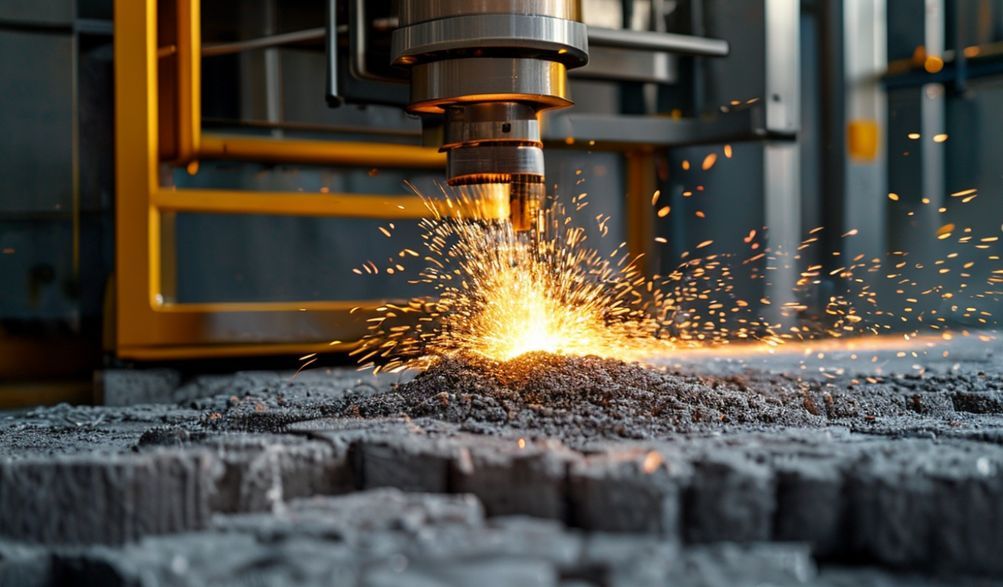
Kern van die saak, 'nbetonplaatblokmasjienis 'n gemeganiseerde stelsel wat ontwerp is om die vorming van betonprodukte te outomatiseer en te optimaliseer. Dit gebruik 'n kombinasie van vibrasie en hoë druk om 'n semi-droë betonmengsel in 'n vorm te kompakteer, wat eenvormige plaveisels, blokke, plaveiers, randstene en ander voorafgegote elemente vervaardig.
Die proses, hoewel gesofistikeerd in uitvoering, volg 'n logiese volgorde:
- Voeding:Die rou betonmengsel (sement, stortgoed, sand en minimale water) word in 'n hopper gelaai.
- Vorming:Die mengsel word oorgeplaas in 'n vorm of holte van 'n spesifieke vorm en grootte.
- Verdigting:Dit is die kritieke fase. Kragtige vibrasiemotors laat die mengsel neersak en skakel lugsakke uit, terwyl 'n hidrouliese of meganiese pers aansienlike afwaartse druk (in ton gemeet) toepas. Hierdie dubbele aksie verseker maksimum digtheid en sterkte.
- Uitskiet:Die vars gevormde, saamgeperste blok word uit die vorm gelig of uitgestoot op 'n palet of die grond.
- Kuuring:Die blokke word dan na 'n uithardingsarea geskuif, waar hulle mettertyd sterkte verkry deur beheerde hidrasie, wat dikwels met stoom of watersproeiing gehelp word.
Primêre toepassingswant hierdie masjiene is uitgestrek:
* Konstruksie:Vervaardiging van blokke vir mure, holblokke vir gewapende konstruksie, en groot plaveisels vir vloerstelsels.
* Infrastruktuur & LandskapVervaardiging van plaveiselstene, ineenvlegte teëls vir opritte en voetpaaie, randstene en keermuureenhede.
* Kommersiële Produksie:Dien as die primêre toerusting vir fabrieke wat toegewy is aan die voorsiening van gestandaardiseerde voorafgestorte betonprodukte aan die konstruksiebedryf.
Sleutelvoordele van die Gebruik van 'n Blokmaakmasjien
Belegging in 'n blokmaakmasjien is nie bloot 'n aankoop nie; dit is 'n strategiese besluit wat jou hele bedryf beïnvloed. Hier is die kernvoordele wat hierdie belegging dryf.
Onoortreflike Doeltreffendheid & Produktiwiteit
- Spoed:Masjiene voltooi 'n produksiesiklus (vul, verdig, stoot uit) binne sekondes, en produseer in 'n uur wat 'n handspanne 'n volle dag kan neem.
- Volume:Ontwerp vir deurlopende werking, kan hierdie masjiene duisende eenvormige blokke per skof produseer, wat jou in staat stel om groot projek spertye te haal of jou verskaffingsbesigheid moeiteloos uit te brei.
Superieure Gehalte & Konsekwentheid
- Uniformiteit: Every block produced has identical dimensions, weight, and density. This precision is impossible to achieve consistently with manual labor.
- Hoë Sterkte: The controlled, high-pressure compaction results in blocks with excellent compressive strength, meeting or exceeding industry standards (like ASTM or IS codes) for load-bearing applications.
- Verminderde Afval: Precise material measurement and consistent output minimize rejected units and material spillage.
Significant Cost Reduction
- Arbeidsoptimalisering: One machine operated by a small team replaces a large manual workforce, drastically reducing long-term labor costs and dependency.
- Materiële Doeltreffendheid: Optimized mix designs and reduced waste lower raw material costs per block.
- Lower Rework: Consistent quality means fewer call-backs, repairs, or replacements on-site, protecting your project’s bottom line.
Operational Versatility
- Produkreeks: With interchangeable molds, a single machine can often produce a variety of products—from solid and hollow blocks to interlocking pavers and slabs of different thicknesses.
- Scale Adaptation: Machines are available for every scale, from small, mobile units for on-site projects to fully automated production lines for industrial plants.
Types of Concrete Block Making Machines
Understanding the classifications is crucial to narrowing your search. Machines are typically categorized by their level of automation, mobility, and output.
Deur Bediening: Handmatig, Semi-outomaties, en Volledig Outomaties
- Handmatige Masjiene: Require significant human effort for feeding, compaction (often via a lever), and ejection. They are low-cost and suitable for very small-scale or start-up ventures with minimal output needs (e.g., a few hundred blocks per day).
- Halfoutomatiese Masjiene: The most common choice for small to medium businesses. Key processes like vibration and compaction are powered (electric or diesel), but mold filling and block removal may require operator intervention. They offer an excellent balance of output, affordability, and control.
- Volledig Outomatiese Masjiene: These are computer-controlled production lines. They feature automated material batching, feeding, compaction, block ejection, stacking, and pallet return. While representing a higher initial investment, they maximize output (thousands of blocks per hour) with minimal labor and unparalleled consistency.
By Production Method: Stationary vs. Mobile
- Stilstaande Blokmaakmasjiene: These are fixed installations, typically found in a factory or dedicated production yard. They are designed for high-volume, continuous output and are often the core of semi- or fully-automatic production lines.
- Mobile Block Making Machines (Egg-Laying Type): These self-contained units can produce blocks directly on the ground at a construction site. As they move forward, they “lay” cured blocks behind them, eliminating the need for block transportation. This is a game-changer for large, remote projects, saving substantial logistics costs.
By Block Type: Slab, Paver, Hollow Block, and Interlocking Block Machines
While many machines are multi-purpose with mold changes, some are optimized for specific products:
* Slab Making Machines: Designed for larger, flatter products like paving slabs or flooring panels, often with larger mold tables and specific vibration systems.
* Plaatmaker Masjiene: Focus on producing smaller, high-density paving stones, frequently with color feeder attachments for surface coloring.
* Holblokmasjiene: Feature mold cores to create the hollow cavities in blocks used for reinforced construction, offering material savings and insulation properties.
* Interlocking Block Machines: Produce blocks with designed tongues and grooves that fit together without mortar, ideal for dry-stack walls and paving systems.
How to Choose the Right Machine: A Buyer’s Checklist
Making the wrong choice can be a costly mistake. Use this expert checklist to guide your evaluation and ensure your investment aligns perfectly with your goals.
Assess Your Production Requirements
Start by asking the fundamental questions:
* What is my required daily or hourly output (e.g., 2,000 blocks/day)?
* What specific products do I need to make (size, type, thickness)?
* Is this for a single projectofcontinuous commercial production?
* What is the available space for the machine and curing area?
Evaluate Machine Specifications & Features
Look beyond the marketing and scrutinize the technical details:
* Druk Krag (Tonnasie): Higher tonnage (e.g., 150 tons vs. 50 tons) generally means higher block density and strength.
* Vibrasie Stelsel: Consider the power (kW/HP) and frequency. A dual vibration system (both vertical and horizontal) often yields better compaction.
* Siklustyd: How many seconds for one complete production cycle? This directly dictates maximum output.
* Mold Compatibility & Changeover Time: Can it accept the molds you need? How quickly and easily can molds be swapped?
* Sleutelkenmerke: Look for automation aids like automatic feeders, concrete mixers, and block stackers, which significantly boost productivity.
Consider Power Source & Infrastructure
- Kragbron: Electric motors are cleaner and cheaper to run in fixed locations with grid access. Diesel engines offer mobility and independence from the power grid, ideal for remote sites.
- Site Needs: Ensure your location has the necessary space, a level and strong concrete foundation, and the required electrical connection (voltage, phase) for the machine.
Factor in Total Cost of Ownership
The purchase price is just the beginning. Consider:
* Installation & Commissioning costs.
* Regular Maintenance and the cost/availability of spare parts (wear parts like mold liners, springs, and hydraulic seals).
* Energy Consumption (electricity or diesel).
* The quality and cost of supplier support (training, service visits).
Vet the Manufacturer for Reliability
This is perhaps the most critical step for long-term success.
* Reputation & History: Research the manufacturer’s track record. How long have they been in business? Look for customer testimonials and case studies.
* Waarborg: What is covered and for how long? A comprehensive warranty indicates confidence in product quality.
* Na-Verkope Diens: Is there local or readily available technical support? Can they provide timely spare parts? Will they offer proper installation and operator training?
* Nakoming: Does the machinery meet relevant safety and quality standards?
Essential Tips for Operation and Maintenance
To protect your investment and ensure peak performance, proper operation and maintenance are non-negotiable.
Best Practices for Optimal Operation
- Mix Design is Key: Use a consistent, semi-dry concrete mix with the correct ratio of cement, sand, and aggregates (e.g., a standard 1:3:5 ratio is a starting point). The mix must be just wet enough to bind but dry enough to hold its shape immediately after ejection.
- Proper Curing: Do not neglect this step. Freshly ejected blocks are fragile. They must be kept moist (via water spraying or steam curing) for several days to achieve their design strength.
- Follow the Manual: Adhere strictly to the manufacturer’s recommended procedures for machine setup, operation, and safety.
Routine Maintenance Schedule
A small amount of preventative care prevents major downtime.
* Daily: Clean the mold, hopper, and feed system thoroughly after each shift. Check for loose bolts and nuts. Inspect hydraulic hoses for leaks.
* Weekly: Lubricate all moving parts as specified. Check the vibration motors and electrical connections.
* Monthly: Inspect wear parts like mold liners, springs, and pressure heads. Check hydraulic oil levels and filters.
Troubleshooting Common Issues
- Poor Surface Finish/Sticking Blocks: Often caused by a worn mold, insufficient vibration, or an incorrect (too wet) concrete mix.
- Low Block Density/Strength: Usually due to insufficient compaction pressure, a short vibration time, or an improper mix design with too much water or insufficient cement.
- Block Breaking During Ejection: Can be caused by a misaligned mold, damaged pallets, or, again, a mix that is too wet.
Frequently Asked Questions (FAQ)
Q1: What is the average production capacity of a standard block making machine?
A: Capacity varies enormously. A small manual machine may produce 800-1500 blocks in an 8-hour shift. A semi-automatic model can produce 2000-5000 blocks, while a fully automatic line can exceed 10,000 blocks per shift. The specific block size, machine model, and cycle time are the determining factors.
Q2: Can one machine produce different sizes of blocks and slabs?
A: Yes, in most cases. The key is verwisselbare vorms. When evaluating a machine, confirm that the manufacturer offers a range of compatible molds for the products you need and that the mold changeover process is manageable for your operation.
Q3: What is the typical cost range for a concrete slab block making machine?
A: Prices can range from a few thousand dollars for a basic manual machine to tens or even hundreds of thousands for a high-output, fully automatic production line with auxiliary equipment. It is essential to get detailed quotes based on your specific required specifications and features.
Q4: How important is after-sales service when purchasing?
A: It is absolutely critical. A machine is a long-term asset. Reliable after-sales service—including installation guidance, operator training, readily available spare parts, and responsive technical support—is what ensures your machine runs smoothly for years, protecting your return on investment and business continuity.
Q5: What raw materials are needed besides the machine?
A: The primary materials are Portland cement, fine aggregate (sand), coarse aggregate (gravel or crushed stone), and water. For colored products, you will need concrete color pigments (iron oxide pigments are common). Some operations also use plasticizers or other admixtures to enhance mix workability or block properties.
Conclusion
Diebetonplaatblokmasjien stands as a transformative force in construction and manufacturing, decisively solving the age-old problems of inefficiency, inconsistency, and high cost associated with manual block production. By automating the core process of compaction, it unlocks new levels of productivity, quality, and profitability.
Your path to success lies in making an informed, strategic choice. Avoid the temptation to simply select the cheapest model. Instead, rigorously apply the buyer’s checklist provided in this guide—aligning the machine’s capabilities with your specific production needs, budget, and operational context. Remember, partnering with a reputable, supportive manufacturer is just as important as the technical specifications of the machine itself. Invest in proper training for your team and commit to a disciplined maintenance routine.
Ready to take the next step? We recommend contacting several trusted suppliers with your detailed requirements to obtain comparative quotes and, if possible, arrange live demonstrations. This due diligence is the final, crucial step in securing the right equipment to build the foundation for your future growth.
<