
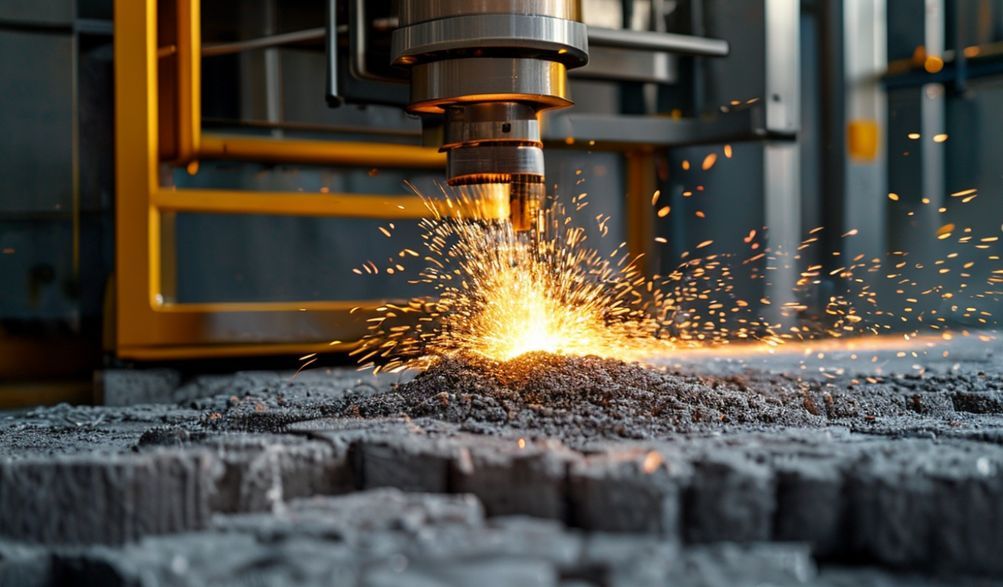
La Guía Definitiva sobre Máquinas para Hacer Bloques de Losa de Concreto: Tipos, Beneficios y Cómo Elegir
Introducción
La industria de la construcción global está en una carrera perpetua contra el tiempo y el presupuesto. En el núcleo de innumerables proyectos—desde pisos residenciales y pavimentos urbanos hasta patios industriales y muros perimetrales—se encuentra un componente fundamental: la losa y el bloque de concreto. Los métodos tradicionales de colado manual para estos elementos esenciales son cada vez más insostenibles, plagados por una producción lenta, altos costos laborales y frustrantes inconsistencias en la calidad. Para contratistas, constructores y emprendedores, este cuello de botella representa un desafío significativo para la rentabilidad y la escalabilidad.
Entra la solución moderna: elMáquina para hacer bloques de losa de concretoEste equipo de ingeniería transforma la mezcla de concreto crudo en unidades de construcción precisas y de alta resistencia con una eficiencia notable. Es la piedra angular de la producción de concreto prefabricado, respondiendo a la demanda de velocidad, consistencia y control de costos.
Esta guía integral está diseñada para eliminar el desorden. Basándonos en las mejores prácticas de la industria y el conocimiento técnico, ofrecemos asesoramiento experto y confiable para cualquier persona que busque invertir en esta tecnología transformadora. Ya sea que seas un contratista que busca internalizar la producción, un empresario que lanza un negocio de fabricación de bloques o un gerente de proyecto que adquiere equipos, aprenderás:
- Qué son estas máquinas y cómo funcionan.
- Los innegables beneficios que ofrecen.
- Los diferentes tipos disponibles en el mercado.
- Una lista de verificación detallada y accionable para elegir el modelo correcto.
- Consejos esenciales para la operación y el mantenimiento.
Construyamos una base de conocimiento para tu próxima inversión inteligente.
¿Qué es una Máquina para Hacer Bloques de Losa de Concreto?
En su esencia, unaMáquina para hacer bloques de losa de concretoes un sistema mecanizado diseñado para automatizar y optimizar la formación de productos de concreto. Utiliza una combinación de vibración y alta presión para compactar una mezcla de concreto semiseco en un molde, produciendo losas, bloques, adoquines, bordillos y otros elementos prefabricados uniformes.
El proceso, aunque sofisticado en su ejecución, sigue una secuencia lógica:
- Alimentación:La mezcla de concreto crudo (cemento, agregados, arena y agua mínima) se carga en una tolva.
- Moldeo:La mezcla se transfiere a un molde o cavidad de una forma y tamaño específicos.
- Compactación:Esta es la fase crítica. Potentes motores vibratorios asientan la mezcla, eliminando las burbujas de aire, mientras una prensa hidráulica o mecánica aplica una fuerza descendente considerable (medida en toneladas). Esta doble acción garantiza la máxima densidad y resistencia.
- Eyección:El bloque recién formado y compactado se levanta o empuja fuera del molde hacia una tarima o al suelo.
- Curado:Los bloques luego se trasladan a una zona de curado, donde ganan resistencia con el tiempo mediante hidratación controlada, a menudo asistida por vapor o rociado de agua.
Aplicaciones principalesporque estas máquinas son inmensas:
* Construcción:Producción de bloques para muros, bloques huecos para construcción reforzada y losas grandes para sistemas de piso.
* Infraestructura y Paisajismo:Fabricación de adoquines, losetas entrelazadas para entradas de vehículos y caminos, bordillos y unidades de muros de contención.
* Producción Comercial:Sirviendo como el equipo principal para fábricas dedicadas a abastecer a la industria de la construcción con productos de concreto prefabricado estandarizado.
Principales Beneficios de Usar una Máquina para Hacer Bloques
Invertir en una máquina para fabricar bloques no es simplemente una compra; es una decisión estratégica que impacta toda tu operación. Aquí están las ventajas principales que impulsan esta inversión.
Eficiencia y Productividad Inigualables
- Velocidad:Las máquinas completan un ciclo de producción (llenar, compactar, expulsar) en segundos, produciendo en una hora lo que a un equipo manual le podría tomar un día completo.
- Volumen:Diseñadas para operación continua, estas máquinas pueden producir miles de bloques uniformes por turno, permitiéndote cumplir con los plazos de grandes proyectos o escalar tu negocio de suministro sin esfuerzo.
Calidad Superior y Consistencia
- Uniformidad:Cada bloque producido tiene dimensiones, peso y densidad idénticos. Esta precisión es imposible de lograr de manera consistente con trabajo manual.
- Alta Resistencia:El compactado controlado a alta presión produce bloques con una resistencia a la compresión excelente, que cumplen o superan los estándares de la industria (como los códigos ASTM o IS) para aplicaciones portantes.
- Residuos Reducidos:La medición precisa del material y la salida consistente minimizan las unidades rechazadas y el derrame de material.
Reducción significativa de costos.
- Optimización de Mano de Obra:Una máquina operada por un equipo pequeño reemplaza una gran fuerza laboral manual, reduciendo drásticamente los costos laborales a largo plazo y la dependencia.
- Eficiencia de Materiales:Los diseños de mezcla optimizados y la reducción de desechos disminuyen los costos de materia prima por bloque.
- Rework inferior Consistent quality means fewer call-backs, repairs, or replacements on-site, protecting your project’s bottom line.
Operational Versatility
- Gama de Productos: With interchangeable molds, a single machine can often produce a variety of products—from solid and hollow blocks to interlocking pavers and slabs of different thicknesses.
- Scale Adaptation: Machines are available for every scale, from small, mobile units for on-site projects to fully automated production lines for industrial plants.
Types of Concrete Block Making Machines
Understanding the classifications is crucial to narrowing your search. Machines are typically categorized by their level of automation, mobility, and output.
By Operation: Manual, Semi-Automatic, and Fully Automatic
- Máquinas Manuales: Require significant human effort for feeding, compaction (often via a lever), and ejection. They are low-cost and suitable for very small-scale or start-up ventures with minimal output needs (e.g., a few hundred blocks per day).
- Máquinas Semiautomáticas: The most common choice for small to medium businesses. Key processes like vibration and compaction are powered (electric or diesel), but mold filling and block removal may require operator intervention. They offer an excellent balance of output, affordability, and control.
- Máquinas Completamente Automáticas: These are computer-controlled production lines. They feature automated material batching, feeding, compaction, block ejection, stacking, and pallet return. While representing a higher initial investment, they maximize output (thousands of blocks per hour) with minimal labor and unparalleled consistency.
By Production Method: Stationary vs. Mobile
- Máquinas Estacionarias para Hacer Bloques: These are fixed installations, typically found in a factory or dedicated production yard. They are designed for high-volume, continuous output and are often the core of semi- or fully-automatic production lines.
- Mobile Block Making Machines (Egg-Laying Type): These self-contained units can produce blocks directly on the ground at a construction site. As they move forward, they “lay” cured blocks behind them, eliminating the need for block transportation. This is a game-changer for large, remote projects, saving substantial logistics costs.
By Block Type: Slab, Paver, Hollow Block, and Interlocking Block Machines
While many machines are multi-purpose with mold changes, some are optimized for specific products:
* Slab Making Machines: Designed for larger, flatter products like paving slabs or flooring panels, often with larger mold tables and specific vibration systems.
* Máquinas para Fabricar Adoquines: Focus on producing smaller, high-density paving stones, frequently with color feeder attachments for surface coloring.
* Máquinas para Bloques Huecos: Feature mold cores to create the hollow cavities in blocks used for reinforced construction, offering material savings and insulation properties.
* Máquinas de Bloques de Entrelazado: Produce blocks with designed tongues and grooves that fit together without mortar, ideal for dry-stack walls and paving systems.
How to Choose the Right Machine: A Buyer’s Checklist
Making the wrong choice can be a costly mistake. Use this expert checklist to guide your evaluation and ensure your investment aligns perfectly with your goals.
Assess Your Production Requirements
Start by asking the fundamental questions:
* What is my required daily or hourly output (e.g., 2,000 blocks/day)?
* What specific products do I need to make (size, type, thickness)?
* Is this for a single projectocontinuous commercial production?
* What is the available space for the machine and curing area?
Evaluate Machine Specifications & Features
Look beyond the marketing and scrutinize the technical details:
* Fuerza de Presión (Tonelaje): Higher tonnage (e.g., 150 tons vs. 50 tons) generally means higher block density and strength.
* Sistema de Vibración: Consider the power (kW/HP) and frequency. A dual vibration system (both vertical and horizontal) often yields better compaction.
* Tiempo de Ciclo: How many seconds for one complete production cycle? This directly dictates maximum output.
* Mold Compatibility & Changeover Time: Can it accept the molds you need? How quickly and easily can molds be swapped?
* Características Clave: Look for automation aids like automatic feeders, concrete mixers, and block stackers, which significantly boost productivity.
Consider Power Source & Infrastructure
- Fuente de Energía: Electric motors are cleaner and cheaper to run in fixed locations with grid access. Diesel engines offer mobility and independence from the power grid, ideal for remote sites.
- Site Needs: Ensure your location has the necessary space, a level and strong concrete foundation, and the required electrical connection (voltage, phase) for the machine.
Factor in Total Cost of Ownership
The purchase price is just the beginning. Consider:
* Installation & Commissioning costs.
* Regular Maintenance and the cost/availability of spare parts (wear parts like mold liners, springs, and hydraulic seals).
* Consumo de Energía (electricity or diesel).
* The quality and cost of supplier support (training, service visits).
Vet the Manufacturer for Reliability
This is perhaps the most critical step for long-term success.
* Reputation & History: Research the manufacturer’s track record. How long have they been in business? Look for customer testimonials and case studies.
* Garantía: What is covered and for how long? A comprehensive warranty indicates confidence in product quality.
* Servicio Postventa: Is there local or readily available technical support? Can they provide timely spare parts? Will they offer proper installation and operator training?
* Cumplimiento: Does the machinery meet relevant safety and quality standards?
Essential Tips for Operation and Maintenance
To protect your investment and ensure peak performance, proper operation and maintenance are non-negotiable.
Best Practices for Optimal Operation
- Mix Design is Key: Use a consistent, semi-dry concrete mix with the correct ratio of cement, sand, and aggregates (e.g., a standard 1:3:5 ratio is a starting point). The mix must be just wet enough to bind but dry enough to hold its shape immediately after ejection.
- Proper Curing: Do not neglect this step. Freshly ejected blocks are fragile. They must be kept moist (via water spraying or steam curing) for several days to achieve their design strength.
- Follow the Manual: Adhere strictly to the manufacturer’s recommended procedures for machine setup, operation, and safety.
Routine Maintenance Schedule
A small amount of preventative care prevents major downtime.
* Diariamente Clean the mold, hopper, and feed system thoroughly after each shift. Check for loose bolts and nuts. Inspect hydraulic hoses for leaks.
* Semanal Lubricate all moving parts as specified. Check the vibration motors and electrical connections.
* Monthly: Inspect wear parts like mold liners, springs, and pressure heads. Check hydraulic oil levels and filters.
Troubleshooting Common Issues
- Poor Surface Finish/Sticking Blocks: Often caused by a worn mold, insufficient vibration, or an incorrect (too wet) concrete mix.
- Low Block Density/Strength: Usually due to insufficient compaction pressure, a short vibration time, or an improper mix design with too much water or insufficient cement.
- Block Breaking During Ejection: Can be caused by a misaligned mold, damaged pallets, or, again, a mix that is too wet.
Frequently Asked Questions (FAQ)
Q1: What is the average production capacity of a standard block making machine?
A: Capacity varies enormously. A small manual machine may produce 800-1500 blocks in an 8-hour shift. A semi-automatic model can produce 2000-5000 blocks, while a fully automatic line can exceed 10,000 blocks per shift. The specific block size, machine model, and cycle time are the determining factors.
Q2: Can one machine produce different sizes of blocks and slabs?
A: Yes, in most cases. The key is interchangeable molds. When evaluating a machine, confirm that the manufacturer offers a range of compatible molds for the products you need and that the mold changeover process is manageable for your operation.
Q3: What is the typical cost range for a concrete slab block making machine?
A: Prices can range from a few thousand dollars for a basic manual machine to tens or even hundreds of thousands for a high-output, fully automatic production line with auxiliary equipment. It is essential to get detailed quotes based on your specific required specifications and features.
Q4: How important is after-sales service when purchasing?
A: It is absolutely critical. A machine is a long-term asset. Reliable after-sales service—including installation guidance, operator training, readily available spare parts, and responsive technical support—is what ensures your machine runs smoothly for years, protecting your return on investment and business continuity.
Q5: What raw materials are needed besides the machine?
A: The primary materials are Portland cement, fine aggregate (sand), coarse aggregate (gravel or crushed stone), and water. For colored products, you will need concrete color pigments (iron oxide pigments are common). Some operations also use plasticizers or other admixtures to enhance mix workability or block properties.
Conclusión
ElMáquina para hacer bloques de losa de concreto stands as a transformative force in construction and manufacturing, decisively solving the age-old problems of inefficiency, inconsistency, and high cost associated with manual block production. By automating the core process of compaction, it unlocks new levels of productivity, quality, and profitability.
Your path to success lies in making an informed, strategic choice. Avoid the temptation to simply select the cheapest model. Instead, rigorously apply the buyer’s checklist provided in this guide—aligning the machine’s capabilities with your specific production needs, budget, and operational context. Remember, partnering with a reputable, supportive manufacturer is just as important as the technical specifications of the machine itself. Invest in proper training for your team and commit to a disciplined maintenance routine.
Ready to take the next step? We recommend contacting several trusted suppliers with your detailed requirements to obtain comparative quotes and, if possible, arrange live demonstrations. This due diligence is the final, crucial step in securing the right equipment to build the foundation for your future growth.
<