
Остаточний посібник з машин для виробництва бетонних блоків: типи, переваги та як обрати
Вступ
Глобальна будівельна індустрія веде вічну гонку з часом і бюджетом. В основі незліченних проектів – від житлових підлог і міських тротуарів до промислових майданчиків та межових стін – лежить фундаментальний компонент: бетонна плита та блок. Традиційні, ручні методи виготовлення цих важливих елементів стають все більш неприйнятними, оскільки страждають від повільного виробництва, високих трудових витрат і неприйнятної нестабільності якості. Для підрядників, будівельників та підприємців це вузьке місце є серйозною перешкодою для прибутковості та масштабованості.
Ось сучасне рішення:машина для виготовлення бетонних плитних блоківЦе інженерне обладнання перетворює сиру бетонну суміш у точні, високоміцні будівельні блоки з вражаючою ефективністю. Воно є наріжним каменем у виробництві збірного залізобетону, задовольняючи потреби в швидкості, стабільності якості та контролі витрат.
Цей всеосяжний посібник створений, щоб розвіяти непевність. Спираючись на найкращі практики галузі та технічні знання, ми пропонуємо експертні, надійні поради для всіх, хто прагне інвестувати в цю революційну технологію. Незалежно від того, чи ви підрядник, який прагне налагодити власне виробництво, власник бізнесу, що запускає виробництво будівельних блоків, чи керівник проекту, який займається пошуком обладнання, ви дізнаєтесь:
- Що це за машини та як вони працюють.
- Безперечні переваги, які вони надають.
- Різні типи, доступні на ринку.
- Детальний, практичний чек-лист для вибору правильної моделі.
- Основні поради щодо експлуатації та обслуговування.
Давайте закладемо основу знань для вашого наступного розумного інвестиційного рішення.
Що таке машина для виготовлення бетонних плитних блоків?
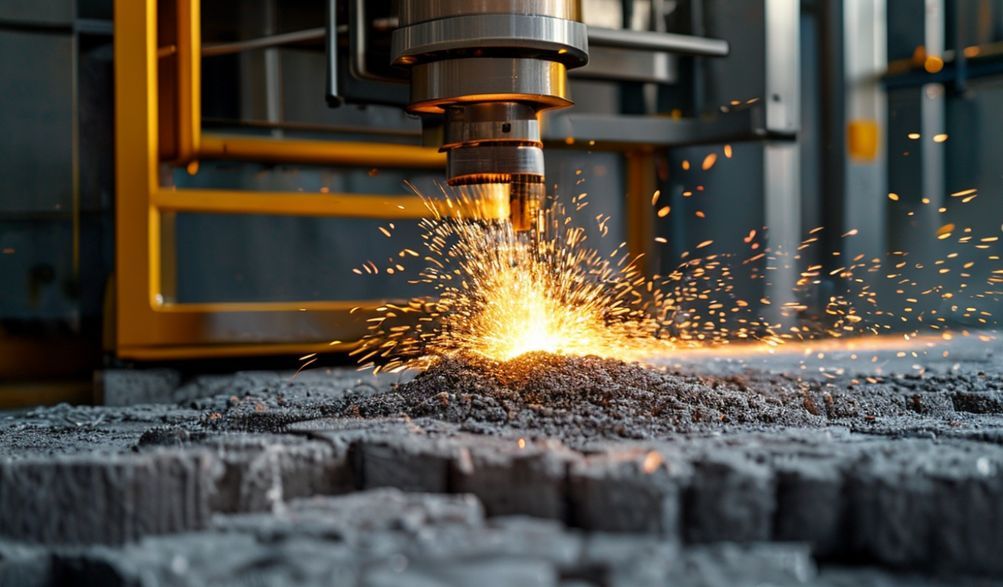
У своїй основі,машина для виготовлення бетонних плитних блоківце механізована система, призначена для автоматизації та оптимізації формування бетонних виробів. Вона використовує поєднання вібрації та високого тиску для ущільнення напівсухої бетонної суміші у формі, виробляючи однорідні плити, блоки, бруківку, бордюри та інші збірні елементи.
Процес, хоча й витончений у виконанні, дотримується логічної послідовності:
- Годування:Сиру бетонну суміш (цемент, заповнювачі, пісок і мінімальна кількість води) завантажують у бункер.
- Лиття:Суміш переміщують у форму або порожнину певної форми та розміру.
- Ущільнення:Це критична фаза. Потужні вібраційні двигуни ущільнюють суміш, усуваючи повітряні кишені, тоді як гідравлічний або механічний прес застосовує значну силу тиску (вимірюється в тонах). Ця подвійна дія забезпечує максимальну щільність і міцність.
- Викид:Свіжо сформований, ущільнений блок піднімають або виштовхують з форми на піддон або на землю.
- Лікування:Потім блоки переміщують до зони тверднення, де вони набувають міцності з часом завдяки контрольованій гідратації, яку часто прискорюють за допомогою пари або зрошення водою.
Основні сфері застосуванняБо ці машини величезні:
* Будівництво:Виробництво блоків для стін, порожнистих блоків для армованої конструкції та великих плит для систем підлоги.
* Інфраструктура та озеленення:Виробництво бруківки, бруківних плит для під'їзних шляхів і доріжок, бордюрів та блоків для підпірних стін.
* Комерційне виробництво:Служить основним обладнанням для заводів, що спеціалізуються на постачанні будівельної галузі стандартизованими збірними залізобетонними виробами.
Ключові переваги використання машини для виробництва блоків
Інвестування в машину для виробництва блоків — це не просто покупка; це стратегічне рішення, яке впливає на всю вашу діяльність. Ось основні переваги, що спонукають до цього інвестування.
Неперевершена ефективність та продуктивність
- Швидкість:Машини завершують виробничий цикл (наповнення, ущільнення, виштовхування) за секунди, виробляючи за годину те, що ручній бригаді могло б знадобитися цілий день.
- Об'єм: Designed for continuous operation, these machines can produce thousands of uniform blocks per shift, enabling you to meet large project deadlines or scale your supply business effortlessly.
Superior Quality & Consistency
- Однорідність: Every block produced has identical dimensions, weight, and density. This precision is impossible to achieve consistently with manual labor.
- High Strength: The controlled, high-pressure compaction results in blocks with excellent compressive strength, meeting or exceeding industry standards (like ASTM or IS codes) for load-bearing applications.
- Reduced Waste: Precise material measurement and consistent output minimize rejected units and material spillage.
Significant Cost Reduction
- Оптимізація трудових ресурсів: One machine operated by a small team replaces a large manual workforce, drastically reducing long-term labor costs and dependency.
- Матеріальна ефективність: Optimized mix designs and reduced waste lower raw material costs per block.
- Lower Rework: Consistent quality means fewer call-backs, repairs, or replacements on-site, protecting your project’s bottom line.
Operational Versatility
- Асортимент продукції: With interchangeable molds, a single machine can often produce a variety of products—from solid and hollow blocks to interlocking pavers and slabs of different thicknesses.
- Scale Adaptation: Machines are available for every scale, from small, mobile units for on-site projects to fully automated production lines for industrial plants.
Types of Concrete Block Making Machines
Understanding the classifications is crucial to narrowing your search. Machines are typically categorized by their level of automation, mobility, and output.
За способом керування: ручний, напівавтоматичний та повністю автоматичний.
- Ручні верстати: Require significant human effort for feeding, compaction (often via a lever), and ejection. They are low-cost and suitable for very small-scale or start-up ventures with minimal output needs (e.g., a few hundred blocks per day).
- Напівавтоматичні верстати: The most common choice for small to medium businesses. Key processes like vibration and compaction are powered (electric or diesel), but mold filling and block removal may require operator intervention. They offer an excellent balance of output, affordability, and control.
- Повністю автоматичні машини: These are computer-controlled production lines. They feature automated material batching, feeding, compaction, block ejection, stacking, and pallet return. While representing a higher initial investment, they maximize output (thousands of blocks per hour) with minimal labor and unparalleled consistency.
By Production Method: Stationary vs. Mobile
- Стаціонарні верстати для виготовлення блоків: These are fixed installations, typically found in a factory or dedicated production yard. They are designed for high-volume, continuous output and are often the core of semi- or fully-automatic production lines.
- Mobile Block Making Machines (Egg-Laying Type): These self-contained units can produce blocks directly on the ground at a construction site. As they move forward, they “lay” cured blocks behind them, eliminating the need for block transportation. This is a game-changer for large, remote projects, saving substantial logistics costs.
By Block Type: Slab, Paver, Hollow Block, and Interlocking Block Machines
While many machines are multi-purpose with mold changes, some are optimized for specific products:
* Slab Making Machines: Designed for larger, flatter products like paving slabs or flooring panels, often with larger mold tables and specific vibration systems.
* Paver Making Machines: Focus on producing smaller, high-density paving stones, frequently with color feeder attachments for surface coloring.
* Машини для виготовлення порожнистих блоків: Feature mold cores to create the hollow cavities in blocks used for reinforced construction, offering material savings and insulation properties.
* Interlocking Block Machines: Produce blocks with designed tongues and grooves that fit together without mortar, ideal for dry-stack walls and paving systems.
How to Choose the Right Machine: A Buyer’s Checklist
Making the wrong choice can be a costly mistake. Use this expert checklist to guide your evaluation and ensure your investment aligns perfectly with your goals.
Assess Your Production Requirements
Start by asking the fundamental questions:
* What is my required daily or hourly output (e.g., 2,000 blocks/day)?
* What specific products do I need to make (size, type, thickness)?
* Is this for a single projectабоcontinuous commercial production?
* What is the available space for the machine and curing area?
Evaluate Machine Specifications & Features
Look beyond the marketing and scrutinize the technical details:
* Сила тиску (тоннаж): Higher tonnage (e.g., 150 tons vs. 50 tons) generally means higher block density and strength.
* Вібраційна система: Consider the power (kW/HP) and frequency. A dual vibration system (both vertical and horizontal) often yields better compaction.
* Час циклу: How many seconds for one complete production cycle? This directly dictates maximum output.
* Mold Compatibility & Changeover Time: Can it accept the molds you need? How quickly and easily can molds be swapped?
* Ключові особливості: Look for automation aids like automatic feeders, concrete mixers, and block stackers, which significantly boost productivity.
Consider Power Source & Infrastructure
- Джерело живлення: Electric motors are cleaner and cheaper to run in fixed locations with grid access. Diesel engines offer mobility and independence from the power grid, ideal for remote sites.
- Site Needs: Ensure your location has the necessary space, a level and strong concrete foundation, and the required electrical connection (voltage, phase) for the machine.
Factor in Total Cost of Ownership
The purchase price is just the beginning. Consider:
* Installation & Commissioning costs.
* Regular Maintenance and the cost/availability of spare parts (wear parts like mold liners, springs, and hydraulic seals).
* Energy Consumption (electricity or diesel).
* The quality and cost of supplier support (training, service visits).
Vet the Manufacturer for Reliability
This is perhaps the most critical step for long-term success.
* Reputation & History: Research the manufacturer’s track record. How long have they been in business? Look for customer testimonials and case studies.
* Warranty: What is covered and for how long? A comprehensive warranty indicates confidence in product quality.
* Післяпродажне обслуговування: Is there local or readily available technical support? Can they provide timely spare parts? Will they offer proper installation and operator training?
* Дотримання вимог: Does the machinery meet relevant safety and quality standards?
Essential Tips for Operation and Maintenance
To protect your investment and ensure peak performance, proper operation and maintenance are non-negotiable.
Best Practices for Optimal Operation
- Mix Design is Key: Use a consistent, semi-dry concrete mix with the correct ratio of cement, sand, and aggregates (e.g., a standard 1:3:5 ratio is a starting point). The mix must be just wet enough to bind but dry enough to hold its shape immediately after ejection.
- Proper Curing: Do not neglect this step. Freshly ejected blocks are fragile. They must be kept moist (via water spraying or steam curing) for several days to achieve their design strength.
- Follow the Manual: Adhere strictly to the manufacturer’s recommended procedures for machine setup, operation, and safety.
Routine Maintenance Schedule
A small amount of preventative care prevents major downtime.
* Daily: Clean the mold, hopper, and feed system thoroughly after each shift. Check for loose bolts and nuts. Inspect hydraulic hoses for leaks.
* Weekly: Lubricate all moving parts as specified. Check the vibration motors and electrical connections.
* Monthly: Inspect wear parts like mold liners, springs, and pressure heads. Check hydraulic oil levels and filters.
Troubleshooting Common Issues
- Poor Surface Finish/Sticking Blocks: Often caused by a worn mold, insufficient vibration, or an incorrect (too wet) concrete mix.
- Low Block Density/Strength: Usually due to insufficient compaction pressure, a short vibration time, or an improper mix design with too much water or insufficient cement.
- Block Breaking During Ejection: Can be caused by a misaligned mold, damaged pallets, or, again, a mix that is too wet.
Часті питання (FAQ)
Q1: What is the average production capacity of a standard block making machine?
А: Capacity varies enormously. A small manual machine may produce 800-1500 blocks in an 8-hour shift. A semi-automatic model can produce 2000-5000 blocks, while a fully automatic line can exceed 10,000 blocks per shift. The specific block size, machine model, and cycle time are the determining factors.
Q2: Can one machine produce different sizes of blocks and slabs?
А: Yes, in most cases. The key is interchangeable molds. When evaluating a machine, confirm that the manufacturer offers a range of compatible molds for the products you need and that the mold changeover process is manageable for your operation.
Q3: What is the typical cost range for a concrete slab block making machine?
А: Prices can range from a few thousand dollars for a basic manual machine to tens or even hundreds of thousands for a high-output, fully automatic production line with auxiliary equipment. It is essential to get detailed quotes based on your specific required specifications and features.
Q4: How important is after-sales service when purchasing?
А: It is absolutely critical. A machine is a long-term asset. Reliable after-sales service—including installation guidance, operator training, readily available spare parts, and responsive technical support—is what ensures your machine runs smoothly for years, protecting your return on investment and business continuity.
Q5: What raw materials are needed besides the machine?
А: The primary materials are Portland cement, fine aggregate (sand), coarse aggregate (gravel or crushed stone), and water. For colored products, you will need concrete color pigments (iron oxide pigments are common). Some operations also use plasticizers or other admixtures to enhance mix workability or block properties.
Висновок
Theмашина для виготовлення бетонних плитних блоків stands as a transformative force in construction and manufacturing, decisively solving the age-old problems of inefficiency, inconsistency, and high cost associated with manual block production. By automating the core process of compaction, it unlocks new levels of productivity, quality, and profitability.
Your path to success lies in making an informed, strategic choice. Avoid the temptation to simply select the cheapest model. Instead, rigorously apply the buyer’s checklist provided in this guide—aligning the machine’s capabilities with your specific production needs, budget, and operational context. Remember, partnering with a reputable, supportive manufacturer is just as important as the technical specifications of the machine itself. Invest in proper training for your team and commit to a disciplined maintenance routine.
Ready to take the next step? We recommend contacting several trusted suppliers with your detailed requirements to obtain comparative quotes and, if possible, arrange live demonstrations. This due diligence is the final, crucial step in securing the right equipment to build the foundation for your future growth.
<