
Hướng Dẫn Toàn Diện Về Máy Sản Xuất Khối Bê Tông: Phân Loại, Lợi Ích & Cách Lựa Chọn
Giới thiệu
Ngành xây dựng toàn cầu đang chạy đua không ngừng với thời gian và ngân sách. Trọng tâm của vô số dự án—từ sàn nhà dân dụng và vỉa hè đô thị đến sân công nghiệp và tường rào—nằm ở một thành phần cơ bản: tấm bê tông và khối bê tông. Các phương pháp đúc truyền thống, thủ công cho những yếu tố thiết yếu này ngày càng trở nên khó duy trì, bị cản trở bởi sản xuất chậm, chi phí nhân công cao và sự không đồng nhất đáng lo ngại về chất lượng. Đối với các nhà thầu, nhà xây dựng và doanh nhân, điểm nghẽn này đại diện cho một thách thức lớn đối với khả năng sinh lời và mở rộng quy mô.
Giải pháp hiện đại:máy làm khối bê tông đúc sẵnThiết bị được thiết kế này biến hỗn hợp bê tông thô thành các đơn vị xây dựng chính xác, có cường độ cao với hiệu suất đáng kể. Nó là nền tảng của sản xuất bê tông đúc sẵn, đáp ứng nhu cầu về tốc độ, tính đồng nhất và kiểm soát chi phí.
Hướng dẫn toàn diện này được thiết kế để loại bỏ mọi thông tin nhiễu loạn. Dựa trên các phương pháp tối ưu nhất của ngành và kiến thức chuyên môn, chúng tôi cung cấp lời khuyên chuyên gia đáng tin cậy cho bất kỳ ai đang tìm cách đầu tư vào công nghệ đột phá này. Dù bạn là nhà thầu muốn tự sản xuất nội bộ, chủ doanh nghiệp khởi nghiệp sản xuất khối xây dựng, hay quản lý dự án tìm nguồn thiết bị, bạn sẽ học được:
- Những cỗ máy này là gì và cách chúng hoạt động.
- Những lợi ích không thể phủ nhận mà họ mang lại.
- Các loại khác nhau có sẵn trên thị trường.
- Một danh sách kiểm tra chi tiết, có thể hành động để lựa chọn mô hình phù hợp.
- Mẹo thiết yếu cho vận hành và bảo trì.
Hãy xây dựng nền tảng kiến thức cho khoản đầu tư thông minh tiếp theo của bạn.
Máy làm khối bê tông là gì?
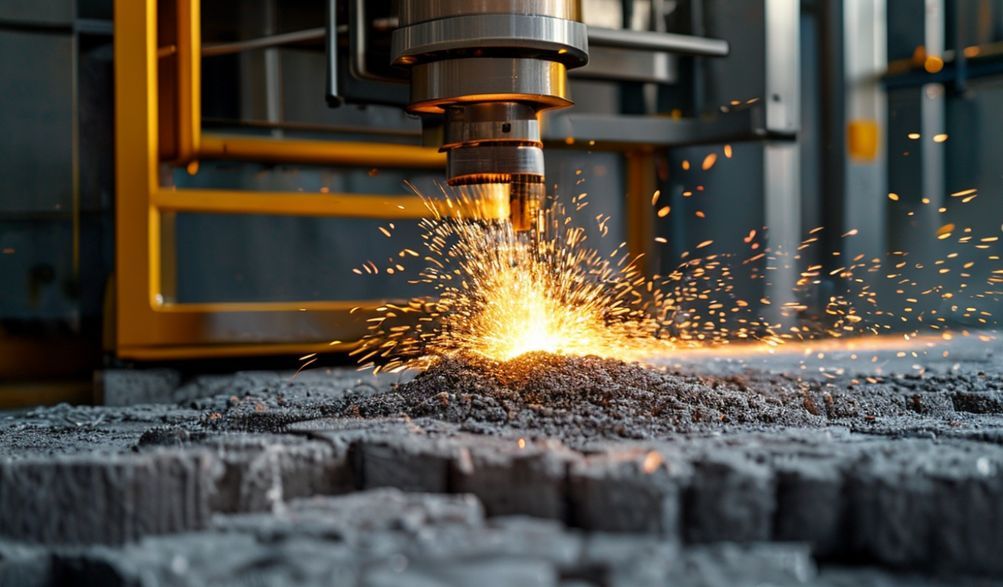
Về cốt lõi, mộtmáy làm khối bê tông đúc sẵnlà một hệ thống cơ khí hóa được thiết kế để tự động hóa và tối ưu hóa quá trình tạo hình sản phẩm bê tông. Nó sử dụng kết hợp rung động và áp lực cao để nén hỗn hợp bê tông bán khô vào khuôn, tạo ra các tấm, khối, gạch lát vỉa hè, đá bó vỉa và các cấu kiện đúc sẵn khác một cách đồng nhất.
Quá trình này, dù được thực hiện một cách tinh vi, vẫn tuân theo một trình tự logic:
- Cho ăn:Hỗn hợp bê tông thô (xi măng, cốt liệu, cát và một lượng nước tối thiểu) được đưa vào phễu.
- Đúc khuônHỗn hợp được chuyển vào khuôn hoặc khoang có hình dạng và kích thước cụ thể.
- Nén chặt:Đây là giai đoạn then chốt. Các động cơ rung mạnh mẽ giúp lèn chặt hỗn hợp, loại bỏ các túi khí, trong khi một máy ép thủy lực hoặc cơ học tác dụng một lực nén xuống đáng kể (đo bằng tấn). Hành động kép này đảm bảo độ đặc chắc và cường độ tối đa.
- Đẩy ra:Khối mới được tạo thành, đã được nén chặt sẽ được nâng lên hoặc đẩy ra khỏi khuôn và đặt lên pallet hoặc mặt đất.
- Chữa bệnh:Sau đó, các khối được chuyển đến khu vực bảo dưỡng, nơi chúng tăng cường độ bền theo thời gian thông qua quá trình thủy hóa có kiểm soát, thường được hỗ trợ bởi hơi nước hoặc phun nước.
Ứng dụng chínhvì những cỗ máy này rất rộng lớn:
* Xây dựng:Sản xuất gạch xây tường, gạch rỗng cho kết cấu bê tông cốt thép và tấm lớn cho hệ thống sàn nhà.
* Cơ sở hạ tầng & Cảnh quan:Sản xuất đá lát vỉa hè, gạch lồng ghép cho đường xe và lối đi, đá vỉa hè, và các khối tường chắn.
* Sản xuất Thương mại:作为专门为建筑行业供应标准化预制混凝土产品的工厂的主要设备。
Key Benefits of Using a Block Making Machine
Investing in a block making machine is not merely a purchase; it’s a strategic decision that impacts your entire operation. Here are the core advantages that drive this investment.
Hiệu Suất & Năng Suất Vượt Trội
- Tốc độ: Machines complete a production cycle (fill, compact, eject) in seconds, producing in an hour what might take a manual crew a full day.
- Khối lượng: Designed for continuous operation, these machines can produce thousands of uniform blocks per shift, enabling you to meet large project deadlines or scale your supply business effortlessly.
Superior Quality & Consistency
- Tính đồng nhất: Every block produced has identical dimensions, weight, and density. This precision is impossible to achieve consistently with manual labor.
- Độ Bền Cao: The controlled, high-pressure compaction results in blocks with excellent compressive strength, meeting or exceeding industry standards (like ASTM or IS codes) for load-bearing applications.
- Giảm Thiểu Rác Thải: Precise material measurement and consistent output minimize rejected units and material spillage.
Significant Cost Reduction
- Tối ưu hóa lao động: One machine operated by a small team replaces a large manual workforce, drastically reducing long-term labor costs and dependency.
- Hiệu suất vật liệu: Optimized mix designs and reduced waste lower raw material costs per block.
- Lower Rework: Consistent quality means fewer call-backs, repairs, or replacements on-site, protecting your project’s bottom line.
Operational Versatility
- Dải sản phẩm: With interchangeable molds, a single machine can often produce a variety of products—from solid and hollow blocks to interlocking pavers and slabs of different thicknesses.
- Scale Adaptation: Machines are available for every scale, from small, mobile units for on-site projects to fully automated production lines for industrial plants.
Types of Concrete Block Making Machines
Understanding the classifications is crucial to narrowing your search. Machines are typically categorized by their level of automation, mobility, and output.
By Operation: Manual, Semi-Automatic, and Fully Automatic
- Máy Móc Thủ Công: Require significant human effort for feeding, compaction (often via a lever), and ejection. They are low-cost and suitable for very small-scale or start-up ventures with minimal output needs (e.g., a few hundred blocks per day).
- Máy Bán Tự Động: The most common choice for small to medium businesses. Key processes like vibration and compaction are powered (electric or diesel), but mold filling and block removal may require operator intervention. They offer an excellent balance of output, affordability, and control.
- Máy Móc Tự Động Hoàn Toàn: These are computer-controlled production lines. They feature automated material batching, feeding, compaction, block ejection, stacking, and pallet return. While representing a higher initial investment, they maximize output (thousands of blocks per hour) with minimal labor and unparalleled consistency.
By Production Method: Stationary vs. Mobile
- Máy Sản Xuất Gạch Block Cố Định: These are fixed installations, typically found in a factory or dedicated production yard. They are designed for high-volume, continuous output and are often the core of semi- or fully-automatic production lines.
- Mobile Block Making Machines (Egg-Laying Type): These self-contained units can produce blocks directly on the ground at a construction site. As they move forward, they “lay” cured blocks behind them, eliminating the need for block transportation. This is a game-changer for large, remote projects, saving substantial logistics costs.
By Block Type: Slab, Paver, Hollow Block, and Interlocking Block Machines
While many machines are multi-purpose with mold changes, some are optimized for specific products:
* Slab Making Machines: Designed for larger, flatter products like paving slabs or flooring panels, often with larger mold tables and specific vibration systems.
* Máy làm gạch lát: Focus on producing smaller, high-density paving stones, frequently with color feeder attachments for surface coloring.
* Máy Sản Xuất Gạch Rỗng: Feature mold cores to create the hollow cavities in blocks used for reinforced construction, offering material savings and insulation properties.
* Máy Sản Xuất Gạch Không Nung Liên Kết: Produce blocks with designed tongues and grooves that fit together without mortar, ideal for dry-stack walls and paving systems.
How to Choose the Right Machine: A Buyer’s Checklist
Making the wrong choice can be a costly mistake. Use this expert checklist to guide your evaluation and ensure your investment aligns perfectly with your goals.
Assess Your Production Requirements
Start by asking the fundamental questions:
* What is my required daily or hourly output (e.g., 2,000 blocks/day)?
* What specific products do I need to make (size, type, thickness)?
* Is this for a single projecthoặccontinuous commercial production?
* What is the available space for the machine and curing area?
Evaluate Machine Specifications & Features
Look beyond the marketing and scrutinize the technical details:
* Lực Ép (Tấn Lực): Higher tonnage (e.g., 150 tons vs. 50 tons) generally means higher block density and strength.
* Hệ thống Rung Consider the power (kW/HP) and frequency. A dual vibration system (both vertical and horizontal) often yields better compaction.
* Thời gian chu kỳ: How many seconds for one complete production cycle? This directly dictates maximum output.
* Mold Compatibility & Changeover Time: Can it accept the molds you need? How quickly and easily can molds be swapped?
* Tính năng chính: Look for automation aids like automatic feeders, concrete mixers, and block stackers, which significantly boost productivity.
Consider Power Source & Infrastructure
- Nguồn điện: Electric motors are cleaner and cheaper to run in fixed locations with grid access. Diesel engines offer mobility and independence from the power grid, ideal for remote sites.
- Site Needs: Ensure your location has the necessary space, a level and strong concrete foundation, and the required electrical connection (voltage, phase) for the machine.
Factor in Total Cost of Ownership
The purchase price is just the beginning. Consider:
* Installation & Commissioning costs.
* Regular Maintenance and the cost/availability of spare parts (wear parts like mold liners, springs, and hydraulic seals).
* Energy Consumption (electricity or diesel).
* The quality and cost of supplier support (training, service visits).
Vet the Manufacturer for Reliability
This is perhaps the most critical step for long-term success.
* Reputation & History: Research the manufacturer’s track record. How long have they been in business? Look for customer testimonials and case studies.
* Bảo hành: What is covered and for how long? A comprehensive warranty indicates confidence in product quality.
* Dịch vụ hậu mãi: Is there local or readily available technical support? Can they provide timely spare parts? Will they offer proper installation and operator training?
* Tuân thủ Does the machinery meet relevant safety and quality standards?
Essential Tips for Operation and Maintenance
To protect your investment and ensure peak performance, proper operation and maintenance are non-negotiable.
Best Practices for Optimal Operation
- Mix Design is Key: Use a consistent, semi-dry concrete mix with the correct ratio of cement, sand, and aggregates (e.g., a standard 1:3:5 ratio is a starting point). The mix must be just wet enough to bind but dry enough to hold its shape immediately after ejection.
- Proper Curing: Do not neglect this step. Freshly ejected blocks are fragile. They must be kept moist (via water spraying or steam curing) for several days to achieve their design strength.
- Follow the Manual: Adhere strictly to the manufacturer’s recommended procedures for machine setup, operation, and safety.
Routine Maintenance Schedule
A small amount of preventative care prevents major downtime.
* Hàng ngày: Clean the mold, hopper, and feed system thoroughly after each shift. Check for loose bolts and nuts. Inspect hydraulic hoses for leaks.
* Hàng tuần: Lubricate all moving parts as specified. Check the vibration motors and electrical connections.
* Monthly: Inspect wear parts like mold liners, springs, and pressure heads. Check hydraulic oil levels and filters.
Troubleshooting Common Issues
- Poor Surface Finish/Sticking Blocks: Often caused by a worn mold, insufficient vibration, or an incorrect (too wet) concrete mix.
- Low Block Density/Strength: Usually due to insufficient compaction pressure, a short vibration time, or an improper mix design with too much water or insufficient cement.
- Block Breaking During Ejection: Can be caused by a misaligned mold, damaged pallets, or, again, a mix that is too wet.
Các Câu Hỏi Thường Gặp (FAQ)
Q1: What is the average production capacity of a standard block making machine?
A: Capacity varies enormously. A small manual machine may produce 800-1500 blocks in an 8-hour shift. A semi-automatic model can produce 2000-5000 blocks, while a fully automatic line can exceed 10,000 blocks per shift. The specific block size, machine model, and cycle time are the determining factors.
Q2: Can one machine produce different sizes of blocks and slabs?
A: Yes, in most cases. The key is interchangeable molds. When evaluating a machine, confirm that the manufacturer offers a range of compatible molds for the products you need and that the mold changeover process is manageable for your operation.
Q3: What is the typical cost range for a concrete slab block making machine?
A: Prices can range from a few thousand dollars for a basic manual machine to tens or even hundreds of thousands for a high-output, fully automatic production line with auxiliary equipment. It is essential to get detailed quotes based on your specific required specifications and features.
Q4: How important is after-sales service when purchasing?
A: It is absolutely critical. A machine is a long-term asset. Reliable after-sales service—including installation guidance, operator training, readily available spare parts, and responsive technical support—is what ensures your machine runs smoothly for years, protecting your return on investment and business continuity.
Q5: What raw materials are needed besides the machine?
A: The primary materials are Portland cement, fine aggregate (sand), coarse aggregate (gravel or crushed stone), and water. For colored products, you will need concrete color pigments (iron oxide pigments are common). Some operations also use plasticizers or other admixtures to enhance mix workability or block properties.
Conclusion
Cáimáy làm khối bê tông đúc sẵn stands as a transformative force in construction and manufacturing, decisively solving the age-old problems of inefficiency, inconsistency, and high cost associated with manual block production. By automating the core process of compaction, it unlocks new levels of productivity, quality, and profitability.
Your path to success lies in making an informed, strategic choice. Avoid the temptation to simply select the cheapest model. Instead, rigorously apply the buyer’s checklist provided in this guide—aligning the machine’s capabilities with your specific production needs, budget, and operational context. Remember, partnering with a reputable, supportive manufacturer is just as important as the technical specifications of the machine itself. Invest in proper training for your team and commit to a disciplined maintenance routine.
Ready to take the next step? We recommend contacting several trusted suppliers with your detailed requirements to obtain comparative quotes and, if possible, arrange live demonstrations. This due diligence is the final, crucial step in securing the right equipment to build the foundation for your future growth.
<