
Ang Komprehensibong Gabay sa Makina ng Paggawa ng Bloke ng Kongkretong Slab: Mga Uri, Pakinabang at Paano Pumili
Panimula
Ang pandaigdigang industriya ng konstruksiyon ay patuloy na nakikipagunahan sa oras at badyet. Sa sentro ng hindi mabilang na mga proyekto—mula sa sahig ng tirahan at mga bangketa sa lungsod hanggang sa mga industriyal na bakuran at mga pader ng hangganan—naroroon ang isang pangunahing sangkap: ang slab at bloke ng kongkreto. Ang tradisyonal, manwal na mga pamamaraan ng paghulma para sa mga mahahalagang elementong ito ay lalong hindi na mapananatili, pinahihirapan ng mabagal na produksiyon, mataas na gastos sa paggawa, at nakakabagot na mga pagkakapare-pareho sa kalidad. Para sa mga kontratista, tagapagtayo, at negosyante, ang balakid na ito ay kumakatawan sa isang malaking hamon sa kakayahang kumita at pagpapalawak.
Pumasok ang modernong solusyon: angmakina ng paggawa ng bloke ng kongkretong slabAng inhenyeriyadong kagamitang ito ay nagpapalit ng hilaw na pinaghalong kongkreto sa tumpak at matibay na mga yunit ng gusali nang may kahanga-hangang kahusayan. Ito ang batong-panulukan ng produksiyon ng prekast na kongkreto, na tumutugon sa pangangailangan para sa bilis, pagkakapare-pareho, at kontrol sa gastos.
Ang komprehensibong gabay na ito ay idinisenyo upang magbigay ng malinaw at diretsahang impormasyon. Batay sa mga nangungunang pamantayan ng industriya at teknikal na kaalaman, nag-aalok kami ng dalubhasa at mapagkakatiwalaang payo para sa sinumang nagnanais mamuhunan sa transformatibong teknolohiyang ito. Maging ikaw ay isang kontratistang naglalayong isagawa ang produksiyon sa loob ng sariling operasyon, isang negosyanteng naglulunsad ng negosyo sa paggawa ng bloke, o isang project manager na naghahanap ng kagamitan, matututunan mo ang mga sumusunod:
- Ano ang mga makinaryang ito at kung paano sila gumagana.
- Ang hindi matutulang mga benepisyo na kanilang naibibigay.
- Ang iba't ibang uri na magagamit sa merkado.
- Isang detalyado at magagamit na talaan ng mga hakbang para sa pagpili ng tamang modelo.
- Mahahalagang tip para sa operasyon at pagpapanatili.
Bumuo tayo ng pundasyon ng kaalaman para sa iyong susunod na matalinong pamumuhunan.
Ano ang Concrete Slab Block Making Machine?
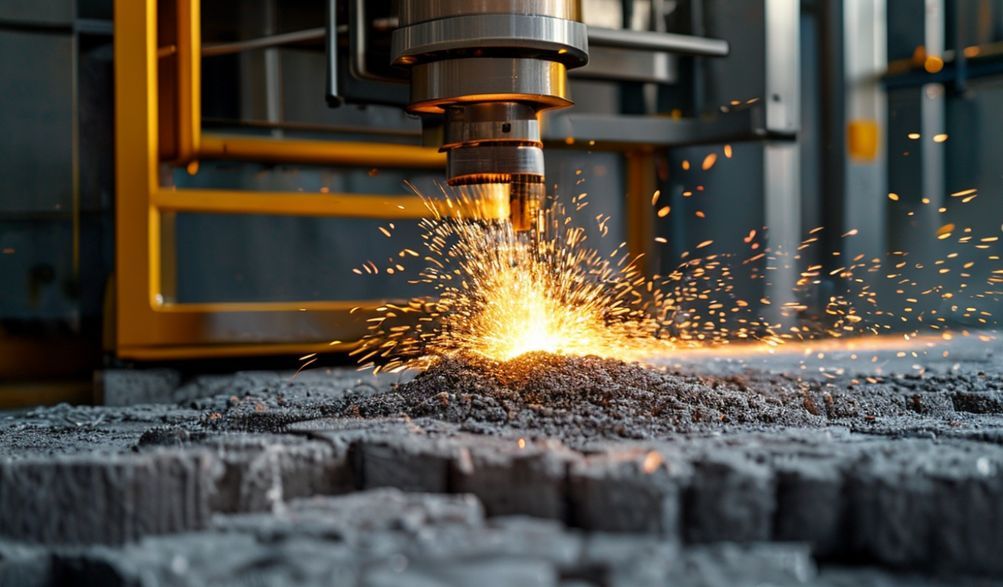
Sa puso nito, angmakina ng paggawa ng bloke ng kongkretong slabIto ay isang mekanisadong sistema na idinisenyo upang i-automate at i-optimize ang pagbuo ng mga produktong kongkreto. Gumagamit ito ng kombinasyon ng panginginig at mataas na presyon upang i-compact ang isang semi-dryong kongkretong timpla sa isang molde, na gumagawa ng mga uniform na slab, bloke, paver, curbstone, at iba pang mga prekast na elemento.
Ang proseso, bagaman masalimuot sa pagpapatupad, ay sumusunod sa isang lohikal na pagkakasunud-sunod:
- Pagpapakain:Ang hilaw na timpla ng kongkreto (semento, mga pinagsama, buhangin, at kaunting tubig) ay ikinakarga sa isang hopper.
- Paghuhulma:Ang halo ay inililipat sa isang molde o lukab na may tiyak na hugis at sukat.
- Pagpapatigas:Ito ang kritikal na yugto. Ang malalakas na motor ng panginginig ay nag-aayos ng halo, inaalis ang mga bulsa ng hangin, habang ang isang haydroliko o mekanikal na pindot ay naglalapat ng malaking pababang puwersa (sinusukat sa tonelada). Tinitiyak ng dalawahang pagkilos na ito ang pinakamataas na densidad at lakas.
- Pag-eject:Ang bagong nabuo at siksik na bloke ay itinataas o itinutulak palabas ng hulma papunta sa isang palyet o sa lupa.
- Pagpapagaling:Ang mga bloke ay inililipat sa isang lugar ng pagpapagaling, kung saan lumalakas ang mga ito sa paglipas ng panahon sa pamamagitan ng kontroladong hydration, na kadalasang tinutulungan ng singaw o pag-spray ng tubig.
Pangunahing aplikasyonSapagkat ang mga makinang ito ay napakalaki:
* Konstruksyon:Pagbuo ng mga bloke para sa mga pader, hollow blocks para sa reinforced na konstruksyon, at malalaking slab para sa mga sistema ng sahig.
* Infrastructure & Landscaping: Manufacturing paving stones, interlocking tiles for driveways and walkways, curbs, and retaining wall units.
* Commercial Production: Serving as the primary equipment for factories dedicated to supplying the construction industry with standardized precast concrete products.
Key Benefits of Using a Block Making Machine
Investing in a block making machine is not merely a purchase; it’s a strategic decision that impacts your entire operation. Here are the core advantages that drive this investment.
Walang Kapantas na Kahusayan at Produktibidad
- Bilis: Machines complete a production cycle (fill, compact, eject) in seconds, producing in an hour what might take a manual crew a full day.
- Volume: Designed for continuous operation, these machines can produce thousands of uniform blocks per shift, enabling you to meet large project deadlines or scale your supply business effortlessly.
Superior Quality & Consistency
- Pagkakapare-pareho: Every block produced has identical dimensions, weight, and density. This precision is impossible to achieve consistently with manual labor.
- High Strength: The controlled, high-pressure compaction results in blocks with excellent compressive strength, meeting or exceeding industry standards (like ASTM or IS codes) for load-bearing applications.
- Reduced Waste: Precise material measurement and consistent output minimize rejected units and material spillage.
Significant Cost Reduction
- Pagpapainam ng Paggawa: One machine operated by a small team replaces a large manual workforce, drastically reducing long-term labor costs and dependency.
- Kahusayan sa Materyales: Optimized mix designs and reduced waste lower raw material costs per block.
- Lower Rework: Consistent quality means fewer call-backs, repairs, or replacements on-site, protecting your project’s bottom line.
Operational Versatility
- Saklaw ng Produkto: With interchangeable molds, a single machine can often produce a variety of products—from solid and hollow blocks to interlocking pavers and slabs of different thicknesses.
- Scale Adaptation: Machines are available for every scale, from small, mobile units for on-site projects to fully automated production lines for industrial plants.
Types of Concrete Block Making Machines
Understanding the classifications is crucial to narrowing your search. Machines are typically categorized by their level of automation, mobility, and output.
By Operation: Manual, Semi-Automatic, and Fully Automatic
- Manual na Makina: Require significant human effort for feeding, compaction (often via a lever), and ejection. They are low-cost and suitable for very small-scale or start-up ventures with minimal output needs (e.g., a few hundred blocks per day).
- Semi-Automatikong Makina: The most common choice for small to medium businesses. Key processes like vibration and compaction are powered (electric or diesel), but mold filling and block removal may require operator intervention. They offer an excellent balance of output, affordability, and control.
- Ganap na Awtomatikong Makina: These are computer-controlled production lines. They feature automated material batching, feeding, compaction, block ejection, stacking, and pallet return. While representing a higher initial investment, they maximize output (thousands of blocks per hour) with minimal labor and unparalleled consistency.
By Production Method: Stationary vs. Mobile
- Mga Makina sa Paggawa ng Bloke na Nakatigil: These are fixed installations, typically found in a factory or dedicated production yard. They are designed for high-volume, continuous output and are often the core of semi- or fully-automatic production lines.
- Mobile Block Making Machines (Egg-Laying Type): These self-contained units can produce blocks directly on the ground at a construction site. As they move forward, they “lay” cured blocks behind them, eliminating the need for block transportation. This is a game-changer for large, remote projects, saving substantial logistics costs.
By Block Type: Slab, Paver, Hollow Block, and Interlocking Block Machines
While many machines are multi-purpose with mold changes, some are optimized for specific products:
* Slab Making Machines: Designed for larger, flatter products like paving slabs or flooring panels, often with larger mold tables and specific vibration systems.
* Mga Makina ng Paggawa ng Paver: Focus on producing smaller, high-density paving stones, frequently with color feeder attachments for surface coloring.
* Mga Makina ng Hollow Block: Feature mold cores to create the hollow cavities in blocks used for reinforced construction, offering material savings and insulation properties.
* Interlocking Block Machines: Produce blocks with designed tongues and grooves that fit together without mortar, ideal for dry-stack walls and paving systems.
How to Choose the Right Machine: A Buyer’s Checklist
Making the wrong choice can be a costly mistake. Use this expert checklist to guide your evaluation and ensure your investment aligns perfectly with your goals.
Assess Your Production Requirements
Start by asking the fundamental questions:
* What is my required daily or hourly output (e.g., 2,000 blocks/day)?
* What specific products do I need to make (size, type, thickness)?
* Is this for a single projectocontinuous commercial production?
* What is the available space for the machine and curing area?
Evaluate Machine Specifications & Features
Look beyond the marketing and scrutinize the technical details:
* Puwersa ng Presyon (Toneladahe): Higher tonnage (e.g., 150 tons vs. 50 tons) generally means higher block density and strength.
* Sistema ng Pagyanig: Consider the power (kW/HP) and frequency. A dual vibration system (both vertical and horizontal) often yields better compaction.
* Oras ng Ikot: How many seconds for one complete production cycle? This directly dictates maximum output.
* Mold Compatibility & Changeover Time: Can it accept the molds you need? How quickly and easily can molds be swapped?
* Mga Pangunahing Tampok: Look for automation aids like automatic feeders, concrete mixers, and block stackers, which significantly boost productivity.
Consider Power Source & Infrastructure
- Pinagmumulan ng Kuryente Electric motors are cleaner and cheaper to run in fixed locations with grid access. Diesel engines offer mobility and independence from the power grid, ideal for remote sites.
- Site Needs: Ensure your location has the necessary space, a level and strong concrete foundation, and the required electrical connection (voltage, phase) for the machine.
Factor in Total Cost of Ownership
The purchase price is just the beginning. Consider:
* Installation & Commissioning costs.
* Regular Maintenance and the cost/availability of spare parts (wear parts like mold liners, springs, and hydraulic seals).
* Energy Consumption (electricity or diesel).
* The quality and cost of supplier support (training, service visits).
Vet the Manufacturer for Reliability
This is perhaps the most critical step for long-term success.
* Reputation & History: Research the manufacturer’s track record. How long have they been in business? Look for customer testimonials and case studies.
* Garantiya: What is covered and for how long? A comprehensive warranty indicates confidence in product quality.
* Serbisyong Pagkatapos ng Benta: Is there local or readily available technical support? Can they provide timely spare parts? Will they offer proper installation and operator training?
* Pagsunod: Does the machinery meet relevant safety and quality standards?
Essential Tips for Operation and Maintenance
To protect your investment and ensure peak performance, proper operation and maintenance are non-negotiable.
Best Practices for Optimal Operation
- Mix Design is Key: Use a consistent, semi-dry concrete mix with the correct ratio of cement, sand, and aggregates (e.g., a standard 1:3:5 ratio is a starting point). The mix must be just wet enough to bind but dry enough to hold its shape immediately after ejection.
- Proper Curing: Do not neglect this step. Freshly ejected blocks are fragile. They must be kept moist (via water spraying or steam curing) for several days to achieve their design strength.
- Follow the Manual: Adhere strictly to the manufacturer’s recommended procedures for machine setup, operation, and safety.
Routine Maintenance Schedule
A small amount of preventative care prevents major downtime.
* Daily: Clean the mold, hopper, and feed system thoroughly after each shift. Check for loose bolts and nuts. Inspect hydraulic hoses for leaks.
* Weekly: Lubricate all moving parts as specified. Check the vibration motors and electrical connections.
* Monthly: Inspect wear parts like mold liners, springs, and pressure heads. Check hydraulic oil levels and filters.
Troubleshooting Common Issues
- Poor Surface Finish/Sticking Blocks: Often caused by a worn mold, insufficient vibration, or an incorrect (too wet) concrete mix.
- Low Block Density/Strength: Usually due to insufficient compaction pressure, a short vibration time, or an improper mix design with too much water or insufficient cement.
- Block Breaking During Ejection: Can be caused by a misaligned mold, damaged pallets, or, again, a mix that is too wet.
Frequently Asked Questions (FAQ)
Q1: What is the average production capacity of a standard block making machine?
A: Capacity varies enormously. A small manual machine may produce 800-1500 blocks in an 8-hour shift. A semi-automatic model can produce 2000-5000 blocks, while a fully automatic line can exceed 10,000 blocks per shift. The specific block size, machine model, and cycle time are the determining factors.
Q2: Can one machine produce different sizes of blocks and slabs?
A: Yes, in most cases. The key is interchangeable molds. When evaluating a machine, confirm that the manufacturer offers a range of compatible molds for the products you need and that the mold changeover process is manageable for your operation.
Q3: What is the typical cost range for a concrete slab block making machine?
A: Prices can range from a few thousand dollars for a basic manual machine to tens or even hundreds of thousands for a high-output, fully automatic production line with auxiliary equipment. It is essential to get detailed quotes based on your specific required specifications and features.
Q4: How important is after-sales service when purchasing?
A: It is absolutely critical. A machine is a long-term asset. Reliable after-sales service—including installation guidance, operator training, readily available spare parts, and responsive technical support—is what ensures your machine runs smoothly for years, protecting your return on investment and business continuity.
Q5: What raw materials are needed besides the machine?
A: The primary materials are Portland cement, fine aggregate (sand), coarse aggregate (gravel or crushed stone), and water. For colored products, you will need concrete color pigments (iron oxide pigments are common). Some operations also use plasticizers or other admixtures to enhance mix workability or block properties.
Conclusion
Angmakina ng paggawa ng bloke ng kongkretong slab stands as a transformative force in construction and manufacturing, decisively solving the age-old problems of inefficiency, inconsistency, and high cost associated with manual block production. By automating the core process of compaction, it unlocks new levels of productivity, quality, and profitability.
Your path to success lies in making an informed, strategic choice. Avoid the temptation to simply select the cheapest model. Instead, rigorously apply the buyer’s checklist provided in this guide—aligning the machine’s capabilities with your specific production needs, budget, and operational context. Remember, partnering with a reputable, supportive manufacturer is just as important as the technical specifications of the machine itself. Invest in proper training for your team and commit to a disciplined maintenance routine.
Ready to take the next step? We recommend contacting several trusted suppliers with your detailed requirements to obtain comparative quotes and, if possible, arrange live demonstrations. This due diligence is the final, crucial step in securing the right equipment to build the foundation for your future growth.
<