
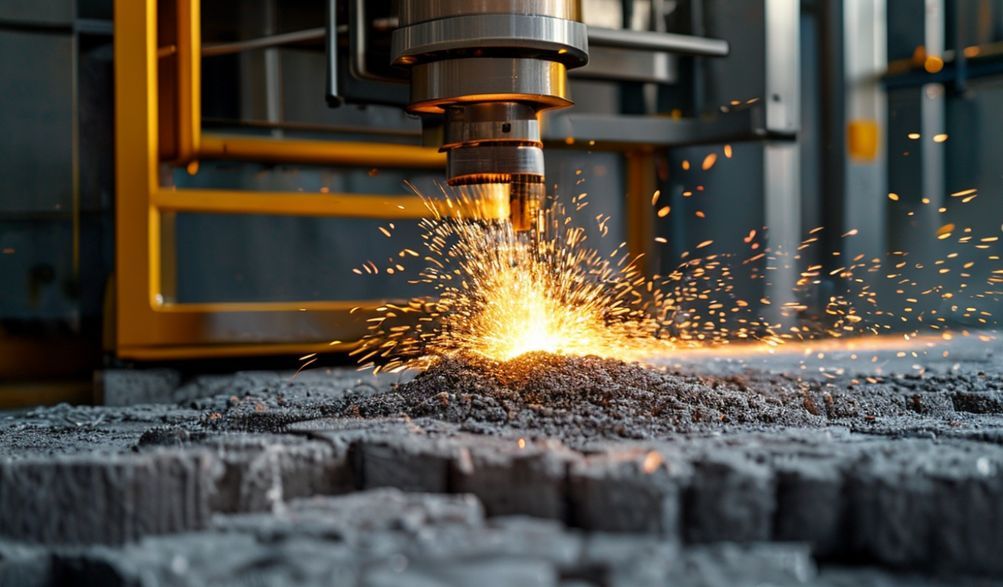
O Guia Definitivo para Máquinas de Fabricação de Blocos de Laje de Concreto: Tipos, Vantagens e Como Escolher
Introdução
A indústria global da construção está em uma corrida perpétua contra o tempo e o orçamento. No centro de inúmeros projetos – desde pisos residenciais e pavimentações urbanas até pátios industriais e muros de delimitação – está um componente fundamental: a laje e o bloco de concreto. Os métodos tradicionais e manuais de moldagem desses elementos essenciais são cada vez mais insustentáveis, atormentados por produção lenta, altos custos de mão de obra e frustrantes inconsistências na qualidade. Para empreiteiros, construtores e empreendedores, esse gargalo representa um desafio significativo para a lucratividade e a escalabilidade.
Entre a solução moderna: amáquina de fabricação de blocos de laje de concretoEste equipamento projetado transforma a mistura bruta de concreto em unidades de construção precisas e de alta resistência com eficiência notável. É a pedra angular da produção de concreto pré-moldado, atendendo à demanda por velocidade, consistência e controle de custos.
Este guia abrangente foi projetado para cortar o ruído. Baseando-se nas melhores práticas do setor e conhecimento técnico, oferecemos conselhos especializados e confiáveis para qualquer pessoa que deseja investir nesta tecnologia transformadora. Seja você um empreiteiro que visa internalizar a produção, um empresário lançando um empreendimento de fabricação de blocos, ou um gerente de projeto adquirindo equipamentos, você aprenderá:
- O que são essas máquinas e como elas funcionam.
- Os benefícios inegáveis que eles proporcionam.
- Os diferentes tipos disponíveis no mercado.
- Um checklist detalhado e acionável para escolher o modelo certo.
- Dicas essenciais para operação e manutenção.
Vamos construir uma base de conhecimento para o seu próximo investimento inteligente.
O que é uma Máquina de Fabricação de Blocos de Laje de Concreto?
No seu cerne, ummáquina de fabricação de blocos de laje de concretoé um sistema mecanizado projetado para automatizar e otimizar a formação de produtos de concreto. Ele utiliza uma combinação de vibração e alta pressão para compactar uma mistura de concreto semi-seco em um molde, produzindo lajes, blocos, pavimentadoras, meio-fios e outros elementos pré-fabricados uniformes.
O processo, embora sofisticado em sua execução, segue uma sequência lógica:
- Alimentação:A mistura de concreto bruta (cimento, agregados, areia e água mínima) é carregada em um funil.
- Moldagem:A mistura é transferida para um molde ou cavidade de formato e tamanho específicos.
- Compactação:Esta é a fase crítica. Motores de vibração potentes assentam a mistura, eliminando bolsas de ar, enquanto uma prensa hidráulica ou mecânica aplica uma força descendente substancial (medida em toneladas). Esta ação dupla garante densidade e resistência máximas.
- Ejeção:O bloco recém-formado e compactado é levantado ou empurrado para fora do molde sobre um palete ou no chão.
- Cura:Os blocos são então movidos para uma área de cura, onde ganham força ao longo do tempo por meio de hidratação controlada, frequentemente auxiliada por vapor ou aspersão de água.
Aplicações primáriaspois essas máquinas são vastas:
* Construção:Produção de blocos para paredes, blocos vazados para construção reforçada e grandes lajes para sistemas de piso.
* Infraestrutura e Paisagismo:Fabricação de paralelepípedos, ladrilhos intertravados para calçadas e passarelas, meio-fios e unidades de muro de contenção.
* Produção Comercial:Servindo como o equipamento principal para fábricas dedicadas a fornecer produtos de concreto pré-moldado padronizados para a indústria da construção.
Principais Benefícios do Uso de uma Máquina de Fabricar Blocos
Investir em uma máquina de fazer blocos não é apenas uma compra; é uma decisão estratégica que impacta toda a sua operação. Aqui estão as principais vantagens que impulsionam esse investimento.
Eficiência e Produtividade Inigualáveis
- Velocidade:As máquinas completam um ciclo de produção (encher, compactar, ejetar) em segundos, produzindo em uma hora o que uma equipe manual levaria um dia inteiro.
- Volume:Projetadas para operação contínua, essas máquinas podem produzir milhares de blocos uniformes por turno, permitindo que você cumpra prazos de grandes projetos ou expanda seu negócio de fornecimento sem esforço.
Qualidade Superior e Consistência
- Uniformidade:Cada bloco produzido tem dimensões, peso e densidade idênticos. Essa precisão é impossível de ser alcançada consistentemente com trabalho manual.
- Alta Resistência:A compactação controlada de alta pressão resulta em blocos com excelente resistência à compressão, atendendo ou superando os padrões do setor (como os códigos ASTM ou IS) para aplicações de carga estrutural.
- Resíduos Reduzidos:A medição precisa de materiais e a produção consistente minimizam unidades rejeitadas e desperdício de material.
Redução Significativa de Custos
- Otimização de Mão de Obra:Uma máquina operada por uma pequena equipe substitui uma grande força de trabalho manual, reduzindo drasticamente os custos de mão de obra a longo prazo e a dependência.
- Eficiência de Materiais:Projetos de mistura otimizados e redução de resíduos diminuem os custos de matéria-prima por bloco.
- Redução de Retrabalho: Consistent quality means fewer call-backs, repairs, or replacements on-site, protecting your project’s bottom line.
Operational Versatility
- Gama de Produtos: With interchangeable molds, a single machine can often produce a variety of products—from solid and hollow blocks to interlocking pavers and slabs of different thicknesses.
- Scale Adaptation: Machines are available for every scale, from small, mobile units for on-site projects to fully automated production lines for industrial plants.
Types of Concrete Block Making Machines
Understanding the classifications is crucial to narrowing your search. Machines are typically categorized by their level of automation, mobility, and output.
By Operation: Manual, Semi-Automatic, and Fully Automatic
- Máquinas Manuais: Require significant human effort for feeding, compaction (often via a lever), and ejection. They are low-cost and suitable for very small-scale or start-up ventures with minimal output needs (e.g., a few hundred blocks per day).
- Máquinas Semiautomáticas: The most common choice for small to medium businesses. Key processes like vibration and compaction are powered (electric or diesel), but mold filling and block removal may require operator intervention. They offer an excellent balance of output, affordability, and control.
- Máquinas Totalmente Automáticas: These are computer-controlled production lines. They feature automated material batching, feeding, compaction, block ejection, stacking, and pallet return. While representing a higher initial investment, they maximize output (thousands of blocks per hour) with minimal labor and unparalleled consistency.
By Production Method: Stationary vs. Mobile
- Máquinas Estacionárias para Fabricação de Blocos: These are fixed installations, typically found in a factory or dedicated production yard. They are designed for high-volume, continuous output and are often the core of semi- or fully-automatic production lines.
- Mobile Block Making Machines (Egg-Laying Type): These self-contained units can produce blocks directly on the ground at a construction site. As they move forward, they “lay” cured blocks behind them, eliminating the need for block transportation. This is a game-changer for large, remote projects, saving substantial logistics costs.
By Block Type: Slab, Paver, Hollow Block, and Interlocking Block Machines
While many machines are multi-purpose with mold changes, some are optimized for specific products:
* Slab Making Machines: Designed for larger, flatter products like paving slabs or flooring panels, often with larger mold tables and specific vibration systems.
* Máquinas para Fabricação de Pavimentadoras: Focus on producing smaller, high-density paving stones, frequently with color feeder attachments for surface coloring.
* Máquinas de Blocos Vazios: Feature mold cores to create the hollow cavities in blocks used for reinforced construction, offering material savings and insulation properties.
* Interlocking Block Machines: Produce blocks with designed tongues and grooves that fit together without mortar, ideal for dry-stack walls and paving systems.
How to Choose the Right Machine: A Buyer’s Checklist
Making the wrong choice can be a costly mistake. Use this expert checklist to guide your evaluation and ensure your investment aligns perfectly with your goals.
Assess Your Production Requirements
Start by asking the fundamental questions:
* What is my required daily or hourly output (e.g., 2,000 blocks/day)?
* What specific products do I need to make (size, type, thickness)?
* Is this for a single projectoucontinuous commercial production?
* What is the available space for the machine and curing area?
Evaluate Machine Specifications & Features
Look beyond the marketing and scrutinize the technical details:
* Força de Pressão (Tonelagem): Higher tonnage (e.g., 150 tons vs. 50 tons) generally means higher block density and strength.
* Sistema de Vibração: Consider the power (kW/HP) and frequency. A dual vibration system (both vertical and horizontal) often yields better compaction.
* Tempo de Ciclo: How many seconds for one complete production cycle? This directly dictates maximum output.
* Mold Compatibility & Changeover Time: Can it accept the molds you need? How quickly and easily can molds be swapped?
* Principais Características: Look for automation aids like automatic feeders, concrete mixers, and block stackers, which significantly boost productivity.
Consider Power Source & Infrastructure
- Fonte de Energia: Electric motors are cleaner and cheaper to run in fixed locations with grid access. Diesel engines offer mobility and independence from the power grid, ideal for remote sites.
- Site Needs: Ensure your location has the necessary space, a level and strong concrete foundation, and the required electrical connection (voltage, phase) for the machine.
Factor in Total Cost of Ownership
The purchase price is just the beginning. Consider:
* Installation & Commissioning costs.
* Regular Maintenance and the cost/availability of spare parts (wear parts like mold liners, springs, and hydraulic seals).
* Consumo de Energia (electricity or diesel).
* The quality and cost of supplier support (training, service visits).
Vet the Manufacturer for Reliability
This is perhaps the most critical step for long-term success.
* Reputation & History: Research the manufacturer’s track record. How long have they been in business? Look for customer testimonials and case studies.
* Garantia: What is covered and for how long? A comprehensive warranty indicates confidence in product quality.
* Serviço Pós-Venda: Is there local or readily available technical support? Can they provide timely spare parts? Will they offer proper installation and operator training?
* Conformidade: Does the machinery meet relevant safety and quality standards?
Essential Tips for Operation and Maintenance
To protect your investment and ensure peak performance, proper operation and maintenance are non-negotiable.
Best Practices for Optimal Operation
- Mix Design is Key: Use a consistent, semi-dry concrete mix with the correct ratio of cement, sand, and aggregates (e.g., a standard 1:3:5 ratio is a starting point). The mix must be just wet enough to bind but dry enough to hold its shape immediately after ejection.
- Proper Curing: Do not neglect this step. Freshly ejected blocks are fragile. They must be kept moist (via water spraying or steam curing) for several days to achieve their design strength.
- Follow the Manual: Adhere strictly to the manufacturer’s recommended procedures for machine setup, operation, and safety.
Routine Maintenance Schedule
A small amount of preventative care prevents major downtime.
* Daily: Clean the mold, hopper, and feed system thoroughly after each shift. Check for loose bolts and nuts. Inspect hydraulic hoses for leaks.
* Weekly: Lubricate all moving parts as specified. Check the vibration motors and electrical connections.
* Monthly: Inspect wear parts like mold liners, springs, and pressure heads. Check hydraulic oil levels and filters.
Troubleshooting Common Issues
- Poor Surface Finish/Sticking Blocks: Often caused by a worn mold, insufficient vibration, or an incorrect (too wet) concrete mix.
- Low Block Density/Strength: Usually due to insufficient compaction pressure, a short vibration time, or an improper mix design with too much water or insufficient cement.
- Block Breaking During Ejection: Can be caused by a misaligned mold, damaged pallets, or, again, a mix that is too wet.
Perguntas Frequentes (FAQ)
Q1: What is the average production capacity of a standard block making machine?
A: Capacity varies enormously. A small manual machine may produce 800-1500 blocks in an 8-hour shift. A semi-automatic model can produce 2000-5000 blocks, while a fully automatic line can exceed 10,000 blocks per shift. The specific block size, machine model, and cycle time are the determining factors.
Q2: Can one machine produce different sizes of blocks and slabs?
A: Yes, in most cases. The key is interchangeable molds. When evaluating a machine, confirm that the manufacturer offers a range of compatible molds for the products you need and that the mold changeover process is manageable for your operation.
Q3: What is the typical cost range for a concrete slab block making machine?
A: Prices can range from a few thousand dollars for a basic manual machine to tens or even hundreds of thousands for a high-output, fully automatic production line with auxiliary equipment. It is essential to get detailed quotes based on your specific required specifications and features.
Q4: How important is after-sales service when purchasing?
A: It is absolutely critical. A machine is a long-term asset. Reliable after-sales service—including installation guidance, operator training, readily available spare parts, and responsive technical support—is what ensures your machine runs smoothly for years, protecting your return on investment and business continuity.
Q5: What raw materials are needed besides the machine?
A: The primary materials are Portland cement, fine aggregate (sand), coarse aggregate (gravel or crushed stone), and water. For colored products, you will need concrete color pigments (iron oxide pigments are common). Some operations also use plasticizers or other admixtures to enhance mix workability or block properties.
Conclusão
Amáquina de fabricação de blocos de laje de concreto stands as a transformative force in construction and manufacturing, decisively solving the age-old problems of inefficiency, inconsistency, and high cost associated with manual block production. By automating the core process of compaction, it unlocks new levels of productivity, quality, and profitability.
Your path to success lies in making an informed, strategic choice. Avoid the temptation to simply select the cheapest model. Instead, rigorously apply the buyer’s checklist provided in this guide—aligning the machine’s capabilities with your specific production needs, budget, and operational context. Remember, partnering with a reputable, supportive manufacturer is just as important as the technical specifications of the machine itself. Invest in proper training for your team and commit to a disciplined maintenance routine.
Ready to take the next step? We recommend contacting several trusted suppliers with your detailed requirements to obtain comparative quotes and, if possible, arrange live demonstrations. This due diligence is the final, crucial step in securing the right equipment to build the foundation for your future growth.
<