
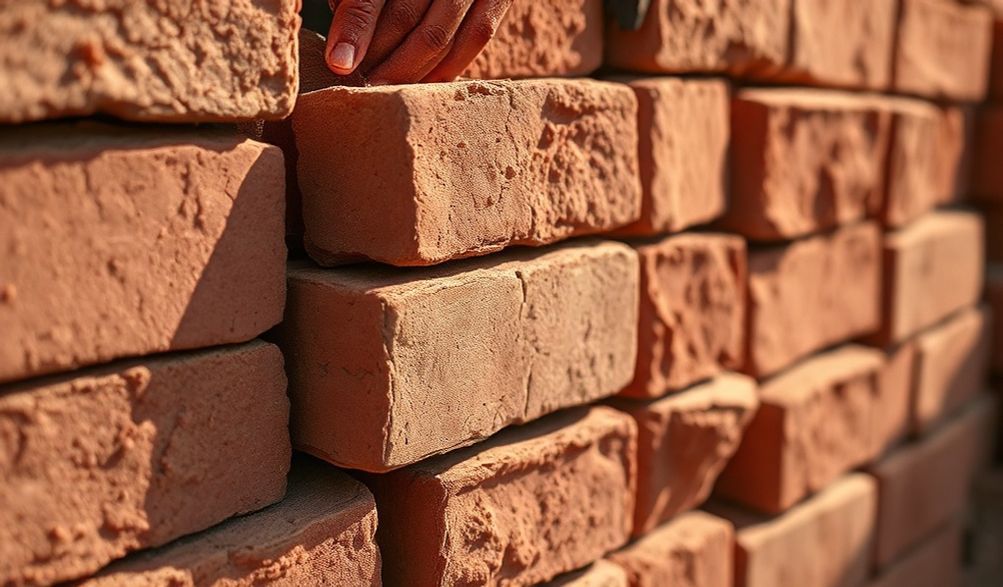
Le Guide Ultime des Machines à Blocs de Terre Interlockables : Construisez de Manière Durable
Introduction
Le défi mondial est sans équivoque : un besoin croissant de logements abordables, doublé de l'impact environnemental de la construction conventionnelle. La recherche de solutions de construction durables, résilientes et économiques n'a jamais été aussi urgente. Dans cette quête, une technologie puissante, mais d'une simplicité élégante, gagne du terrain : la machine à blocs de terre compactée (BTC) à emboîtement.
Ce guide présente la machine ISB non seulement comme un outil, mais comme une approche révolutionnaire de la construction. Elle permet aux individus, aux communautés et aux promoteurs de construire des structures solides, esthétiques et écologiques avec la terre même sous leurs pieds. Notre propos s'appuie sur des principes d'ingénierie, une expérience pratique de terrain et un engagement à fournir des informations fiables et exploitables. Notre objectif est d'être votre ressource de référence sur cette technologie transformatrice.
En explorant les subtilités de la « machine à blocs de terre emboîtables », vous découvrirez son fonctionnement, ses avantages profonds, les différents types disponibles et les étapes cruciales pour l’utiliser avec succès. Que vous soyez un auto-constructeur, un professionnel du développement ou simplement curieux des alternatives durables, ce guide vous promet un parcours complet, du choix de la terre à la construction d’un mur solide.
Qu'est-ce qu'une machine à blocs de sol imbriqués ? (Comprendre la technologie de base)
Au cœur de son fonctionnement, une machine à blocs de terre emboîtables est un appareil qui compresse de la terre humide en un bloc de construction de haute densité et de forme précise. Sa caractéristique principale est le design emboîtable moulé dans chaque bloc, permettant de les assembler comme les pièces d'un puzzle, souvent sans nécessiter de mortier.
Le Principe Fondamental : Compression et Enchevêtrement
La mécanique est d'une simplicité magnifique.
- Compression :Un mélange de terre humide—souvent stabilisé avec une petite quantité de ciment ou de chaux—est placé dans un moule en acier. Une presse à haute pression, qu'elle soit manuelle, hydraulique ou mécanique, comprime ensuite ce matériau. Cette force aligne les particules de terre, élimine les poches d'air et crée un bloc d'une résistance remarquable.
- Interlock:Contrairement à une brique rectangulaire standard, une ISB présente un motif en relief (langue) sur sa face supérieure et une rainure correspondante sur sa face inférieure. Certains modèles intègrent également des bords en forme de puzzle sur les côtés. Cela permet aux blocs de s'emboîter verticalement et horizontalement, formant ainsi un système de mur monolithique stable grâce à l'empilement à sec.
Une brève histoire et son impact mondial
Le concept moderne a évolué à partir du CINVA Ram manuel développé dans les années 1950. Les machines actuelles sont des itérations sophistiquées de cette idée originale, allant des presses à commande manuelle aux lignes de production entièrement automatisées.
L'impact mondial est considérable. La technologie ISB a été déterminante dans :
* Reconstruction post-catastropheDans des régions comme Haïti et le Népal, fournissant des logements rapides et à faible coût.
* Projets de logements abordablesà travers l'Afrique, l'Asie et l'Amérique latine.
* Constructions durablesdans le monde entier, des écolodges aux résidences privées, appréciées pour leur faible énergie grise et leurs performances thermiques.
Principaux avantages de l'utilisation d'une machine à blocs de terre interlockables
Les avantages de cette technologie s'étendent aux domaines économique, environnemental et structurel, ce qui constitue un argument convaincant pour son adoption.
Avantages économiques et d'accessibilité
- Réduction drastique des coûts des matériaux.L'ingrédient principal—la terre—est souvent disponible sur place ou localement à un coût minime. Cela élimine la dépense majeure des briques cuites ou des blocs de béton.
- Faible coût opérationnel :Une fois la machine acquise, les coûts de production sont très bas, nécessitant un minimum d'énergie (surtout pour les modèles manuels) et de main-d'œuvre.
- Potentiel de génération de revenus :Les propriétaires peuvent créer une petite entreprise, produire des blocs pour leur communauté et générer des emplois locaux, favorisant ainsiconstruction à faible coûtetconstruction abordableinitiatives.
Avantages environnementaux et de durabilité
- Empreinte carbone minimale :Le procédé ne nécessite aucune cuisson, ce qui permet d'économiser de grandes quantités de combustibles fossiles et d'éviter les émissions de CO2 associées aux fours à ciment ou à briques.
- Matériaux locaux et naturels :Il utilise le sous-sol, une ressource locale renouvelable, réduisant ainsi les dommages environnementaux liés à l'extraction en carrière et au transport longue distance des matériaux.
- Masse Thermique Supérieure :Les blocs de terre compressée possèdent une excellente inertie thermique, absorbant la chaleur le jour et la restituant la nuit, régulant naturellement les températures intérieures et réduisant considérablement les factures d'énergie, une caractéristique emblématique deconstruction écologiqueetmatériau de construction durable.
Structural and Practical Perks
- Haute résistance à la compression : Properly made and cured blocks can achieve strengths comparable to or exceeding conventional fired clay bricks.
- Faster Construction Speed: The interlocking, mortar-less system allows walls to rise quickly, as there’s no waiting for mortar to set between courses.
- Flexibilité de conception : The blocks can be easily shaped on-site for creating curved walls, arches, and various architectural features, offering great aesthetic freedom.
Types of Interlocking Soil Block Machines: Choosing the Right One
Selecting the correct machine hinges on your project scale, budget, and labor availability. Here are the three main categories.
Manual Press Machines (The Entry-Level Option)
- Description : Operated by a long lever, these rely on human power to generate compression force. They are highly portable and simple.
- Avantages : Lowest upfront cost, no need for electricity or fuel, extremely portable, easy to maintain.
- Inconvénients : Physically demanding, slower production rate (e.g., 60-100 blocks per person per day), requires consistent effort for uniform block quality.
Hydraulic Machines (The Balanced Performer)
- Description : These use a hydraulic system to apply pressure. They can be powered by a manual hand pump, an electric motor, or a petrol/diesel engine.
- Avantages : Delivers higher, more consistent pressure for stronger blocks. Significantly increases production output with less physical labor. Offers a great balance of capability and cost. Often marketed as a hydraulic brick pressouMachine à blocs de terre comprimée.
- Inconvénients : Higher initial investment than manual presses. Requires basic maintenance of hydraulic components. Engine or electric models need a power source.
Fully Automated Machines (The High-Production Solution)
- Description : These are motorized, stationary systems that often integrate a mixer, conveyor, and multiple presses. They produce blocks in a continuous, automated cycle.
- Avantages : Very high, consistent output (thousands of blocks per day), minimal manual labor, and excellent block uniformity. Ideal for commercial ventures.
- Inconvénients : Requires a substantial capital investment, a reliable power supply, and more space. They are not portable. These are true automatic soil block maker systems for commercial block making machineopérations.
The Step-by-Step Process: From Soil to Solid Wall
Success with ISBs depends on a meticulous process. Skipping steps compromises quality and strength.
Step 1: Soil Testing and Selection (The Critical Foundation)
Not all soil is suitable. The ideal soil is a “loam” containing a balanced mix of:
* Argile : Acts as the natural binder.
* Silt: Fills voids.
* Sable: Provides skeletal strength and reduces shrinkage.
Perform these simple field tests:
* Jar Test: Layer soil and water in a clear jar, shake, and let settle. The layers will show approximate ratios of sand, silt, and clay.
* Ribbon Test: Moisten soil and try to roll it into a thin ribbon. If it forms a ribbon 2-3 cm long before breaking, the clay content is likely adequate.
Step 2: Material Preparation and Stabilization
- Tamissage : Remove stones, roots, and organic matter.
- Stabilisation : For permanent, load-bearing structures in most climates, a stabilizer is essential.
- Ciment (5-10%) : Most common. Provides high strength and water resistance.
- Lime (5-15%): Good for clay-rich soils, offers flexibility.
- Mélange : Combine soil, stabilizer, and water thoroughly. The moisture content is critical—aim for “optimum moisture” where a handful of mix holds its shape when squeezed but crumbles when poked.
Step 3: Block Production and Curing
- Production : Fill the machine’s mold with the prepared mix, operate the press to compress, then eject the finished block.
- Guérison : This is where blocks gain strength. Stack them in a shaded area, cover with plastic sheeting, and keep them damp by lightly sprinkling with water for 7-14 days. Proper curing is non-negotiable for durability.
Critical Considerations Before You Buy or Use a Machine
Project Scope and Scale Assessment
Demandez-vous :
* How many blocks do I need for my project?
* What is my timeline?
* What is my budget for the machine and labor?
Your answers will clearly point you toward a manual, hydraulic, or automated system.
Soil Suitability and Local Regulations
- Professional Testing: For large projects, invest in a lab soil test for precise composition and recommended stabilizer percentages.
- Building Codes: Crucially, check your local building regulations. While earth construction is gaining acceptance, you may need permits or to demonstrate compliance with specific engineering standards. This due diligence is key to establishing trustworthiness in your build.
Machine Specifications and Supplier Vetting
Spécifications clés à examiner :
* Block dimensions and interlock design.
* Compression pressure (measured in MPa or PSI). Higher pressure generally means stronger blocks.
* Production capacity (blocks per hour/day).
* Machine weight and build quality (thick steel is better).
* Warranty and availability of spare parts.
Choosing a supplier:
* Seek companies with a proven track record.
* Ask for customer references and contact them.
* Look for suppliers who offer comprehensive training—this is a major value-add.
Frequently Asked Questions (FAQ) About Interlocking Soil Block Machines
Q1: How strong are interlocking soil blocks compared to fired bricks or concrete blocks?
A: With proper soil mix and stabilization (e.g., 5-10% cement), ISBs can achieve a compressive strength of 3-10 MPa, which meets or exceeds the strength of standard fired clay bricks (3.5-7 MPa). They are perfectly suited for durable, load-bearing walls in 1-3 story buildings.
Q2: Can I use any type of soil from my property?
A: Not all soil is suitable. Pure clay will shrink and crack; pure sand will not bind. The ideal soil is a blend. Simple field tests like the jar test and ribbon test are essential first steps to determine suitability.
Q3: Are buildings made with these blocks waterproof?
A: The blocks are weather-resistant but not waterproof. Like most masonry, they require protective detailing: a raised foundation, adequate roof overhangs, and a breathable plaster render (e.g., earthen or lime-based plaster). The interlocking design itself provides excellent resistance to rain penetration.
Q4: What is the typical cost range for a machine?
A: Manual presses range from \$500 – \$2,500. Hydraulic machines typically cost \$2,500 – \$15,000. Fully automated production systems start around \$20,000 and can exceed \$100,000. Prices vary by capacity, automation, and region.
Q5: Is special training required to operate the machine and build with the blocks?
A: Basic machine operation is simple to learn. However, comprehensive training in soil science, mix design, block production, and—most importantly—construction techniques (lintels, rebars, bond beams, plumbing/electrical integration) is highly recommended for ensuring structural integrity, safety, and a long-lasting building.
Conclusion
The interlocking soil block machine stands as a testament to the power of appropriate technology. It offers a tangible path toward sustainable, economical, and resilient construction, putting the power to build back into the hands of communities and individuals. As we’ve explored, its success is not magic—it’s the application of expert knowledge in soil mechanics, learning from experienced practitioners, investing in trustworthy equipment, and adhering to proven best practices.
Your journey starts with understanding your local soil. We encourage you to take that first step: perform a simple jar test, connect with sustainable building organizations in your area, and reach out to reputable machine manufacturers for detailed specifications. In an era demanding smarter resource use, interlocking soil block technology isn’t just an alternative; it’s a forward-looking, practical choice for the future of building.
<