
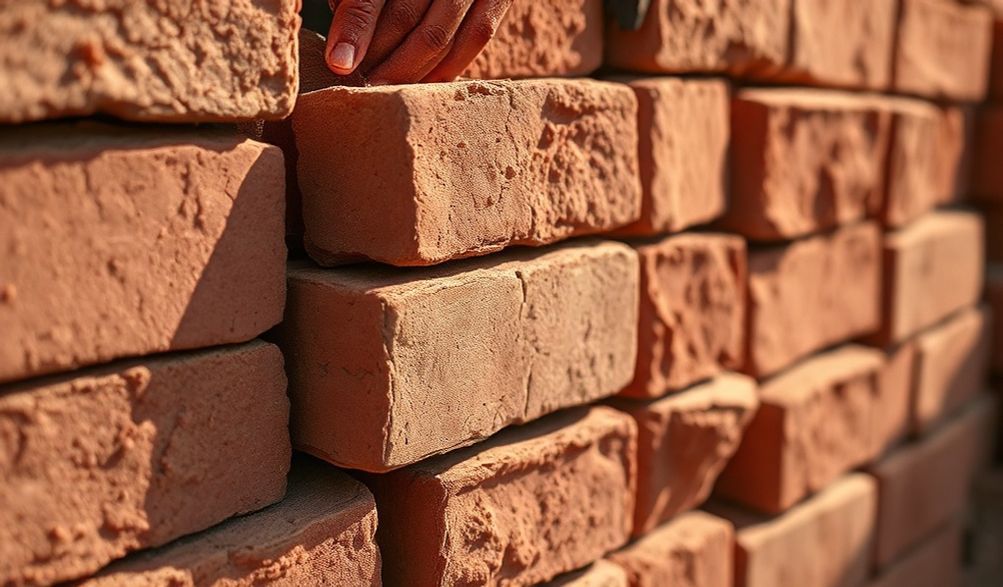
Interloklash Tuproq Blok Mashinalari Bo'yicha Yakuniy Qo'llanma: Barqaror Qurilish
Kirish
Global muammo aniq: arzon uy-joyga bo'lgan ehtiyojning ortishi, shuningdek, an'anaviy qurilishning atrof-muhitga salbiy ta'siri. Barqaror, bardoshli va arzon qurilish yechimlarini izlash hech qachon shu qadar dolzarblik kasb etmagan. Bu izlanishlar davomida kuchli, ammo sodda texnologiya keng tarqalmoqda – bu qulay tuproq blok (ISB) mashinasidir.
Ushbu qo‘llanma ISB mashinasini oddiy vosita sifatida emas, balki qurilish sohasidagi inqilobiy yondashuv sifatida taqdim etadi. U shaxslar, hamjamiyatlar va ishlab chiquvchilarga oyoqlari ostidagi tuproqdan mustahkam, chiroyli va ekologik toza inshootlar qurish imkoniyatini beradi. Bizning muhokamamiz muhandislik tamoyillari, amaliy tajriba va ishonchli, amaliy ma’lumotlar taqdim etishga sodiqlik asosida qurilgan. Maqsadimiz ushbu transformatsion texnologiya bo‘yicha sizning ishonchli manbayingiz bo‘lishdir.
"O'zaro bog'langan tuproq blok mashinasi" ning murakkab jihatlarini o'rganish orqali siz uning qanday ishlashini, uning chuqur afzalliklarini, mavjud turlarini va muvaffaqiyatli foydalanish uchun muhim qadamlarni o'rganasiz. Siz o'z-o'zini quruvchi, rivojlanish mutaxassisi yoki shunchaki barqaror muqobillar haqida qiziquvchi bo'lishingizdan qat'i nazar, ushbu qo'llanma tuproq tanlashdan tortib mustahkam devorgacha bo'lgan har tomonlama sayohatni va'da qiladi.
Interlokli Tuproq Blok Mashinasi nima? (Asosiy Texnologiyani Tushunish)
Uning mohiyati shundan iboratki, bir-biriga o'ralgan tuproq blok mashinasi nam tuproqni yuqori zichlikdagi, aniq shakllangan qurilish blokiga siqib chiqaradigan qurilmadir. Uning asosiy xususiyati har bir blokga quyilgan bir-biriga o'ralgan dizayndir, bu ularni bir-biriga yopishtiruvchi modda kerak bo'lmasdan, boshqo'cha bo'lagi kabi ulash imkonini beradi.
Asosiy tamoyil: Siqish va o'zaro bog'lanish
Mexanika juda sodda va chiroyli.
- Siqish:Namlangan tuproq aralashmasi (ko'pincha oz miqdorda sement yoki ohak bilan barqarorlashtiriladi) po'lat qolipga solinadi. So'ngra qo'l, gidravlik yoki mexanik bo'lgan yuqori bosimli zarb qismi ushbu materialni siqadi. Bu kuch tuproq zarralarini tekislaydi, havo bo'shliqlarini yo'q qiladi va ajoyib mustahkamlikdagi blok hosil qiladi.
- Interlock:Standart to‘rtburchak g‘ishtdan farqli o‘laroq, ISBning yuqori qismida ko‘tarilgan naqsh (til) va pastki qismida mos keladigan yiv mavjud. Ba’zi dizaynlar yon tomonlarida ham jumboqsimon qirralarga ega. Bu bloklarning vertikal va gorizontal ravishda bir-biriga bog‘lanishiga imkon beradi, natijada “quruq terish” orqali barqaror, monolit devor tizimi yaratiladi.
Qisqa Tarix va Global Ta'sir
Zamonaviy kontseptsiya 1950-yillarda ishlab chiqilgan qo‘lda boshqariladigan CINVA Ram pressidan kelib chiqqan. Bugungi kundagi mashinalar bu asl g‘oyaning murakkab variantlari bo‘lib, qo‘l presslaridan tortib to‘liq avtomatlashtirilgan ishlab chiqarish liniyalarigacha bo‘lgan turlarni o‘z ichiga oladi.
Global ta'sir katta. ISB texnologiyasi quyidagilarda muhim rol o'ynadi:
* Falokatdan keyingi qayta qurish in regions like Haiti and Nepal, providing rapid, low-cost housing.
* Affordable housing projects across Africa, Asia, and Latin America.
* Sustainable builds worldwide, from eco-lodges to private homes, prized for their low embodied energy and thermal performance.
Key Benefits of Using an Interlocking Soil Block Machine
The advantages of this technology span economic, environmental, and structural domains, making a compelling case for its adoption.
Economic and Accessibility Advantages
- Drastic Material Cost Reduction: The primary ingredient—soil—is often available on-site or locally for minimal cost. This eliminates the major expense of fired bricks or concrete blocks.
- Low Operational Cost: Once the machine is acquired, production costs are very low, requiring minimal energy (especially for manual models) and labor.
- Income Generation Potential: Owners can establish a small-scale business, producing blocks for their community and creating local jobs, fostering low-cost buildingваaffordable construction initiatives.
Environmental and Sustainability Benefits
- Minimal Carbon Footprint: The process requires no firing, saving vast amounts of fossil fuels and avoiding the CO2 emissions associated with cement or brick kilns.
- Local & Natural Materials: It utilizes subsoil, a renewable local resource, reducing the environmental damage from quarrying and long-distance transport of materials.
- Yuqori Issiqlik Sig'imi: Compressed earth blocks have excellent thermal mass, absorbing heat during the day and releasing it at night, naturally regulating indoor temperatures and slashing energy bills—a hallmark of eco-friendly constructionваsustainable building material.
Structural and Practical Perks
- Yuqori Siqilish Mustahkamligi: Properly made and cured blocks can achieve strengths comparable to or exceeding conventional fired clay bricks.
- Faster Construction Speed: The interlocking, mortar-less system allows walls to rise quickly, as there’s no waiting for mortar to set between courses.
- Dizayn moslashuvchanligi: The blocks can be easily shaped on-site for creating curved walls, arches, and various architectural features, offering great aesthetic freedom.
Types of Interlocking Soil Block Machines: Choosing the Right One
Selecting the correct machine hinges on your project scale, budget, and labor availability. Here are the three main categories.
Manual Press Machines (The Entry-Level Option)
- Tavsif: Operated by a long lever, these rely on human power to generate compression force. They are highly portable and simple.
- Afzalliklari: Lowest upfront cost, no need for electricity or fuel, extremely portable, easy to maintain.
- Kamchiliklari: Physically demanding, slower production rate (e.g., 60-100 blocks per person per day), requires consistent effort for uniform block quality.
Hydraulic Machines (The Balanced Performer)
- Tavsif: These use a hydraulic system to apply pressure. They can be powered by a manual hand pump, an electric motor, or a petrol/diesel engine.
- Afzalliklari: Delivers higher, more consistent pressure for stronger blocks. Significantly increases production output with less physical labor. Offers a great balance of capability and cost. Often marketed as a hydraulic brick pressyokisiqilgan loy blok mashinasi.
- Kamchiliklari: Higher initial investment than manual presses. Requires basic maintenance of hydraulic components. Engine or electric models need a power source.
Fully Automated Machines (The High-Production Solution)
- Tavsif: These are motorized, stationary systems that often integrate a mixer, conveyor, and multiple presses. They produce blocks in a continuous, automated cycle.
- Afzalliklari: Very high, consistent output (thousands of blocks per day), minimal manual labor, and excellent block uniformity. Ideal for commercial ventures.
- Kamchiliklari: Requires a substantial capital investment, a reliable power supply, and more space. They are not portable. These are true automatic soil block maker systems for commercial block making machineoperatsiyalar.
The Step-by-Step Process: From Soil to Solid Wall
Success with ISBs depends on a meticulous process. Skipping steps compromises quality and strength.
Step 1: Soil Testing and Selection (The Critical Foundation)
Not all soil is suitable. The ideal soil is a “loam” containing a balanced mix of:
* LoyTabiiy bog‘lovchi sifatida ishlaydi.
* LoyBo'shliqlarni to'ldiradi.
* Qum: Provides skeletal strength and reduces shrinkage.
Perform these simple field tests:
* Jar Test: Layer soil and water in a clear jar, shake, and let settle. The layers will show approximate ratios of sand, silt, and clay.
* Ribbon Test: Moisten soil and try to roll it into a thin ribbon. If it forms a ribbon 2-3 cm long before breaking, the clay content is likely adequate.
Step 2: Material Preparation and Stabilization
- Sieving: Remove stones, roots, and organic matter.
- Barqarorlashtirish: For permanent, load-bearing structures in most climates, a stabilizer is essential.
- Sement (5-10%): Most common. Provides high strength and water resistance.
- Lime (5-15%): Good for clay-rich soils, offers flexibility.
- Aralash: Combine soil, stabilizer, and water thoroughly. The moisture content is critical—aim for “optimum moisture” where a handful of mix holds its shape when squeezed but crumbles when poked.
Step 3: Block Production and Curing
- Ishlab chiqarish: Fill the machine’s mold with the prepared mix, operate the press to compress, then eject the finished block.
- Davolash: This is where blocks gain strength. Stack them in a shaded area, cover with plastic sheeting, and keep them damp by lightly sprinkling with water for 7-14 days. Proper curing is non-negotiable for durability.
Critical Considerations Before You Buy or Use a Machine
Project Scope and Scale Assessment
O'zingizdan so'rang:
* How many blocks do I need for my project?
* What is my timeline?
* What is my budget for the machine and labor?
Your answers will clearly point you toward a manual, hydraulic, or automated system.
Soil Suitability and Local Regulations
- Professional Testing: For large projects, invest in a lab soil test for precise composition and recommended stabilizer percentages.
- Building Codes: Crucially, check your local building regulations. While earth construction is gaining acceptance, you may need permits or to demonstrate compliance with specific engineering standards. This due diligence is key to establishing trustworthiness in your build.
Machine Specifications and Supplier Vetting
Key specifications to scrutinize:
* Block dimensions and interlock design.
* Compression pressure (measured in MPa or PSI). Higher pressure generally means stronger blocks.
* Production capacity (blocks per hour/day).
* Machine weight and build quality (thick steel is better).
* Warranty and availability of spare parts.
Choosing a supplier:
* Seek companies with a proven track record.
* Ask for customer references and contact them.
* Look for suppliers who offer comprehensive training—this is a major value-add.
Frequently Asked Questions (FAQ) About Interlocking Soil Block Machines
Q1: How strong are interlocking soil blocks compared to fired bricks or concrete blocks?
A: With proper soil mix and stabilization (e.g., 5-10% cement), ISBs can achieve a compressive strength of 3-10 MPa, which meets or exceeds the strength of standard fired clay bricks (3.5-7 MPa). They are perfectly suited for durable, load-bearing walls in 1-3 story buildings.
Q2: Can I use any type of soil from my property?
A: Not all soil is suitable. Pure clay will shrink and crack; pure sand will not bind. The ideal soil is a blend. Simple field tests like the jar test and ribbon test are essential first steps to determine suitability.
Q3: Are buildings made with these blocks waterproof?
A: The blocks are weather-resistant but not waterproof. Like most masonry, they require protective detailing: a raised foundation, adequate roof overhangs, and a breathable plaster render (e.g., earthen or lime-based plaster). The interlocking design itself provides excellent resistance to rain penetration.
Q4: What is the typical cost range for a machine?
A: Manual presses range from \$500 – \$2,500. Hydraulic machines typically cost \$2,500 – \$15,000. Fully automated production systems start around \$20,000 and can exceed \$100,000. Prices vary by capacity, automation, and region.
Q5: Is special training required to operate the machine and build with the blocks?
A: Basic machine operation is simple to learn. However, comprehensive training in soil science, mix design, block production, and—most importantly—construction techniques (lintels, rebars, bond beams, plumbing/electrical integration) is highly recommended for ensuring structural integrity, safety, and a long-lasting building.
Xulosa
The interlocking soil block machine stands as a testament to the power of appropriate technology. It offers a tangible path toward sustainable, economical, and resilient construction, putting the power to build back into the hands of communities and individuals. As we’ve explored, its success is not magic—it’s the application of expert knowledge in soil mechanics, learning from experienced practitioners, investing in trustworthy equipment, and adhering to proven best practices.
Your journey starts with understanding your local soil. We encourage you to take that first step: perform a simple jar test, connect with sustainable building organizations in your area, and reach out to reputable machine manufacturers for detailed specifications. In an era demanding smarter resource use, interlocking soil block technology isn’t just an alternative; it’s a forward-looking, practical choice for the future of building.
<