
Panduan Utama Mesin Pembuat Blok Tanah Saling Kunci: Bangun secara Berkelanjutan
Pengantar
Tantangan global sangat jelas: kebutuhan akan perumahan terjangkau yang terus meningkat, ditambah dengan dampak lingkungan dari konstruksi konvensional. Pencarian solusi bangunan yang berkelanjutan, tangguh, dan hemat biaya menjadi semakin mendesak. Di tengah pencarian ini, sebuah teknologi yang kuat namun sederhana dan elegan semakin berkembang—mesin bata tanah saling mengunci (ISB).
Panduan ini menghadirkan mesin ISB bukan sekadar sebagai alat, tetapi sebagai pendekatan revolusioner dalam konstruksi. Ia memberdayakan individu, komunitas, dan pengembang untuk membangun struktur yang kuat, indah, dan ramah lingkungan langsung dari tanah di bawah kaki mereka. Pembahasan kami dibangun di atas fondasi prinsip-prinsip teknik, pengalaman lapangan praktis, serta komitmen untuk menyediakan informasi yang dapat dipercaya dan dapat diterapkan. Tujuan kami adalah menjadi sumber otoritatif Anda untuk teknologi transformatif ini.
Dengan mengeksplorasi kompleksitas "mesin bata tanah saling mengunci", Anda akan mempelajari cara kerjanya, manfaat mendalamnya, berbagai jenis yang tersedia, serta langkah-langkah kritis untuk menggunakannya dengan sukses. Baik Anda seorang pembangun mandiri, profesional pembangunan, atau sekadar penasaran dengan alternatif berkelanjutan, panduan ini menjanjikan perjalanan komprehensif dari pemilihan tanah hingga dinding yang kokoh.
Apa itu Mesin Pembuat Blok Tanah Saling Mengunci? (Memahami Teknologi Inti)
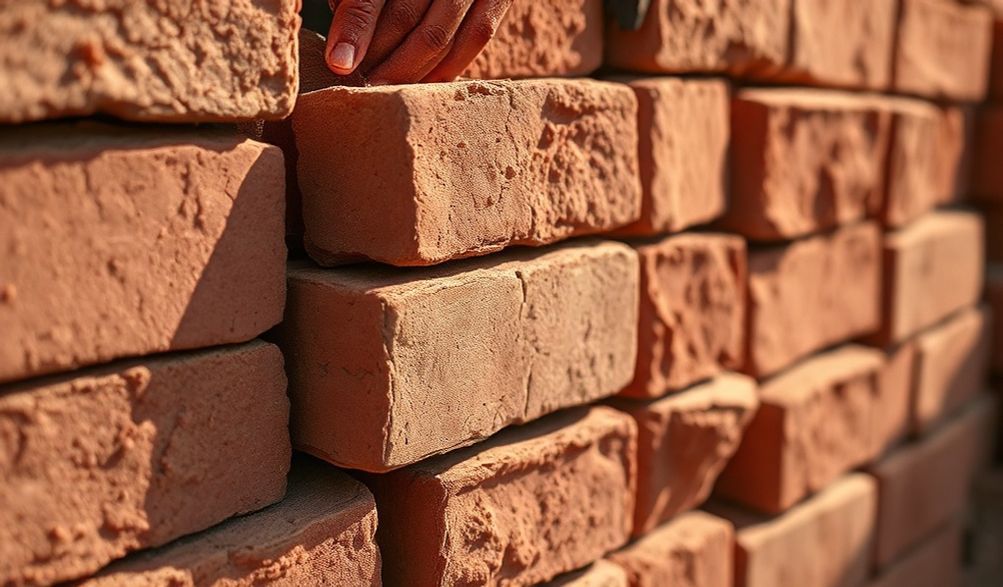
Inti dari mesin pembuat blok tanah saling mengunci adalah alat yang memampatkan tanah lembap menjadi blok bangunan berdensitas tinggi dan berbentuk presisi. Fitur utamanya adalah desain saling mengunci yang dicetak pada setiap blok, memungkinkan mereka menyatu seperti potongan puzzle, sering kali tanpa memerlukan mortar.
Prinsip Dasar: Kompresi dan Saling Mengunci
Mekaniknya sangat sederhana dan indah.
- Kompresi:Campuran tanah lembap—sering distabilkan dengan sedikit semen atau kapur—dimasukkan ke dalam cetakan baja. Kemudian, penekan bertekanan tinggi, baik manual, hidrolik, atau mekanis, memadatkan material ini. Gaya ini menyelaraskan partikel tanah, menghilangkan rongga udara, dan menciptakan balok dengan kekuatan yang luar biasa.
- Interlock:Berbeda dengan bata persegi panjang standar, ISB memiliki pola timbul (lidah) di bagian atas dan alur yang sesuai di bagian bawahnya. Beberapa desain juga menampilkan tepi mirip teka-teki di sisi-sisinya. Hal ini memungkinkan balok terkunci secara vertikal dan horizontal, menciptakan sistem dinding monolitik yang stabil melalui "penumpukan kering".
Sejarah Singkat dan Dampak Global
Konsep modern berkembang dari CINVA Ram manual yang dikembangkan pada tahun 1950-an. Mesin-mesin saat ini merupakan iterasi canggih dari ide asli tersebut, mulai dari mesin tekan yang dioperasikan secara manual hingga lini produksi yang sepenuhnya otomatis.
Dampak globalnya signifikan. Teknologi ISB telah menjadi kunci dalam:
* Rekonstruksi pascabencanadi wilayah seperti Haiti dan Nepal, menyediakan perumahan yang cepat dan berbiaya rendah.
* Proyek perumahan terjangkaudi seluruh Afrika, Asia, dan Amerika Latin.
* Bangunan berkelanjutandi seluruh dunia, dari eko-pondok hingga rumah pribadi, dihargai karena energi terwujud yang rendah dan performa termalnya.
Manfaat Utama Menggunakan Mesin Pembuat Blok Tanah Saling Mengunci
Keunggulan teknologi ini mencakup aspek ekonomi, lingkungan, dan struktural, sehingga membentuk argumen yang kuat untuk adopsinya.
Keunggulan Ekonomi dan Aksesibilitas
- Pengurangan Biaya Material yang Drastis:Bahan utama—tanah—sering tersedia di lokasi atau secara lokal dengan biaya minimal. Ini menghilangkan biaya besar dari batu bata atau blok beton.
- Biaya Operasional RendahSetelah mesin diperoleh, biaya produksi menjadi sangat rendah, hanya membutuhkan energi minimal (terutama untuk model manual) dan tenaga kerja.
- Potensi Penghasilan:Pemilik dapat mendirikan usaha skala kecil, memproduksi blok untuk komunitas mereka dan menciptakan lapangan kerja lokal, serta mendorongbangunan berbiaya rendahdankonstruksi terjangkauinisiatif.
Manfaat Lingkungan dan Keberlanjutan
- Minimal Carbon Footprint: The process requires no firing, saving vast amounts of fossil fuels and avoiding the CO2 emissions associated with cement or brick kilns.
- Local & Natural Materials: It utilizes subsoil, a renewable local resource, reducing the environmental damage from quarrying and long-distance transport of materials.
- Massa Termal Unggul: Compressed earth blocks have excellent thermal mass, absorbing heat during the day and releasing it at night, naturally regulating indoor temperatures and slashing energy bills—a hallmark of eco-friendly constructiondansustainable building material.
Structural and Practical Perks
- Kekuatan Tekan Tinggi: Properly made and cured blocks can achieve strengths comparable to or exceeding conventional fired clay bricks.
- Faster Construction Speed: The interlocking, mortar-less system allows walls to rise quickly, as there’s no waiting for mortar to set between courses.
- Fleksibilitas Desain: The blocks can be easily shaped on-site for creating curved walls, arches, and various architectural features, offering great aesthetic freedom.
Types of Interlocking Soil Block Machines: Choosing the Right One
Selecting the correct machine hinges on your project scale, budget, and labor availability. Here are the three main categories.
Manual Press Machines (The Entry-Level Option)
- Deskripsi: Operated by a long lever, these rely on human power to generate compression force. They are highly portable and simple.
- Kelebihan: Lowest upfront cost, no need for electricity or fuel, extremely portable, easy to maintain.
- Kekurangan: Physically demanding, slower production rate (e.g., 60-100 blocks per person per day), requires consistent effort for uniform block quality.
Hydraulic Machines (The Balanced Performer)
- Deskripsi: These use a hydraulic system to apply pressure. They can be powered by a manual hand pump, an electric motor, or a petrol/diesel engine.
- Kelebihan: Delivers higher, more consistent pressure for stronger blocks. Significantly increases production output with less physical labor. Offers a great balance of capability and cost. Often marketed as a hydraulic brick pressataumesin blok tanah padat.
- Kekurangan: Higher initial investment than manual presses. Requires basic maintenance of hydraulic components. Engine or electric models need a power source.
Fully Automated Machines (The High-Production Solution)
- Deskripsi: These are motorized, stationary systems that often integrate a mixer, conveyor, and multiple presses. They produce blocks in a continuous, automated cycle.
- Kelebihan: Very high, consistent output (thousands of blocks per day), minimal manual labor, and excellent block uniformity. Ideal for commercial ventures.
- Kekurangan: Requires a substantial capital investment, a reliable power supply, and more space. They are not portable. These are true automatic soil block maker systems for commercial block making machineoperasi.
The Step-by-Step Process: From Soil to Solid Wall
Success with ISBs depends on a meticulous process. Skipping steps compromises quality and strength.
Step 1: Soil Testing and Selection (The Critical Foundation)
Not all soil is suitable. The ideal soil is a “loam” containing a balanced mix of:
* Tanah liat: Acts as the natural binder.
* Lumpur: Fills voids.
* Pasir: Provides skeletal strength and reduces shrinkage.
Perform these simple field tests:
* Jar Test: Layer soil and water in a clear jar, shake, and let settle. The layers will show approximate ratios of sand, silt, and clay.
* Ribbon Test: Moisten soil and try to roll it into a thin ribbon. If it forms a ribbon 2-3 cm long before breaking, the clay content is likely adequate.
Step 2: Material Preparation and Stabilization
- Penyaringan: Remove stones, roots, and organic matter.
- Stabilisasi: For permanent, load-bearing structures in most climates, a stabilizer is essential.
- Cement (5-10%): Most common. Provides high strength and water resistance.
- Lime (5-15%): Good for clay-rich soils, offers flexibility.
- Mencampur: Combine soil, stabilizer, and water thoroughly. The moisture content is critical—aim for “optimum moisture” where a handful of mix holds its shape when squeezed but crumbles when poked.
Step 3: Block Production and Curing
- Produksi: Fill the machine’s mold with the prepared mix, operate the press to compress, then eject the finished block.
- Menyembuhkan: This is where blocks gain strength. Stack them in a shaded area, cover with plastic sheeting, and keep them damp by lightly sprinkling with water for 7-14 days. Proper curing is non-negotiable for durability.
Critical Considerations Before You Buy or Use a Machine
Project Scope and Scale Assessment
Tanyakan pada dirimu sendiri:
* How many blocks do I need for my project?
* What is my timeline?
* What is my budget for the machine and labor?
Your answers will clearly point you toward a manual, hydraulic, or automated system.
Soil Suitability and Local Regulations
- Professional Testing: For large projects, invest in a lab soil test for precise composition and recommended stabilizer percentages.
- Building Codes: Crucially, check your local building regulations. While earth construction is gaining acceptance, you may need permits or to demonstrate compliance with specific engineering standards. This due diligence is key to establishing trustworthiness in your build.
Machine Specifications and Supplier Vetting
Spesifikasi kunci yang perlu diperiksa:
* Block dimensions and interlock design.
* Compression pressure (measured in MPa or PSI). Higher pressure generally means stronger blocks.
* Production capacity (blocks per hour/day).
* Machine weight and build quality (thick steel is better).
* Warranty and availability of spare parts.
Choosing a supplier:
* Seek companies with a proven track record.
* Ask for customer references and contact them.
* Look for suppliers who offer comprehensive training—this is a major value-add.
Frequently Asked Questions (FAQ) About Interlocking Soil Block Machines
Q1: How strong are interlocking soil blocks compared to fired bricks or concrete blocks?
A: With proper soil mix and stabilization (e.g., 5-10% cement), ISBs can achieve a compressive strength of 3-10 MPa, which meets or exceeds the strength of standard fired clay bricks (3.5-7 MPa). They are perfectly suited for durable, load-bearing walls in 1-3 story buildings.
Q2: Can I use any type of soil from my property?
A: Not all soil is suitable. Pure clay will shrink and crack; pure sand will not bind. The ideal soil is a blend. Simple field tests like the jar test and ribbon test are essential first steps to determine suitability.
Q3: Are buildings made with these blocks waterproof?
A: The blocks are weather-resistant but not waterproof. Like most masonry, they require protective detailing: a raised foundation, adequate roof overhangs, and a breathable plaster render (e.g., earthen or lime-based plaster). The interlocking design itself provides excellent resistance to rain penetration.
Q4: What is the typical cost range for a machine?
A: Manual presses range from \$500 – \$2,500. Hydraulic machines typically cost \$2,500 – \$15,000. Fully automated production systems start around \$20,000 and can exceed \$100,000. Prices vary by capacity, automation, and region.
Q5: Is special training required to operate the machine and build with the blocks?
A: Basic machine operation is simple to learn. However, comprehensive training in soil science, mix design, block production, and—most importantly—construction techniques (lintels, rebars, bond beams, plumbing/electrical integration) is highly recommended for ensuring structural integrity, safety, and a long-lasting building.
Kesimpulan
The interlocking soil block machine stands as a testament to the power of appropriate technology. It offers a tangible path toward sustainable, economical, and resilient construction, putting the power to build back into the hands of communities and individuals. As we’ve explored, its success is not magic—it’s the application of expert knowledge in soil mechanics, learning from experienced practitioners, investing in trustworthy equipment, and adhering to proven best practices.
Your journey starts with understanding your local soil. We encourage you to take that first step: perform a simple jar test, connect with sustainable building organizations in your area, and reach out to reputable machine manufacturers for detailed specifications. In an era demanding smarter resource use, interlocking soil block technology isn’t just an alternative; it’s a forward-looking, practical choice for the future of building.
<